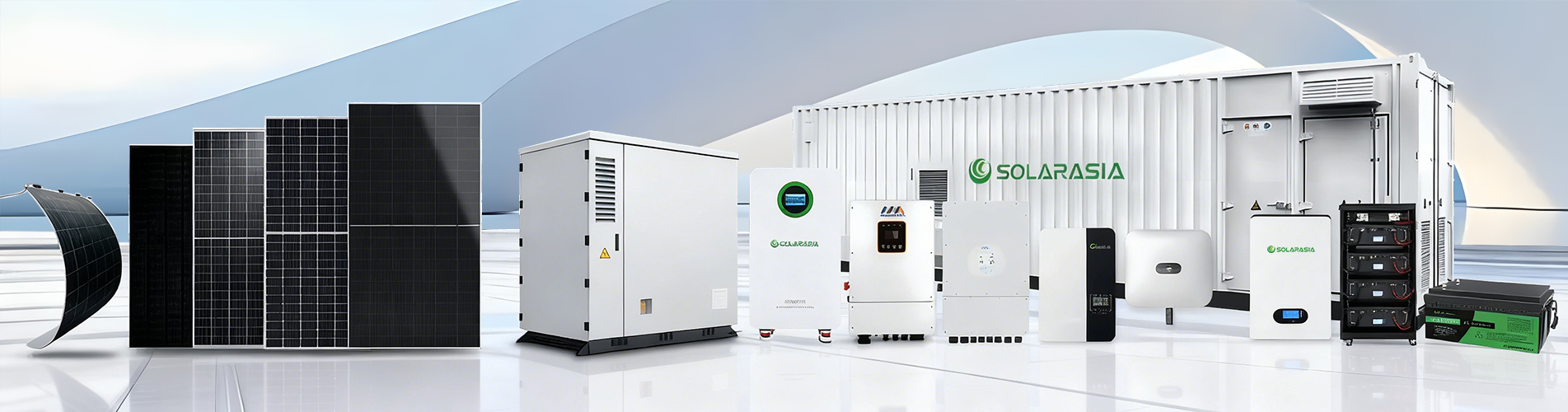
Solarasia banner

Hybrid Solar Inverter

Home

Hybrid Solar Inverter

  • Which Inverter is Better? A Comprehensive Comparison between Hybrid Inverters and Ordinary Inverters May 12, 2025
    In the selection of energy equipment, the type of inverter directly affects the stability and efficiency of power supply. Understanding the differences between different types of inverters is crucial for choosing a suitable product. This article will deeply explore the classification of inverters, focus on comparing the characteristics of hybrid inverters and ordinary inverters, and extend the analysis of relevant types of solar inverters to help you make a better decision. Meanwhile, through practical application cases, you can have a more intuitive understanding of the value of inverters in different scenarios.   I. Basics of Inverters: Core Differences between Solar Inverters and Ordinary Inverters The core function of an inverter is to convert direct current (DC) output from power sources such as batteries and solar panels into alternating current (AC) to meet the power consumption needs of household and commercial appliances. Based on different application scenarios, inverters are mainly divided into solar inverters and ordinary inverters. Differences in Built-in Controllers Solar inverters are specifically designed for solar systems and usually have built-in components such as a maximum power point tracking (MPPT) controller. The MPPT controller can track the maximum power output point of the solar panel in real-time. By dynamically adjusting the voltage and current, it ensures that the solar panel operates at high efficiency. Ordinary inverters are independent devices, lack a built-in controller, and have no hybrid grid connection function. They are mostly applied to power supply systems that do not involve solar panels. In addition, solar inverters are also known as off-grid inverters or hybrid inverters. With functions such as battery charging and grid connection, they can be flexibly applied in residential and commercial scenarios. Comparison of Efficiency Performance Efficiency is an important indicator distinguishing the two types of inverters. Solar inverters can fully tap the power generation potential of solar panels with the help of the MPPT algorithm, ensuring their continuous and efficient operation and increasing the overall power generation. In contrast, ordinary inverters are prone to energy loss during the conversion from DC to AC due to the lack of such optimization technology, reducing the power utilization rate. Cost and Benefit Trade-off In terms of price, solar inverters are usually more expensive than ordinary inverters, but the environmental value and long-term economic benefits they bring cannot be ignored. Using solar inverters can significantly reduce carbon emissions, which is in line with the concept of green development. Over time, the electricity costs saved can gradually offset the higher upfront equipment investment. From a long-term perspective, it is a choice that combines environmental protection and economic efficiency. II. In-depth Analysis: Hybrid Inverters VS Ordinary Inverters After clarifying the differences between solar inverters and ordinary inverters, a further comparison between hybrid inverters and ordinary inverters can more clearly show their advantages and disadvantages in practical applications. Efficiency and Energy Flexibility The greatest advantage of hybrid inverters lies in the diversity of energy utilization. They can integrate multiple energy sources such as solar energy, batteries, utility power, and generators. With a built-in MPPT controller, they can intelligently optimize the energy configuration, effectively reducing the dependence on the traditional power grid. In terms of efficiency, hybrid inverters can usually reach 90% - 98%, while the efficiency of ordinary inverters is mostly in the range of 80% - 90%. The high efficiency of hybrid inverters is obvious. Battery Storage Capacity Battery energy storage is another major difference between the two. Hybrid inverters are equipped with a multi-functional battery energy storage system, which can store surplus electricity from solar power generation and grid power for use at night or during power outages. Moreover, hybrid inverters integrated with an MPPT controller support different operating modes with or without a battery, providing users with flexible battery configuration solutions and helping to control costs. Ordinary inverters not only require an additional battery energy storage system but also have shortcomings in battery charging efficiency. Intelligent Monitoring Function Modern hybrid inverters generally have a remote monitoring function, allowing users to grasp the energy production and usage in real-time through mobile phones or other terminals. This function is convenient for timely discovery of system problems and optimization of energy efficiency. In contrast, ordinary inverters usually do not have a remote monitoring capability and are somewhat insufficient in intelligent management. III. Extended Analysis: Comparison and Analysis of Various Solar Inverters Solar inverters include types such as off-grid inverters, hybrid inverters, and grid-connected inverters, each suitable for different application scenarios. 3.1 Comprehensive Comparison of Grid-connected, Off-grid, and Hybrid Solar Inverters Grid Connection:Grid-connected inverters work in coordination with the public power grid and feed surplus electricity back to the grid; off-grid inverters operate independently and do not rely on the grid; hybrid solar inverters have both grid-connected and off-grid modes. When there is sufficient solar energy, they operate in grid-connected mode and automatically switch to off-grid mode during power outages to provide backup power. Backup Power: Grid-connected inverters stop working during power outages and cannot provide backup power; off-grid inverters rely on batteries to ensure continuous power supply; hybrid solar inverters can be configured with batteries as needed to flexibly meet backup power requirements. Cost: Grid-connected inverters have the lowest cost, off-grid inverters are the most expensive due to their complex systems, and the cost of hybrid solar inverters is between the two. However, their high flexibility and reliability also bring higher cost-effectiveness. Installation Difficulty: Grid-connected inverters are the easiest to install, off-grid inverters are complex to install due to their many components, and although hybrid solar inverters require professional installation, the installation difficulty is lower than that of off-grid systems. 3.2 Special Comparison between Off-grid Inverters and Hybrid Inverters Off-grid Inverters: They are suitable for remote areas without grid coverage. By connecting to a battery pack, they store surplus electricity during the day to achieve self-sufficient power supply. In the long run, they can save grid usage costs. Hybrid Inverters: In hybrid solar power systems, they coordinate the current between solar panels, battery packs, and the grid. They can both sell surplus power to the grid and store electricity for backup; the built-in MPPT or PWM controller integrates multiple functions, simplifies the system setup, and also supports remote monitoring; moreover, compared with off-grid systems, hybrid systems require a smaller battery pack, which is more cost-effective. 3.3 Detailed Comparison between Hybrid Inverters and Grid-connected Inverters Grid Connection Method: Grid-connected inverters are directly connected to the grid and feed surplus solar power to the grid without the need for battery energy storage; hybrid inverters work in coordination with the grid and battery backup systems. They store surplus electricity generated by solar panels in batteries for use during power outages. Hybrid inverters automatically switch between obtaining power from the grid and using the power stored in batteries to ensure uninterrupted operation. However, they cannot feed power back to the grid. Cost Consideration: Hybrid inverters have a higher upfront cost due to the battery backup function. However, they can be more cost-effective over time by minimizing the impact of power outages and reducing electricity bills. Grid-connected inverters have a lower initial cost but lack energy storage capabilities. Operating Time Difference: Grid-connected inverters only generate electricity during the day when there is sufficient sunlight; hybrid inverters can operate around the clock, providing a stable power supply both during the day and at night. 3.4 Similarities and Differences between Off-grid Inverters and Grid-connected Inverters Similarities: Both can convert DC power into AC power to ensure stable power output; both have protection functions such as overload protection and short-circuit protection; both can work with battery energy storage systems to achieve energy management; both can be integrated with intelligent systems and support remote monitoring through mobile devices. Differences: Off-grid inverters operate independently and rely on built-in charge controllers to manage batteries; grid-connected inverters are connected to the grid and feed surplus electricity to the public grid to obtain benefits.   IV. Practical Application Cases of Inverters In addition to theoretical analysis, practical application cases can more intuitively demonstrate the value of different inverters.   Solar Power Generation Project of a Small Factory in Thailand: For a small factory in an industrial cluster area of Thailand, due to the old power supply system's inability to meet the growing electricity demand, production often comes to a halt due to unstable power supply. Hinton Power recommended a 50-kilowatt off-grid solar power generation system for it. The core device is the HDSX - 50kW three-phase solar inverter of Hinton. This inverter has the functions of three-in and three-out and UPS power supply, and can adapt to the configuration of various battery types. After the installation of the system in the factory, the production efficiency has been significantly improved, the number of production halts has been sharply reduced, the order delivery punctuality rate has been increased, and the production cost has been significantly reduced.   Empirical Comparison Test of Photovoltaic Inverters in a Factory in Jiaozhou, Qingdao: In order to compare the performance of photovoltaic inverters of different brands, an empirical test was carried out on the roof of a factory in Jiaozhou, Qingdao. The 110kW photovoltaic inverter for industry and commerce of Sige New Energy and a 110kW photovoltaic inverter of a leading brand in the industry were selected for testing under the same external conditions such as illumination, temperature, components, and inclination. The Sige inverter has a lower starting voltage of 180V and an ultra-wide MPPT voltage range of 160 - 1000V, is equipped with a self-developed AI intelligent MPPT algorithm, and all products use high-efficiency silicon carbide (SiC) devices. The test results show that the average power generation of the Sige inverter has been significantly improved, achieving an average power generation gain of 0.41%, with the highest single-day increase reaching 2.12%, and the equipment has operated stably throughout the process without abnormal fluctuations or performance degradation.   Through a comprehensive comparison of different types of inverters and practical case analysis, it can be found that hybrid inverters show stronger applicability in most scenarios with their advantages such as energy flexibility, efficient energy storage, and intelligent monitoring; ordinary inverters are suitable for scenarios with relatively simple functional requirements. When making an actual selection, users should comprehensively evaluate and choose the most suitable inverter product according to their own power consumption needs, usage scenarios, and budget.
  • Why Choose a 3 Phase Hybrid Solar Inverter for Your Energy Storage System Jan 06, 2026
    As more homes and businesses move toward solar energy, many buyers are asking an important question: what is a three phase hybrid solar inverter and why is it becoming so popular The answer is simple. A high quality hybrid inverter allows you to combine solar power generation with a battery energy storage system so you can use your own electricity day and night, even during grid outages.   A three phase hybrid solar inverter is specially designed for larger homes, villas, small factories and commercial buildings that use three phase power. It works with both the grid and battery storage, which means it can supply power directly to loads, charge batteries, or feed energy into the grid when needed. With this flexible working mode, users can greatly reduce electricity bills and increase self consumption of solar energy. This makes the solar energy storage system more efficient and easier to manage.   So what makes a hybrid solar inverter different from a traditional solar inverter A normal grid tied inverter only works when the grid is available and cannot store energy. A hybrid solar inverter can work with batteries and provide backup power during outages, which is essential in areas with unstable grids or rising power prices. It is also an ideal solution for customers planning to expand from a simple solar system to a complete battery energy storage system in the future.   When choosing such equipment, many users also care about questions like how to select the right power range and when to invest in an energy storage system A three phase hybrid solar inverter with options such as 28 kW 35 kW 40 kW and 55 kW can meet different project sizes, from residential upgrades to commercial applications. It supports smart monitoring and is suitable for customers who are ready to upgrade their energy independence and reduce long term electricity costs.   This type of inverter is designed for people who want reliable clean energy, strong backup power and future proof system expansion. If you are planning a new solar project or upgrading your current system, a three phase hybrid solar inverter combined with battery energy storage system is one of the smartest investments today. Feel free to contact our team for system design, quotation and technical support.  
  • On Grid vs Hybrid Solar Inverter for Businesses Mar 17, 2026
    On Grid vs Hybrid Solar Inverter for Businesses: Which Is the Smart Investment? For commercial enterprises, choosing the right solar inverter is more than a technical decision—it’s a strategic one that impacts energy costs, operational resilience, and long-term ROI. On grid and hybrid solar inverters are the two most popular options for businesses connected to the utility grid, but they serve vastly different needs: one prioritizes immediate cost savings and grid synergy, the other delivers energy independence, backup power, and flexible long term value.   In this guide, we’ll break down the core differences between on grid and hybrid solar inverters for commercial use, analyze their performance, cost implications, and ideal use cases, and help you determine which solution aligns with your business’s energy goals, budget, and operational requirements.   Key Definitions: What Are On Grid and Hybrid Solar Inverters? At their core, both inverters convert DC power from solar panels into usable AC power for your business—but their capabilities diverge drastically when it comes to grid interaction and energy storage. • On Grid Solar Inverters (Grid-Tied): The most basic and cost effective option, these inverters manage solar power flow between your business, the grid, and your loads. They feed excess solar energy back to the grid for net metering credits but cannot operate during power outages (due to anti islanding safety standards that protect utility workers). They have no battery compatibility and offer only basic energy management. Top commercial models include Huawei SUN2000-36KTL-M3 and Deye SUN-100K-G03. • Hybrid Solar Inverters: The “all-in-one” solution, hybrid inverters handle solar-to-grid/load power flow and integrate with battery storage (e.g., LiFePO4 batteries). They disconnect safely from the grid during outages to create a self sustaining mini grid for your business, provide seamless backup power, and feature advanced smart energy management for peak shaving and self consumption optimization. Leading commercial models are Huawei SUN2000-15K-MB0 and Deye SUN-50K-SG01HP3-EU-BM4.   Core Feature Comparison for Business Applications The table below highlights the critical differences between on grid and hybrid inverters, tailored to commercial energy needs: Feature On Grid Solar Inverter Hybrid Solar Inverter Energy Storage Compatibility No (AC coupling is a costly workaround) Yes (LiFePO4 battery ready, seamless integration) Backup Power for Outages No (shuts down entirely) Yes (UPS switchover: ≤10ms single phase, ≤20ms three phase) Grid Independence Low (100% grid dependent) High (operates off grid during outages; scalable independence) Smart Energy Management Basic (only solar/grid load balancing) Advanced (peak shaving, TOU tariff optimization, remote monitoring) Net Metering Eligibility Full (maximize excess power sales) Yes (retains grid connection and net metering when needed) System Complexity Simple (fewer components, easy installation) Complex (integrates solar, battery, and grid control) Scalability Easy (add panels for more grid feed in) Flexible (add batteries/panels for greater self consumption) Performance Metrics: On Grid vs Hybrid for Commercial Solar When evaluating performance, businesses need to consider efficiency, power range, and real-world operational reliability—two key commercial inverter series (Huawei SUN2000 on grid, Deye hybrid) illustrate the tradeoffs: • Power Range: On grid inverters offer larger commercial power capacities (36kW–100kW for Huawei SUN2000-36KTL-M3 and Deye SUN-100K-G03), ideal for high output solar arrays focused on grid feed in. Hybrid inverters range from 15kW–50kW (Huawei SUN2000-15K-MB0 and Deye SUN-50K-SG01HP3-EU-BM4), perfect for medium to large businesses balancing self use and grid interaction. • Efficiency: On grid inverters boast slightly higher max efficiency (98.6%–98.7% for Huawei SUN2000-36KTL-M3 and Deye SUN-100K-G03) due to their simpler design. Hybrid inverters offer a still impressive 98.0%–98.6% max efficiency (Huawei SUN2000-15K-MB0 and Deye hybrid models), a small tradeoff for their multi functional capabilities. • MPPT Controllers: On grid inverters have 4–6 MPPTs (for multiple solar panel strings, such as Deye SUN-100K-G03 with 6 MPPTs), while hybrid inverters feature 2–4 MPPTs (Huawei SUN2000-15K-MB0 with 2 MPPTs, Deye 50kW hybrid with 4 MPPTs)—both sufficient for commercial solar array design, with on-grid edging out for ultra large setups. • Outage Performance: The biggest performance gap—on-grid inverters shut down during blackouts, disrupting operations for businesses with critical loads (e.g., manufacturing, retail, healthcare). Hybrid inverters provide instantaneous backup power, ensuring uninterrupted operations for essential equipment.   Cost & ROI: Upfront Savings vs. Long-Term Commercial Value For businesses, ROI is king—and on-grid and hybrid inverters deliver returns in very different timelines and ways.   On Grid Inverters: Low Upfront Cost, Fast Short-Term ROI On grid inverters are the most affordable solar inverter option for businesses, with lower purchase and installation costs thanks to their simple design (no battery integration or advanced control systems). They shine for businesses with: • Access to a stable utility grid and favorable net metering/feed-in tariffs; • A primary goal of maximizing solar power sales to the grid (not self-consumption); • A strict upfront budget and short-term ROI targets.   Commercial Example: A 1 MW rice mill in Pakistan chose 10 Deye SUN-100K-G03 on-grid inverters for its solar project, prioritizing pure power output and fast ROI by selling all excess solar energy to the grid—an ideal choice for a business with no critical backup power needs and a stable grid. Similarly, a large warehouse in Southeast Asia opted for Huawei SUN2000-36KTL-M3 inverters to leverage their 98.6% efficiency and wide voltage compatibility for maximum grid feed-in benefits.   Hybrid Inverters: Higher Upfront Cost, Superior Long-Term ROI Hybrid inverters have a higher initial investment (due to battery compatibility and advanced electronics) but deliver greater and more versatile long-term savings for commercial operations. Their key financial advantages for businesses include: • Peak Shaving: Store excess solar energy during low-tariff hours and use it during peak evening/operational hours, avoiding expensive grid electricity for high-demand periods; • Energy Cost Insulation: Protect your business from rising utility prices and volatile grid tariffs by increasing solar self-consumption (critical for businesses with high energy usage); • Operational Resilience: Avoid costly downtime from power outages—for businesses like retail stores, data centers, or manufacturing facilities, even a short blackout can lead to significant revenue loss; • Subsidy Eligibility: Many regions offer green energy subsidies for battery-integrated solar systems, further reducing payback time (e.g., a Spanish commercial user achieved 15% annual profitability with a Huawei hybrid inverter, a metric easily scaled for larger operations).   Ideal Commercial Use Cases: When to Choose On-Grid vs Hybrid The right inverter for your business depends on grid reliability, energy goals, critical load needs, and budget. Use this checklist to align your choice with your operations:   Choose an On-Grid Inverter If Your Business: • Operates in an area with a 100% stable utility grid (no frequent outages); • Prioritizes fastest possible ROI through grid feed-in/net metering; • Has no critical loads that require uninterrupted power; • Is working with a strict upfront budget for solar installation; • Plans to use solar power primarily for offsetting grid usage (not full self-sufficiency). Best For: Large commercial rooftops (e.g., warehouses in urban China with stable grids), manufacturing plants with grid-backed backup generators, and businesses with favorable feed-in tariffs. Recommended models: Huawei SUN2000-36KTL-M3, Deye SUN-100K-G03.   Choose a Hybrid Inverter If Your Business: • Operates in an area with grid fluctuations, blackouts, or unreliable power (e.g., Victoria, Australia); • Has critical loads (e.g., refrigeration, medical equipment, production lines) that cannot tolerate downtime; • Aims to maximize solar self-consumption and reduce reliance on the grid; • Wants to future-proof its solar system (add batteries at any time for greater independence); • Operates under Time-of-Use (TOU) tariffs (peak shaving delivers massive savings); • Values energy resilience as a core business priority (e.g., retail, healthcare, data centers). Best For: Medium to large businesses in regions with unstable grids, commercial operations with high peak-hour energy costs, and any business looking to build a sustainable, grid-independent energy system. Recommended models: Huawei SUN2000-15K-MB0, Deye SUN-50K-SG01HP3-EU-BM4.   Common Misconceptions for Businesses: Debunking On Grid vs Hybrid Myths Many business owners make costly decisions based on misinformation about on grid and hybrid inverters—here are the most common myths, busted: 1. Myth: “I can add a battery to my on-grid inverter later for backup power.”Reality: Adding a battery to an on-grid system requires AC coupling—a costly, complex process that needs a separate battery inverter and causes double conversion efficiency loss. It’s a workaround, not a planned upgrade, and far more expensive than choosing a hybrid inverter (such as Huawei SUN2000-15K-MB0 or Deye 50kW hybrid) from the start. 2. Myth: “Hybrid inverters are only for off-grid businesses—we don’t need that.”Reality: Modern hybrid inverters (like Huawei and Deye models) are designed to work with the grid while providing battery backup—they deliver the best of both worlds. For grid-connected businesses, they retain net metering capabilities while adding the safety net of backup power and energy optimization. 3. Myth: “The cheaper on-grid inverter always saves my business more money.”Reality: While on-grid inverters (e.g., Huawei SUN2000-36KTL-M3, Deye SUN-100K-G03) save money upfront, hybrid inverters deliver significantly greater long-term savings by cutting peak-hour grid costs, avoiding downtime, and insulating your business from rising energy prices. On-grid saves on day one; hybrid saves over 5–10 years (and beyond). 4. Myth: “Hybrid inverters are too complex for commercial operations.”Reality: While hybrid systems have more components, modern models (e.g., Huawei SUN2000-15K-MB0 with Fusionsolar intelligent monitoring, Deye hybrid with smart cooling and remote management) feature user-friendly smart energy management systems (EMS) with remote monitoring and automated load balancing. Most solar installers are trained to design and maintain commercial hybrid systems from Huawei and Deye, making them a manageable investment.   Final Verdict for Businesses: On-Grid for the Present, Hybrid for the Future For commercial enterprises, the choice between on grid and hybrid solar inverters boils down to immediate needs vs. long-term strategic planning: • On-Grid Inverters are the perfect entry point for businesses with a strict budget, a stable grid, and a focus on fast ROI through grid feed-in. Top choices like Huawei SUN2000-36KTL-M3 and Deye SUN-100K-G03 are reliable, efficient, and easy to install, letting you dip your toes into solar without the complexity of battery storage. • Hybrid Inverters are the superior long-term investment for most businesses. Models like Huawei SUN2000-15K-MB0 and Deye SUN-50K-SG01HP3-EU-BM4 deliver operational resilience (no downtime from outages), maximum solar self-consumption, protection from rising energy costs, and future flexibility (add batteries anytime). For businesses that view energy as a strategic asset—rather than just an expense—hybrid inverters from Huawei and Deye are the clear choice.   Key Takeaways for Business Owners 1. Prioritize operational resilience if your business has critical loads—hybrid inverters (Huawei, Deye) are the only option for backup power. 2. Calculate ROI over 5–10 years (not just upfront) — hybrid inverters from Huawei and Deye outperform on-grid inverters in long-term savings for most commercial use cases. 3. Avoid AC coupling for on-grid systems—it’s a costly, inefficient way to add battery storage later. 4. Leverage TOU tariffs and green energy subsidies—hybrid inverters from Huawei and Deye maximize the value of these incentives through peak shaving and self-consumption.   5. Choose a reputable commercial inverter brand (e.g., Huawei, Deye) with proven performance for on-grid (Huawei SUN2000 series, Deye G03 series) and hybrid (Huawei SUN2000-MB0 series, Deye SG01 series) applications.   Contact us now to get the latest price and technical support.    
  • Off Grid vs. Hybrid Inverters: 2026 Procurement Guide for Unstable Grid Regions Mar 30, 2026
    Introduction: The Energy Challenge in Volatile Markets The Problem: In regions like Southeast Asia, Africa, and parts of the Middle East, factory owners and industrial parks face a dual challenge: skyrocketing electricity rates and an unreliable power grid with frequent blackouts. The Confusion: Choosing the right inverter is critical for energy independence. But should you go completely off grid or utilize a hybrid system that interacts with the grid? The Goal: This guide will break down the technical differences, application scenarios, and cost implications of Off Grid vs. Hybrid Inverters to help you make the right procurement decision for your 2026 projects.   1. What is an Off Grid Solar Inverter? (Complete Independence) Definition: An Off Grid Inverter operates entirely independently of the utility grid. It converts DC power from solar panels and batteries into AC power for your factory loads. Key Feature: It requires a battery bank to function. It cannot feedback power to the grid. Best For: remote telecommunication towers, mining sites, farms, or facilities where the grid connection is nonexistent or too expensive to extend.   2. What is a Hybrid Solar Inverter? (Smart Grid Interaction) Definition: A Hybrid Inverter (also known as a Multi-mode or Battery-Ready Inverter) can manage power from solar panels, batteries, AND the utility grid simultaneously. Key Feature: It can switch seamlessly between grid power and battery power. Crucially, it can also feedback excess solar energy to the grid (if net metering is available) or store it in [Anhui Solarasia's BESS] (Link to your Pillar Post). Best For: Commercial buildings and factories with an existing but unreliable grid connection. It prioritizes solar and battery power, using the grid only as a backup.   3. Head-to-Head: Off Grid vs. Hybrid Inverter Comparison (2026) Feature Off-Grid Inverter Hybrid Inverter Grid Connection No Yes (Bi-directional) Battery Required? Yes (Always) Highly Recommended (For backup/optimization) Grid Feedback? No Yes (Configurable) System Complexity High (Requires large battery sizing) Moderate (Easier to scale) Upfront Cost Lower (Inverter only) Higher (More sophisticated electronics) Long-term ROI (with Grid) Fixed High (Through peak shaving/net metering)   4. Critical Factors for Industrial Procurement in Unstable Regions Seamless Switching (UPS Grade): For factories with sensitive machinery, a Hybrid Inverter with <10ms switching time is a must-have to prevent production downtime. Scalability: Can you easily add more battery capacity later? Hybrid systems are typically more flexible. Integration with Large BESS: Ensure your chosen inverter is compatible with high-voltage battery clusters, such as those used in our [1MW Container BESS] (Link to your first blog post). This is crucial for optimizing your project's [LCOE] (Link to your second blog post).   Conclusion: Don't Buy an Inverter, Buy a Solution Choosing between off grid and hybrid isn't just a technical decision; it's a financial one. If you have a grid, a Hybrid Inverter offers more ways to save money and ensure stability. If you are truly remote, an Off-Grid Inverter is your only path to power.   As a leading supplier, Anhui Solarasia specializes in both technologies, offering robust, high voltage solutions tailored for demanding industrial environments.   Get a Custom Inverter Feasibility Study Confused about which inverter is right for your facility? Our technical engineers are ready to help. We can analyze your load profile and grid conditions to recommend the perfect, cost effective inverter solution for your 2026.
  • Pure Sine Wave Hybrid Inverters: The Non Negotiable Standard for Industrial Equipment Safety in 2026 Apr 02, 2026
    Introduction: The Hidden Threat to Industrial Downtime The Problem: In 2026, industrial facilities are more automated and reliant on sensitive electronics than ever before. While solar power offers energy independence, an inferior inverter can quietly damage millions of dollars in equipment, leading to catastrophic downtime. The Solution: Not all hybrid inverters are created equal. The distinction between "Modified Sine Wave" and "Pure Sine Wave" is not just technical jargon; it is the boundary between equipment longevity and premature failure. The Goal: This article explains why a Pure Sine Wave Hybrid Inverter is a critical, non negotiable component for ensuring the safety and stable operation of any modern industrial facility.   1. The Science of Smooth Power: What is a Pure Sine Wave? Modified Sine Wave: A crude, stair step approximation of AC power. This sudden voltage switching creates "Harmonic Distortion" (noise) that electrical motors and electronics hate. Pure Sine Wave: A smooth, continuous wave, identical to (or often cleaner than) the power supplied by a high-quality utility grid. The Non-Negotiable Choice: Anhui Solarasia exclusively manufactures Pure Sine Wave Hybrid Inverters for industrial applications because we prioritize your equipment's health over cheap components.   2. Four Critical Reasons Your Factory Needs Pure Sine Wave Power A. Protecting Sensitive Motors and Variable Frequency Drives (VFDs) The Issue: Modified sine waves cause motors (in pumps, fans, conveyors) to run hotter, vibrate excessively, and buzz. This "harmonic heating" significantly shortens insulation life. The Pure Sine Advantage: Ensure cool, quiet, and efficient motor operation, preventing premature burnout.   B. Ensuring Accuracy in CNC Machines and Robotics The Issue: Precision machinery relies on clean timing and control signals. Harmonic noise from modified inverters can cause logic errors, erratic behavior, or complete controller failure in CNC and robotic systems. The Pure Sine Advantage: Guarantees signal integrity for flawless automated production.   C. Preventing Data Corruption in Servers and IT Infrastructure The Issue: Uninterruptible Power Supplies (UPS) and servers often detect modified sine waves as "bad power" and may refuse to operate, or worse, suffer power supply failure and data corruption. The Pure Sine Advantage: Provides a stable foundation for your critical data and communication systems.   D. Compatibility with Advanced Industrial ESS (BESS) The Issue: Modern high-voltage battery storage systems (like our [1MW Container BESS]-Link to Pillar Post) require a clean AC reference to synchronize and operate efficiently. Modified waves disrupt this synchronization, increasing energy loss and LCOE.     3. Integrated Industrial Safety Features of Solarasia Inverters Robust Transient Response: Our inverters can handle sudden load spikes (like a large motor starting) without voltage dips that trip other equipment. This directly affects your project's [LCOE]. Surge and Lightning Protection: Built-in Type II AC/DC surge protection devices (SPDs) shield against external electrical spikes. Seamless Transfer (<10ms): For regions with unstable grids (Link to [Hybrid vs Off-Grid] blog), our high speed switching ensures your facility runs without interruption, acting as an active power quality stabilizer.   Conclusion: Your Inverter is an Insurance Policy, Not just a Component The Final Word: Investing in a Pure Sine Wave Hybrid Inverter is an investment in your facility's operational insurance. Choosing a modified wave to save a few dollars today will inevitably cost you thousands tomorrow in repairs and lost production. Solarasia’s Commitment: We do not compromise on power quality. Every Solarasia Industrial Inverter is designed to deliver utility grade, pure sine wave electricity, protecting your assets for decades.   Optimize Your Industrial Power Quality Is your current inverter putting your expensive machinery at risk?   Contact Solarasia’s engineering team for a free power quality audit and compatibility check for your critical equipment.   👉[Button: Get My Free Power Audit]  
foot logo

Address : Room 305, Tower B, Yinuo Business Center, intersection of West Second Ring Road and Hehuan Road, Bijiashan Street, Shushan District, Hefei city, Anhui Province

Tel : +86 17730022793

Email : [email protected]

Subscribe

Please read on, stay posted, subscribe, and we welcome you to tell us what you think.

submit

Links: Inverter Cables Cowellxm Copyright 2026 @ Anhui Solarasia Energy Technology Co.,Ltd .All Rights Reserved. Sitemap | Blog | XML | Privacy Policy Network Supported

Click To Leave A Message

leave a message
If you are interested in our products and want to know more details,please leave a message here,we will reply you as soon as we can.
submit

Home

Products

whatsApp

contact