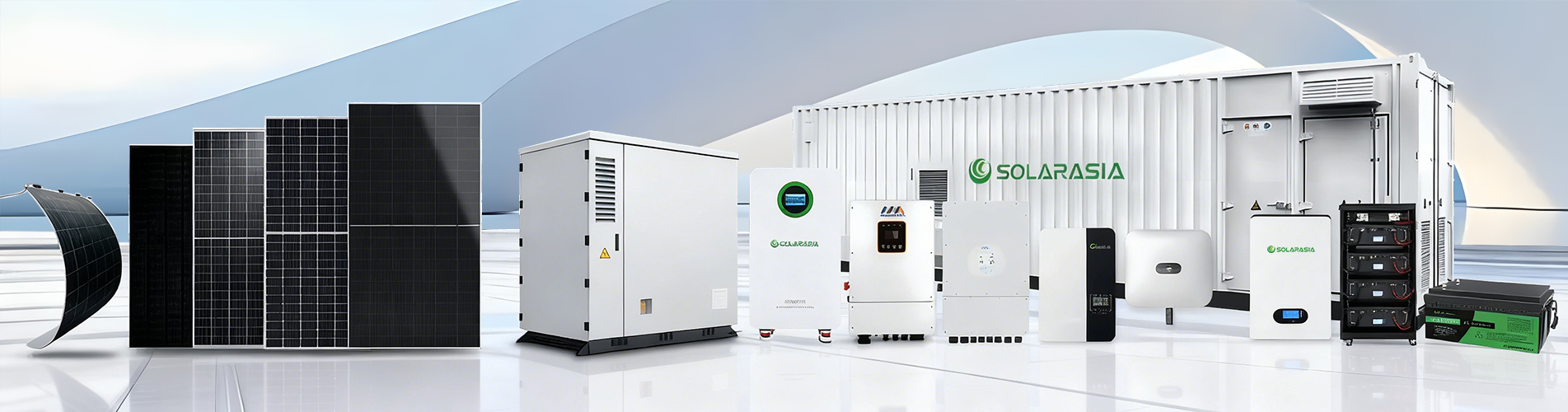
Solarasia banner

Chinese Solar Power Inverters

Home

Chinese Solar Power Inverters

  • Solar Inverter Showdown: How to Choose the Best for Your Home or Business? Nov 24, 2025
    When it comes to harnessing solar energy, the solar inverter is the unsung hero that converts sunlight into usable power. But with so many options available, how do you pick the right one? From on grid to hybrid systems, the choices can be overwhelming. Whether you're a homeowner looking to cut electricity bills or a business aiming for sustainability, understanding the role of a solar inverter is key. Why settle for high energy costs when you can switch to efficient solar solutions? In this guide, we'll break down the essentials to help you make an informed decision.   What makes a solar power inverter so crucial in renewable energy systems? Think of it as the brain of your solar setup—it transforms DC electricity generated by panels into AC power for your appliances. But not all inverters are created equal. For instance, on grid inverters sync with the utility grid, ideal for reducing dependency on traditional power sources. Off grid models, on the other hand, operate independently, perfect for remote areas. Then there are hybrid inverters, which combine the best of both worlds by integrating battery storage. How do you know which type suits your needs? It all depends on your energy goals and location.   In the debate of solar inverter technologies, efficiency and reliability take center stage. Modern inverters come with features like MPPT (Maximum Power Point Tracking) to optimize energy harvest, even on cloudy days. We provide robust solutions tailored for residential, commercial, and industrial use. But when should you consider upgrading? If you're expanding your solar array or adding batteries, a hybrid inverter might be the answer. Ultimately, investing in a high quality inverter ensures long term savings and a smaller carbon footprint. Ready to power your life with clean energy? Start by evaluating your inverter options today!
  • Choosing the Right Commercial Solar Inverter: A Strategic Guide May 21, 2026
    As businesses face rising energy costs and stricter sustainability targets, investing in commercial solar is no longer just a trend—it’s a bottom line necessity. While solar panels usually grab the spotlight, the solar inverter is the true powerhouse of the system. It’s the brain that dictates how efficiently your factory, warehouse, or office building turns sunlight into usable, profitable energy.   Upgrading to a high performance inverter does more than just convert DC to AC. Modern commercial units have evolved into sophisticated energy management hubs, handling everything from battery integration and smart grid interaction to remote diagnostics. Choosing the right one is the single most important decision you’ll make for your system’s ROI.   The Heart of the System   Think of the inverter as the gatekeeper of your energy infrastructure. Whether you are running a manufacturing plant, a cold storage warehouse, or a massive commercial rooftop project, your inverter determines how much of your generated power actually makes it to your appliances and the grid. Without a reliable, high-grade inverter, even the most expensive panels are essentially operating at half capacity.   Which Inverter Fits Your Project?   1. On-Grid Inverters: The Efficiency Standard   If your main goal is trimming electricity bills or feeding excess power back into the grid, an on-grid inverter is your workhorse. These are the gold standard for shopping malls, office complexes, and industrial warehouses where battery storage isn't an immediate priority. When paired with a reliable three-phase configuration, these units offer the best balance of simplicity and performance.   2. Hybrid Inverters: The Future Proof Choice   For businesses worried about grid instability or those looking to maximize peak-shaving, hybrid inverters are the way to go. By bridging the gap between solar generation and battery storage (BESS), they allow you to store energy when it’s cheap and deploy it when rates are high. Models in the 100kW to 125kW range are currently the go-to for serious industrial users.   Check out the latest industrial grade specs here: Solar inverter. Why "Commercial Grade" Matters   It is tempting to look at residential style equipment to save a few dollars, but commercial environments are a different beast. Industrial systems demand 24/7 reliability, higher heat tolerance, and massive load management.   Peak Efficiency: Modern commercial units now push past 98% conversion efficiency. In a project of scale, those lost percentages translate directly into thousands of dollars of wasted potential over the life of the system. Intelligent Maintenance: Gone are the days of manual checks. With modern WiFi enabled monitoring, your team can catch a voltage dip or a performance bottleneck via a mobile app before it ever impacts your production line. Grid Stability: Industrial sites are sensitive to power fluctuations. High end inverters act as a buffer, ensuring your machinery receives clean, steady power regardless of what the utility grid is doing.   Quick Selection Guide: Getting It Right   Don't get overwhelmed by the spec sheets. Focus on these three pillars:   Capacity Planning: Don’t just match the inverter to the panels—match it to your peak load. You want a system that can handle your biggest power drawing machines without breaking a sweat. Grid Compatibility: It sounds obvious, but verify the local grid regulations early. A great piece of hardware is useless if it doesn’t play nice with local utility voltage standards. Storage Readiness: Even if you aren't installing batteries today, buy an inverter that is "storage ready." Adding a lithium battery bank later is much cheaper if you don't have to rip out and replace your existing inverter.   The Bottom Line   Investing in the right inverter is about more than just keeping the lights on; it’s about controlling your business's energy future. Whether you're looking to hedge against rising energy costs, reduce your carbon footprint, or stabilize your power supply, the right hardware turns your roof into a long term asset.   As the energy market shifts toward smarter, more decentralized systems, the right inverter won't just perform—it will evolve alongside your business.   👉 Ready to find the right fit for your facility? Explore commercial solutions here: SolarAsia Power Products    
  • Low vs High Voltage Inverters: Which One Do You Really Need? May 25, 2026
    Choosing the right inverter is arguably the most critical decision you will make when setting up your solar power infrastructure. It isn’t just a simple purchase; it is a foundational choice that determines the long-term efficiency and scalability of your home or business power system. As you navigate the technical specifications, one question inevitably emerges: Low voltage vs high voltage inverters—which one is the right fit for your energy goals?   What Is a Low Voltage Inverter?   Low voltage (LV) inverters, which typically operate with battery banks at 48V, have long been the "go-to" choice for residential installations. Their design is rooted in simplicity, safety, and widespread compatibility with older, well-established battery technologies.   Why Choose Low Voltage? Safety and Maintenance: Operating at lower voltages inherently reduces the risk of arc faults and electrical shock, making them highly favored for residential applications. Ease of Deployment: Because the technology is mature, components are easily sourced, and finding a qualified technician for maintenance is rarely a challenge.   Ideal Scenarios   If you have a modest home solar setup, a small-scale off-grid cabin, or a basic emergency backup system, an LV inverter is often the most cost-effective solution.   Understanding High Voltage (HV) Inverters   High voltage (HV) inverters are the powerhouse of modern solar technology, operating in the range of 200V to 600V or even higher. By increasing the system voltage, the system can significantly reduce the current (amperage) required to deliver the same amount of power, which has a direct impact on inverter efficiency and performance.   Why Choose High Voltage? Reduced Energy Loss: Lower current means less resistance-based heat loss in your cables. This equates to higher overall system efficiency. Scalability: HV systems allow for higher power throughput, making them ideal for large homes or businesses with significant energy demands. Future Proofing: Many modern high-capacity energy storage systems are exclusively designed for high-voltage architecture.   Ideal Scenarios   HV inverters are the best choice for large residential estates, commercial facilities, or industrial applications where energy optimization is a priority. If your goal is to build a high performance solar energy storage system, the high-voltage route is increasingly becoming the industry standard.   Comparison Table: Which One Fits Your Needs?   Feature Low Voltage (LV) High Voltage (HV) Typical Voltage ~48V 200V - 600V+ System Efficiency Moderate High Installation Difficulty Simple Professional Required Best For Small Homes / Off Grid Large Homes / Commercial   How to Decide?   When you are deep in the planning phase, consider these three "Why" questions: Why do you need energy storage? If it is only for short-term power backup, LV is sufficient. If you are aiming for true energy independence and daily cycle optimization, HV is the better investment. What is your total load requirement? High-demand homes benefit from the lower current flow of HV systems, which keeps your wiring costs down. How much space do you have? HV systems often allow for more compact battery integration due to the higher power density.   Ultimately, your choice in low voltage vs high voltage inverters will define the reliability of your solar energy storage system for the next decade. Prioritizing inverter efficiency and performance today ensures that your investment continues to pay off in lower electricity bills and greater power security for years to come.    
foot logo

Address : Room 908-909, Building 2, No. 469 Huatuo Lane, Shushan District, Hefei City, Anhui Province

Tel : +86 17730022793

Email : [email protected]

Subscribe

Please read on, stay posted, subscribe, and we welcome you to tell us what you think.

submit

Links: Inverter Cables Sunrangeenergy gmsolarkit Copyright 2026 @ Anhui Solarasia Energy Technology Co.,Ltd .All Rights Reserved. Sitemap | Blog | XML | Privacy Policy Network Supported

Click To Leave A Message

leave a message
If you are interested in our products and want to know more details,please leave a message here,we will reply you as soon as we can.
submit

Home

Products

whatsApp

contact