How to Choose the Right Solar Battery for Your Solar System?
Oct 08, 2026
Solar panels can generate clean electricity during the day, but solar production does not always match a building's electricity consumption.
A home may generate more electricity than it needs during the afternoon, while electricity demand increases in the evening. Commercial and industrial facilities can have similar differences between solar generation and load demand.
Adding battery storage allows excess electricity to be stored and used later.
However, choosing a battery is not simply a matter of selecting the largest capacity available. Battery voltage, usable capacity, power rating, chemistry, inverter compatibility, operating environment and intended application all need to be considered.
The right solar battery should work together with the PV system, inverter and electrical loads as part of a complete energy storage solution.
In this guide, we explain the key factors to consider when selecting a battery for a residential, commercial or industrial solar system.
Why Add a Battery to a Solar System?
A battery allows electricity generated by solar panels to be stored for later use.
A basic solar system works like this:
Solar Panels → Solar Inverter → Building Loads
When battery storage is added, the energy flow becomes more flexible:
Solar Panels → Building Loads + Battery Charging
Later:
Battery → Inverter → Building Loads
This can help businesses and homeowners increase solar self consumption and reduce dependence on grid electricity during selected periods.
Depending on the system design, battery storage can also support:
Solar energy shifting
Peak demand management
Time of use energy management
Backup power
Energy independence
Commercial energy management
The best battery depends on which of these objectives is most important.
What Should You Consider When Choosing a Solar Battery?
There are several important specifications to compare before selecting a battery.
The main factors include:
Battery chemistry
Battery capacity
Battery power
Battery voltage
Usable energy
Depth of discharge
Cycle life
Inverter compatibility
Operating temperature
Safety and protection
Installation environment
Warranty and service
Let's look at each factor in more detail.
1. Choose the Right Battery Chemistry
Battery chemistry has a major impact on performance, safety, lifespan and application.
For modern solar energy storage systems, lithium based batteries are widely used.
One of the most common options is lithium iron phosphate, commonly known as LiFePO4.
LiFePO4 Batteries
LiFePO4 batteries are widely used for residential and commercial energy storage because they offer a combination of:
Good thermal stability
Long cycle life
High usable energy
Stable performance
Suitable energy density
Battery management system integration
They are used in applications ranging from residential wall mounted batteries to larger commercial battery storage systems.
For many modern solar battery storage applications, LiFePO4 is an important technology to consider.
2. Determine the Required Battery Capacity
Battery capacity is normally measured in kilowatt hours, or kWh.
It represents how much energy the battery can store under specified conditions.
For example:
10kWh battery = approximately 10kWh nominal energy capacity
However, the usable energy may be lower depending on the battery's operating limits.
The required capacity should be based on the actual electricity consumption and the purpose of the storage system.
For example, a homeowner may want enough energy to cover evening electricity consumption.
A commercial building may need storage for several hours of peak demand management.
An off grid facility may require substantially more storage to maintain electricity availability during periods of low solar generation.
How Much Battery Capacity Do You Need?
A simple starting calculation is:
Required Battery Capacity ≈ Energy Demand × Required Backup or Discharge Time
For example, if selected loads consume approximately 20kW and the target support period is four hours:
20kW × 4 hours = 80kWh
This does not mean an 80kWh nominal battery will always provide four hours of operation.
Real system design needs to account for:
Usable battery capacity
Depth of discharge
Inverter efficiency
Battery degradation
Temperature
Auxiliary consumption
Load variation
Therefore, professional system sizing should use actual load data rather than relying only on a simple calculation.
3. Understand Battery Power vs Battery Capacity
This is one of the most important concepts when choosing a battery.
Battery Capacity: kWh
Battery capacity indicates how much energy can be stored.
Battery Power: kW
Battery power indicates how much power the battery can charge or discharge at a given time.
For example, a battery system may be rated around:
100kW / 215kWh
This means the system has approximately 100kW of power capability and 215kWh of nominal energy capacity under specified conditions.
A battery with sufficient kWh but insufficient kW may not be able to support high power loads.
This is particularly important for commercial and industrial applications.
4. Select the Appropriate Battery Voltage
Battery voltage is another important specification.
Solar battery systems can generally be divided into low voltage and high voltage configurations.
Low Voltage Battery Systems
Low voltage batteries are commonly used in residential and smaller energy storage applications.
Typical applications include:
Residential solar storage
Small commercial systems
Backup power
Off grid applications
High Voltage Battery Systems
High voltage battery systems can be suitable for larger systems where higher power and energy requirements exist.
Applications can include:
Commercial energy storage
Industrial energy storage
Larger hybrid solar systems
C&I battery storage
The battery voltage needs to match the inverter or PCS architecture.
You should never select a battery based only on its capacity without checking electrical compatibility.
5. Check the Usable Battery Capacity
Nominal capacity and usable capacity are not always the same.
For example, a battery may have a nominal capacity of 100kWh, but the amount of energy available for normal operation may be lower depending on the configured state of charge limits.
This is why buyers should compare:
Nominal Capacity
and
Usable Capacity
rather than looking only at the headline kWh figure.
Usable capacity gives a more practical indication of how much energy can actually be delivered to the loads.
6. Consider Depth of Discharge
Depth of discharge, commonly called DoD, indicates how much of the battery's available capacity is used during a discharge cycle.
For example, if a battery has a 100kWh nominal capacity and operates at an 80% depth of discharge:
100kWh × 80% = 80kWh
approximately represents the energy used during that cycle before considering conversion losses.
A higher usable depth of discharge can provide more available energy from the same nominal battery capacity.
However, battery operating limits should always follow the manufacturer's specifications.
7. Compare Battery Cycle Life
Cycle life is an important specification for solar energy storage.
A battery experiences charging and discharging cycles during operation.
For example:
Solar Generation → Battery Charging → Battery Discharging → Load
This represents a basic charge and discharge cycle.
A battery's cycle life can be affected by:
Depth of discharge
Charge and discharge rate
Temperature
Operating voltage
Battery chemistry
Operating conditions
When comparing batteries, do not consider cycle life separately from the conditions under which the cycle life is specified.
A high cycle count without understanding the testing conditions may not provide a complete picture of battery performance.
8. Make Sure the Battery Is Compatible With the Inverter
Battery and inverter compatibility is essential.
The battery must be compatible with the electrical and communication requirements of the inverter or PCS.
Important factors may include:
Battery voltage range
Maximum charge current
Maximum discharge current
Communication protocol
BMS communication
Power rating
Battery management requirements
For example, a low voltage battery should not simply be connected to an inverter designed for a high voltage battery system.
Before purchasing, verify the approved battery and inverter compatibility list.
9. Check the Battery Management System
The Battery Management System, or BMS, is an important part of a modern lithium battery.
The BMS can monitor and manage:
Cell voltage
Battery temperature
State of charge
Charging current
Discharging current
Protection status
Communication with the inverter
The BMS helps maintain the battery within its specified operating conditions.
For modular systems, the BMS can also help coordinate multiple battery modules.
10. Consider the Installation Environment
Where the battery will be installed can affect the appropriate product selection.
For indoor residential applications, a compact wall mounted or floor mounted battery may be suitable.
For commercial and industrial applications, outdoor battery cabinets may be preferred.
Important considerations include:
Indoor or outdoor installation
Temperature
Humidity
Dust
Water exposure
Ventilation
Installation space
IP protection
Fire safety requirements
For outdoor commercial applications, the enclosure should provide appropriate protection against environmental conditions.
11. Look at Battery Safety Features
Safety is a critical consideration when selecting any energy storage system.
A commercial or residential battery may include multiple layers of protection.
These can include:
Overvoltage protection
Overcurrent protection
Short circuit protection
Overtemperature protection
Cell monitoring
BMS protection
Thermal management
Electrical isolation
The specific safety architecture varies between battery products.
Buyers should also check applicable certifications and local installation requirements.
12. Consider the Battery's Operating Temperature
Battery performance can be affected by temperature.
Very high or very low temperatures can influence:
Charging performance
Discharging performance
Available capacity
Battery life
System efficiency
For commercial systems, the installation environment should therefore be evaluated before selecting the battery.
Depending on the application, thermal management or battery heating and cooling may be required.
Low Voltage vs High Voltage Solar Batteries
One common question is whether a low voltage or high voltage battery is better.
There is no universal answer.
The correct choice depends on the inverter, system power, installation requirements and application.
Feature
Low Voltage Battery
High Voltage Battery
Typical Application
Residential and small systems
Larger residential and commercial systems
System Power
Lower to medium
Medium to high
System Architecture
Relatively simple
More specialized
Installation
Flexible for smaller systems
Suitable for larger systems
Inverter Compatibility
LV compatible inverter
HV compatible inverter
Commercial Application
Selected projects
Common for larger systems
The key point is compatibility.
A higher voltage battery is not automatically better for every solar system.
What Size Solar Battery Should You Choose?
The answer depends on the PV system and electricity consumption.
Consider three basic scenarios.
Residential Solar System
A home may need battery storage primarily for evening consumption and backup power.
The battery can be sized according to:
Daily Household Consumption + Desired Backup
Commercial Solar System
A business may use batteries for:
Solar self consumption
Peak demand management
Time of use energy management
Backup power
The battery should be sized using actual load profiles and operating objectives.
Off Grid Solar System
An off grid system may require substantially more storage.
The design should account for:
Daily energy consumption
Nighttime load
Weather conditions
Solar resource
Required autonomy
Backup generator availability
Solar Battery Sizing Example
Imagine a commercial building has the following simplified profile:
Average Daily Consumption: 600kWh
Daytime Solar Generation: 500kWh
The building consumes much of its solar generation during the day, but there is still electricity demand after solar production decreases.
A battery could be used to shift a portion of daytime solar energy toward later periods.
However, it would not automatically make sense to install a 500kWh battery.
The correct battery size depends on:
How much surplus solar is available
When surplus generation occurs
Evening load
Battery charge power
Battery discharge power
Electricity tariff
Desired operating strategy
This is why load profile analysis is more useful than sizing a battery based only on the PV capacity.
AC Coupled vs DC Coupled Battery Systems
The battery can be integrated into a solar system using different architectures.
AC Coupled
A simplified configuration is:
Solar Panels → PV Inverter → AC Bus
and:
Battery ↔ PCS → AC Bus
AC coupling can be particularly useful when adding battery storage to an existing PV system.
The existing solar inverter may potentially remain in place while a separate battery system is added.
DC Coupled
A simplified configuration is:
Solar Panels → DC Bus / Hybrid Inverter ↔ Battery
The PV and battery share a DC side conversion architecture.
DC coupling can be attractive for certain new solar and storage projects.
The appropriate architecture depends on the project design and equipment compatibility.
What Is the Best Solar Battery for Commercial Applications?
For commercial applications, the best battery is not necessarily the battery with the highest capacity.
A suitable commercial battery should match:
Solar system capacity
Building load
Required power
Energy storage duration
Inverter or PCS
Installation environment
Operating temperature
Energy management strategy
Safety requirements
Project budget
For larger projects, modular lithium battery systems can provide flexibility.
Multiple battery modules or cabinets can be combined to achieve the required energy capacity.
This can make modular systems useful for warehouses, factories, commercial buildings and other C&I applications.
Solar Battery for Peak Shaving
Peak shaving is an important application for commercial battery storage.
A business may experience short periods of high electricity demand.
For example:
Normal Demand → 300kW
Peak Demand → 500kW
A battery system may discharge during selected peak periods to reduce grid demand.
The required battery power depends on how much peak demand needs to be reduced.
The required battery capacity depends on how long the peak period lasts.
Therefore:
Peak Shaving Battery Size = Required Power × Peak Duration
This is a simplified concept and should be refined using actual interval load data.
Solar Battery for Backup Power
If backup power is the main purpose, battery selection should focus on critical loads.
Instead of asking:
"How large is the solar system?"
ask:
"Which loads must continue operating during an outage?"
For example, a business may need to support:
Server equipment
Security systems
Emergency lighting
Communication equipment
Refrigeration
Selected production equipment
The battery and inverter can then be sized around the required critical load.
Can You Add a Battery to an Existing Solar System?
Yes, in many cases.
An existing solar PV system can potentially be upgraded with battery storage.
The available options depend on the existing inverter architecture.
For example:
Existing PV + AC Coupled Battery
can be a practical retrofit approach.
Another possibility is replacing or upgrading the inverter with a compatible hybrid system.
Before adding a battery, check:
Existing solar inverter
PV system capacity
Grid connection
Electrical distribution
Battery compatibility
Available installation space
Backup requirements
Local regulations
A professional assessment should be completed before selecting equipment.
How to Compare Different Solar Batteries
When comparing products from different manufacturers, create a specification checklist.
Specification
What to Check
Battery Chemistry
LiFePO4 or other chemistry
Nominal Capacity
Total kWh
Usable Capacity
Available energy
Voltage
Low voltage or high voltage
Rated Power
kW
Charge Power
Maximum charging capability
Discharge Power
Maximum discharge capability
Cycle Life
Specified operating conditions
BMS
Integrated battery management
IP Rating
Indoor or outdoor suitability
Communication
CAN, RS485 or other compatible protocol
Operating Temperature
Application environment
Safety Certifications
Applicable standards
Warranty
Product and performance coverage
This makes it easier to compare batteries based on the actual project requirements rather than marketing claims alone.
Common Mistakes When Choosing a Solar Battery
Choosing Only by Capacity
A larger battery is not always a better battery.
If the system cannot use the stored energy effectively, excessive capacity can increase project cost without providing proportional benefits.
Ignoring Battery Power
A battery may have plenty of kWh but insufficient kW to support high power loads.
Ignoring Inverter Compatibility
The battery and inverter need to communicate and operate within compatible voltage and current ranges.
Focusing Only on Cycle Life
Cycle life should be evaluated together with depth of discharge, temperature and test conditions.
Ignoring the Installation Environment
An indoor battery and an outdoor battery cabinet may have very different requirements.
Not Considering Future Expansion
Commercial customers may increase electricity consumption in the future.A modular battery system can provide greater flexibility when expansion is expected.
How to Choose the Right Solar Battery: A Practical Checklist
Before purchasing a battery, answer these questions:
1. What Is the Main Purpose?
Is the battery for:
Solar self consumption?
Backup power?
Peak shaving?
Time of use energy management?
Off grid operation?
2. How Much Energy Do You Need?
Determine the required kWh based on actual consumption.
3. How Much Power Do You Need?
Determine the required kW based on the loads the battery must support.
4. What Voltage Does the Inverter Require?
Check whether the system requires low voltage or high voltage batteries.
5. Is the Battery Compatible?
Check the approved inverter and PCS compatibility list.
6. Where Will the Battery Be Installed?
Determine indoor or outdoor installation requirements.
7. Will the System Need Future Expansion?
If yes, consider modular battery solutions.
8. What Certifications Are Required?
Verify applicable local and international standards.
9. What Are the Warranty Conditions?
Check both product warranty and battery performance warranty.
10. Can the Battery Be Monitored?
Communication and monitoring are increasingly important for commercial energy storage systems.
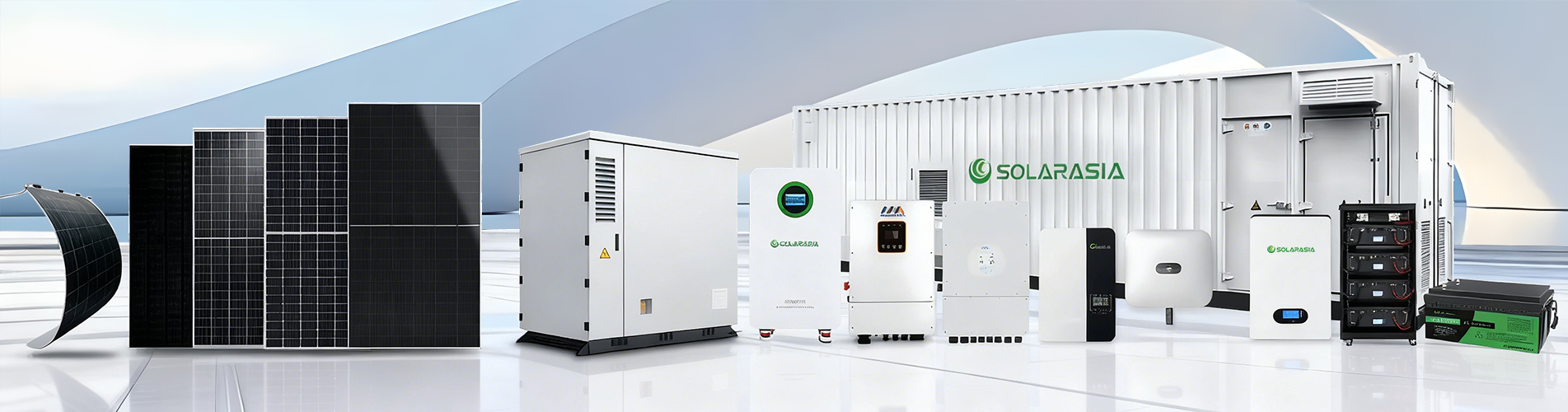
Solarasia Power Solar Battery and Energy Storage Solutions
Anhui Solarasia Energy Technology Co., Ltd. provides lithium battery and energy storage solutions for residential, commercial and industrial applications.
Our product portfolio includes:
Lithium battery systems
LiFePO4 battery systems
Residential energy storage batteries
High voltage battery systems
Low voltage battery systems
Commercial and industrial BESS
Outdoor battery storage cabinets






 Network Supported