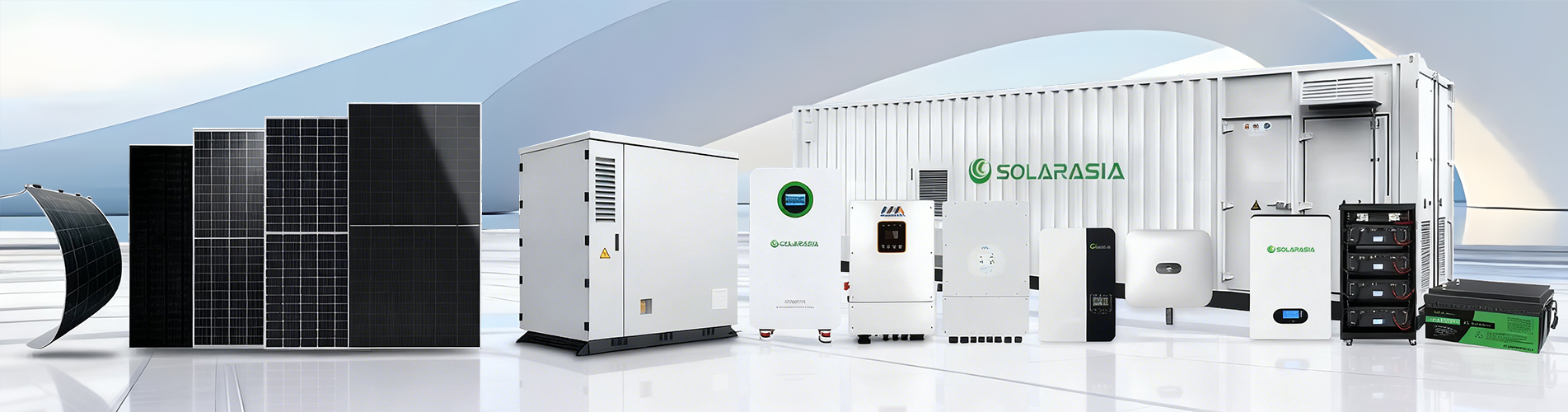
Solarasia banner

solar battery storage

Home

solar battery storage

  • What Are the Main Components of a PV System? Here's Everything You Need to Know! May 16, 2025
    With global efforts to achieve carbon neutrality and build a sustainable future, solar power is becoming one of the most accessible and cost-effective renewable energy solutions. Whether it’s a residential rooftop installation, a commercial distributed system, or a large-scale utility plant, understanding the core structure and components of a solar photovoltaic (PV) system is essential. So, what exactly makes up a PV system? What roles do different components play? And how can you choose the right setup for your needs? This article breaks down the key parts of a solar system and offers insights to help you get started in the world of solar energy.      What Makes Up a Solar PV System? A complete solar PV system typically includes the following major components: 1. Solar Panels (PV Modules) These are the heart of the system, responsible for converting sunlight into direct current (DC) electricity. Panels are made of multiple solar cells connected in series and/or parallel to achieve the desired voltage and power output.     2. Combiner Box This unit consolidates the outputs from multiple panel strings into a single DC output and provides protection against overcurrent through fuses or breakers. It's an essential safety and wiring component. 3. Distribution Cabinet The cabinet handles secondary power distribution and protection. It connects the inverter to the grid or energy storage system, acting as a key control and transition point in the power flow. 4. Inverter This is the system’s "brain," converting DC electricity from the solar panels into alternating current (AC) electricity used by household appliances or the grid. It also performs Maximum Power Point Tracking (MPPT), grid synchronization, and safety protections.     5. Transformer (for Large-Scale Systems) Used in utility-scale plants to step up the voltage for efficient transmission to the grid. It ensures the solar-generated power can be delivered over long distances with minimal loss.    A Closer Look at Solar Panels: The Key to System Efficiency What Are Solar Panels Made Of? A solar panel consists of dozens (sometimes hundreds) of solar cells packaged and encapsulated together. Since individual cells generate small amounts of electricity, they are grouped into panels to meet real-world power requirements.   Common Types of Solar Panels (Pros & Cons)   Type Efficiency Appearance Pros Cons Monocrystalline 21–24% Black or dark blue High efficiency, long lifespan Higher cost Polycrystalline 16–18% Light blue, grainy texture Cost-effective, mature technology Lower efficiency Heterojunction (HJT) Up to 25% Similar to mono High efficiency, great low-temp performance Expensive, not widely adopted yet Thin Film (Perovskite/CIGS) 15–22% (theoretical) Flexible or semi-transparent Lightweight, low-cost, good in low light Shorter lifespan, lower stability, still under development   🌟 Special Mention: Perovskite Panels This new technology is generating a lot of buzz due to its high theoretical efficiency and low production cost. However, it still faces technical challenges such as shorter lifespan, potential toxicity, and limited commercial scalability.     Panel Structure Breakdown Standard crystalline silicon panels are made of the following layers: Tempered Glass: Protects the cells from weather and debris while allowing maximum sunlight penetration. EVA Film: Encapsulates and binds the cells, providing durability and adhesion. Solar Cells: The core energy-generating unit, converting light to electricity. Backsheet (e.g. TPT or TPE): Provides insulation and environmental protection. Aluminum Frame: Offers mechanical strength and helps with installation. Junction Box & Sealant: Ensures safe external connections and waterproofing.     What Affects Solar System Efficiency? Aside from the inherent performance of the panels, several external factors can influence the overall efficiency of your solar system: ☀️ 1. Hot Spot Effect Caused by partial shading or damaged cells, leading to local overheating and potential panel damage. Can be prevented with proper panel layout and bypass diodes. ⚡ 2. PID (Potential Induced Degradation) Occurs when high voltage differences cause power loss, especially in humid environments. Selecting PID-resistant panels and proper grounding can help mitigate this. 🔍 3. Micro-Cracks Tiny cracks in solar cells, often caused during shipping or installation, can reduce output. High-quality panels are usually EL-tested to detect and eliminate micro-cracks. 🌤️ 4. Tilt Angle & Orientation To maximize energy production, panel angles should match your local latitude (±10°). Simulation tools like PVsyst can optimize positioning based on sun exposure data. 🌡️ 5. Temperature Coefficient As temperatures rise, panel output tends to drop. Panels with a lower temperature coefficient (e.g. -0.30%/°C) perform more reliably under hot conditions.   How to Choose the Right Solar Panels? When selecting panels for your project, consider the following: Budget vs Performance: Monocrystalline panels offer better efficiency, but polycrystalline can be more budget-friendly. Roof Space: If space is limited, go for high-efficiency modules like N-type or HJT. Climate Conditions: In areas with high humidity, temperature, or dust, choose panels with strong resistance to PID and corrosion. Warranty & Brand Reputation: Look for panels with a solid 25-year performance warranty and a proven track record in quality control.   Final Thoughts A well-designed PV system depends not only on panel quality but also on how each component integrates within the system. Choosing the right modules, inverter, and accessories ensures long-term performance and safety. 🌎 Ready to go solar? Whether you're planning a residential setup or a large commercial project, we're here to help. Contact us for customized, end-to-end solar solutions tailored to your needs.
  • How to Add Battery Storage to an Existing Solar System: Solar + Battery Storage for Commercial Buildings Sep 28, 2026
      Many businesses install solar panels first and consider energy storage later.   This approach is increasingly common for commercial buildings because a business's energy requirements can change over time. Electricity prices may change, daytime solar generation may exceed the building's immediate demand, or the business may want backup power for critical loads.   Adding batteries to an existing photovoltaic system can allow a business to store surplus solar energy and use it when solar production is lower.   A simplified system can look like: Existing Solar System → Battery Storage → Building Loads   Instead of sending all excess solar generation to the grid, part of the energy can be stored in batteries and used later.   However, adding batteries to an existing PV system is not simply a matter of purchasing a battery cabinet and connecting it to the existing inverter. The battery, inverter, electrical distribution system, protection equipment, monitoring system, and operating strategy all need to work together.   This article explains how businesses can evaluate an existing solar installation and plan a solar battery storage retrofit.   Why Add Battery Storage to an Existing Solar System?       A commercial solar system usually produces the most electricity during daylight hours.   However, the building's electricity demand may not follow the same pattern.   For example, a warehouse may have high electricity consumption in the evening, while its rooftop solar system generates most of its electricity between late morning and afternoon.   Without energy storage, surplus solar generation may be exported to the grid or curtailed, depending on the local system configuration.   With batteries, the energy flow can become: Solar → Building Loads   and when solar generation exceeds immediate demand: Solar → Battery   Later, when solar production falls: Battery → Building Loads     This allows businesses to shift part of their solar generation from one period to another.     What Is Solar Battery Storage?     Solar battery storage is an energy storage system designed to store electricity generated by a photovoltaic system for later use.   A commercial system may include: Solar panels Solar inverter Battery modules Battery management system Battery inverter or PCS Energy management system DC and AC protection Monitoring equipment Switchgear Building loads Utility grid connection   Lithium iron phosphate, commonly known as LiFePO4 or LFP, is widely used in modern energy storage applications because of its combination of safety characteristics, cycle performance, and energy density.     The exact battery technology should be selected according to the project requirements, operating environment, system size, and applicable standards.     Can You Add Batteries to an Existing Solar System?     In many cases, yes.   However, the existing PV system needs to be evaluated first.   The most important questions include: What type of solar inverter is currently installed? Does the existing inverter support batteries? Is the system AC coupled or DC coupled? How much excess solar energy is available? What is the building's electricity load profile? How much battery capacity is required? Does the business need backup power? What is the existing electrical service capacity? Can the grid connection accommodate the proposed system? What local electrical and fire safety requirements apply?     The answers determine which retrofit architecture is appropriate.   Two Main Ways to Add Battery Storage   There are two common approaches to integrating batteries with an existing solar system:   AC Coupled Battery Storage The battery system is connected on the AC side of the existing solar inverter.   DC Coupled Battery Storage The battery is connected on the DC side through a compatible hybrid inverter or power conversion architecture.Both approaches can be used for commercial applications, but their installation requirements and operating characteristics are different.   AC Coupled vs DC Coupled Battery Storage   Feature AC Coupled DC Coupled Connection Point AC side DC side Existing PV Inverter Can often remain May need replacement or compatible architecture Retrofit Flexibility Generally high More dependent on equipment Existing Solar System Well suited to many retrofits Better suited to compatible systems Battery Inverter / PCS Required Integrated or separately configured Solar and Battery Control Separate power conversion paths More integrated Installation Complexity Project dependent Project dependent New Solar Projects Suitable Suitable Existing PV Retrofit Often considered Model dependent    The best architecture depends on the existing equipment and project requirements.   What Is AC Coupled Battery Storage?   In an AC coupled system, the existing solar PV system continues operating through its existing solar inverter.A separate battery inverter or PCS is then connected to the AC electrical system.   A simplified architecture is: Solar Panels → Existing PV Inverter → AC Bus → Building   and: AC Bus → Battery PCS → Battery   When excess solar electricity is available, the battery system can charge.   When the building needs additional electricity, the battery can discharge through the PCS and supply the AC system.   This architecture can be particularly useful when a business already has a functioning PV system and does not want to replace the existing solar inverter.   Advantages of AC Coupled Storage   One of the main advantages of AC coupling is retrofit flexibility.   A business may already have: A functioning PV array Existing solar inverters Existing rooftop mounting Existing DC wiring Existing monitoring equipment   Adding an independent battery system can allow the existing PV installation to continue operating while the new energy storage system is integrated into the AC side.   This can reduce the need to modify the existing PV array.   However, the actual installation requirements depend on the existing electrical infrastructure.   What Is DC Coupled Battery Storage?   In a DC coupled architecture, the battery and PV system share a DC side power conversion architecture.   A simplified configuration can be: Solar Panels → Hybrid Inverter / DC Bus → Building   with: Battery ↔ Hybrid Inverter / DC Bus   Solar energy can be converted and managed through a common power conversion system.   DC coupling can reduce some conversion steps when solar energy is stored directly from the DC side, depending on the equipment architecture.   However, compatibility with the existing PV inverter is a critical consideration.   If the existing system was designed only as a conventional grid tied PV system, adding DC coupled batteries may require significant equipment changes.   AC Coupled or DC Coupled: Which Is Better for a Retrofit?   There is no universal answer.   For an existing commercial PV installation, AC coupling is often considered when the business wants to retain the existing solar inverter.   DC coupling may be attractive when the system is being redesigned or when the existing inverter architecture already supports battery integration.   The decision should consider: Existing Equipment + Battery Capacity + Power Requirements + Backup Requirements + Electrical Infrastructure + Future Expansion   A professional system assessment should be completed before selecting the architecture.   How to Determine the Right Battery Size   Battery capacity is usually expressed in: kWh   while inverter or PCS power is generally expressed in: kW   These two specifications should not be confused.   For example, a battery system could have: 100kW Power + 215kWh Energy Capacity   The 100kW value describes how much power the system can deliver at a given time.The 215kWh value describes how much energy can be stored under specified conditions.The appropriate battery size depends on what the business wants the system to accomplish.   Battery Sizing Based on Solar Surplus   One approach is to analyze how much solar energy is not being consumed immediately.   For example: A commercial building has a 100kW solar system.   During certain periods, the PV system produces 80kW while the building only consumes 50kW.   The approximate surplus is: 80kW − 50kW = 30kW   That surplus can potentially be directed toward battery charging, subject to system limitations.   If the surplus continues for several hours, the battery may need significant energy capacity.   However, actual battery sizing should use historical interval load and PV generation data rather than a single operating point.   Battery Sizing Based on Peak Demand   Some businesses may add batteries to reduce grid demand during specific periods.   In this case, the battery may be used to discharge during high demand periods.   For example: High Demand → Battery Discharge → Lower Grid Import   This can be relevant where electricity tariffs include demand charges or where the business has significant short-term power requirements.   The battery needs sufficient: Discharge power Energy capacity State of charge Operating duration   The system should therefore be sized using actual demand data.   Battery Sizing for Backup Power   Backup power requires a different calculation.   Suppose a business wants to keep several critical loads operating during a grid outage.   The system designer needs to identify: Critical load power Required backup duration Battery usable capacity Inverter output Starting current Load priority Battery reserve level   For example, a business may not need to back up its entire building.   Instead, it may prioritize: Server equipment Security systems Emergency lighting Communication equipment Refrigeration Selected production equipment   This can significantly affect the required battery capacity.   How Much Battery Storage Does a Commercial Building Need?   There is no standard battery size that works for every building.   A small commercial facility might require a relatively small battery system, while a large industrial building could require hundreds of kWh or several MWh of storage.   The design should be based on:   Electricity Consumption How much electricity does the building use each day?   Load Profile When does the building consume electricity?   Solar Generation How much electricity does the existing PV system generate?   Solar Surplus How much solar generation is available after serving immediate loads?   Peak Demand When does the building experience its highest power demand?   Backup Requirements Which loads need to remain operational during grid outages?   Tariff Structure Does the electricity price change throughout the day?   These factors should be evaluated together.   Check the Existing Solar Inverter   Before adding batteries, inspect the existing PV inverter.   Important specifications include: Rated AC power Maximum DC input power DC voltage range MPPT voltage range Maximum input current AC voltage AC frequency Number of MPPTs Communication interfaces Battery compatibility Backup capability Grid support functions   If the existing inverter is not battery compatible, an additional battery inverter or PCS may be needed.   This is one reason AC coupled storage is commonly considered for existing commercial PV systems.   Check the Existing Electrical System   The battery is not the only component that needs to be evaluated.   The existing electrical infrastructure may include: Main distribution board Switchgear Transformers Circuit breakers Protection devices AC cables Metering equipment Grid connection Emergency power systems   The proposed battery system needs to be integrated safely into this infrastructure.   For larger commercial projects, the available transformer and grid connection capacity may also need to be evaluated.   Check Battery Voltage and Power Requirements   Battery voltage is another important consideration.   Commercial energy storage systems can use different battery voltage architectures depending on their capacity and system design.   The selected battery should be compatible with: PCS Hybrid inverter Battery management system Communication protocol Charging current Discharging current   The battery's nominal voltage alone does not determine whether it can be connected to a particular inverter.   Compatibility must be confirmed using the manufacturer's specifications.   Battery Management System   The Battery Management System, or BMS, is an important component of a modern battery energy storage system.   The BMS can monitor parameters such as: Cell voltage Battery temperature State of charge State of health Charging current Discharging current Protection status   It can also communicate with the inverter or PCS to coordinate charging and discharging.   For commercial projects, communication between the battery, PCS, EMS, and monitoring platform can be especially important.   Energy Management System   An Energy Management System, or EMS, can coordinate different energy sources and loads.   A commercial system may include: Solar + Battery + Grid + Building Loads + EMS   The EMS can help determine when the battery should: Charge from solar Discharge to loads Remain in standby Respond to electricity prices Maintain a backup reserve Participate in demand management   The exact functions depend on the project configuration and available software.   Can Existing Solar Panels Be Used?   In many retrofit projects, the existing solar panels can remain in operation.   The battery system can be added separately, particularly in an AC coupled configuration.   This can be attractive for businesses that already have: High quality PV modules A functioning solar inverter Existing rooftop mounting Existing DC wiring Several years of solar operation   However, the condition and remaining useful life of the existing equipment should be assessed.   If the existing PV system is already approaching the end of its service life, a complete system redesign may make more sense than adding a new battery to aging equipment.   Can a Commercial Battery Store All Excess Solar Energy?   Not necessarily.   The amount of energy that can be stored depends on: Battery capacity Battery charge power Solar surplus PCS power Battery state of charge Operating limits Energy management settings   For example, if a solar system produces a large surplus for several hours but the battery has limited capacity, the battery may reach full charge before the solar surplus period ends.   Additional solar generation may then need to be consumed by other loads, exported to the grid, or curtailed depending on the system configuration.     This is why battery sizing should be based on actual PV and load data.   Solar Battery Storage for Commercial Buildings     Commercial buildings can have several reasons for adding energy storage.   1. Increase Solar Self Consumption   A battery can store surplus solar electricity and make it available later.This can increase the proportion of solar energy used by the building.   2. Shift Energy to Higher Cost Periods   If electricity prices vary throughout the day, stored solar energy may be used during periods when grid electricity is more expensive.The actual financial benefit depends on the local electricity tariff structure.   3. Support Critical Loads   A battery system can provide backup power to selected loads when supported by the inverter and electrical architecture.   This can be useful for businesses where interruptions can cause:   Production downtime Data loss Refrigeration problems Security issues Operational disruption   4. Manage Peak Demand   Battery discharge can potentially reduce grid demand during certain periods.The economic value depends on how demand charges are calculated in the relevant market.   5. Prepare for Future Energy Needs   Commercial electricity demand may increase as businesses add: EV charging HVAC systems Heat pumps Refrigeration Production equipment Data equipment   Adding energy storage can become part of a broader commercial energy management strategy.   What Happens During a Power Outage?   Whether the battery can provide backup power depends on the system design.   A battery alone does not automatically mean the entire building will continue operating during a grid outage.   The system may require: Backup capable inverter or PCS Automatic transfer equipment Backup distribution board Battery reserve Appropriate protection Load management   Some systems are designed to supply only selected critical loads.   Others may be designed for a larger portion of the facility, subject to equipment capacity and local requirements.     Therefore, backup capability should be defined during system design.   What Is the Difference Between Energy Capacity and Power Capacity?   This is an important concept when evaluating commercial battery systems.   Power Capacity: kW Power capacity determines how much electrical power the battery system can deliver or absorb at a given moment.   Energy Capacity: kWh Energy capacity determines how much energy the battery can store.   For example: 100kW / 215kWh   means approximately: 100kW maximum power under specified conditions 215kWh nominal energy capacity   If a battery delivers 100kW continuously for one hour under simplified assumptions, it would provide approximately 100kWh of energy.     Actual usable energy depends on operating limits, efficiency, temperature, state of charge, and other factors.   Round Trip Efficiency Matters   Energy storage systems involve charging and discharging losses.   If 100kWh of solar energy enters the battery, less than 100kWh may be available for later use.   This is because energy is consumed by: Battery charging Battery discharging PCS conversion Cooling Auxiliary equipment Other system components     Therefore, system evaluation should consider round trip efficiency rather than looking only at the battery's nominal capacity.   What About Battery Degradation?   Battery capacity can gradually decrease through operation and aging.   Factors that influence degradation include: Number of cycles Depth of discharge Operating temperature Charge and discharge rate Time Battery chemistry Operating strategy   For a commercial project, the battery should therefore be evaluated not only by its initial capacity but also by its expected performance over the planned operating period.     A suitable energy management strategy can help manage battery operating conditions.   Safety Considerations for Commercial Battery Storage   Safety should be considered from the beginning of the project.   A commercial battery installation may need to address: Battery thermal management Electrical protection Overcurrent protection Short circuit protection Fire safety Emergency shutdown Ventilation or cooling Equipment spacing Environmental conditions Monitoring and alarms   The exact requirements vary by battery technology, installation location, system size, and local regulations.     Commercial battery systems should be installed according to applicable codes, standards, and manufacturer requirements.   How to Retrofit Battery Storage Step by Step     A practical retrofit process can be divided into several stages.   Step 1: Analyze the Existing PV System   Collect: PV capacity Panel specifications Inverter model Inverter capacity Installation date Annual generation Historical performance   Step 2: Analyze Electricity Consumption   Review electricity bills and, where possible, interval load data.   Identify: Daily consumption Peak demand Daytime demand Evening demand Seasonal changes   Step 3: Identify the Project Goal   Determine whether the primary goal is: Higher solar self consumption Energy cost management Peak demand management Backup power Renewable energy utilization A combination of objectives   Step 4: Select the Coupling Architecture   Evaluate: AC Coupled   or DC Coupled   based on the existing system and project requirements.   Step 5: Size the Battery   Determine appropriate: kWh capacity kW power Charge rate Discharge rate Backup reserve   Step 6: Select PCS or Hybrid Inverter The power conversion equipment should be compatible with the battery and electrical system.   Step 7: Evaluate Electrical Infrastructure Check the distribution system, transformer, protection equipment, cables, and grid connection.   Step 8: Configure EMS and Monitoring Define how the battery should operate under different conditions.   Step 9: Complete Installation and Commissioning   The final stage includes electrical testing, communication setup, protection verification, commissioning, and monitoring.   Common Mistakes When Adding Battery Storage   Mistake 1: Choosing the Battery Based Only on PV Capacity   A 100kW solar system does not automatically require a specific battery capacity.Battery sizing should be based on actual energy flows and project objectives.   Mistake 2: Ignoring the Existing Inverter   The inverter architecture determines how the battery can be integrated.  
  • How to Choose the Right Solar Battery for Your Solar System? Oct 08, 2026
    Solar panels can generate clean electricity during the day, but solar production does not always match a building's electricity consumption.     A home may generate more electricity than it needs during the afternoon, while electricity demand increases in the evening. Commercial and industrial facilities can have similar differences between solar generation and load demand.   Adding battery storage allows excess electricity to be stored and used later.   However, choosing a battery is not simply a matter of selecting the largest capacity available. Battery voltage, usable capacity, power rating, chemistry, inverter compatibility, operating environment and intended application all need to be considered.   The right solar battery should work together with the PV system, inverter and electrical loads as part of a complete energy storage solution.     In this guide, we explain the key factors to consider when selecting a battery for a residential, commercial or industrial solar system.   Why Add a Battery to a Solar System?   A battery allows electricity generated by solar panels to be stored for later use.   A basic solar system works like this: Solar Panels → Solar Inverter → Building Loads   When battery storage is added, the energy flow becomes more flexible: Solar Panels → Building Loads + Battery Charging   Later: Battery → Inverter → Building Loads   This can help businesses and homeowners increase solar self consumption and reduce dependence on grid electricity during selected periods.   Depending on the system design, battery storage can also support: Solar energy shifting Peak demand management Time of use energy management Backup power Energy independence Commercial energy management     The best battery depends on which of these objectives is most important.   What Should You Consider When Choosing a Solar Battery?   There are several important specifications to compare before selecting a battery.   The main factors include: Battery chemistry Battery capacity Battery power Battery voltage Usable energy Depth of discharge Cycle life Inverter compatibility Operating temperature Safety and protection Installation environment Warranty and service     Let's look at each factor in more detail.   1. Choose the Right Battery Chemistry   Battery chemistry has a major impact on performance, safety, lifespan and application.   For modern solar energy storage systems, lithium based batteries are widely used.   One of the most common options is lithium iron phosphate, commonly known as LiFePO4.   LiFePO4 Batteries   LiFePO4 batteries are widely used for residential and commercial energy storage because they offer a combination of: Good thermal stability Long cycle life High usable energy Stable performance Suitable energy density Battery management system integration   They are used in applications ranging from residential wall mounted batteries to larger commercial battery storage systems.     For many modern solar battery storage applications, LiFePO4 is an important technology to consider.   2. Determine the Required Battery Capacity   Battery capacity is normally measured in kilowatt hours, or kWh.   It represents how much energy the battery can store under specified conditions.   For example: 10kWh battery = approximately 10kWh nominal energy capacity   However, the usable energy may be lower depending on the battery's operating limits.   The required capacity should be based on the actual electricity consumption and the purpose of the storage system.   For example, a homeowner may want enough energy to cover evening electricity consumption.   A commercial building may need storage for several hours of peak demand management.     An off grid facility may require substantially more storage to maintain electricity availability during periods of low solar generation.   How Much Battery Capacity Do You Need?   A simple starting calculation is: Required Battery Capacity ≈ Energy Demand × Required Backup or Discharge Time   For example, if selected loads consume approximately 20kW and the target support period is four hours: 20kW × 4 hours = 80kWh   This does not mean an 80kWh nominal battery will always provide four hours of operation.   Real system design needs to account for: Usable battery capacity Depth of discharge Inverter efficiency Battery degradation Temperature Auxiliary consumption Load variation     Therefore, professional system sizing should use actual load data rather than relying only on a simple calculation.   3. Understand Battery Power vs Battery Capacity   This is one of the most important concepts when choosing a battery.   Battery Capacity: kWh   Battery capacity indicates how much energy can be stored.   Battery Power: kW   Battery power indicates how much power the battery can charge or discharge at a given time.   For example, a battery system may be rated around: 100kW / 215kWh   This means the system has approximately 100kW of power capability and 215kWh of nominal energy capacity under specified conditions.   A battery with sufficient kWh but insufficient kW may not be able to support high power loads.     This is particularly important for commercial and industrial applications.   4. Select the Appropriate Battery Voltage   Battery voltage is another important specification.   Solar battery systems can generally be divided into low voltage and high voltage configurations.   Low Voltage Battery Systems   Low voltage batteries are commonly used in residential and smaller energy storage applications.   Typical applications include: Residential solar storage Small commercial systems Backup power Off grid applications   High Voltage Battery Systems   High voltage battery systems can be suitable for larger systems where higher power and energy requirements exist.   Applications can include: Commercial energy storage Industrial energy storage Larger hybrid solar systems C&I battery storage   The battery voltage needs to match the inverter or PCS architecture.     You should never select a battery based only on its capacity without checking electrical compatibility.   5. Check the Usable Battery Capacity   Nominal capacity and usable capacity are not always the same.   For example, a battery may have a nominal capacity of 100kWh, but the amount of energy available for normal operation may be lower depending on the configured state of charge limits.   This is why buyers should compare: Nominal Capacity   and Usable Capacity   rather than looking only at the headline kWh figure.     Usable capacity gives a more practical indication of how much energy can actually be delivered to the loads.   6. Consider Depth of Discharge   Depth of discharge, commonly called DoD, indicates how much of the battery's available capacity is used during a discharge cycle.   For example, if a battery has a 100kWh nominal capacity and operates at an 80% depth of discharge: 100kWh × 80% = 80kWh   approximately represents the energy used during that cycle before considering conversion losses.   A higher usable depth of discharge can provide more available energy from the same nominal battery capacity.     However, battery operating limits should always follow the manufacturer's specifications.   7. Compare Battery Cycle Life   Cycle life is an important specification for solar energy storage.   A battery experiences charging and discharging cycles during operation.   For example: Solar Generation → Battery Charging → Battery Discharging → Load   This represents a basic charge and discharge cycle.   A battery's cycle life can be affected by: Depth of discharge Charge and discharge rate Temperature Operating voltage Battery chemistry Operating conditions   When comparing batteries, do not consider cycle life separately from the conditions under which the cycle life is specified.     A high cycle count without understanding the testing conditions may not provide a complete picture of battery performance.   8. Make Sure the Battery Is Compatible With the Inverter   Battery and inverter compatibility is essential.   The battery must be compatible with the electrical and communication requirements of the inverter or PCS.   Important factors may include: Battery voltage range Maximum charge current Maximum discharge current Communication protocol BMS communication Power rating Battery management requirements   For example, a low voltage battery should not simply be connected to an inverter designed for a high voltage battery system.     Before purchasing, verify the approved battery and inverter compatibility list.   9. Check the Battery Management System   The Battery Management System, or BMS, is an important part of a modern lithium battery.   The BMS can monitor and manage: Cell voltage Battery temperature State of charge Charging current Discharging current Protection status Communication with the inverter   The BMS helps maintain the battery within its specified operating conditions.     For modular systems, the BMS can also help coordinate multiple battery modules.   10. Consider the Installation Environment   Where the battery will be installed can affect the appropriate product selection.   For indoor residential applications, a compact wall mounted or floor mounted battery may be suitable.   For commercial and industrial applications, outdoor battery cabinets may be preferred.   Important considerations include: Indoor or outdoor installation Temperature Humidity Dust Water exposure Ventilation Installation space IP protection Fire safety requirements     For outdoor commercial applications, the enclosure should provide appropriate protection against environmental conditions.   11. Look at Battery Safety Features   Safety is a critical consideration when selecting any energy storage system.   A commercial or residential battery may include multiple layers of protection.   These can include: Overvoltage protection Overcurrent protection Short circuit protection Overtemperature protection Cell monitoring BMS protection Thermal management Electrical isolation   The specific safety architecture varies between battery products.     Buyers should also check applicable certifications and local installation requirements.   12. Consider the Battery's Operating Temperature   Battery performance can be affected by temperature.   Very high or very low temperatures can influence: Charging performance Discharging performance Available capacity Battery life System efficiency   For commercial systems, the installation environment should therefore be evaluated before selecting the battery.     Depending on the application, thermal management or battery heating and cooling may be required.   Low Voltage vs High Voltage Solar Batteries   One common question is whether a low voltage or high voltage battery is better.   There is no universal answer.     The correct choice depends on the inverter, system power, installation requirements and application.   Feature Low Voltage Battery High Voltage Battery Typical Application Residential and small systems Larger residential and commercial systems System Power Lower to medium Medium to high System Architecture Relatively simple More specialized Installation Flexible for smaller systems Suitable for larger systems Inverter Compatibility LV compatible inverter HV compatible inverter Commercial Application Selected projects Common for larger systems   The key point is compatibility.     A higher voltage battery is not automatically better for every solar system.   What Size Solar Battery Should You Choose?   The answer depends on the PV system and electricity consumption.   Consider three basic scenarios.   Residential Solar System   A home may need battery storage primarily for evening consumption and backup power.   The battery can be sized according to: Daily Household Consumption + Desired Backup   Commercial Solar System   A business may use batteries for: Solar self consumption Peak demand management Time of use energy management Backup power   The battery should be sized using actual load profiles and operating objectives.   Off Grid Solar System   An off grid system may require substantially more storage.   The design should account for:   Daily energy consumption Nighttime load Weather conditions Solar resource Required autonomy Backup generator availability   Solar Battery Sizing Example     Imagine a commercial building has the following simplified profile: Average Daily Consumption: 600kWh Daytime Solar Generation: 500kWh   The building consumes much of its solar generation during the day, but there is still electricity demand after solar production decreases.   A battery could be used to shift a portion of daytime solar energy toward later periods.   However, it would not automatically make sense to install a 500kWh battery.   The correct battery size depends on: How much surplus solar is available When surplus generation occurs Evening load Battery charge power Battery discharge power Electricity tariff Desired operating strategy     This is why load profile analysis is more useful than sizing a battery based only on the PV capacity.   AC Coupled vs DC Coupled Battery Systems   The battery can be integrated into a solar system using different architectures.   AC Coupled   A simplified configuration is: Solar Panels → PV Inverter → AC Bus   and: Battery ↔ PCS → AC Bus   AC coupling can be particularly useful when adding battery storage to an existing PV system.   The existing solar inverter may potentially remain in place while a separate battery system is added.   DC Coupled   A simplified configuration is: Solar Panels → DC Bus / Hybrid Inverter ↔ Battery   The PV and battery share a DC side conversion architecture.   DC coupling can be attractive for certain new solar and storage projects.     The appropriate architecture depends on the project design and equipment compatibility.   What Is the Best Solar Battery for Commercial Applications?   For commercial applications, the best battery is not necessarily the battery with the highest capacity.   A suitable commercial battery should match: Solar system capacity Building load Required power Energy storage duration Inverter or PCS Installation environment Operating temperature Energy management strategy Safety requirements Project budget   For larger projects, modular lithium battery systems can provide flexibility.   Multiple battery modules or cabinets can be combined to achieve the required energy capacity.     This can make modular systems useful for warehouses, factories, commercial buildings and other C&I applications.   Solar Battery for Peak Shaving   Peak shaving is an important application for commercial battery storage.   A business may experience short periods of high electricity demand.   For example: Normal Demand → 300kW Peak Demand → 500kW   A battery system may discharge during selected peak periods to reduce grid demand.   The required battery power depends on how much peak demand needs to be reduced.   The required battery capacity depends on how long the peak period lasts.   Therefore: Peak Shaving Battery Size = Required Power × Peak Duration     This is a simplified concept and should be refined using actual interval load data.   Solar Battery for Backup Power   If backup power is the main purpose, battery selection should focus on critical loads.   Instead of asking: "How large is the solar system?"   ask: "Which loads must continue operating during an outage?"   For example, a business may need to support: Server equipment Security systems Emergency lighting Communication equipment Refrigeration Selected production equipment     The battery and inverter can then be sized around the required critical load.   Can You Add a Battery to an Existing Solar System?     Yes, in many cases.   An existing solar PV system can potentially be upgraded with battery storage.   The available options depend on the existing inverter architecture.   For example: Existing PV + AC Coupled Battery   can be a practical retrofit approach.   Another possibility is replacing or upgrading the inverter with a compatible hybrid system.   Before adding a battery, check: Existing solar inverter PV system capacity Grid connection Electrical distribution Battery compatibility Available installation space Backup requirements Local regulations     A professional assessment should be completed before selecting equipment.   How to Compare Different Solar Batteries     When comparing products from different manufacturers, create a specification checklist.   Specification What to Check Battery Chemistry LiFePO4 or other chemistry Nominal Capacity Total kWh Usable Capacity Available energy Voltage Low voltage or high voltage Rated Power kW Charge Power Maximum charging capability Discharge Power Maximum discharge capability Cycle Life Specified operating conditions BMS Integrated battery management IP Rating Indoor or outdoor suitability Communication CAN, RS485 or other compatible protocol Operating Temperature Application environment Safety Certifications Applicable standards Warranty Product and performance coverage   This makes it easier to compare batteries based on the actual project requirements rather than marketing claims alone.   Common Mistakes When Choosing a Solar Battery   Choosing Only by Capacity   A larger battery is not always a better battery.   If the system cannot use the stored energy effectively, excessive capacity can increase project cost without providing proportional benefits.   Ignoring Battery Power A battery may have plenty of kWh but insufficient kW to support high power loads.   Ignoring Inverter Compatibility The battery and inverter need to communicate and operate within compatible voltage and current ranges.   Focusing Only on Cycle Life Cycle life should be evaluated together with depth of discharge, temperature and test conditions.   Ignoring the Installation Environment An indoor battery and an outdoor battery cabinet may have very different requirements.   Not Considering Future Expansion Commercial customers may increase electricity consumption in the future.A modular battery system can provide greater flexibility when expansion is expected.   How to Choose the Right Solar Battery: A Practical Checklist   Before purchasing a battery, answer these questions:   1. What Is the Main Purpose?   Is the battery for: Solar self consumption? Backup power? Peak shaving? Time of use energy management? Off grid operation?   2. How Much Energy Do You Need?   Determine the required kWh based on actual consumption.   3. How Much Power Do You Need?   Determine the required kW based on the loads the battery must support.   4. What Voltage Does the Inverter Require?   Check whether the system requires low voltage or high voltage batteries.   5. Is the Battery Compatible?   Check the approved inverter and PCS compatibility list.   6. Where Will the Battery Be Installed?   Determine indoor or outdoor installation requirements.   7. Will the System Need Future Expansion?   If yes, consider modular battery solutions.   8. What Certifications Are Required?   Verify applicable local and international standards.   9. What Are the Warranty Conditions?   Check both product warranty and battery performance warranty.   10. Can the Battery Be Monitored?     Communication and monitoring are increasingly important for commercial energy storage systems.   Solarasia Power Solar Battery and Energy Storage Solutions   Anhui Solarasia Energy Technology Co., Ltd. provides lithium battery and energy storage solutions for residential, commercial and industrial applications.   Our product portfolio includes: Lithium battery systems LiFePO4 battery systems Residential energy storage batteries High voltage battery systems Low voltage battery systems Commercial and industrial BESS Outdoor battery storage cabinets
foot logo

Address : Room 908-909, Building 2, No. 469 Huatuo Lane, Shushan District, Hefei City, Anhui Province

Tel : +86 17730022793

Email : [email protected]

Subscribe

Please read on, stay posted, subscribe, and we welcome you to tell us what you think.

submit

Copyright 2026 @ Anhui Solarasia Energy Technology Co.,Ltd .All Rights Reserved. Sitemap | Blog | XML | Privacy Policy Network Supported

Click To Leave A Message

leave a message
If you are interested in our products and want to know more details,please leave a message here,we will reply you as soon as we can.
submit

Home

Products

whatsApp

contact