Solar Panels and Battery Storage: How Do They Work Together?
Sep 01, 2026
Solar panels and battery storage work together by allowing electricity generated by a photovoltaic system to be used immediately or stored for later use. Solar panels generate DC electricity, a compatible inverter converts and manages electrical power, and a battery energy storage system (BESS) stores energy for later discharge.
A simplified energy flow is:
Sunlight → Solar Panels → Inverter → Loads / Grid
With battery storage:
Sunlight → Solar Panels → Inverter → Loads / Grid + BESS
When electricity demand and solar generation do not occur at the same time, battery storage can provide another way to manage the energy produced by the PV system.
This makes solar + inverter + BESS an increasingly important system architecture for certain residential, commercial, industrial and utility applications.
However, adding a battery does not automatically make every solar system better. The right configuration depends on the project's load profile, solar generation, battery requirements, inverter architecture, local electricity rules and economic objectives.
What Is a Solar-Plus-Storage System?
A solar-plus-storage system combines photovoltaic generation with battery energy storage.
The basic components are:
Solar panels — generate electricity from sunlight.
Solar inverter — converts and manages electrical power.
BESS — stores electrical energy for later use.
Loads — consume electricity.
Grid connection — supplies or receives electricity where applicable.
Energy management and monitoring equipment — manages system operation according to the system design.
The exact architecture can vary significantly.
For a simple grid-connected PV system, the energy pathway may be:
Solar Panels → Solar Inverter → Building Loads / Grid
For a solar-plus-storage system, the pathway can become:
Solar Panels → Inverter → Loads + BESS → Loads / Grid
The inverter and battery system need to be compatible and correctly configured for the intended application.
How Do Solar Panels Generate Electricity?
Solar panels use photovoltaic cells to convert sunlight into direct current (DC) electricity.
The amount of electricity generated varies throughout the day depending on conditions such as:
Solar irradiance
Module orientation
Tilt angle
Temperature
Shading
Module technology
System design
A module datasheet normally includes specifications such as:
Maximum power (Pmax)
Open-circuit voltage (Voc)
Short-circuit current (Isc)
Voltage at maximum power (Vmp)
Current at maximum power (Imp)
These parameters become important when the PV array is connected to an inverter.
For larger projects, multiple modules are connected into strings and multiple strings can form a larger PV array.
What Does the Solar Inverter Do?
The solar inverter is the link between PV generation and the AC electrical system.
Solar panels produce DC electricity. Most buildings and conventional utility grids use AC electricity.
The inverter therefore performs the essential DC-to-AC conversion.
Depending on the inverter type, it may also provide functions such as:
Maximum Power Point Tracking (MPPT)
Grid synchronization
Monitoring
Electrical protection
Battery charging
Battery discharging
Energy management
A conventional PV inverter and a hybrid or battery-compatible inverter can have different functions.
Therefore, when designing a solar-plus-storage system, buyers should evaluate the inverter and BESS together rather than treating them as completely independent products.
How Does Battery Storage Work With Solar Panels?
During periods of solar generation, the PV array produces electricity.
If the building or other electrical loads are consuming electricity at the same time, the generated power can be used directly.
If there is additional available generation and the system is designed to charge the battery, some of that energy can be directed toward the BESS.
A simplified example is:
SUNLIGHT
↓
SOLAR PANELS
↓
DC POWER
↓
SOLAR INVERTER
↙ ↘
AC LOADS BESS
↑ ↓
└────────────┘
↓
GRID
The actual power flow depends on the equipment architecture and energy management strategy.
The battery does not simply “store solar power” as a separate type of electricity. It stores electrical energy through electrochemical processes and later supplies electricity back through the system.
Why Add Battery Storage to a Solar PV System?
The main reason to combine PV with storage is to give the system greater flexibility over when generated electricity is used.
Solar generation typically varies throughout the day.
For example:
Morning: Solar generation increases.
Midday: Solar generation may be relatively high.
Evening: Solar generation decreases while electricity demand may remain significant.
Without storage, electricity generated by the PV system generally needs to be consumed, exported where permitted, curtailed or otherwise managed at that time.
With a properly designed BESS, some available energy can be stored and discharged later.
This creates a different energy-use pattern:
Generate → Store → Use later
That can be valuable for certain applications.
Solar Panels and Battery Storage: A Simple Example
Imagine a commercial building with:
High solar generation around midday
Lower electricity demand during part of the day
Higher electricity demand later in the afternoon or evening
A solar-plus-storage system could potentially operate like this:
Morning
Solar generation begins increasing.The PV system supplies available building loads.
Midday
Solar generation becomes higher.After supplying the applicable loads, surplus energy can be directed to the battery if the system is configured to do so.
Afternoon
Solar generation begins declining.The BESS may discharge stored energy according to the system's operating strategy.
Evening
Solar generation may be unavailable or significantly lower.The system can potentially use stored energy to supply compatible loads.This example is simplified. Actual operation depends on the system design, battery state of charge, inverter capabilities, electricity tariffs and grid requirements.
What Is BESS?
BESS stands for Battery Energy Storage System.
A BESS is more than a battery cell.
A complete system can include:
Battery modules
Battery management system (BMS)
Power conversion equipment
Thermal management
Protection systems
Control systems
Monitoring equipment
Enclosures or containers
The configuration depends on the BESS type and application.
For commercial and industrial projects, BESS may be deployed as part of a larger energy management system.
Solar + Inverter + BESS: Why All Three Matter
A solar-plus-storage system works because the components are designed to operate together.
Solar Panels
The PV modules determine how much DC electricity can be generated under given conditions.
Solar Inverter
The inverter determines how PV electricity is converted and managed within the electrical system.
BESS
The battery system provides energy storage capacity and can discharge energy according to the system's operating strategy.These three components therefore form an interconnected system:
Solar generation → Power conversion → Energy storage / consumption
This is why choosing a battery without considering the inverter or choosing solar panels without considering the complete system can lead to an inefficient design process.
AC-Coupled vs DC-Coupled Solar + BESS
There are different ways to integrate battery storage into a PV system.
Two common concepts are AC coupling and DC coupling.
AC-Coupled System
In an AC-coupled configuration, PV and battery systems can have separate power conversion equipment connected on the AC side.
A simplified structure is:
Solar Panels → PV Inverter → AC Bus
and:
Battery → Battery Inverter → AC Bus
This architecture can provide flexibility, particularly when adding storage to an existing PV system, depending on the equipment.
DC-Coupled System
In a DC-coupled architecture, PV generation and battery storage can share DC-side power conversion infrastructure through compatible equipment.
A simplified structure is:
Solar Panels → DC Bus / Hybrid Power Conversion → BESS + AC System
The exact design depends on the inverter and BESS architecture.
DC coupling can have different design considerations from AC coupling, including equipment compatibility and system control.
Neither architecture is universally best.
The choice should be based on the project requirements and equipment available.
How to Choose Solar Panels for a Solar + BESS System
Adding BESS does not change the fundamental importance of selecting suitable PV modules.
Consider the following factors.
1. Module Power
Higher power modules can potentially reduce the number of modules needed to reach a target DC capacity.However, module dimensions and electrical specifications also need to fit the project.
2. Module Efficiency
Higher efficiency can be useful where available installation space is limited.
3. Electrical Characteristics
Check:
Voc
Isc
Vmp
Imp
These values need to be considered together with the inverter's DC input requirements.
4. Module Technology
Depending on the application, buyers may evaluate:
N-type
TOPCon
HJT
Bifacial
Other PV technologies
Technology should be selected according to actual project requirements rather than marketing claims alone.
How to Choose an Inverter for Solar + BESS
Inverter selection becomes especially important when battery storage is included.
Depending on the system architecture, buyers may consider:
PV input voltage
PV input current
MPPT voltage range
Number of MPPTs
AC output capacity
Battery voltage range
Battery charging and discharging capability
Communication interfaces
Grid requirements
Monitoring capabilities
Backup functionality, where required
A hybrid inverter can combine certain PV and battery functions in one device, while larger systems may use separate inverters or power conversion equipment.
The exact architecture should be verified against the manufacturer's technical documentation.
How to Choose the Right BESS
Battery selection should begin with the project's actual energy requirements.
Important factors include:
Battery Capacity
Usually expressed in kWh, battery capacity represents the amount of energy the system can store under specified conditions.
Power Rating
Battery energy capacity and power capacity are different.A battery can have a large energy capacity but a lower power output, or vice versa.
Depth of Discharge
The usable portion of the battery's capacity depends on the battery technology, configuration and operating limits.
Cycle Requirements
The expected operating pattern can influence battery selection.
Temperature
Battery systems have operating temperature requirements and may require thermal management.
Safety
Battery storage requires appropriate electrical, thermal and protection systems.
Compatibility
The BESS needs to be compatible with the inverter and control system.
What Are the Benefits of Solar + BESS?
Solar-plus-storage can offer several potential benefits depending on the application.
1. Better Use of Solar Generation
Battery storage can help shift some solar-generated electricity to a later period.
2. Greater Energy Flexibility
The system can have more flexibility in deciding when stored energy is used.
3. Commercial Energy Management
For some commercial and industrial facilities, BESS can become part of a broader energy management strategy.
4. Backup Power Potential
Some appropriately designed systems can provide backup power to selected loads.However, backup functionality depends on the inverter, BESS, electrical architecture and applicable requirements.
5. Integration With Renewable Energy
BESS can help integrate variable renewable generation into a broader energy system.The financial and technical benefits vary significantly between markets and projects.
Solar + BESS for Commercial and Industrial Projects
Commercial and industrial facilities are important applications for integrated solar and storage systems.
A typical system might include:
Commercial Rooftop Solar + Inverters + BESS + Energy Management
Before selecting equipment, project developers should analyze:
Building load profile
Peak demand
Solar generation profile
Available roof area
Grid connection
Electricity tariff structure
Battery operating strategy
Required backup loads
Local regulations
For example, a business with high electricity demand during periods when solar generation is low may have different storage requirements from a business with strong daytime consumption.
System design should therefore start with the load profile, not simply the battery size.
Solar + BESS for Solar Farms
Large-scale solar projects can also integrate battery storage.
The architecture may include:
PV Modules → Inverters → Grid
with BESS added to the system for specific operating requirements.
Depending on the project, storage may be considered for applications such as:
Energy shifting
Grid support
Renewable energy integration
Power management
Other market-specific applications
The actual value and operating strategy depend heavily on the local electricity market, grid rules and project economics.
Solar + BESS for Off-Grid Applications
Off-grid systems have different requirements because there may be no utility grid available to balance generation and demand.
A simplified off-grid system can look like:
Solar Panels → Inverter → Loads
with:
BESS ↔ Inverter
The battery becomes particularly important because solar generation is variable while electricity demand can occur at any time.
The system needs to be sized around both:
Energy generation
Energy consumption
An appropriately designed system may need to account for periods of low solar generation and required energy autonomy.
Common Mistakes When Combining Solar Panels and Battery Storage
Mistake 1: Choosing the Battery First
Battery size should be based on the project's energy requirements and operating strategy.
Mistake 2: Ignoring Inverter Compatibility
The inverter and BESS need to work together according to their technical specifications.
Mistake 3: Looking Only at Battery Capacity
A 100 kWh battery, for example, does not tell you its complete system capability.Power rating, usable energy, operating limits and system architecture also matter.
Mistake 4: Ignoring the Load Profile
The right storage system depends on when electricity is consumed, not only how much electricity is consumed.
Mistake 5: Assuming BESS Always Improves Project Economics
Battery storage adds equipment and installation costs.Its economic value depends on factors such as tariffs, energy prices, operating strategy, project utilization and local market conditions.
How to Design a Complete Solar Energy Solution
A professional approach should follow a logical process.
Step 1: Analyze Energy Consumption
Determine:
Daily energy consumption
Peak demand
Operating hours
Seasonal variations
Step 2: Assess the Solar Resource
Evaluate:
Solar irradiation
Roof or land area
Shading
Orientation
Installation conditions
Step 3: Select Solar Panels
Choose suitable module technology, power, efficiency and electrical characteristics.
Step 4: Select the Inverter
Match the PV array with the inverter's DC input and MPPT requirements.
Step 5: Determine BESS Requirements
Define:
Required energy capacity
Required power
Operating schedule
Backup requirements
Battery chemistry and technology
Environmental conditions
Step 6: Select the System Architecture
Determine whether an AC-coupled, DC-coupled or other architecture is appropriate.
Step 7: Evaluate Total Project Economics
Compare equipment, installation, operation, maintenance and expected system performance.This approach is more reliable than selecting individual products independently.
Why Choose a Supplier for the Complete Solar Solution?
For EPC contractors, distributors and project developers, procurement can become more efficient when a supplier understands multiple parts of the energy system.
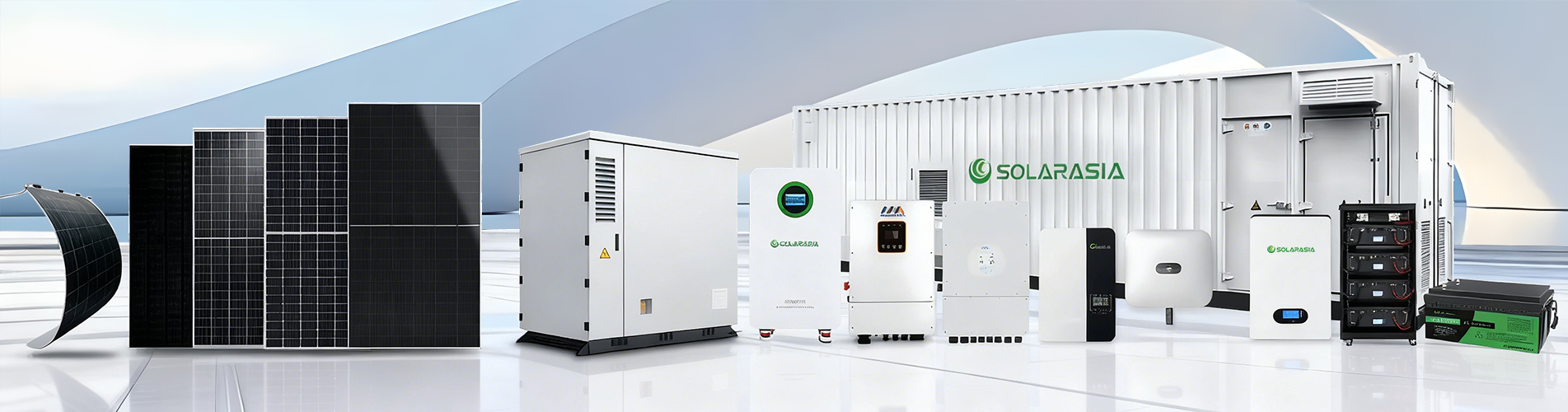
A broader solar energy supplier may support:
Solar panels
Solar inverters
Hybrid inverters
BESS
Commercial solar systems
Industrial energy solutions
Utility-scale solar projects
This does not mean every project needs all these products.
Instead, the supplier should be able to understand the project requirements and help buyers identify appropriate product combinations.
For a company such as Solar Asia Power, connecting Solar Panels + Inverters + BESS within a broader solution-oriented content strategy can also make the website's business positioning clearer.
Solar Panels, Inverters and BESS: How They Fit Together
The simplest way to understand a complete system is to separate the roles:
Component
Main Function
Solar Panels
Convert sunlight into DC electricity
Solar Inverter
Convert and manage electrical power
BESS
Store electrical energy
BMS
Monitor and manage battery operation
Energy Management System
Coordinate system operation where applicable
Loads
Consume electricity
Grid
Supply or receive electricity where applicable
Together, these components can form an integrated solar energy system.
The important point is that the best component combination depends on the application.
A residential rooftop system, commercial building, industrial facility and utility-scale solar farm can have very different requirements.
FAQs
How do solar panels and battery storage work together?
Solar panels generate electricity during sunlight hours. A compatible system can use that electricity immediately or direct available energy to the battery for storage. The stored energy can later be discharged according to the system's design and operating strategy.
Do solar panels need a battery?
No. A solar PV system can operate without battery storage. Batteries are added when the project has specific energy-storage, energy-management or backup requirements.
What does an inverter do in a solar battery system?
The inverter converts and manages electrical power between the PV array, AC loads, grid and battery system, depending on its architecture and capabilities.
What is the difference between solar PV and solar + BESS?
Solar PV primarily generates electricity from sunlight. Solar + BESS combines PV generation with battery storage, allowing some generated energy to be stored and used later when the system is appropriately configured.
Can I add BESS to an existing solar system?
In some cases, yes. The feasibility depends on the existing PV inverter, electrical architecture, battery compatibility, available space, control system and local requirements. AC-coupled and other retrofit architectures may be possible depending on the equipment.
What size battery do I need for solar panels?
Battery size depends on electricity consumption, solar generation, desired backup duration, operating strategy, battery power rating and other project requirements. There is no universal battery size for a particular solar panel capacity.
Is solar + BESS suitable for commercial buildings?
It can be suitable for certain commercial applications. The value depends on the building's load profile, solar resource, electricity tariffs, grid conditions, battery costs and intended operating strategy.
What is a hybrid solar inverter?
A hybrid inverter is designed to coordinate PV generation and battery storage functions within a compatible system. Exact capabilities vary between products, so the manufacturer's specifications should be checked.
Are solar panels and BESS enough to build a complete solar system?
Not necessarily. A complete system may also require inverters, mounting structures, electrical protection, monitoring, controls and grid interconnection equipment. The required components depend on the application and system architecture.
What is the difference between AC-coupled and DC-coupled BESS?
In an AC-coupled system, PV and battery systems can use separate power conversion equipment connected through the AC side. In a DC-coupled system, PV and battery components can share DC side power conversion infrastructure through compatible equipment. The appropriate architecture depends on project requirements.
Conclusion
Solar panels and battery storage work together by combining renewable electricity generation with energy storage. Solar panels generate DC electricity, the inverter converts and manages that power, and BESS can store available energy for later use.
The complete energy pathway can be summarized as:
Solar Panels → Inverter → Loads / Grid
and, where storage is included:
Solar Panels → Inverter → BESS → Loads / Grid
The most important consideration is not simply choosing the highest-power solar panel or the largest battery.
A well-designed system considers:
Solar generation + inverter compatibility + battery capacity + battery power + load profile + site conditions + grid requirements + project economics.
For commercial, industrial and utility projects, this integrated approach can help buyers evaluate equipment based on the actual needs of the energy system.
For professional solar buyers, EPC contractors and distributors, the next step is to evaluate not only individual products but also how solar panels, solar inverters and BESS can work together as an integrated solution.
Explore Solarasia Power's solar panel products:
https://www.solarasiapower.com/solar-panel






 Network Supported