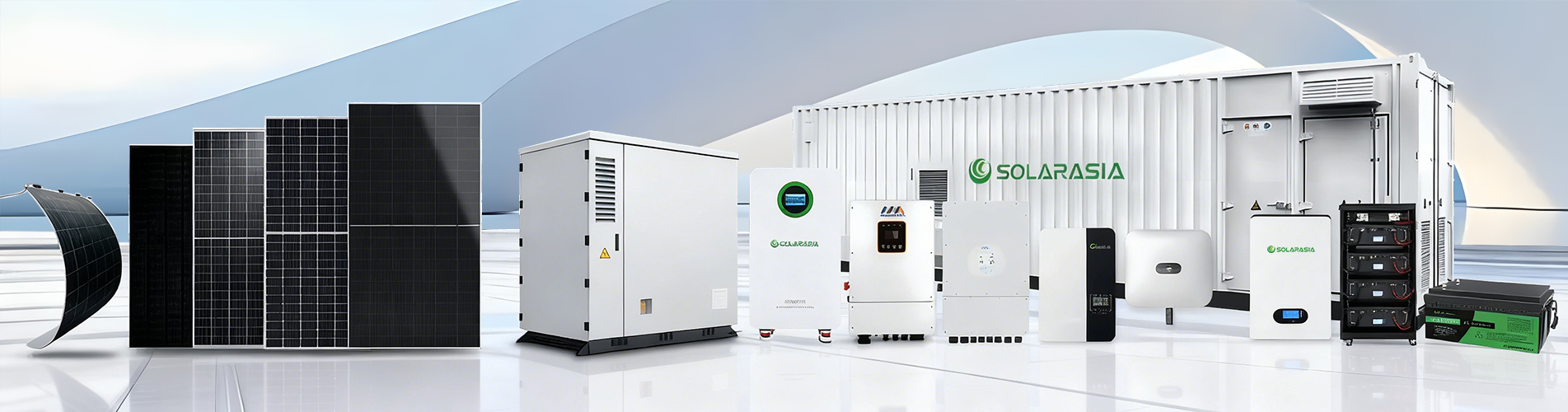
Solarasia banner

Battery Energy Storage System

Home

Battery Energy Storage System

  • What Makes Modern BESS Solutions Essential for Commercial Energy Independence? Dec 08, 2025
    In an era of rising electricity costs and unstable grids, more businesses are asking: Why choose a BESS battery energy storage system for industrial operations? The answer lies in reliability, efficiency, and long term savings. Our latest outdoor cabinet energy storage solutions—ranging from 125kW/112kWh to 261kWh—are engineered for companies seeking stable backup power, peak shaving performance, and seamless integration with solar PV systems. Unlike traditional power backup options, these weather-resistant outdoor BESS cabinets are designed for real world conditions. Whether installed in manufacturing facilities, logistics centers, commercial buildings, or remote industrial sites, the system offers uninterrupted power security. Its modular design supports efficient expansion, while intelligent management ensures balanced operation and safety at all times. So how do outdoor BESS systems help businesses reduce energy costs? By storing excess electricity during low tariff periods and releasing it during peak hours, companies can significantly lower their operational expenses. The high performance LFP battery chemistry provides long cycle life, high energy density, and excellent thermal stability—making the system a reliable asset for long term energy planning. Many buyers also wonder: What is the key difference between traditional battery banks and modern cabinet type BESS? With advanced cooling, built in fire protection, smart EMS control, and plug and play installation, these new generation units are far more efficient and safer than older storage setups. They are purpose built for commercial and industrial applications that demand continuous uptime and stable energy output.   If you are evaluating options for commercial battery energy storage or considering upgrading existing power infrastructure, this solution delivers a balance of performance, cost effectiveness, and durability. As global industries shift toward energy independence, BESS outdoor cabinets have become a critical foundation for every modern facility.
  • Why Choose a 3 Phase Hybrid Solar Inverter for Your Energy Storage System Jan 06, 2026
    As more homes and businesses move toward solar energy, many buyers are asking an important question: what is a three phase hybrid solar inverter and why is it becoming so popular The answer is simple. A high quality hybrid inverter allows you to combine solar power generation with a battery energy storage system so you can use your own electricity day and night, even during grid outages.   A three phase hybrid solar inverter is specially designed for larger homes, villas, small factories and commercial buildings that use three phase power. It works with both the grid and battery storage, which means it can supply power directly to loads, charge batteries, or feed energy into the grid when needed. With this flexible working mode, users can greatly reduce electricity bills and increase self consumption of solar energy. This makes the solar energy storage system more efficient and easier to manage.   So what makes a hybrid solar inverter different from a traditional solar inverter A normal grid tied inverter only works when the grid is available and cannot store energy. A hybrid solar inverter can work with batteries and provide backup power during outages, which is essential in areas with unstable grids or rising power prices. It is also an ideal solution for customers planning to expand from a simple solar system to a complete battery energy storage system in the future.   When choosing such equipment, many users also care about questions like how to select the right power range and when to invest in an energy storage system A three phase hybrid solar inverter with options such as 28 kW 35 kW 40 kW and 55 kW can meet different project sizes, from residential upgrades to commercial applications. It supports smart monitoring and is suitable for customers who are ready to upgrade their energy independence and reduce long term electricity costs.   This type of inverter is designed for people who want reliable clean energy, strong backup power and future proof system expansion. If you are planning a new solar project or upgrading your current system, a three phase hybrid solar inverter combined with battery energy storage system is one of the smartest investments today. Feel free to contact our team for system design, quotation and technical support.  
  • How a 5 MWh Battery Energy Storage System Reduces Energy Costs for Businesses Jan 26, 2026
    For industrial and commercial users facing high electricity bills and unstable grid supply, energy storage has become a practical investment rather than a future concept. A 5 MWh battery energy storage system offers a powerful solution for reducing operating costs while improving energy reliability across multiple business scenarios.   By storing electricity during low tariff periods or capturing excess solar energy, businesses can discharge power during peak demand hours. This approach significantly lowers peak demand charges and improves energy cost predictability. For factories logistics hubs and large commercial facilities, an industrial battery energy storage system delivers measurable financial returns within a reasonable payback period.   Another major advantage lies in system integration. A 5 MWh solution can work seamlessly with existing solar power systems or operate as a standalone backup power source. In regions with frequent grid interruptions, this ensures stable production and prevents losses caused by unexpected downtime. A well designed commercial energy storage solution also allows future capacity expansion based on business growth.   Beyond direct cost savings, energy storage supports long term sustainability strategies. Businesses using large scale battery systems reduce reliance on grid electricity and increase renewable energy utilization. This not only cuts carbon emissions but also enhances corporate energy independence and competitiveness in energy intensive industries.  
  • Why BESS Is Becoming Essential for Modern Solar and Industrial Energy Projects Feb 14, 2026
    As renewable energy adoption continues to accelerate worldwide, power stability and energy management have become critical challenges for commercial and industrial users. A well designed battery energy storage system BESS provides a reliable solution by storing excess electricity and releasing it when demand increases. For solar plants industrial facilities and large commercial projects, energy storage is no longer optional but essential.   One of the main advantages of a modern BESS energy storage system is its ability to support peak shaving load shifting and backup power. By storing energy during low demand periods and discharging during peak hours, businesses can significantly reduce electricity costs. In regions with unstable grid supply, BESS solutions also ensure continuous operation and protect production from unexpected power interruptions.   For large scale solar projects, integrating storage improves renewable energy utilization and enhances grid stability. A properly configured containerized battery energy storage system offers scalable capacity advanced battery management and high safety standards. This makes it suitable for utility scale solar plants industrial parks and infrastructure projects requiring long term performance and operational reliability.   As energy prices fluctuate and sustainability goals become more important, businesses and developers are increasingly investing in battery storage. A professional BESS solution not only improves financial returns but also strengthens energy independence and environmental responsibility. For project owners and EPC contractors planning future ready energy systems, BESS has become a strategic component of modern power infrastructure.  
  • How BESS Improves Project Bankability and Long Term Energy Returns Feb 15, 2026
    For large scale solar and industrial projects, energy storage is increasingly viewed not only as a technical upgrade but as a financial strategy. Integrating a professional battery energy storage system into a project structure improves revenue predictability, reduces operational risk, and enhances overall project bankability.   One of the main concerns for investors and developers is revenue stability. A properly designed BESS energy storage system allows energy to be dispatched during high value periods rather than sold at lower off peak tariffs. This improves cash flow forecasting and strengthens long term return models. In competitive energy markets, the ability to control dispatch timing creates a clear financial advantage.   Risk management is another major consideration. Grid instability, curtailment, and peak demand penalties can significantly impact project performance. A scalable containerized BESS solution provides backup support and load management capability, helping protect production continuity and reducing exposure to unexpected grid limitations. For industrial users, this directly safeguards operational output and contractual obligations.     As regulatory environments evolve and sustainability targets tighten, projects equipped with energy storage are often viewed more favorably by stakeholders and financing institutions. By improving technical resilience and financial performance, BESS has become a strategic asset in modern energy infrastructure. For developers planning long term commercial and industrial energy investments, integrating storage is no longer just an option but a competitive necessity.
  • How BESS Improves Project Bankability and Long Term Energy Returns Feb 25, 2026
    For large scale solar and industrial projects, energy storage is increasingly viewed not only as a technical upgrade but as a financial strategy. Integrating a professional battery energy storage system into a project structure improves revenue predictability, reduces operational risk, and enhances overall project bankability. One of the main concerns for investors and developers is revenue stability. A properly designed BESS energy storage system allows energy to be dispatched during high value periods rather than sold at lower off peak tariffs. This improves cash flow forecasting and strengthens long term return models. In competitive energy markets, the ability to control dispatch timing creates a clear financial advantage. Risk management is another major consideration. Grid instability, curtailment, and peak demand penalties can significantly impact project performance. A scalable containerized BESS solution provides backup support and load management capability, helping protect production continuity and reducing exposure to unexpected grid limitations. For industrial users, this directly safeguards operational output and contractual obligations.   As regulatory environments evolve and sustainability targets tighten, projects equipped with energy storage are often viewed more favorably by stakeholders and financing institutions. By improving technical resilience and financial performance, BESS has become a strategic asset in modern energy infrastructure. For developers planning long term commercial and industrial energy investments, integrating storage is no longer just an option but a competitive necessity.
  • Why Energy Storage Is Becoming Essential for Commercial Projects in Europe and North America Mar 03, 2026
    Across Europe and North America, rising electricity prices and grid instability are pushing businesses to rethink their energy strategies. Industrial facilities and commercial operators are increasingly investing in battery energy storage systems to protect operations, stabilize costs, and improve long term energy security.   In many European countries, peak demand charges and dynamic pricing models have significantly increased operating expenses for factories and large commercial buildings. In North America, extreme weather events and aging grid infrastructure have made backup power a critical requirement. A properly configured commercial energy storage solution allows businesses to store electricity during low tariff periods and discharge during peak hours, reducing energy costs and protecting against unexpected outages.   Energy storage is also becoming a strategic tool for sustainability compliance. With stricter carbon reduction targets and ESG reporting standards across the EU and the United States, companies are under pressure to improve renewable energy utilization. Integrating a scalable industrial battery energy storage system alongside solar installations enhances renewable penetration while maintaining operational stability.     For project developers and EPC contractors, modern containerized storage systems offer flexible deployment and high safety standards. Whether supporting a rooftop solar plant in Germany or an industrial park in Texas, battery storage has become a core component of resilient energy infrastructure. Businesses that invest in energy storage today position themselves for stronger financial performance and greater energy independence in the years ahead.
  • How a 1MW Container Energy Storage System (BESS) Solves Power Stability for Factories Mar 25, 2026
    Introduction: The Rising Energy Challenge for Modern Factories In 2026, industrial power reliability is no longer a luxury—it’s a survival requirement. With the global shift toward renewable energy and the increasing strain on aging power grids, many factories face frequent voltage fluctuations, peak hour surcharges, and unexpected blackouts.   For large scale manufacturing, a 1MW Containerized Battery Energy Storage System (BESS) has emerged as the "Gold Standard" for securing power stability. But how exactly does this massive "power bank" work for your facility? Let’s dive into the technical and economic benefits. 1. Eliminating Production Downtime with Seamless UPS Integration The most immediate threat to factory ROI is a sudden power drop. Even a 500ms flicker can reset CNC machines, ruin chemical batches, or damage sensitive semiconductor equipment. The BESS Advantage: A 1MW system equipped with high-speed PCS (Power Conversion System) acts as a large-scale Uninterruptible Power Supply (UPS). The Result: Transitioning to battery power happens in milliseconds, ensuring your production line never stops, saving thousands of dollars in potential waste and repair costs. 2. Peak Shaving & Load Shifting: Slashing Electricity Bills Most utility companies charge factories a "Demand Charge" based on their highest usage period. Peak Shaving: The 1MW BESS discharges stored energy during peak hours when grid prices are highest. Load Shifting: The system recharges during off-peak hours (nighttime) when rates are low. Economic Impact: For a typical mid-sized factory, this "Arbitrage" strategy can reduce monthly electricity expenses by 20% to 40%. 3. Optimizing On-Site Solar Self-Consumption Many factories have installed rooftop solar panels but struggle with the "Duck Curve"—generating too much power at noon and having none at night. The Solution: A 1MW BESS captures the excess solar energy that would otherwise be wasted or sold back to the grid at low rates. Stability Benefit: It smooths out the intermittency of solar power (e.g., when a cloud passes over), providing a constant, stable voltage to the factory floor. 4. Why the "Containerized" Design is the Industry Standard For 1MW+ systems, the "All-in-One Container" (usually 20ft or 40ft) is the preferred choice for Anhui Solarasia's global clients due to: Safety: Integrated HVAC (Thermal Management), Fire Suppression Systems (Aerosol/Water), and BMS (Battery Management System). Scalability: Modular design allows you to expand from 1MWh to 5MWh easily. Durability: IP54/IP55 rated protection against harsh industrial environments, dust, and humidity. Technical Specifications at a Glance (1MW/2MWh Example) Model Air Cooling Battery Chemistry LiFePO4 Nominal Energy 2057kwh Rated Power 1000kW Grid Connection 3L+N+PE, 50Hz/45Hz-55Hz Other Parameter Max. PV Input Voltage 1000VDC Cooling Air cooling Communication RJ45 Port, Modbus TCP, IEC104, IEC61850 protocols. Humidity 0%~90%RH Altitude ≤3000m IP Rating of Enclosure IP54 rating and C4-M anti-corrosion level. Storage Temperature ( °C ) -20-50 Warranty 10 years Dimension (W/D/H,mm) 20ft (HC) Installation Location Floor mount   Conclusion: Is a 1MW BESS Right for Your Factory? Investing in a 1MW Container Energy Storage System is a strategic move toward energy independence. It solves the dual problem of technical instability and rising operational costs.   As a leading supplier, Anhui Solarasia Energy Technology provides end-to-end BESS solutions tailored to your specific load requirements. From initial site analysis to final commissioning, we ensure your factory stays powered, no matter the grid conditions. Get a Custom Energy Audit & Quote Ready to stabilize your power supply? Contact our engineering team today for a free technical consultation and a customized ROI projection for your 1MW BESS project.    
  • Mastering Residential Energy Independence: The 2026 Roadmap to Grid Sovereignty Apr 20, 2026
    The energy math of 2026 has changed. We are moving past the era where a few solar panels on a roof were enough to "offset the bill." Today, skyrocketing utility rates and the fragility of aging national grids have turned Residential Energy Independence from a sustainable dream into a strategic financial necessity.   For the modern homeowner, the goal is no longer just "saving money"—it is about owning the means of production and achieving total immunity from grid volatility.   1. Breaking the "Daylight Only" Barrier For years, residential solar was handicapped by its dependence on the sun’s schedule. You produced power when you weren't home and bought it back at a premium when you were. In 2026, high performance Home Energy Storage Systems have shattered this cycle.   By pairing ultra-efficient modules—such as the Aiko ABC or Jinko Tiger Neo series—with robust Lithium Iron Phosphate (LFP) battery stacks, families can now capture the midday sun and deploy it during the "Golden Hours" (6 PM to 10 PM) when utility companies charge the highest rates. This isn't just backup power; it is a sophisticated "buy low, use own" strategy that accelerates your ROI.     2. The Intelligence Layer: AI-Driven Self-Sufficiency Hardware is only half the battle. In 2026, the true differentiator for any solar installation is its "IQ." Modern systems now utilize Smart Energy Management to turn a passive battery into an active financial asset.   Advanced hybrid inverters, like those from Deye, now integrate AI algorithms that analyze real-time weather forecasts and local grid pricing. If the system predicts a storm or a localized grid failure, it automatically prioritizes a "Battery First" mode. If it sees a price surge coming from the utility provider, it shifts the entire house to the storage reserve. This level of automation ensures that energy independence doesn't require a degree in electrical engineering to manage.     3. The Full Ecosystem: Solar, Storage, and Mobility True Residential Energy Independence in 2026 must account for the garage. As Electric Vehicles (EVs) become the standard, the home energy system must evolve into a "Total Energy Hub."   The integration of V2H (Vehicle-to-Home) technology allows your EV to act as a secondary battery. On days with massive solar surplus, your car becomes a storage vessel. During a prolonged grid outage, your car can power your home’s critical loads for days. By closing the loop between solar production, home storage, and EV charging, you eliminate the two biggest household expenses: your power bill and your fuel cost.     Conclusion: Securing Your Future with Solarasia The path to energy freedom isn't paved with "cheap" components. It is built on a foundation of quality, transparency, and technical expertise. At Anhui Solarasia (solarasiapower.com), we specialize in providing the high-efficiency building blocks—from BC technology modules to intelligent LFP storage—that make grid sovereignty a reality.   In an era of uncertainty, owning your energy is the ultimate security. Are you ready to cut the cord?    
  • Grid Tied VS Hybrid VS Off Grid Solar: What’s the REAL Difference for Your ROI in 2026? Apr 22, 2026
    The solar industry has a messaging problem. Walk into any trade show or scroll through a distributor’s website in 2026, and you will be bombarded with three distinct categories—Grid-Tied, Hybrid, and Off-Grid—each presented as if it were the “correct” answer to a universal problem. The truth is far more nuanced. These are not lifestyle choices; they are financial and engineering decisions with vastly different implications for energy independence, system Levelized Cost of Energy (LCOE), and long term operational security.   At Solarasia Power, we have deployed all three configurations across more than 100 countries, from grid-tied commercial rooftops in stable European markets to fully autonomous off-grid systems in remote mining operations. What we have learned is this: choosing the wrong architecture in 2026 does not just cost you a few percentage points of efficiency—it can fundamentally undermine your entire investment thesis.   This article goes beyond the surface-level feature list. We will dissect the three architectures through the lens of 2026’s specific technological and regulatory realities: the emergence of Virtual Power Plant (VPP) economics, the impact of Time-of-Use (TOU) rate arbitrage on battery ROI, and the silent role that N-type TOPCon module selection plays in shrinking or inflating your LCOE.     1. Grid-Tied Systems: The Baseline LCOE Champion—But With a 2026 Asterisk   How They Work A grid-tied system is the most direct implementation of photovoltaic generation. Solar panels feed DC power to a grid tied inverter, which converts it to AC and synchronizes with the utility waveform. When generation exceeds consumption, surplus flows to the grid; when consumption exceeds generation, the grid fills the gap. There is no battery. The grid acts as an infinite, zero-maintenance buffer.   The 2026 Financial Equation On paper, grid tied remains the lowest capital cost option. A residential on-grid system typically costs 40–60% less than an equivalent off grid system, owing to the absence of batteries, charge controllers, and backup switchgear.For Commercial & Industrial (C&I) applications in markets with favorable net metering policies, payback periods of 4–7 years are still achievable.   However,2026 has fundamentally rewritten the grid-tied value proposition. The defining dynamic is the widening chasm between generation LCOE and retail electricity prices. While utility-scale solar LCOE has plummeted to between $0.03 and $0.06 per kWh in sun-rich regions, peak commercial grid tariffs in markets like California, Germany, and Australia routinely exceed $0.35 to $0.50 per kWh.This delta—nearly a 10x spread—represents a massive arbitrage opportunity.   The Policy Landmine The catch is that pure grid-tied systems cannot capture this delta. They produce when the sun shines, regardless of when power is most valuable. Under California’s Net Billing Tariff (NEM 3.0), export credits have been slashed by up to 75% compared to legacy net metering, with compensation now based on avoided energy costs at specific times of day rather than simple retail-rate netting.Meanwhile, European markets are moving even more aggressively: the Netherlands has approved the phase-out of net metering (salderingsregeling) by January 1, 2027, and energy suppliers are already imposing solar grid penalties during periods of negative electricity prices.   2026 Verdict Grid-tied systems excel where the grid is stable, net metering remains favorable (increasingly rare), and daytime consumption closely matches solar generation. For C&I facilities with high base loads during operating hours—manufacturing plants, data centers, cold storage—grid-tied remains a compelling baseline. But for any project where TOU rate differentials exceed 3x or where grid reliability is questionable, a grid-tied-only approach in 2026 is increasingly a value-destructive decision.     2. Hybrid Systems: Where the 2026 ROI Is Actually Being Made How They Work A hybrid system adds a bidirectional inverter and battery storage to the grid-tied architecture. During the day, solar generation first serves the building’s loads. Any surplus charges the battery; only after the battery reaches its target state of charge does excess export to the grid. During evening peak pricing windows, the inverter can discharge stored energy to offset expensive grid imports—or, in markets with VPP programs, dispatch it to the grid for direct compensation.   The Battery Intelligence Layer In 2026, the critical differentiator in hybrid systems is no longer battery chemistry (LFP has largely won that battle at the residential and light C&I scale). It is the Smart Energy Management System (EMS) that orchestrates the entire operation. Advanced hybrid inverters now integrate AI algorithms that analyze real-time weather forecasts and local grid pricing. If the system predicts a storm or a localized grid failure, it automatically prioritizes a “Battery First” mode. If it detects a price surge from the utility provider, it shifts the entire house to the storage reserve.   This is the crucial nuance that many procurement teams miss: a hybrid inverter without smart load management is just a grid-tied inverter with an expensive battery attached. Modern 25 kW hybrid inverters, for instance, are designed to handle heavy industrial loads without triggering expensive “peak demand” penalties from the utility. Through automated load shedding, if a facility’s demand exceeds the inverter limit, the system enters “Hybrid Mode” and seamlessly draws only the excess difference from the grid—precisely shaving the most expensive kilowatts off the utility bill.   The 2026 ROI Math The numbers make the case decisively. Under NEM 3.0 in California, a solar-only system sees its payback period stretch to 12–15 years. Adding a battery, however, cuts that payback to 7–9 years by enabling peak-shaving during the expensive 4–9 PM window.   A 10 kW solar + 13.5 kWh battery system costs approximately $32,550 after incentives, breaking even in Year 8 for a typical $400/month household—delivering over $77,000 in 20-year savings.   For C&I applications, the numbers are even more compelling. Top-performing projects have delivered payback in as little as 1.3 years, with lifetime savings exceeding $15 million and internal rates of return above 60%.The key driver is peak demand charge avoidance, which in commercial rate structures can represent 30–50% of the total electricity bill.   The VPP Wildcard: Turning Your Battery into a Revenue Stream Perhaps the most consequential development for hybrid system economics in 2026 is the operationalization of Virtual Power Plants (VPPs) . Across the United States, battery-based aggregation is rapidly scaling—ratepayers who own or lease batteries can now join a VPP in more than half of all states and earn direct compensation for their grid service.In Arizona, VPP programs offer incentives up to $110/kW per year for battery dispatch during peak hours.In Northern California, Ava Community Energy’s SmartHome Battery program provides both installation rebates of up to $500/kWh for income-qualified customers and ongoing participation payments of $3 per kWh per month based on the portion of battery capacity shared with the VPP.   This fundamentally changes the hybrid system ROI model. A battery is no longer merely a cost center that enables self-consumption—it is a grid asset that can generate recurring revenue. In 2026, the question is shifting from “Can this work?” to “How do we scale?”   2026 Verdict Hybrid systems are the default choice for any project in a market with TOU rate structures, NEM 3.0-style net billing, or active VPP programs. The 30–50% premium over grid-tied systems is more than offset by the combination of self-consumption optimization, peak demand charge avoidance, and VPP participation revenue.For businesses, hybrid is no longer an “upgrade”—it is the baseline configuration for financial viability.     3. Off-Grid Systems: The Engineering Discipline of Full Autonomy How They Work Off-grid systems have no utility connection whatsoever. Solar panels charge a battery bank through a charge controller, and an off-grid inverter converts stored DC power to AC for the building’s loads. Because there is no grid to fall back on, the entire system must be sized to meet the worst-case scenario: the longest stretch of cloudy days coupled with the highest seasonal load. A backup generator (diesel or propane) is almost always included as a failsafe.   The Sizing Imperative: Depth of Discharge and Days of Autonomy This is where off-grid diverges most sharply from grid-tied and hybrid—not just in cost, but in design philosophy. Off-grid sizing is an exercise in risk management. Two parameters govern the entire design: Depth of Discharge (DoD) and Days of Autonomy.   DoD determines how much stored energy you can actually use without damaging your batteries. Research on standalone PV/battery systems has identified 70% as the optimal DoD value for maximizing battery longevity while maintaining zero loss of load probability (LLP).This means a 10 kWh battery bank in an off-grid context is not 10 kWh of usable capacity—it is 7 kWh. Oversizing the battery bank to maintain a conservative average DoD is not optional; it is the difference between a system that lasts 15 years and one that fails in three.   Days of Autonomy is the number of consecutive days the battery bank can sustain the load without any solar input. In temperate climates with reliable sun,2–3 days may suffice. In monsoon regions or high-latitude installations,5–7 days is often required. Each additional day of autonomy adds approximately 20–30% to the battery capital cost—and this cost compounds because the solar array must also be oversized to recharge that larger bank within the available sun hours.   The Real-World Economics A 3 kW off-grid system typically costs 2–3 times more than a comparable 3 kW on-grid system.But the cost premium is not just about the hardware—it is about the design rigor required. Improperly sized off-grid systems fail silently. They work beautifully in July, then collapse during a week of overcast weather in January. The cost of that failure, in a remote telecommunications site or an island resort, can dwarf the entire system’s capital expenditure.   2026 Verdict Off-grid is not a “choice” in the conventional sense—it is a necessity dictated by geography. Where grid connection is physically impossible or prohibitively expensive (e.g., remote mining camps, island communities, agricultural monitoring stations), off-grid is the only viable solution. The 2026 optimization frontier for off-grid is not about reducing capital cost; it is about right-sizing DoD, autonomy days, and generator integration to minimize total lifecycle cost over a 20–25 year horizon. This requires sophisticated energy modeling—spreadsheet-level napkin math is a recipe for stranded assets.     4. The Silent Differentiator: Why N-Type TOPCon Modules Change the Calculus for All Three Architectures Regardless of which architecture you choose, one factor silently compounds or erodes your returns: module technology selection. In 2026, the industry has decisively entered the N-type era. High-efficiency technologies such as N-type TOPCon, Back Contact (BC), and HJT are now mainstream, while traditional P-type PERC modules are rapidly being phased out.   The numbers are striking. TOPCon modules have demonstrated a consistent performance advantage over BC modules in real-world field testing. Over a four-month monitoring period from November 2025 to February 2026, TOPCon modules achieved an average cumulative power gain of 3.16% per watt compared to BC modules. Cumulative generation per watt reached 310.26 kWh/kW for the 650W TOPCon module versus 300.76 kWh/kW for the 650W BC module.   Why does this matter for your 2026 project? Three reasons: First, temperature coefficient. TOPCon’s temperature coefficient is approximately -0.26%/°C, meaning it loses only about 0.26% of rated power output for every degree above standard test conditions. In hot climates—think Middle East, Latin America, sub-Saharan Africa—this advantage compounds across the entire system lifetime.   Second, low-light performance. During the field test period, Yantai experienced 43–47 days of irradiance below 400 W/m², accounting for 70–77% of the monitoring period. During these low-irradiance days, TOPCon modules recorded power gains of 5.39% and 4.30% over BC modules, respectively.This means more kilowatt-hours on cloudy days, in winter, and during early morning and late afternoon hours—precisely when grid electricity is often most expensive.   Third, bifacial gain. TOPCon’s high bifaciality enables effective capture of reflected and scattered light from the rear side of the module. In ground-mount installations with modules elevated just 1.5 meters above ground, this contributed significantly to cumulative power gains without increasing installed capacity.   The 2026 Takeaway For grid-tied systems, TOPCon’s efficiency advantage directly reduces the number of modules required to hit a given power target—lowering Balance of System (BOS) costs for racking, cabling, and labor. For hybrid systems, the improved low-light performance extends the daily generation window, reducing reliance on the battery during shoulder hours. For off-grid systems, higher energy yield per square meter means a smaller array can meet the same load—or the same array can support more days of autonomy.   Choosing the right module technology in 2026 is not about chasing the highest nameplate efficiency; it is about understanding which technology delivers the most consistent, real-world energy yield for your specific climate and application.     5. How to Choose: A 2026 Decision Framework Given all of the above, the 2026 decision framework distills to four sequential questions:   1. Is grid connection physically available and economically feasible? If the answer is no—you are in a remote location where extending utility infrastructure would cost more than the entire solar-plus-storage system—then off-grid is your only path. Accept the higher upfront capital cost as the price of operational autonomy, and focus your optimization efforts on DoD, autonomy days, and generator integration.   2. If grid-connected, what is your net metering or net billing policy? In markets where net metering remains favorable (retail-rate credits for exports, no export penalties), a pure grid-tied system may still deliver the fastest payback. However, these markets are shrinking rapidly. If you are in California (NEM 3.0), much of Europe (post-net-metering phase-out), or any market with TOU differentials exceeding 3x between peak and off-peak, a hybrid system is almost certainly the correct financial decision.   3. Does your utility offer a Virtual Power Plant (VPP) program, or are you subject to peak demand charges? If yes to either, hybrid becomes not just financially advantageous but strategically essential. A VPP program turns your battery into a recurring revenue stream; peak demand charge avoidance can reduce a C&I electricity bill by 30–50%. In these scenarios, the 30–50% premium for hybrid over grid-tied should be reframed as an investment with a sub-5-year payback—not an incremental cost.   4. What is your load profile relative to solar generation? If your facility operates primarily during daylight hours (e.g., manufacturing, retail, education), your self-consumption will naturally be high, reducing the value of battery storage. If your load peaks in the evening or overnight (e.g., residential, hospitality, data centers), battery storage is essential to capture daytime solar generation for later use. This single factor can make the difference between a hybrid system that pays for itself in 5 years and one that takes 12.   Conclusion: The End of One-Size-Fits-All Solar The solar industry spent its first two decades selling a simple proposition: put panels on your roof, watch your meter spin backwards, and enjoy the savings. That era is over. In 2026, the financial performance of a solar installation is determined less by the quality of the sunlight on your site and more by the sophistication of your system architecture.   Grid-tied remains the LCOE champion where policies support it—but those markets are shrinking. Hybrid has emerged as the default configuration for any project where TOU rates, peak demand charges, or VPP participation shape the economics. Off-grid remains the only viable option where the grid does not exist, demanding a level of engineering rigor that far exceeds the other two categories.   At Anhui Solarasia, we do not believe in pushing a single “best” system. We believe in equipping our global partners with the right combination of N-type TOPCon modules, intelligent hybrid inverters, and LFP battery storage to optimize for your specific conditions—not a generic playbook.     The 2026 question is not “Which system is cheaper?” It is “Which system will still be performing profitably in 2036?” If you are ready to answer that question with data rather than assumptions, we are ready to help you engineer the solution.    
  • What Is C&I Energy Storage and How Does It Work? Apr 27, 2026
    Introduction As electricity prices continue to rise and grid stability becomes a growing concern, more businesses are looking for smarter energy solutions. One of the fastest-growing technologies today is the commercial energy storage system.   From factories to office buildings, companies are increasingly investing in energy storage to reduce costs and improve power reliability.   So, what exactly is a commercial & industrial energy storage system (C&I ESS)?How does it work, and why is it becoming essential for modern businesses?     This guide covers everything you need to know.   What Is a Commercial Energy Storage System? A commercial energy storage system (also known as C&I ESS) is a system that stores electricity for later use, typically using advanced lithium batteries such as LiFePO4 (LFP).   These systems are designed for: Industrial facilities Commercial buildings Solar + storage hybrid projects Microgrids and backup power systems   Unlike residential storage, industrial energy storage systems are larger, more powerful, and designed for continuous operation.     👉 In simple terms, it allows businesses to “store energy when it’s cheap and use it when it’s expensive.”   How Does a C&I ESS Work?   A typical battery energy storage system for business consists of three main components:   1. Battery System Stores electricity generated from solar panels or the grid.   2. PCS (Power Conversion System) Converts electricity between DC and AC, ensuring compatibility with your equipment.   3. EMS (Energy Management System)   Controls and optimizes how energy is stored and used.     Working Principle Electricity is generated (solar or grid) Excess energy is stored in the battery The system releases energy when needed EMS automatically manages energy flow     👉 This intelligent operation is what makes C&I ESS highly efficient and cost-effective.   Key Applications of Industrial Energy Storage Systems 1. Peak Shaving One of the most common uses of commercial energy storage systems is peak shaving. Charge during off-peak hours (low electricity price) Discharge during peak hours (high electricity price)     👉 This can significantly reduce electricity bills for businesses.   2. Backup Power (UPS Function) Power outages can cause major losses in industrial operations.   A battery energy storage system for business provides:   Instant backup power Stable voltage supply Protection for critical equipment     3. Solar Self-Consumption Optimization When combined with solar panels: Excess solar energy is stored instead of wasted More renewable energy is used onsite   👉 This improves ROI for solar projects.   4. Demand Charge Management Many utilities charge businesses based on peak demand. Energy storage helps:   Reduce peak load Avoid high demand charges   Key Benefits of Commercial & Industrial Energy Storage 1. Lower Electricity Costs   By optimizing when energy is used, businesses can achieve significant savings.   2. Energy Independence   Less reliance on the grid means better control over energy usage.   3. Improved Power Reliability   Avoid downtime caused by unstable grid conditions.   4. Sustainability & ESG Goals   Using industrial energy storage supports clean energy adoption and reduces carbon footprint.   Why Battery Energy Storage Systems Are Growing Rapidly The global demand for battery energy storage systems is increasing due to: Rising energy costs worldwide Government incentives for clean energy Growth of renewable energy installations Increasing need for grid stability     👉 C&I ESS is now one of the fastest-growing segments in the energy market.   What to Consider When Choosing a C&I ESS Solution Choosing the right system is critical for performance and ROI.   1. System Capacity (kWh)   Defines how much energy can be stored.   2. Power Rating (kW)   Determines how much power can be delivered at once.   3. Battery Type Most systems today use LFP batteries due to:   High safety Long cycle life Stable performance   4. Compatibility with Solar Inverters   Ensure the system works seamlessly with your commercial solar inverter.   5. Installation Type   Rack-mounted systems Containerized ESS (very popular for large projects)   Containerized Battery Energy Storage Systems (BESS) One of the hottest trends in the market is containerized storage.   A BESS (Battery Energy Storage System) in container form offers:   Plug-and-play installation Scalability Easy transportation Lower installation time     👉 Ideal for industrial parks and large scale projects.   Future Trends of Commercial Energy Storage Looking ahead, several trends are shaping the industry: Integration with smart grids AI-based energy management Hybrid systems (solar + storage + EV charging) Larger capacity systems (100kWh to MWh scale)     👉 Businesses that adopt early will gain a competitive advantage.   Conclusion A commercial energy storage system is no longer just an optional upgrade—it’s becoming a core part of modern energy strategy.   By combining solar power with battery energy storage systems, businesses can reduce costs, improve reliability, and move toward a more sustainable future.     If you are planning a solar or energy upgrade project, investing in a C&I ESS solution is a smart long term decision.    
foot logo

Address : Room 305, Tower B, Yinuo Business Center, intersection of West Second Ring Road and Hehuan Road, Bijiashan Street, Shushan District, Hefei city, Anhui Province

Tel : +86 17730022793

Email : [email protected]

Subscribe

Please read on, stay posted, subscribe, and we welcome you to tell us what you think.

submit

Links: Inverter Cables Cowellxm gmsolarkit Copyright 2026 @ Anhui Solarasia Energy Technology Co.,Ltd .All Rights Reserved. Sitemap | Blog | XML | Privacy Policy Network Supported

Click To Leave A Message

leave a message
If you are interested in our products and want to know more details,please leave a message here,we will reply you as soon as we can.
submit

Home

Products

whatsApp

contact