
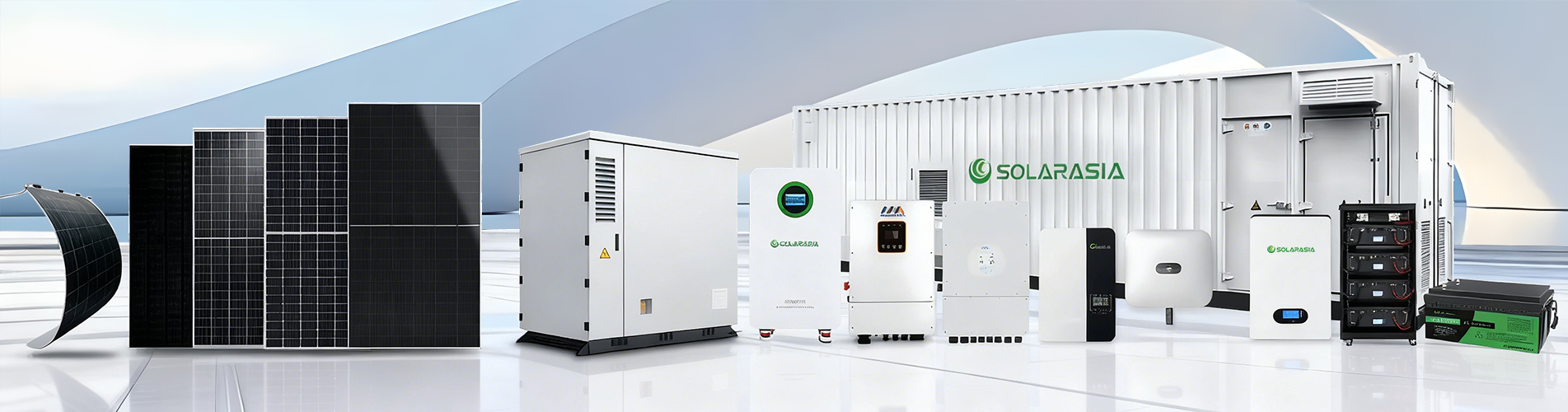
How to Add Battery Storage to an Existing Solar System: Solar + Battery Storage for Commercial Buildings
Many businesses install solar panels first and consider energy storage later.
This approach is increasingly common for commercial buildings because a business's energy requirements can change over time. Electricity prices may change, daytime solar generation may exceed the building's immediate demand, or the business may want backup power for critical loads.
Adding batteries to an existing photovoltaic system can allow a business to store surplus solar energy and use it when solar production is lower.
A simplified system can look like:
Existing Solar System → Battery Storage → Building Loads
Instead of sending all excess solar generation to the grid, part of the energy can be stored in batteries and used later.
However, adding batteries to an existing PV system is not simply a matter of purchasing a battery cabinet and connecting it to the existing inverter. The battery, inverter, electrical distribution system, protection equipment, monitoring system, and operating strategy all need to work together.
This article explains how businesses can evaluate an existing solar installation and plan a solar battery storage retrofit.
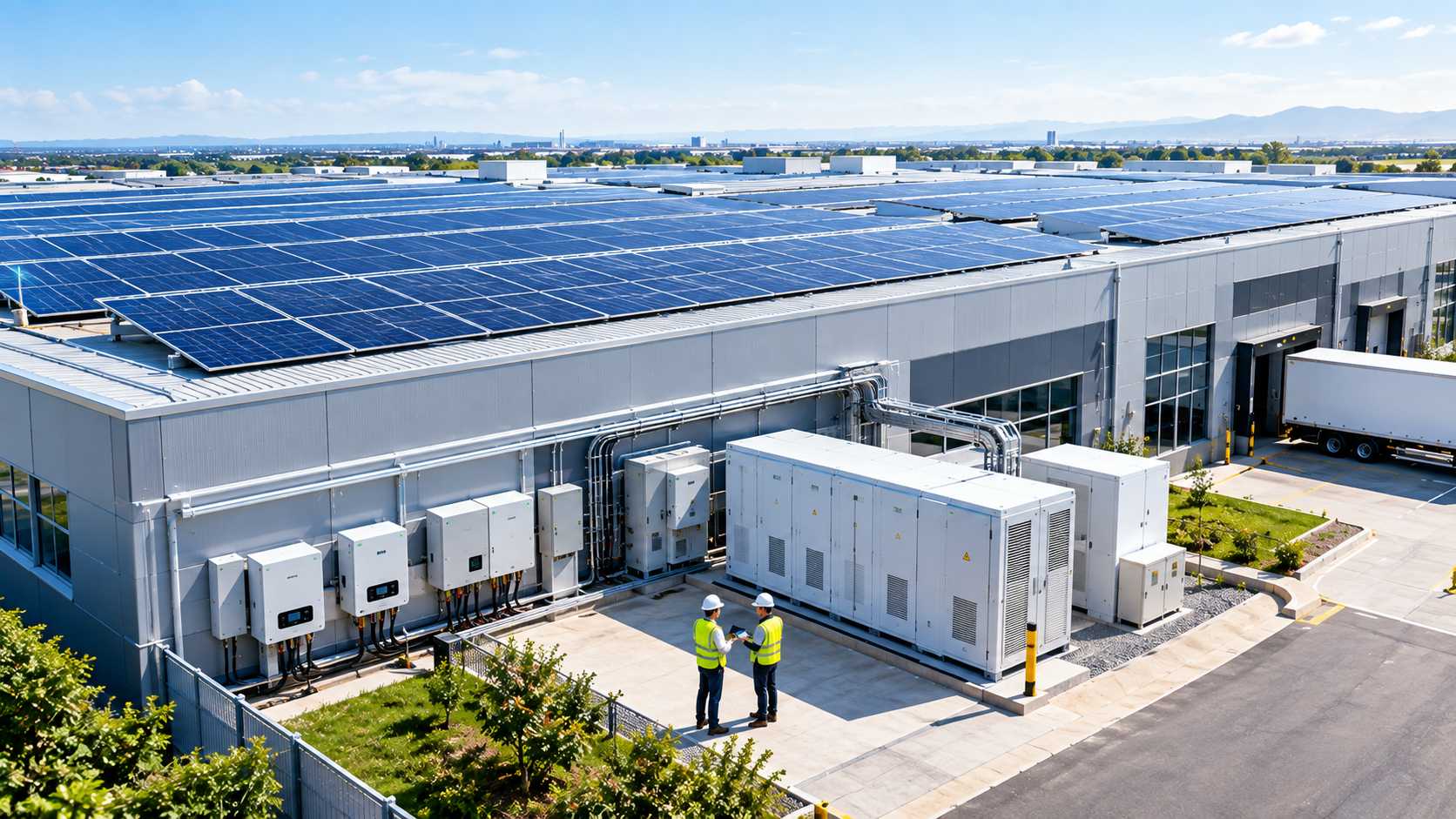
A commercial solar system usually produces the most electricity during daylight hours.
However, the building's electricity demand may not follow the same pattern.
For example, a warehouse may have high electricity consumption in the evening, while its rooftop solar system generates most of its electricity between late morning and afternoon.
Without energy storage, surplus solar generation may be exported to the grid or curtailed, depending on the local system configuration.
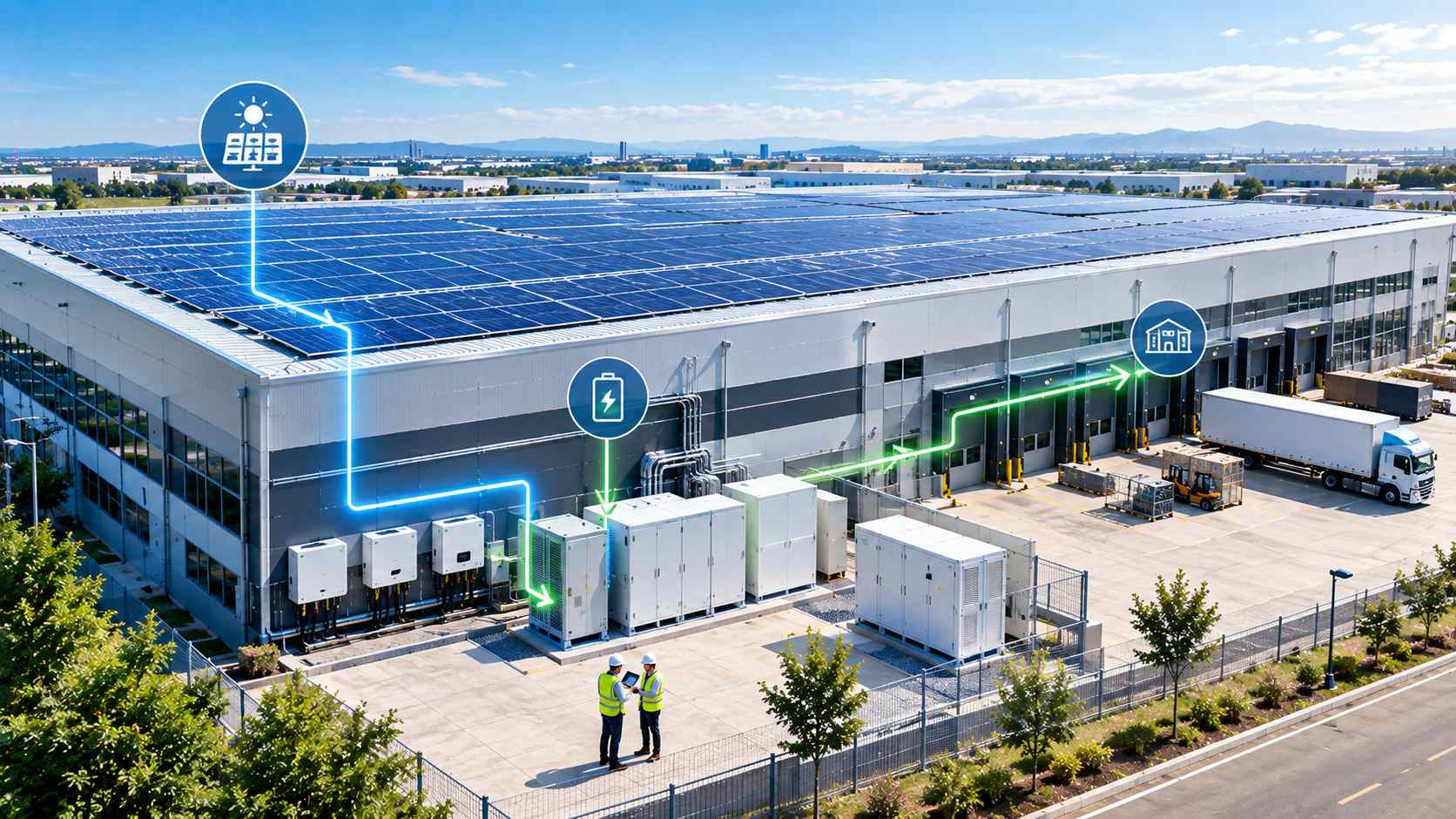
With batteries, the energy flow can become:
Solar → Building Loads
and when solar generation exceeds immediate demand:
Solar → Battery
Later, when solar production falls:
Battery → Building Loads
This allows businesses to shift part of their solar generation from one period to another.
Solar battery storage is an energy storage system designed to store electricity generated by a photovoltaic system for later use.
A commercial system may include:
Lithium iron phosphate, commonly known as LiFePO4 or LFP, is widely used in modern energy storage applications because of its combination of safety characteristics, cycle performance, and energy density.
The exact battery technology should be selected according to the project requirements, operating environment, system size, and applicable standards.
In many cases, yes.
However, the existing PV system needs to be evaluated first.
The most important questions include:
The answers determine which retrofit architecture is appropriate.
There are two common approaches to integrating batteries with an existing solar system:
The battery system is connected on the AC side of the existing solar inverter.
The battery is connected on the DC side through a compatible hybrid inverter or power conversion architecture.Both approaches can be used for commercial applications, but their installation requirements and operating characteristics are different.
AC Coupled vs DC Coupled Battery Storage
| Feature | AC Coupled | DC Coupled |
| Connection Point | AC side | DC side |
| Existing PV Inverter | Can often remain | May need replacement or compatible architecture |
| Retrofit Flexibility | Generally high | More dependent on equipment |
| Existing Solar System | Well suited to many retrofits | Better suited to compatible systems |
| Battery Inverter / PCS | Required | Integrated or separately configured |
| Solar and Battery Control | Separate power conversion paths | More integrated |
| Installation Complexity | Project dependent | Project dependent |
| New Solar Projects | Suitable | Suitable |
| Existing PV Retrofit | Often considered | Model dependent |
The best architecture depends on the existing equipment and project requirements.
In an AC coupled system, the existing solar PV system continues operating through its existing solar inverter.A separate battery inverter or PCS is then connected to the AC electrical system.
A simplified architecture is:
Solar Panels → Existing PV Inverter → AC Bus → Building
and:
AC Bus → Battery PCS → Battery
When excess solar electricity is available, the battery system can charge.
When the building needs additional electricity, the battery can discharge through the PCS and supply the AC system.
This architecture can be particularly useful when a business already has a functioning PV system and does not want to replace the existing solar inverter.
One of the main advantages of AC coupling is retrofit flexibility.
A business may already have:
Adding an independent battery system can allow the existing PV installation to continue operating while the new energy storage system is integrated into the AC side.
This can reduce the need to modify the existing PV array.
However, the actual installation requirements depend on the existing electrical infrastructure.
In a DC coupled architecture, the battery and PV system share a DC side power conversion architecture.
A simplified configuration can be:
Solar Panels → Hybrid Inverter / DC Bus → Building
with:
Battery ↔ Hybrid Inverter / DC Bus
Solar energy can be converted and managed through a common power conversion system.
DC coupling can reduce some conversion steps when solar energy is stored directly from the DC side, depending on the equipment architecture.
However, compatibility with the existing PV inverter is a critical consideration.
If the existing system was designed only as a conventional grid tied PV system, adding DC coupled batteries may require significant equipment changes.
There is no universal answer.
For an existing commercial PV installation, AC coupling is often considered when the business wants to retain the existing solar inverter.
DC coupling may be attractive when the system is being redesigned or when the existing inverter architecture already supports battery integration.
The decision should consider:
Existing Equipment + Battery Capacity + Power Requirements + Backup Requirements + Electrical Infrastructure + Future Expansion
A professional system assessment should be completed before selecting the architecture.
Battery capacity is usually expressed in:
kWh
while inverter or PCS power is generally expressed in:
kW
These two specifications should not be confused.
For example, a battery system could have:
100kW Power + 215kWh Energy Capacity
The 100kW value describes how much power the system can deliver at a given time.The 215kWh value describes how much energy can be stored under specified conditions.The appropriate battery size depends on what the business wants the system to accomplish.
One approach is to analyze how much solar energy is not being consumed immediately.
For example:
A commercial building has a 100kW solar system.
During certain periods, the PV system produces 80kW while the building only consumes 50kW.
The approximate surplus is:
80kW − 50kW = 30kW
That surplus can potentially be directed toward battery charging, subject to system limitations.
If the surplus continues for several hours, the battery may need significant energy capacity.
However, actual battery sizing should use historical interval load and PV generation data rather than a single operating point.
Some businesses may add batteries to reduce grid demand during specific periods.
In this case, the battery may be used to discharge during high demand periods.
For example:
High Demand → Battery Discharge → Lower Grid Import
This can be relevant where electricity tariffs include demand charges or where the business has significant short-term power requirements.
The battery needs sufficient:
The system should therefore be sized using actual demand data.
Backup power requires a different calculation.
Suppose a business wants to keep several critical loads operating during a grid outage.
The system designer needs to identify:
For example, a business may not need to back up its entire building.
Instead, it may prioritize:
This can significantly affect the required battery capacity.
There is no standard battery size that works for every building.
A small commercial facility might require a relatively small battery system, while a large industrial building could require hundreds of kWh or several MWh of storage.
The design should be based on:
How much electricity does the building use each day?
When does the building consume electricity?
How much electricity does the existing PV system generate?
How much solar generation is available after serving immediate loads?
When does the building experience its highest power demand?
Which loads need to remain operational during grid outages?
Does the electricity price change throughout the day?
These factors should be evaluated together.
Before adding batteries, inspect the existing PV inverter.
Important specifications include:
If the existing inverter is not battery compatible, an additional battery inverter or PCS may be needed.
This is one reason AC coupled storage is commonly considered for existing commercial PV systems.
The battery is not the only component that needs to be evaluated.
The existing electrical infrastructure may include:
The proposed battery system needs to be integrated safely into this infrastructure.
For larger commercial projects, the available transformer and grid connection capacity may also need to be evaluated.
Battery voltage is another important consideration.
Commercial energy storage systems can use different battery voltage architectures depending on their capacity and system design.
The selected battery should be compatible with:
The battery's nominal voltage alone does not determine whether it can be connected to a particular inverter.
Compatibility must be confirmed using the manufacturer's specifications.
The Battery Management System, or BMS, is an important component of a modern battery energy storage system.
The BMS can monitor parameters such as:
It can also communicate with the inverter or PCS to coordinate charging and discharging.
For commercial projects, communication between the battery, PCS, EMS, and monitoring platform can be especially important.
An Energy Management System, or EMS, can coordinate different energy sources and loads.
A commercial system may include:
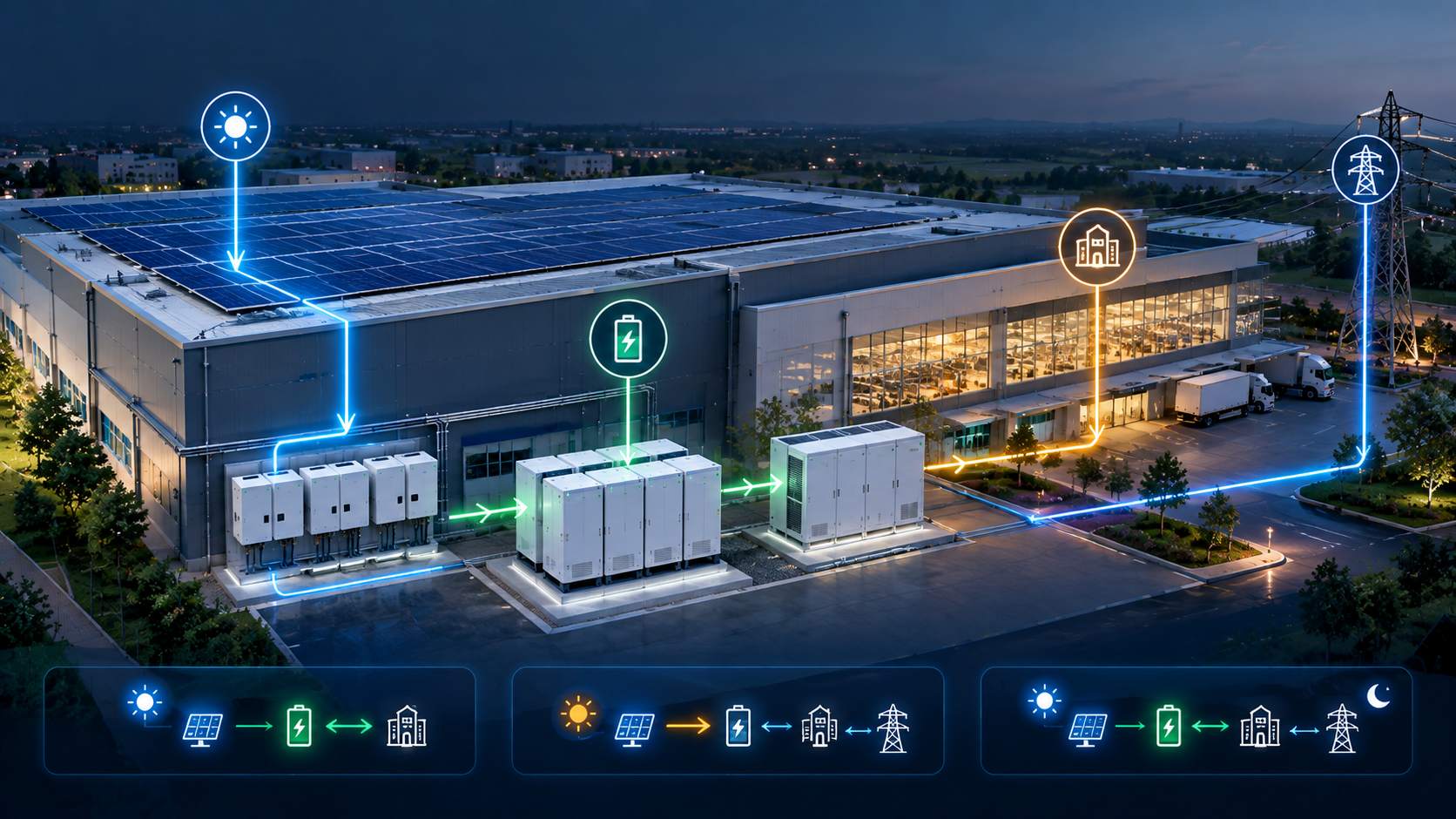
Solar + Battery + Grid + Building Loads + EMS
The EMS can help determine when the battery should:
The exact functions depend on the project configuration and available software.
In many retrofit projects, the existing solar panels can remain in operation.
The battery system can be added separately, particularly in an AC coupled configuration.
This can be attractive for businesses that already have:
However, the condition and remaining useful life of the existing equipment should be assessed.
If the existing PV system is already approaching the end of its service life, a complete system redesign may make more sense than adding a new battery to aging equipment.
Not necessarily.
The amount of energy that can be stored depends on:
For example, if a solar system produces a large surplus for several hours but the battery has limited capacity, the battery may reach full charge before the solar surplus period ends.
Additional solar generation may then need to be consumed by other loads, exported to the grid, or curtailed depending on the system configuration.
This is why battery sizing should be based on actual PV and load data.
Commercial buildings can have several reasons for adding energy storage.
A battery can store surplus solar electricity and make it available later.This can increase the proportion of solar energy used by the building.
If electricity prices vary throughout the day, stored solar energy may be used during periods when grid electricity is more expensive.The actual financial benefit depends on the local electricity tariff structure.
A battery system can provide backup power to selected loads when supported by the inverter and electrical architecture.
This can be useful for businesses where interruptions can cause:
Battery discharge can potentially reduce grid demand during certain periods.The economic value depends on how demand charges are calculated in the relevant market.
Commercial electricity demand may increase as businesses add:
Adding energy storage can become part of a broader commercial energy management strategy.
Whether the battery can provide backup power depends on the system design.
A battery alone does not automatically mean the entire building will continue operating during a grid outage.
The system may require:
Some systems are designed to supply only selected critical loads.
Others may be designed for a larger portion of the facility, subject to equipment capacity and local requirements.
Therefore, backup capability should be defined during system design.
This is an important concept when evaluating commercial battery systems.
Power capacity determines how much electrical power the battery system can deliver or absorb at a given moment.
Energy capacity determines how much energy the battery can store.
For example:
100kW / 215kWh
means approximately:
If a battery delivers 100kW continuously for one hour under simplified assumptions, it would provide approximately 100kWh of energy.
Actual usable energy depends on operating limits, efficiency, temperature, state of charge, and other factors.
Energy storage systems involve charging and discharging losses.
If 100kWh of solar energy enters the battery, less than 100kWh may be available for later use.
This is because energy is consumed by:
Therefore, system evaluation should consider round trip efficiency rather than looking only at the battery's nominal capacity.
Battery capacity can gradually decrease through operation and aging.
Factors that influence degradation include:
For a commercial project, the battery should therefore be evaluated not only by its initial capacity but also by its expected performance over the planned operating period.
A suitable energy management strategy can help manage battery operating conditions.
Safety should be considered from the beginning of the project.
A commercial battery installation may need to address:
The exact requirements vary by battery technology, installation location, system size, and local regulations.
Commercial battery systems should be installed according to applicable codes, standards, and manufacturer requirements.
A practical retrofit process can be divided into several stages.
Collect:
Review electricity bills and, where possible, interval load data.
Identify:
Determine whether the primary goal is:
Evaluate:
AC Coupled
or
DC Coupled
based on the existing system and project requirements.
Determine appropriate:
The power conversion equipment should be compatible with the battery and electrical system.
Check the distribution system, transformer, protection equipment, cables, and grid connection.
Define how the battery should operate under different conditions.
The final stage includes electrical testing, communication setup, protection verification, commissioning, and monitoring.
A 100kW solar system does not automatically require a specific battery capacity.Battery sizing should be based on actual energy flows and project objectives.
The inverter architecture determines how the battery can be integrated.

Address : Room 908-909, Building 2, No. 469 Huatuo Lane, Shushan District, Hefei City, Anhui Province


Please read on, stay posted, subscribe, and we welcome you to tell us what you think.
Copyright 2026 @ Anhui Solarasia Energy Technology Co.,Ltd .All Rights Reserved. Sitemap | Blog | XML | Privacy Policy
 Network Supported