
Commercial Battery Energy Storage System vs Diesel Generator: Which Is Better for Business Backup Power?
Businesses depend on a stable electricity supply to keep production lines, commercial equipment, data systems, and daily operations running smoothly. However, power outages, grid instability, and rising electricity costs can create significant challenges for industrial and commercial facilities.
Traditionally, diesel generators have been widely used as backup power solutions. Today, commercial battery energy storage systems (BESS) are becoming an increasingly attractive option for businesses looking for cleaner, quieter, and more flexible energy management solutions.
So, which is better: a commercial battery energy storage system or a diesel generator?
The answer depends on your power requirements, backup duration, operating costs, energy consumption patterns, and project objectives. This guide compares both solutions to help businesses make a more informed investment decision.
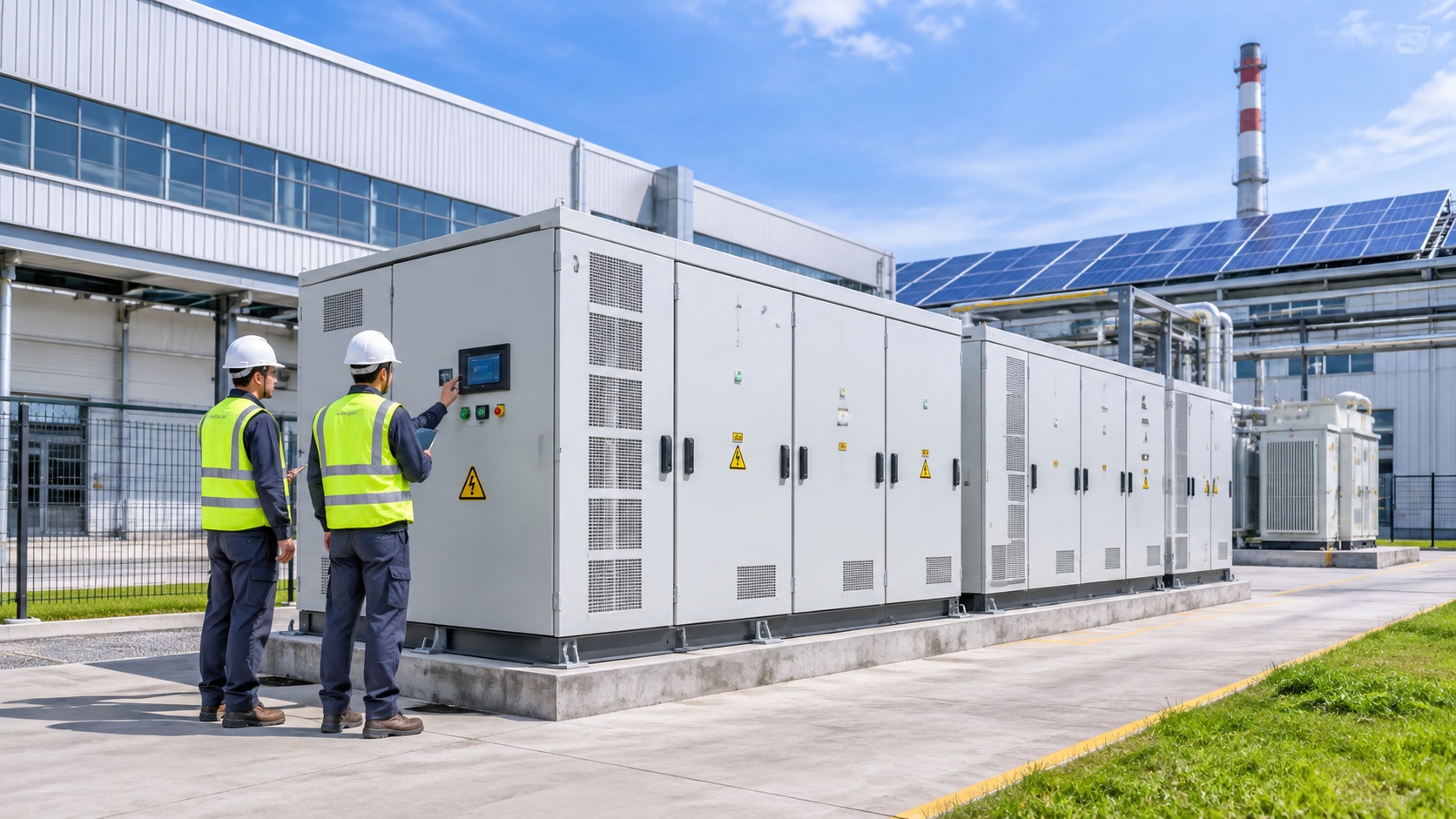
A commercial battery energy storage system stores electricity in rechargeable batteries and releases it when energy is needed.
Most modern commercial BESS projects use lithium iron phosphate (LiFePO4) battery technology because of its thermal stability, cycle life, and suitability for stationary energy storage applications.
A typical commercial BESS consists of several key components:
Battery System: Stores electrical energy for backup power and energy management.
Power Conversion System (PCS): Converts electricity between AC and DC and controls charging and discharging.
Energy Management System (EMS): Monitors energy consumption and coordinates system operation.
Battery Management System (BMS): Monitors battery voltage, temperature, current, and operating conditions.
Thermal Management and Safety Systems: Help maintain suitable operating conditions and support system protection.
Commercial battery storage systems can be connected to the utility grid, solar PV systems, or other power sources.
Depending on the system design, a BESS can support peak shaving, load shifting, renewable energy integration, and backup power.
For backup applications, the system must be specifically designed with suitable islanding capability, grid-forming functionality where required, and an appropriate transfer and protection arrangement. A standard grid-following BESS does not automatically provide backup power during a grid outage.
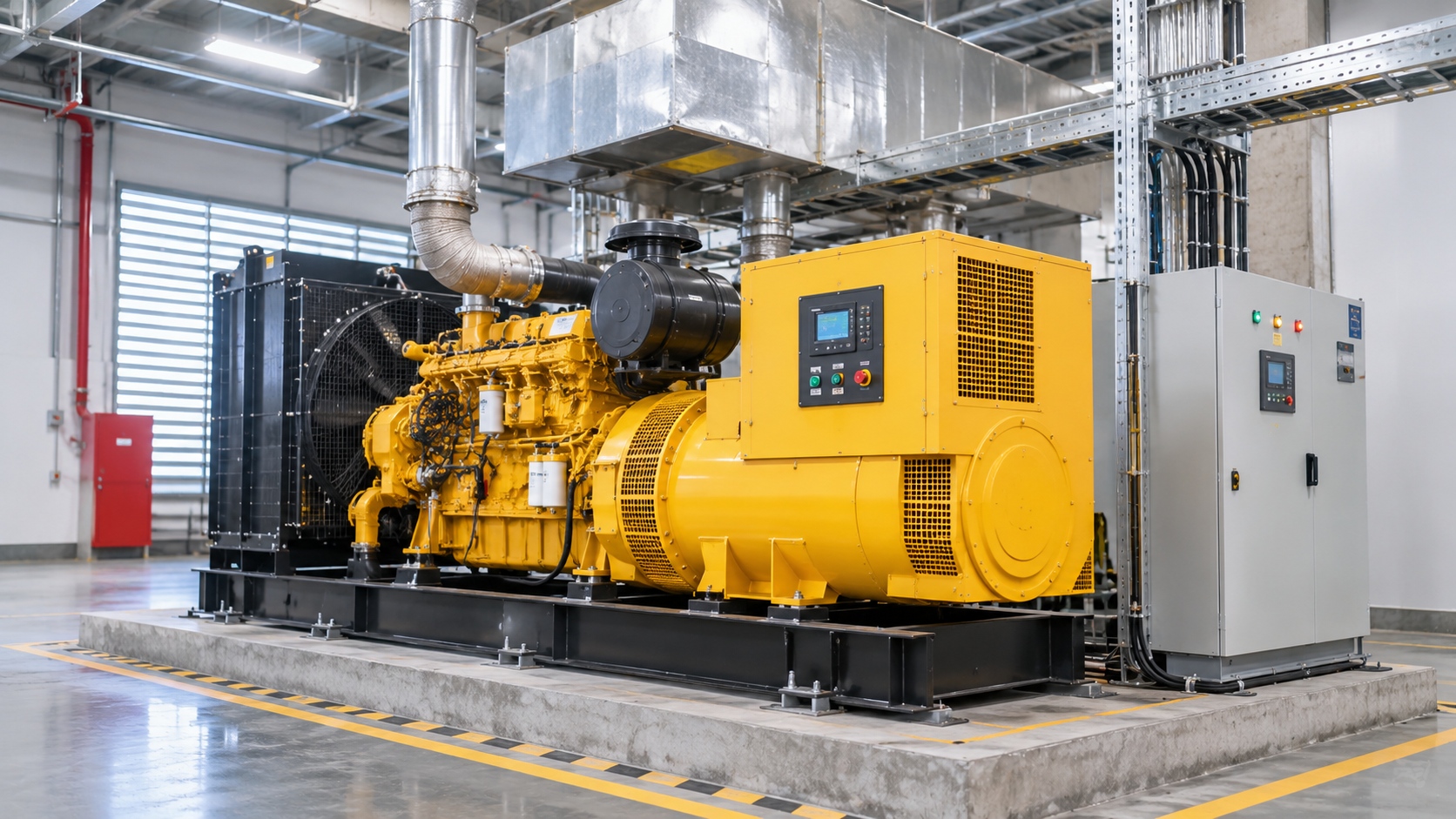
A diesel generator converts the chemical energy of diesel fuel into electrical energy through an internal combustion engine connected to an electrical generator.
When the utility grid fails, an automatic transfer switch (ATS) or another approved switching arrangement can transfer the supported electrical loads to the generator.
Diesel generators are commonly used in:
Manufacturing plants and industrial facilities
Hospitals and healthcare buildings
Construction sites
Commercial buildings
Data centers and critical infrastructure
Remote facilities without reliable grid access
Their main advantage is the ability to provide electricity for extended periods as long as sufficient fuel is available and the equipment is properly maintained.
However, diesel generators require regular servicing, fuel storage and supply arrangements, and appropriate exhaust and noise management.
Both technologies can provide backup power, but they operate differently and serve different energy requirements.
| Comparison | Commercial BESS | Diesel Generator |
|---|---|---|
| Energy source | Stored electrical energy | Diesel fuel |
| Power response | Very fast, depending on system configuration | Requires starting and transfer sequence |
| Backup duration | Limited by usable battery capacity and load | Can operate for extended periods with fuel supply |
| Noise | Generally quiet during battery operation | Produces engine noise |
| Local exhaust emissions | No combustion exhaust during battery discharge | Produces exhaust emissions during operation |
| Maintenance | Battery, PCS, cooling, controls and protection maintenance | Engine, oil, filters, fuel and mechanical maintenance |
| Energy management | Supports peak shaving and load shifting | Primarily generates electricity |
| Solar integration | Can store excess solar electricity | Can work alongside solar but does not store solar energy |
| Fuel dependency | No continuous diesel fuel requirement | Requires continuous fuel availability |
| Initial investment | Depends on battery capacity, PCS and project design | Depends on generator power and installation requirements |
One important distinction is that a BESS can provide additional energy management functions beyond emergency backup, while a diesel generator is primarily designed to generate electricity when required.
Initial equipment prices are only one part of the investment decision. Businesses should also consider installation, maintenance, energy consumption, fuel expenses, and equipment replacement over the expected project life.
A commercial battery energy storage project may include:
Battery cabinets or containers
PCS equipment
EMS and BMS
Cooling and fire protection systems
Electrical distribution and protection equipment
Installation, commissioning, and engineering
Grid connection and site preparation
Although the initial investment can be relatively high, a BESS may provide additional economic value through peak shaving, load shifting, and solar self-consumption.
For businesses with high demand charges or suitable time-of-use electricity tariffs, these functions may help reduce electricity expenses.
The total cost of a diesel generator project may include:
Generator equipment
Fuel storage and supply arrangements
Automatic transfer switch
Exhaust and ventilation systems
Installation and commissioning
Routine maintenance and replacement parts
Diesel fuel consumption
Fuel expenses can become a significant operating cost, particularly when generators run frequently or for extended periods.
There is no universal answer.
A diesel generator may be more economical for infrequent outages requiring long-duration backup. A BESS may offer stronger long-term value when it is used regularly for both backup power and energy management.
To compare the two solutions accurately, businesses should calculate total cost of ownership over the expected operating period rather than comparing equipment purchase prices alone.
The right backup power solution depends on the facility's operating conditions and energy requirements.
Manufacturing facilities may have high electricity demand, fluctuating loads, and expensive production interruptions.
A commercial BESS can help reduce peak demand and support critical loads during outages, provided the system is correctly sized and configured.
For facilities requiring extended backup during prolonged grid interruptions, a diesel generator may still be necessary.
Shopping centers, office buildings, and commercial complexes often have a combination of lighting, elevators, HVAC systems, and other electrical loads.
A BESS can help manage peak electricity demand, integrate rooftop solar, and provide backup for selected critical loads.
The backup configuration should be designed according to the building's load priorities and required backup duration.
Data centers and other critical facilities require carefully engineered backup power architectures.
Battery systems can provide rapid power support and may work alongside UPS systems and standby generators. However, the BESS must be designed for the facility's specific reliability, redundancy, transfer, and runtime requirements.
Remote facilities may not have reliable grid access.
A combination of solar PV, battery storage, and a diesel generator can provide a flexible power supply. Solar energy and batteries can reduce generator operating hours, while the generator can provide additional power during extended periods of low solar generation.
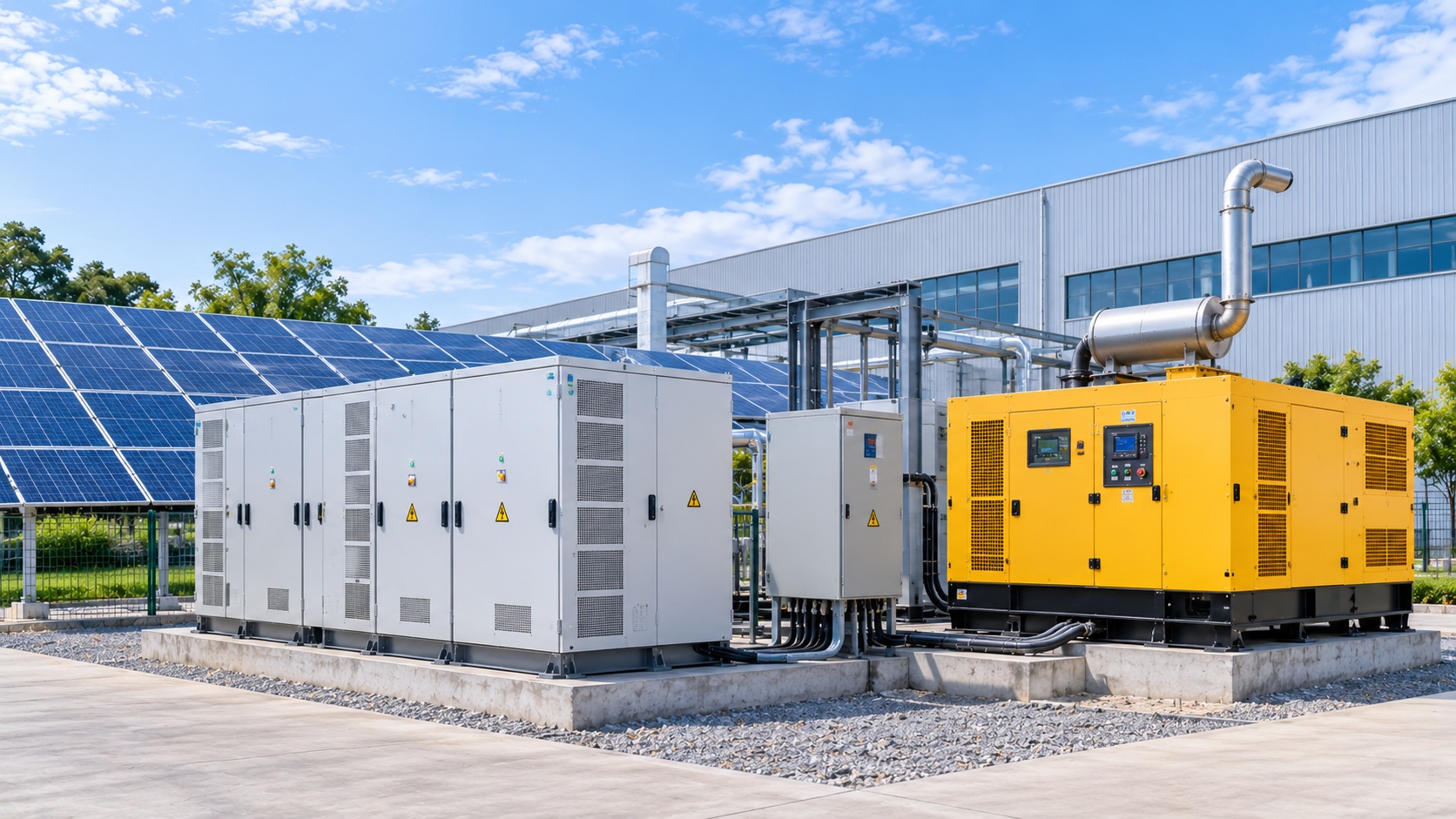
Yes. Combining a commercial battery energy storage system with a diesel generator is a practical solution for some industrial and commercial applications.
This configuration is commonly known as a hybrid power system.
A typical hybrid system may include:
Solar PV panels
Commercial lithium battery storage
PCS or hybrid power conversion equipment
Diesel generator
Energy management system
Grid connection, where available
The system can coordinate different energy sources according to electricity demand, battery state of charge, solar generation, and generator operating conditions.
For example:
Solar PV supplies electricity to the facility during the day.
Excess solar electricity charges the battery.
The battery supplies stored electricity when solar generation decreases or demand increases.
During a grid outage or extended low-generation period, the diesel generator can start according to the system's control strategy.
The EMS coordinates energy sources to support the required loads and maintain stable operation.
The exact control strategy depends on generator compatibility, PCS capabilities, protection settings, and the project's electrical design.
Reduced Fuel Consumption: Battery storage can reduce generator runtime when the system is properly designed and operated.
Improved Energy Flexibility: The battery can respond to changing loads while the generator provides longer-duration energy.
Solar Energy Integration: Solar PV can charge the battery and reduce dependence on diesel fuel.
Flexible Backup Configuration: Businesses can design different operating modes according to critical load requirements and local grid conditions.
For facilities that require both long-duration backup and regular energy cost optimization, a hybrid solution may provide a more balanced approach than relying on either technology alone.
Before selecting a commercial battery energy storage system or diesel generator, businesses should evaluate several important factors.
1. Power Demand (kW): Determine the total electrical load and identify which equipment must remain operational during an outage.
2. Energy Requirement (kWh): Estimate how much energy is needed during the backup period. This is particularly important when sizing a battery storage system.
3. Backup Duration: Decide whether the facility needs backup for a few minutes, several hours, or potentially longer periods.
4. Load Characteristics: Consider starting currents, motor loads, peak demand, and load fluctuations.
5. Electricity Tariffs: Review time-of-use pricing and demand charges to understand whether battery storage can provide additional savings.
6. Site Conditions: Evaluate available installation space, temperature, ventilation, safety requirements, and local regulations.
7. Future Expansion: Consider whether the system may need additional battery capacity or power output as business operations grow.
A professional system assessment can help determine whether a BESS, diesel generator, or hybrid configuration is the most suitable choice.
Choosing the right energy storage supplier is an important part of a successful BESS project.
At SOLARASIA, we provide commercial and industrial battery energy storage solutions for businesses, project developers, and system integrators.
Our solutions can be configured according to different project requirements, including battery capacity, power rating, operating environment, and application scenarios.
We focus on:
Commercial and Industrial Energy Storage: Battery storage solutions for factories, commercial buildings, and industrial facilities.
Customized System Configuration: Flexible solutions based on project power demand, energy capacity, and operating requirements.
Battery and Inverter Integration: Support for compatible battery systems, PCS equipment, and energy management configurations.
Technical Support: Assistance with system selection, configuration, and project requirements.
Project-Oriented Service: Support throughout the purchasing and technical communication process.
Whether you are planning a standalone commercial BESS project, a solar-plus-storage installation, or a hybrid battery and diesel generator system, our team can help evaluate a suitable configuration.
Contact SOLARASIA to discuss your project requirements and request a customized commercial battery energy storage solution.
It depends on the application. A BESS is suitable for fast-response backup, peak shaving, load shifting, and renewable energy integration. A diesel generator is often more suitable for extended backup when fuel is available. Some facilities benefit from combining both.
Yes, if it is specifically designed and configured for backup operation. The system may require islanding capability, suitable PCS functionality, transfer equipment, and appropriate electrical protection. Not every grid-connected battery system can operate independently during a blackout.
Backup duration depends on usable battery capacity and the connected electrical load.
A simplified calculation is:
Backup Duration (hours) = Usable Battery Energy (kWh) ÷ Average Load (kW)
Actual runtime also depends on system efficiency, operating limits, reserve capacity, and load variations.
Yes. In a properly designed hybrid system, battery storage can supply part of the electrical demand and reduce the amount of time the generator needs to operate. Actual fuel savings depend on system sizing, load profile, control strategy, and generator operating characteristics.
Yes. Solar PV, battery storage, and diesel generators can be integrated into a hybrid energy system. An appropriate EMS and compatible power conversion equipment are required to coordinate the different energy sources.
Yes. Commercial and industrial BESS solutions can support factory applications such as peak shaving, load shifting, solar self-consumption, and backup power for selected critical loads. System capacity and power rating should be selected according to the factory's electricity demand.
Important information includes the required power output (kW), backup energy capacity (kWh), expected backup duration, load characteristics, grid conditions, installation environment, and whether solar PV or a diesel generator will be integrated.
Both commercial battery energy storage systems and diesel generators play important roles in business backup power.
A diesel generator remains a practical option for long-duration electricity generation, especially where grid reliability is poor and fuel supply is available. A commercial BESS offers additional advantages in fast-response power support, peak shaving, solar integration, and energy management.
For many businesses, the most suitable solution may be a hybrid system that combines battery storage, solar PV, and diesel generation.
The key is to select a system based on actual power demand, backup duration, operating costs, and future energy requirements.
Looking for a reliable commercial battery energy storage solution? Contact SOLARASIA to discuss your project and get a customized BESS configuration.


Address : Room 908-909, Building 2, No. 469 Huatuo Lane, Shushan District, Hefei City, Anhui Province


Please read on, stay posted, subscribe, and we welcome you to tell us what you think.
Copyright 2026 @ Anhui Solarasia Energy Technology Co.,Ltd .All Rights Reserved. Sitemap | Blog | XML | Privacy Policy
 Network Supported