
How to Choose the Right Commercial Battery Energy Storage System for Your Business
Choosing the right commercial battery energy storage system (BESS) is an important decision for businesses looking to reduce electricity costs, improve power reliability, and integrate renewable energy. However, selecting an appropriate system involves more than comparing battery prices or storage capacities.
Businesses need to evaluate power demand, energy consumption, backup duration, battery technology, system configuration, safety requirements, and long-term operating costs.
Whether you operate a manufacturing facility, warehouse, commercial building, industrial park, or solar power project, this guide explains how to choose a suitable commercial battery energy storage system for your application.
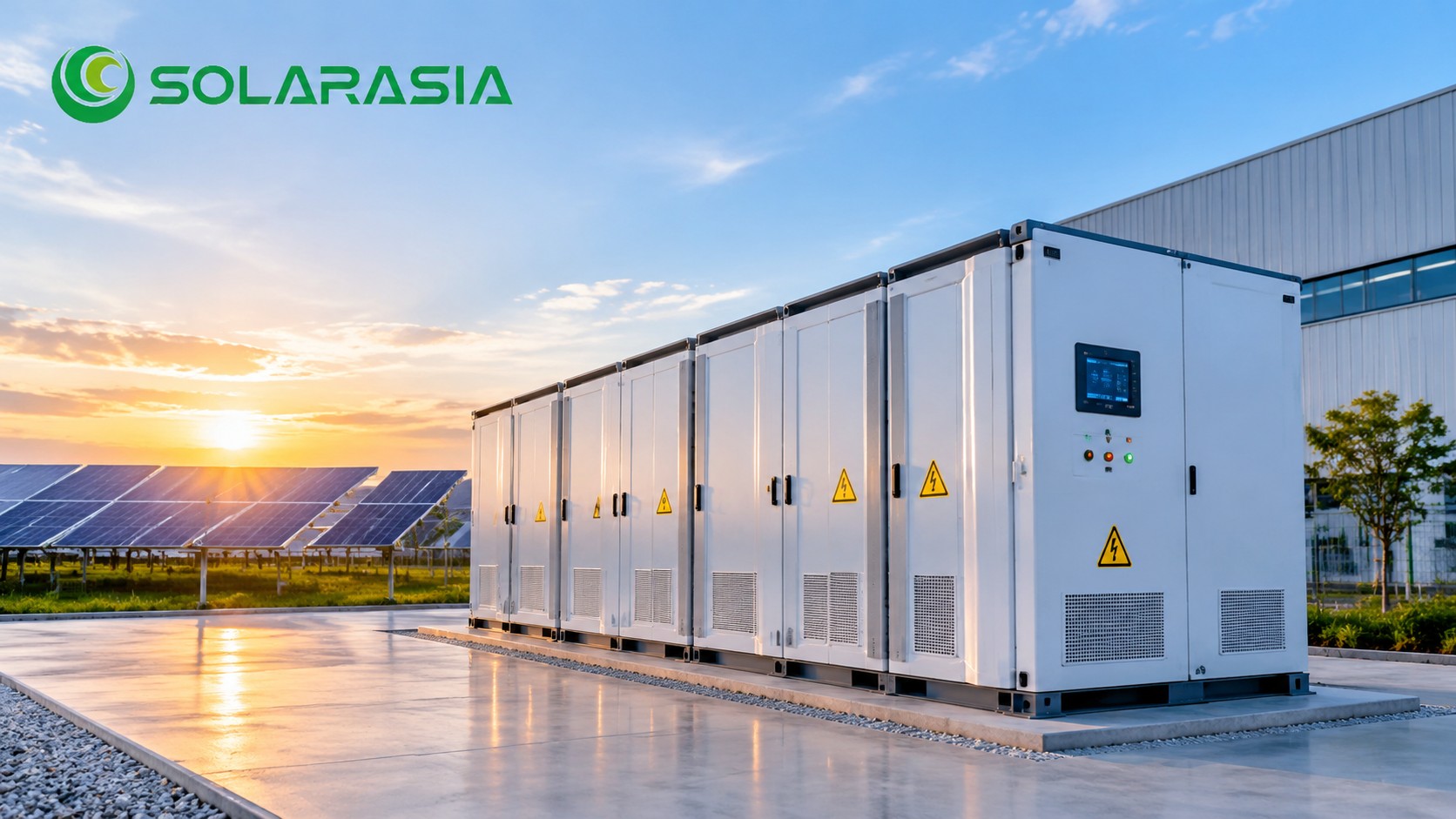
Before selecting a commercial battery energy storage system, you should understand how your facility consumes electricity.
Different businesses have different load profiles, operating schedules, and backup power requirements. A system designed for a factory with heavy machinery may not be suitable for a commercial building with relatively stable electricity consumption.
Start by collecting the following information:
Daily electricity consumption: How many kWh does your facility use per day?
Peak power demand: What is the maximum power required by your facility?
Operating hours: Does your business operate during the day, at night, or 24 hours a day?
Electricity tariff: Are there peak and off-peak electricity prices?
Backup requirements: Which equipment must remain operational during a power outage?
Solar PV capacity: Does your facility already have a solar power system?
Ideally, review at least several weeks of electricity bills and interval meter data. For facilities with seasonal production or changing workloads, longer-term data provides a more reliable basis for system design.
Understanding these factors helps determine whether your business needs a battery system for peak shaving, load shifting, backup power, solar energy storage, or multiple applications.
The power rating of a commercial battery energy storage system indicates how much electricity the system can deliver or absorb at a given moment.
It is usually measured in kilowatts (kW).
For example:
A 50 kW BESS can deliver up to 50 kW of power under its specified operating conditions.
A 100 kW BESS can deliver up to 100 kW of power.
A 250 kW BESS can support higher power demand, subject to the system configuration.
When determining the required power rating, consider the maximum simultaneous load rather than simply adding together the rated power of every piece of equipment.
You should also consider:
The maximum demand of the facility.
Which loads need battery support.
Motor starting currents and other short-duration surges.
Whether the system operates in grid-connected or off-grid mode.
The output capacity and overload capability of the PCS.
For example, a factory may have a peak load of 180 kW, but only 100 kW of critical equipment may need backup power. The required BESS power rating will depend on the actual operating strategy and which loads the battery must support.
Important: Battery energy capacity and inverter power rating are different specifications. A 215 kWh battery system does not automatically mean that it can deliver 215 kW of power.
Battery capacity determines how much electrical energy a storage system can store and deliver over time. It is measured in kilowatt-hours (kWh).
The required capacity depends mainly on the power demand and the duration for which the battery needs to supply that demand.
A simplified calculation is:
Required Battery Energy (kWh) = Average Supported Load (kW) × Backup Duration (hours)
For example, if a business needs to support a 50 kW load for 4 hours:
50 kW × 4 hours = 200 kWh
This means the facility needs 200 kWh of usable energy at the load side before accounting for conversion losses and additional design margins.
The actual battery capacity should also account for:
Depth of discharge (DoD)
Battery charging and discharging efficiency
PCS conversion efficiency
Operating temperature
Battery aging and capacity degradation
Required reserve capacity
For a simplified preliminary estimate:
Nominal Battery Capacity ≈ Required Delivered Energy ÷ (Usable DoD × Discharge Efficiency)
Assume a business needs 200 kWh of delivered energy, with an illustrative usable DoD of 90% and discharge efficiency of 95%.
200 ÷ (0.90 × 0.95) ≈ 234 kWh
A battery system around 234 kWh would be a preliminary reference, not a final engineering selection. The final design should use manufacturer specifications, actual load data, operating limits, and project conditions.
| System Capacity | Potential Application |
|---|---|
| 100 kWh | Smaller commercial facilities, selected critical loads, and short-duration energy storage |
| 215 kWh | Small to medium industrial applications, commercial buildings, and peak shaving |
| 261 kWh | Larger commercial loads, longer discharge periods, and selected industrial applications |
These are illustrative application references. The appropriate system size depends on the actual power rating, usable capacity, load profile, and operating strategy.
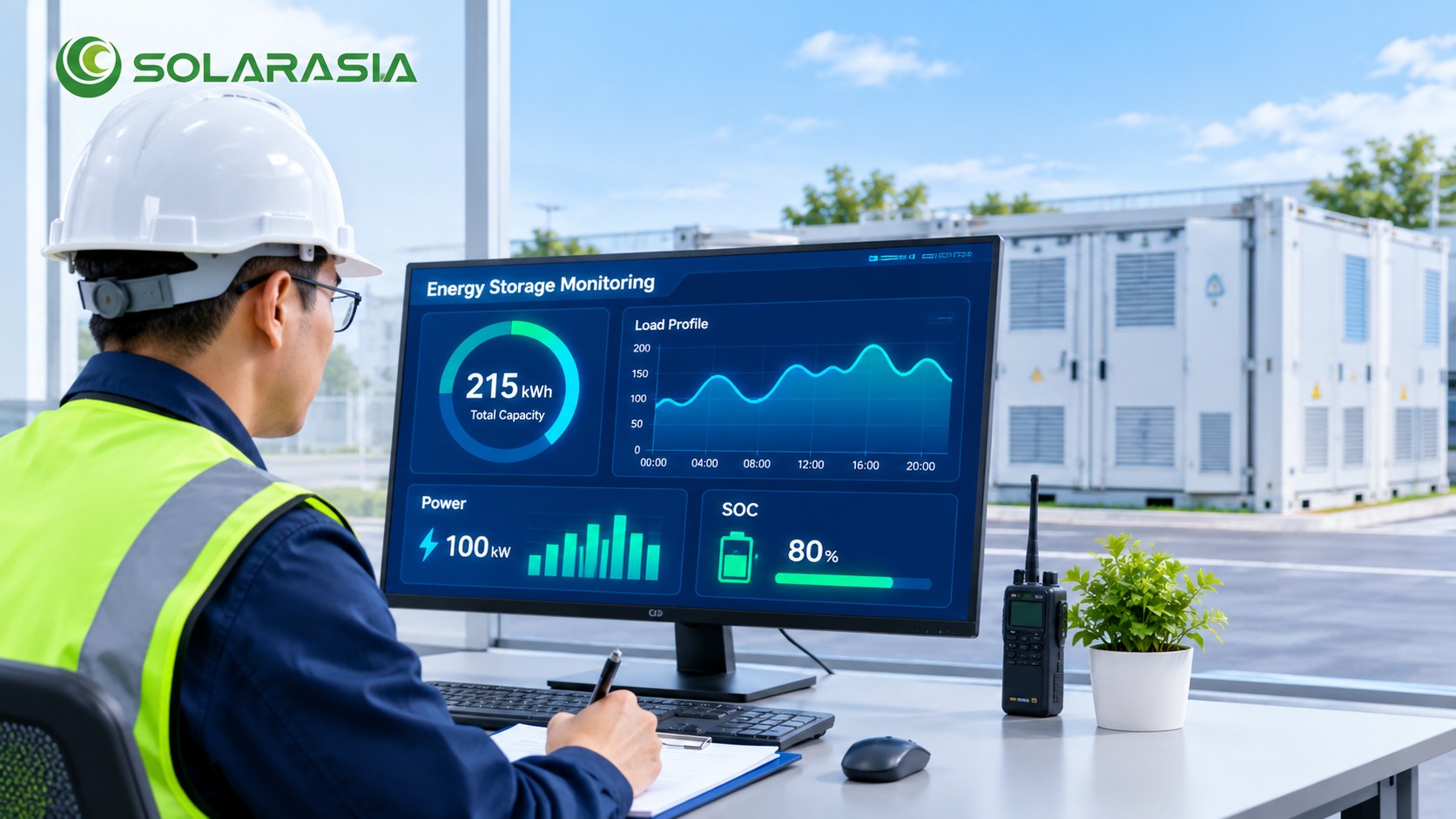
Battery chemistry has a direct impact on system safety, cycle life, performance, and total ownership cost.
For many commercial and industrial energy storage applications, lithium iron phosphate (LiFePO4 or LFP) batteries are widely used.
1. High Thermal Stability
LFP batteries generally offer better thermal stability than some other common lithium-ion chemistries. This makes them a widely adopted option for stationary energy storage.
However, LFP batteries are not completely free from thermal runaway risks. Proper battery management, thermal control, electrical protection, and fire safety design remain essential.
2. Long Cycle Life
LFP batteries can support frequent charging and discharging when operated within the manufacturer's specified voltage, temperature, and current limits.
Actual cycle life depends on operating conditions, DoD, charging and discharging rates, and battery quality.
3. Suitable for Frequent Energy Management
Commercial energy storage systems may operate daily for peak shaving, load shifting, and solar self-consumption. LFP technology is suitable for these applications when properly configured.
4. Lower Long-Term Operating Considerations
A longer service life and stable operating characteristics can help improve the long-term economics of a commercial battery storage project.
When comparing battery products, check the cell specifications, rated capacity, cycle-life test conditions, warranty, and available certification documents rather than relying on chemistry alone.
A commercial battery energy storage system is not simply a collection of battery cells. Several components work together to manage energy conversion, battery operation, and system control.
The PCS converts DC electricity from the battery into AC electricity for commercial loads or grid-connected operation. It also converts AC electricity into DC electricity when charging the battery.
When selecting a PCS, evaluate:
Rated AC power
Charging and discharging power
Grid voltage and frequency
Grid-connected and off-grid capabilities
Overload performance
Power quality and protection functions
Compatibility with the battery system
If backup power is required, confirm that the PCS and complete system support the required backup operating mode, transfer arrangement, and load characteristics.
The BMS monitors and manages battery operation.
Its main functions include:
Cell voltage monitoring
Battery temperature monitoring
Charge and discharge current monitoring
Overcharge and over-discharge protection
Cell balancing
Fault detection and communication
A properly configured BMS helps maintain battery operating limits and improves system reliability.
The EMS coordinates energy flows between the battery, grid, solar PV system, and facility loads.
Depending on the system configuration, an EMS can support:
Peak shaving
Load shifting
Solar energy self-consumption
Charging and discharging schedules
Demand management
System monitoring and operational reporting
For commercial and industrial projects, EMS functionality is especially important because it determines how the storage system responds to electricity demand and tariff conditions.
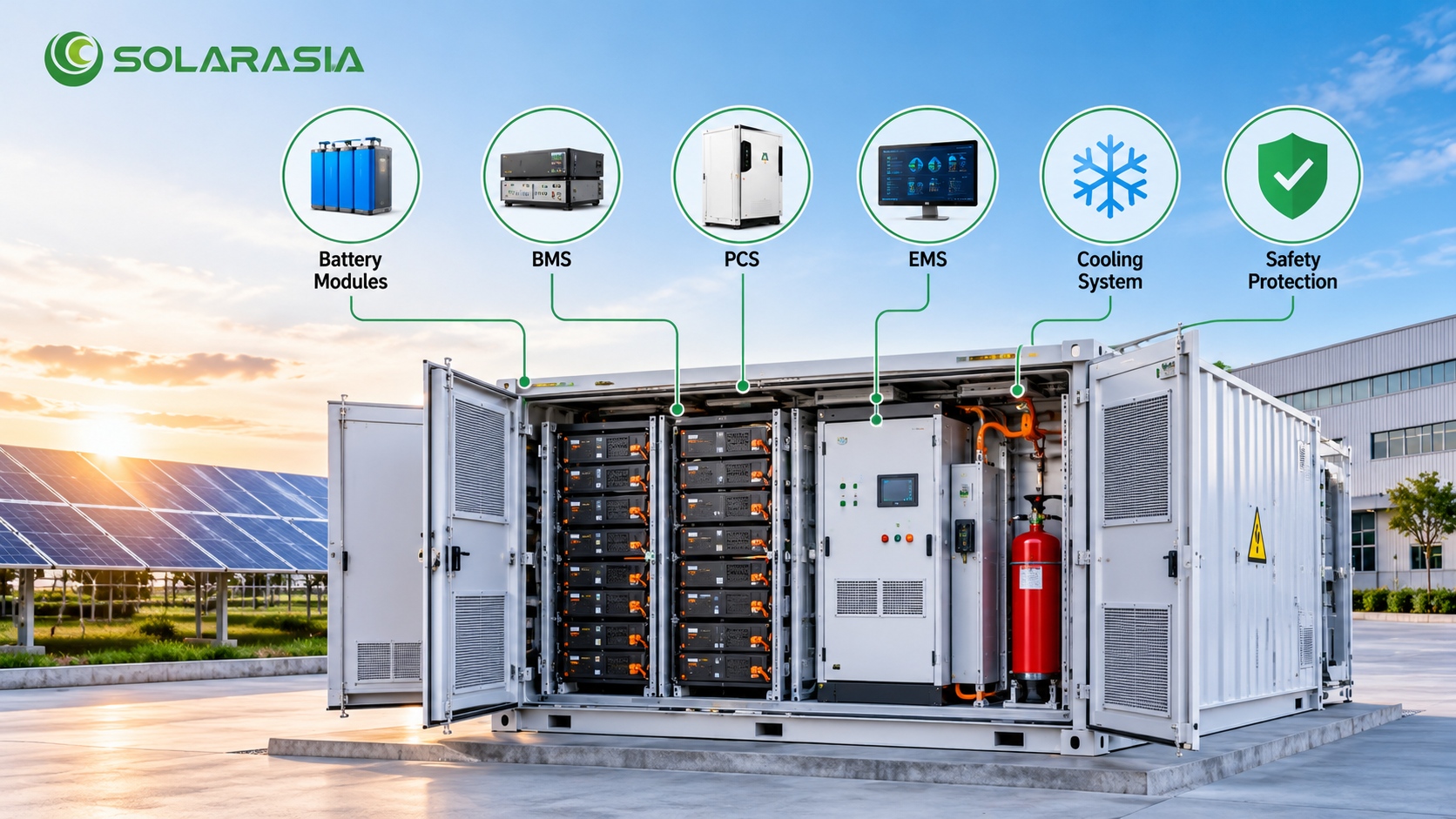
Thermal management is another important factor when selecting a commercial battery energy storage system.
The cooling method affects operating temperature, system design, maintenance requirements, and installation conditions.
Air-cooled systems use fans and air circulation to manage battery temperature.
Advantages include:
Relatively simple system structure
Familiar maintenance requirements
Potentially lower initial equipment costs
Suitable for certain smaller and less densely configured systems
However, temperature distribution and cooling performance must be carefully evaluated, particularly in hot environments or systems with high operating loads.
Liquid-cooled systems use a coolant circulation system to regulate battery temperature.
Potential advantages include:
More controlled temperature management
Improved temperature uniformity
Suitability for certain high-capacity and high-density systems
Support for demanding operating conditions
However, liquid cooling introduces additional components and maintenance considerations, including coolant circulation, pumps, and leak monitoring.
| Comparison | Air Cooling | Liquid Cooling |
|---|---|---|
| Cooling Method | Forced air circulation | Coolant circulation |
| System Structure | Relatively simple | More complex |
| Temperature Control | Depends on airflow and layout | More precise when properly designed |
| Maintenance | Fans and air filters | Pumps, coolant, and circulation components |
| Typical Applications | Selected small and medium systems | Selected medium and large BESS projects |
The best option depends on system capacity, battery layout, ambient temperature, operating conditions, and the manufacturer's engineering design.
Safety should be a priority when purchasing an industrial battery energy storage system.
A suitable BESS should include multiple layers of protection rather than relying on a single safety component.
Important features to evaluate include:
Battery Management System (BMS)
Overcurrent and short-circuit protection
Overvoltage and undervoltage protection
Temperature monitoring
Thermal management
Smoke and fire detection where required
Fire suppression solutions designed for the project
Emergency shutdown and electrical isolation
Appropriate enclosure protection
You should also assess the installation environment.
Consider:
Indoor or outdoor installation.
Ambient temperature and humidity.
Ventilation and heat dissipation.
Available installation space.
Electrical connection and grounding.
Fire separation and emergency access.
Local electrical and fire regulations.
Depending on the project and target market, relevant standards may include IEC 62619, IEC 62933-5-2, UL 9540, UL 9540A, and NFPA 855.
These standards have different scopes and applicability. Always verify the actual certification or test documentation for the proposed battery, equipment, and complete system configuration.
A commercial battery energy storage system should be selected according to the business objective.
Different applications require different system configurations and operating strategies.
Businesses with high peak electricity demand can use battery storage to discharge electricity during periods of high demand.
This can help reduce peak demand charges where the electricity tariff structure allows it.
The battery charges during periods of lower electricity prices and discharges during more expensive periods.
This strategy can help reduce electricity purchasing costs when the tariff difference and system efficiency justify the investment.
A commercial BESS can store surplus solar electricity generated during the day and supply energy when solar production decreases.
This can increase on-site solar energy utilization and reduce reliance on grid electricity.
A battery storage system can supply selected critical loads during grid interruptions if the system is specifically designed for backup operation.
The design must consider the PCS operating mode, isolation and transfer equipment, protection coordination, and load requirements.
For industrial parks, remote facilities, and sites with distributed energy resources, a BESS can form part of a microgrid solution together with solar PV, generators, and grid connections.
The EMS coordinates the available energy sources according to the project's operating requirements.
When comparing commercial battery energy storage systems, do not focus only on the initial battery price.
The total project cost may include:
Battery modules or battery cabinets
PCS and electrical equipment
EMS and monitoring systems
Cooling and fire protection systems
Installation and commissioning
Transformer and switchgear upgrades, if required
Transportation and civil works
Operation and maintenance
To estimate potential financial benefits, identify the main sources of savings.
For example:
Annual Energy Cost Savings = Peak Shaving Savings + Load Shifting Savings + Solar Self-Consumption Benefits + Other Verified Savings
The calculation should avoid double-counting benefits from the same stored energy.
A preliminary simple payback estimate is:
Simple Payback Period = Total Initial Project Investment ÷ Annual Net Financial Savings
For a more reliable investment evaluation, consider battery degradation, electricity tariff changes, replacement costs, financing, maintenance, and the system's expected operating life.
A technically suitable system is not necessarily the most economical one. The best BESS should balance performance, safety, project costs, and long-term financial returns.
Choosing the right supplier is just as important as selecting the right battery capacity.
A reliable commercial battery energy storage supplier should be able to provide technical documentation, system customization, project support, and after-sales service.
Before placing an order, evaluate the following factors:
1. Product Quality and Technical Specifications
Check battery chemistry, rated capacity, nominal voltage, cycle life, operating temperature, and system efficiency.
2. Manufacturing and Quality Control
Ask about production processes, quality inspection procedures, battery testing, and traceability.
3. System Integration Capability
A qualified supplier should understand how battery modules, PCS, BMS, EMS, cooling systems, and protection equipment work together.
4. Certifications and Test Reports
Request relevant documents and verify that they apply to the actual product model and configuration.
5. Customization Capability
Commercial projects may require different capacities, output power ratings, cabinet configurations, communication protocols, and operating strategies.
6. Technical and After-Sales Support
Confirm whether the supplier can provide technical consultation, installation guidance, commissioning support, troubleshooting, and warranty service.
Working with a supplier that understands both battery technology and project requirements can reduce communication costs and improve project execution.
At SOLARASIA, we provide commercial and industrial battery energy storage solutions for businesses, energy developers, distributors, and project contractors.
Our solutions cover battery storage systems for industrial facilities, commercial buildings, solar-plus-storage projects, and customized energy storage applications.
We focus on:
LiFePO4 battery energy storage solutions
Commercial and industrial BESS configurations
Customized battery capacity and system designs
Battery management and energy management integration
Technical support throughout project development
Pre-sales consultation and after-sales service
Whether you are planning a new commercial energy storage project or upgrading an existing solar power system, our team can help evaluate your requirements and recommend a suitable configuration.
Looking for a commercial battery energy storage system for your project?
Contact SOLARASIA and share your electricity consumption, peak power demand, backup duration, and project location.
Our team can help you evaluate a suitable BESS capacity and system configuration.
The required capacity depends on electricity consumption, supported load, operating hours, and desired backup duration. A preliminary estimate can be calculated by multiplying the average supported load in kW by the required operating hours.
kW represents the power that a battery energy storage system can deliver or absorb at a given moment. kWh represents the amount of energy it can store or deliver over time. Both specifications are essential when selecting a BESS.
Yes. LiFePO4 batteries are widely used in commercial and industrial energy storage because of their thermal stability, cycle-life characteristics, and suitability for frequent charging and discharging. Proper safety and thermal management are still necessary.
Backup duration depends on usable battery capacity and the actual supported load. For example, a system with 200 kWh of usable energy supplying a constant 50 kW load could theoretically operate for approximately 4 hours, before considering additional operating limitations and conversion losses.
Yes. A compatible BESS can be integrated with an existing solar PV system to store surplus solar electricity and supply energy when solar generation is insufficient. Compatibility and system architecture should be evaluated before installation.
Air-cooled systems use fans and airflow to regulate temperature, while liquid-cooled systems circulate coolant through thermal management components. Liquid cooling can provide more precise temperature control in suitable designs, but the best choice depends on system size and operating conditions.
Yes, if the system is designed and equipped for backup or off-grid operation. The PCS, electrical isolation, transfer equipment, protection system, and load configuration must support this operating mode. A standard grid-following system may shut down during a grid outage.
Prepare your average and peak electricity demand, required backup duration, existing solar capacity, installation location, and preferred system application. These details help the supplier evaluate the required battery capacity, PCS power, and system configuration.
Choosing the right commercial battery energy storage system requires a complete evaluation of energy demand, power rating, battery capacity, battery technology, system components, safety, and project economics.
Instead of selecting a system based only on its advertised kWh capacity, businesses should consider how the BESS will operate within their actual electrical infrastructure.
With the right system design and a qualified supplier, commercial battery storage can support peak shaving, load shifting, solar energy utilization, and backup power.
Contact SOLARASIA to discuss your commercial and industrial energy storage project and request a customized BESS solution.


Address : Room 908-909, Building 2, No. 469 Huatuo Lane, Shushan District, Hefei City, Anhui Province


Please read on, stay posted, subscribe, and we welcome you to tell us what you think.
Copyright 2026 @ Anhui Solarasia Energy Technology Co.,Ltd .All Rights Reserved. Sitemap | Blog | XML | Privacy Policy
 Network Supported