
Solar Panels and Battery Storage: How Do They Work Together?
Solar panels generate electricity when sunlight is available, but electricity demand does not always follow the same schedule.
A commercial building, for example, may generate more solar power than it needs during the middle of the day. In the evening, however, electricity consumption may continue after solar production has fallen.
This is where battery storage becomes useful.
By combining solar panels with batteries, a photovoltaic system can store part of the electricity generated during periods of high solar production and make that energy available later.
The basic concept is:
Solar Panels → Solar Inverter → Building Loads
With battery storage, the energy flow becomes more flexible:
Solar Panels → Building Loads + Battery Storage
and later:
Battery Storage → Building Loads
This combination is commonly known as solar plus battery storage.
For homeowners, warehouses, factories, offices and other commercial facilities, solar and storage can form an integrated energy system that supports solar self consumption, energy management and, depending on the system design, backup power.
Solar panels generate direct current, or DC electricity.
Most buildings use alternating current, or AC electricity.
Therefore, an inverter or power conversion system is required to convert and manage the electricity.
A simplified system consists of:
Solar Panels → DC Electricity → Inverter → AC Electricity → Building
When solar generation is higher than the building's immediate demand, the surplus can be directed toward the battery:
Solar Panels → Inverter / Power Conversion System → Battery
When solar production decreases, the stored energy can be discharged:
Battery → Inverter / PCS → Building Loads
If the battery is fully charged and the building has no additional demand, surplus solar energy may be exported to the grid or curtailed depending on the system configuration.
A solar battery storage system combines photovoltaic generation with rechargeable batteries and power conversion equipment.
A typical system can include:
The exact configuration depends on the size and purpose of the installation.
A small residential system may use a hybrid inverter with an integrated battery interface.
A large commercial installation may use separate PV inverters, battery cabinets, PCS equipment, EMS and electrical switchgear.
Solar panels are an effective way to generate electricity from sunlight, but their production is naturally dependent on solar conditions.
Solar generation generally increases during the morning, reaches higher levels around the middle of the day, and decreases in the afternoon.
Electricity consumption may follow a completely different pattern.
For example, a commercial building could have:
High Solar Production → Low Building Demand
during part of the afternoon.
Later:
Low Solar Production → High Building Demand
may occur during the evening.
Battery storage can help shift some electricity from the first period to the second.
Consider a commercial warehouse with a rooftop PV system.
During the day:
Solar Generation = 100kW
Building Demand = 60kW
The approximate instantaneous surplus is:
100kW − 60kW = 40kW
Depending on the system and grid arrangement, that surplus could potentially be exported to the grid or otherwise managed.
Without battery storage, the building cannot simply save the unused electricity for the evening.
Now add a battery system.
During the same period:
Solar Generation = 100kW
Building Demand = 60kW
Potential Surplus = 40kW
Part of the surplus can potentially charge the battery, subject to:
Later in the day, solar production decreases.
The battery can then discharge energy to support building loads, subject to the system's operating conditions.
This is one of the fundamental ways solar panels and battery storage work together.
Solar panels convert sunlight into DC electricity.
Important specifications include:
Higher power modules can help reduce the number of panels required for a specific PV capacity.
The solar inverter converts DC electricity from the PV array into AC electricity for the building and grid.
Commercial solar inverters may provide functions such as:
The inverter must be correctly matched to the PV array in terms of voltage, current and power.
The battery stores electrical energy for later use.
Modern energy storage systems commonly use lithium based battery technologies, including lithium iron phosphate, or LiFePO4.
Important battery specifications include:
The Battery Management System, or BMS, monitors and manages the battery.
It can monitor:
The BMS can communicate with the inverter or PCS to coordinate battery operation.
The power conversion system, or PCS, manages the conversion between AC and DC in many commercial battery systems.
Depending on the architecture, a hybrid inverter can also manage both solar generation and battery storage.
The appropriate configuration depends on the system size and application.
The Energy Management System, or EMS, coordinates energy flows.
It may control:
For larger commercial projects, EMS functionality can become an important part of the overall energy strategy.
The charging process depends on the system architecture.
A simplified process is:
Step 1: Solar panels generate DC electricity.
Step 2: The inverter or power conversion system manages the solar electricity.
Step 3: Electricity first supplies the building's active loads.
Step 4: Surplus energy can be directed toward the battery.
Step 5: The BMS monitors battery conditions during charging.
Step 6: The battery stops or reduces charging when it reaches its configured operating limit.
This means the battery does not necessarily receive all electricity generated by the solar panels.
The actual charging power depends on the available solar surplus, battery capacity, PCS rating and control strategy.
When solar production falls below the desired level, the battery can discharge.
The simplified process is:
Battery → PCS / Inverter → AC Distribution → Building Loads
For example, if a building requires 80kW and solar generation is producing 30kW, the remaining power could potentially be supplied by the grid, battery or a combination of both.
With battery storage:
80kW Load − 30kW Solar = 50kW Remaining Demand
The battery may provide part or all of that remaining demand depending on its available power and operating strategy.
When the battery reaches its configured maximum state of charge, it cannot continue storing energy indefinitely.
If solar generation remains higher than building demand, the system may:
The exact behavior depends on the grid connection, inverter configuration, export policy and EMS settings.
This is why battery capacity should be designed according to actual solar generation and electricity consumption patterns.
When the battery reaches its configured minimum state of charge, the system will normally stop discharging or reduce discharge power.
The building can then obtain electricity from:
Maintaining a reserve state of charge can also be important when the battery system is intended to provide backup power.
Commercial buildings can benefit from combining PV generation with battery storage for different applications.
The battery can store surplus solar generation and make it available later.This can increase the amount of generated solar energy that is consumed on site.
Some commercial electricity tariffs include demand charges based on peak power demand.Battery discharge can potentially help reduce grid demand during selected periods.The actual economic benefit depends on the local tariff structure and system operation.
Some electricity markets use different electricity prices at different times.A battery can potentially charge during lower cost periods or from surplus solar and discharge during higher cost periods.The operating strategy depends on local tariffs and project objectives.
A properly designed solar and battery system can provide backup power for selected loads.
The system may support:
However, backup functionality requires compatible inverter equipment, electrical isolation and appropriate system design.
A battery alone does not automatically provide whole building backup power.
Battery runtime depends on both battery energy capacity and building demand.
A simplified calculation is:
Runtime ≈ Usable Battery Capacity ÷ Load Power
For example, if a battery has approximately 200kWh of usable energy and the supported load is 50kW:
200kWh ÷ 50kW = 4 hours
This is a simplified calculation.
Actual runtime can be affected by:
Therefore, project calculations should use actual usable energy and system efficiency.
This is an important concept when designing a solar storage system.
This describes how much electrical power the battery system can deliver or absorb at a given moment.
This describes how much energy the battery can store.
For example:
100kW / 215kWh
indicates a system with approximately 100kW power capability and 215kWh nominal energy capacity under specified conditions.
A battery with high energy capacity does not necessarily have high discharge power.
Both specifications need to match the intended application.
AC coupling is widely considered for both new projects and PV retrofit applications.
A simplified architecture is:
Solar Panels → PV Inverter → AC Bus
and:
Battery ↔ PCS → AC Bus
The existing solar inverter and battery PCS operate on the AC side.
One advantage is that an existing PV system may potentially retain its original solar inverter when adding a separate battery system.
This can make AC coupling a consideration for commercial solar retrofits.
However, actual compatibility must be verified for each project.
In a DC coupled architecture, the battery and PV system share a DC side power conversion path.
A simplified configuration is:
Solar Panels → DC Bus / Hybrid Inverter ↔ Battery
The solar energy can be managed through a common DC architecture before conversion to AC.
DC coupling can be attractive for certain new solar plus storage projects, but it is more dependent on equipment compatibility and system architecture.
AC Coupled vs DC Coupled
| Feature | AC Coupled | DC Coupled |
| Battery Connection | AC side | DC side |
| Existing PV Retrofit | Often considered | More equipment dependent |
| Existing PV Inverter | Can potentially remain | May need compatible architecture |
| Battery PCS | Typically required | Integrated or dedicated conversion path |
| Design Flexibility | High for many retrofit projects | Depends strongly on equipment |
| Application | New systems and retrofits | New systems and compatible designs |
Neither architecture should be selected based only on the battery capacity.
The existing PV system, inverter configuration, electrical infrastructure and project objectives all need to be evaluated.
Battery sizing should start with the purpose of the storage system.
Different applications require different battery configurations.
Analyze how much excess solar energy is generated during the day.
The battery should have enough energy capacity to capture an appropriate portion of that surplus.
Focus on:
Focus on:
Analyze:
There is no universal battery size for a particular PV capacity.
A 100kW solar system, for example, could potentially be paired with different battery sizes depending on the project's objectives.
The main concept is energy shifting.
Without storage:
Solar Generation → Immediate Building Consumption → Grid Export or Curtailment
With storage:
Solar Generation → Immediate Consumption + Battery Charging
Later:
Battery → Building Consumption
This can make the overall energy system more flexible.
However, batteries also introduce conversion losses and additional equipment costs.
Therefore, system design should consider both the energy benefits and the overall project economics.
Energy is lost during charging and discharging.
For example, if 100kWh of solar electricity is used to charge a battery, the amount of energy later delivered to the building will generally be lower.
Losses can occur in:
Round trip efficiency is therefore an important specification when comparing storage systems.
Several factors can affect the actual performance of a solar storage system.
Different battery chemistries have different characteristics.
Battery performance can vary with operating temperature.
Operating within appropriate limits can influence battery lifetime.
Higher power operation can affect thermal and electrical conditions.
Battery capacity gradually changes over time.
Conversion losses affect how much energy is ultimately available.
The way the system is operated can have a significant effect on energy utilization.
It depends on the system architecture.
A conventional grid tied solar inverter normally requires the utility grid to be available to operate.
A properly designed backup or off grid capable system can operate differently.
For example:
Solar Panels + Battery + Backup Capable Inverter
can potentially create a local electrical system during a grid outage.
The inverter needs to establish the appropriate electrical conditions and manage the balance between solar generation, battery charging and building loads.
Therefore, businesses that require backup power should specify this requirement before selecting the equipment.
Warehouses and factories are common applications for solar plus storage.
A typical industrial project may include:
The system can be designed around:
Solar Generation + Building Load + Battery Storage + Grid
For facilities with large daytime electricity consumption, solar can supply building loads directly.
When solar generation exceeds demand, the battery can potentially store the surplus.
Later, stored energy can support building loads when PV generation decreases.
When selecting a battery system, businesses should evaluate more than nominal capacity.
Important specifications include:
For commercial projects, installation environment and system integration are also important.
Outdoor battery cabinets may need appropriate protection against dust, water and changing weather conditions.
A 100kW solar system does not automatically require a specific battery capacity.
The battery should be sized according to the actual load profile and project objectives.
The battery must communicate and operate correctly with the selected inverter or PCS.
Power capacity in kW is equally important.
If backup power is required, the system may need to maintain a reserve state of charge.
Battery charging power and capacity are limited.
Charging and discharging involve conversion losses, so nominal battery capacity does not equal delivered energy.
A practical design process can follow these steps:
Determine the PV system's expected daily and annual generation.
Review electricity bills and, where available, interval load data.
Determine whether the system is designed for:
Consider AC coupling or DC coupling.
Determine the required:
Verify electrical and communication compatibility.
Include appropriate DC and AC protection, switchgear and grounding.
Define when the battery should charge, discharge or remain in reserve.
Test the PV system, battery, inverter, protection and communication systems before commercial operation.
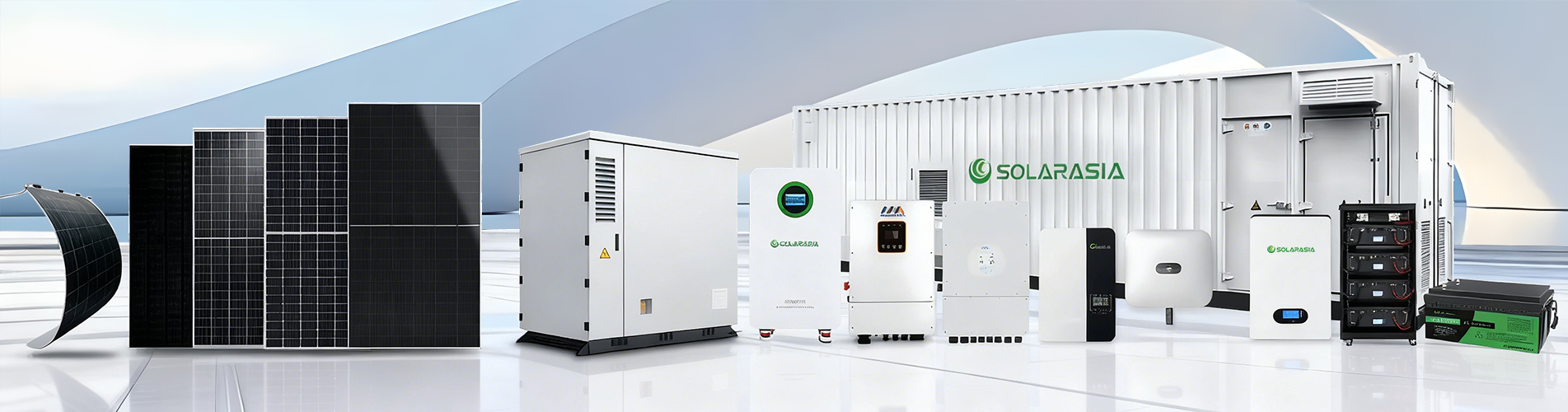
Anhui Solarasia Energy Technology Co., Ltd. provides solar and energy storage products for residential, commercial and industrial applications.
Our product portfolio includes:

Address : Room 908-909, Building 2, No. 469 Huatuo Lane, Shushan District, Hefei City, Anhui Province


Please read on, stay posted, subscribe, and we welcome you to tell us what you think.
Copyright 2026 @ Anhui Solarasia Energy Technology Co.,Ltd .All Rights Reserved. Sitemap | Blog | XML | Privacy Policy
 Network Supported