
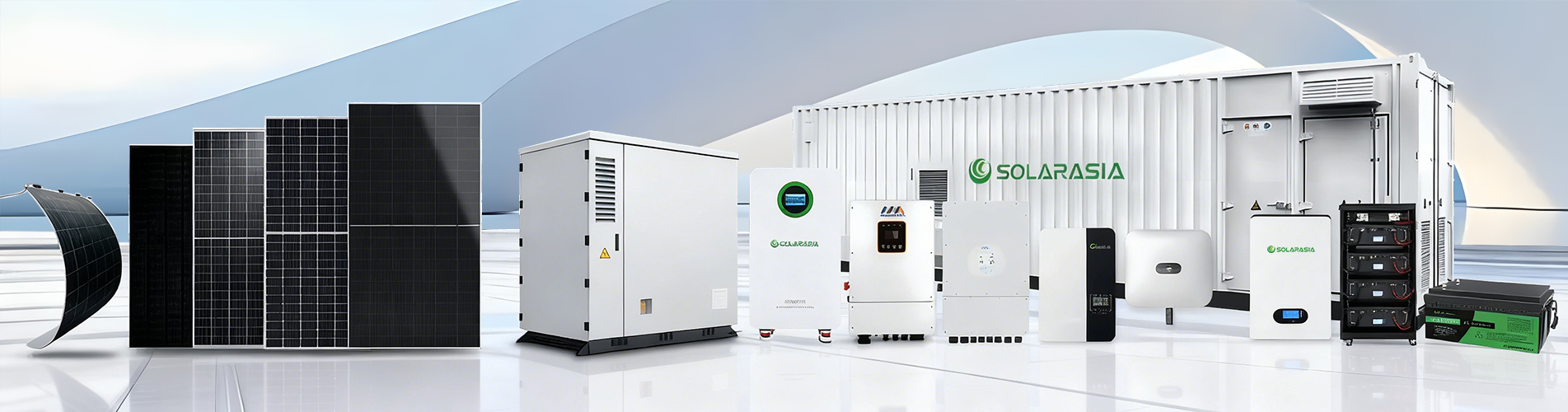
How Does a Solar Inverter Work? The Amazing Process That Turns Sunlight Into Usable Electricity
Solar panels often get all the attention when people talk about renewable energy. However, solar panels alone cannot power your home, office, or factory.
The real magic happens inside the solar inverter.
Without a solar inverter, the electricity generated by solar panels would be unusable for most appliances and electrical equipment.
So, how does a solar inverter work, and why is it considered the brain of a solar energy system?
Let's break it down step by step.
What Is a Solar Inverter?
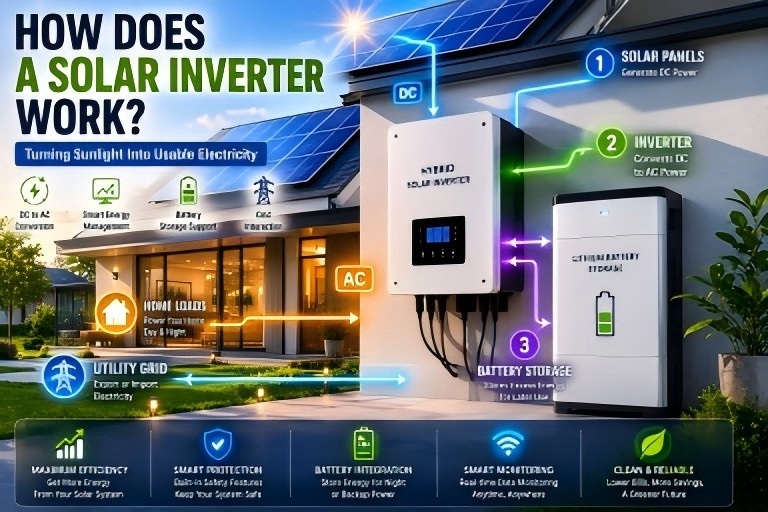
A solar inverter is an electronic device that converts direct current (DC) electricity produced by solar panels into alternating current (AC) electricity used by homes, businesses, and industrial equipment.
Since most electrical devices operate on AC power, the inverter serves as the essential link between solar energy generation and practical electricity usage.
Modern solar inverter technology also includes advanced monitoring, battery integration, and intelligent energy management capabilities.
Click here to learn more.(What Is A Solar Inverter?)
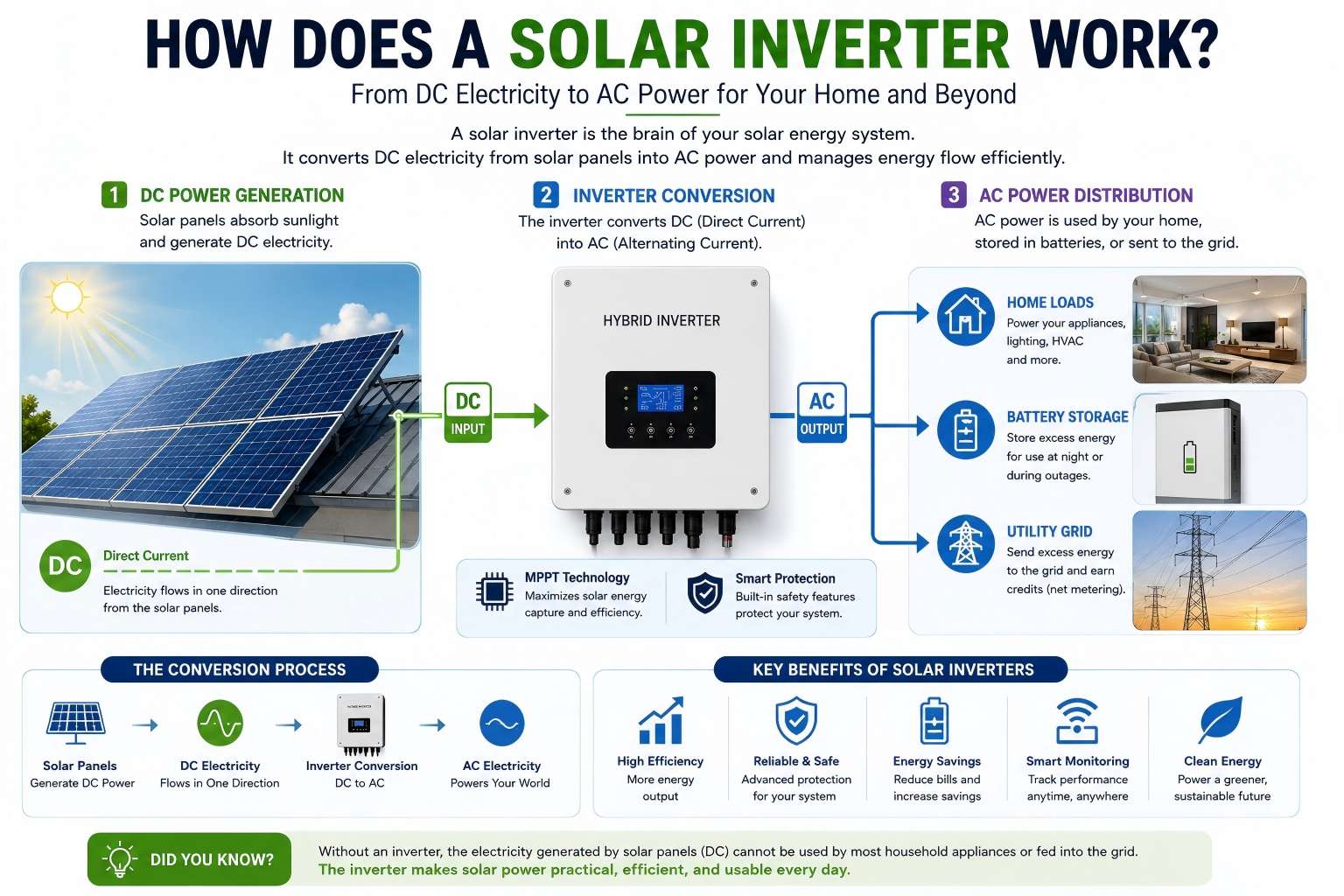
Step 1: Solar Panels Generate DC Electricity
The process begins when sunlight strikes photovoltaic (PV) cells inside solar panels.
The photovoltaic effect generates electrical current in the form of direct current (DC).
However, this DC electricity cannot directly power most household appliances or industrial equipment.
At this stage, the energy must be processed by the inverter.
Step 2: The Solar Inverter Converts DC Power Into AC Power
Once DC electricity enters the inverter, advanced electronic components rapidly switch and transform the power into alternating current (AC).
This conversion process is the inverter's primary function.
The generated AC electricity can then be used to:
This is why the solar power inverter is one of the most critical components in any photovoltaic system.
Step 3: The Inverter Optimizes Solar Energy Production
Modern solar inverters do much more than simple power conversion.They continuously monitor solar panel performance through Maximum Power Point Tracking (MPPT).
MPPT technology automatically adjusts operating conditions to maximize solar energy production throughout the day.
Benefits include:
This feature is especially important in advanced hybrid solar inverter systems.
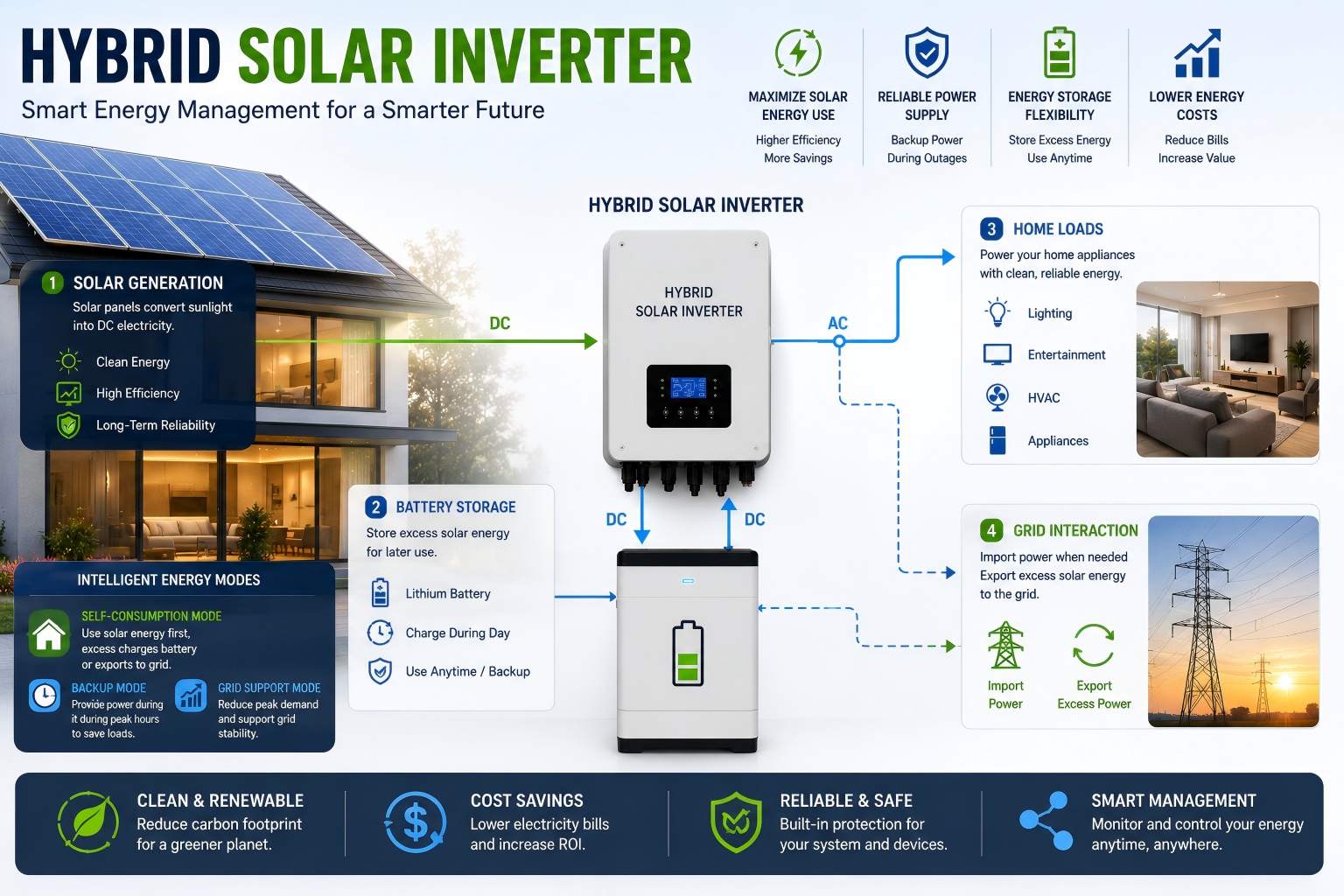
Step 4: Managing Battery Storage and Backup Power
In traditional solar systems, excess electricity is typically exported to the utility grid.
However, modern solar battery storage systems allow users to store surplus energy for later use.
A hybrid inverter can:
This capability has become increasingly popular as electricity costs continue to rise worldwide.
How Does a Hybrid Solar Inverter Work?
A hybrid inverter combines multiple functions into one intelligent device.
Unlike a standard inverter, a hybrid inverter can manage:
Because of this flexibility, hybrid solar inverter technology is becoming the preferred choice for both residential and commercial energy storage projects.
Solar Inverter vs Hybrid Inverter: What's the Difference?
| Feature | Standard Solar Inverter | Hybrid Solar Inverter |
|---|---|---|
| DC to AC Conversion | Yes | Yes |
| Battery Integration | No | Yes |
| Backup Power | Limited | Yes |
| Energy Management | Basic | Advanced |
| Grid Independence | Low | High |
For users planning future battery storage upgrades, hybrid inverters often provide greater long term value.
What Happens to Excess Solar Energy?
There are typically three options for excess solar electricity:
Why Are Solar Inverters So Important?
Even the highest quality solar panels cannot operate effectively without a reliable inverter.
A modern inverter provides:
In many ways, the inverter is the intelligence center of the entire solar power system.
Common Applications of Solar Inverters
Today's solar inverter technology is used across multiple sectors.
Final Thoughts
So, how does a solar inverter work?
It converts DC electricity generated by solar panels into usable AC electricity while simultaneously managing energy production, battery storage, and grid interaction.
Whether you're installing a residential solar system or developing a large commercial energy project, choosing the right solar inverter or hybrid solar inverter is essential for achieving maximum efficiency and long term reliability.
As solar energy and battery storage continue to grow globally, inverter technology will remain at the heart of every successful renewable energy system.


Address : Room 908-909, Building 2, No. 469 Huatuo Lane, Shushan District, Hefei City, Anhui Province


Please read on, stay posted, subscribe, and we welcome you to tell us what you think.
Copyright 2026 @ Anhui Solarasia Energy Technology Co.,Ltd .All Rights Reserved. Sitemap | Blog | XML | Privacy Policy
 Network Supported