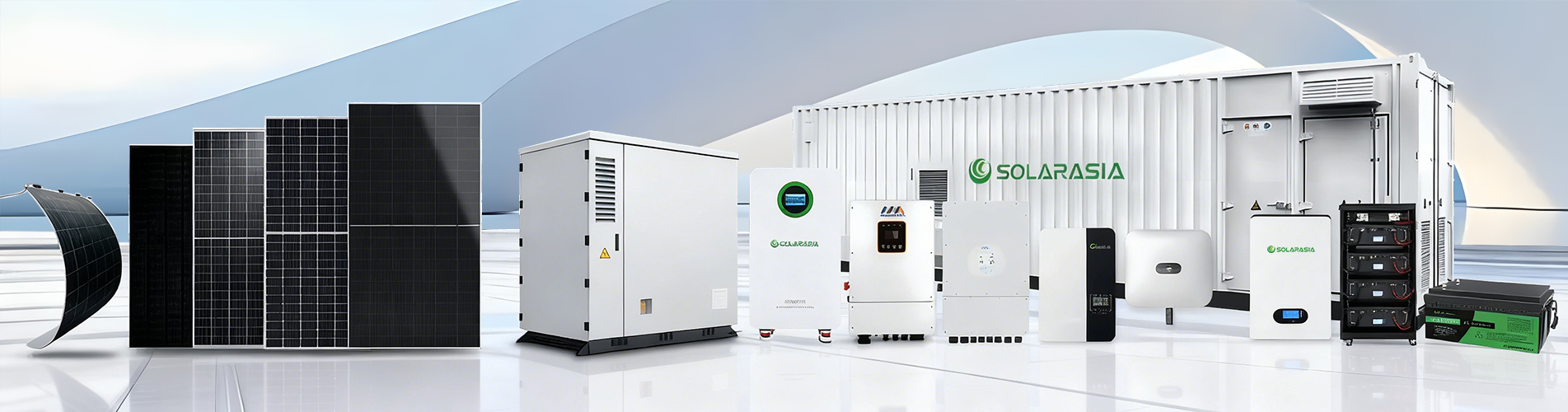
Solarasia banner

commercial solar panels

Home

commercial solar panels

  • Why LONGi Hi-MO X10? How 650W–670W Solar Panels Improve Project Returns Dec 15, 2025
    What makes the LONGi Hi-MO X10 solar panel stand out in today’s highly competitive PV market? Built on advanced monocrystalline cell technology, this series is designed to deliver higher power output with lower degradation, helping large scale and commercial projects achieve better long term returns. When buyers compare different high wattage modules, LONGi solar panels are often recognized for their stable performance, bankability, and strong manufacturing standards.     How does higher wattage really impact project economics? With power ratings ranging from 640W to 670W, the Hi-MO X10 reduces the number of panels needed per megawatt, cutting installation time, BOS costs, and land usage. This is a key reason why EPCs and developers focusing on LONGi solar panel efficiency increasingly prefer this series for utility scale and industrial rooftops, especially where space optimization matters.     Why do buyers pay close attention to pricing when choosing high power modules? While the LONGi solar panel price may vary by market and order volume, the Hi-MO X10 is widely viewed as a cost effective solution when evaluated by LCOE rather than upfront cost alone. Its balance of high output, durability, and brand reliability makes it a smart option for those looking to buy premium panels without sacrificing project profitability.     When should you choose the Hi-MO X10 over other 650W–670W panels? If your project prioritizes long term yield, strong supplier credibility, and scalable deployment, the LONGi Hi-MO X10 stands out as a future ready choice. For developers seeking performance driven modules that align with global standards, this series continues to set a strong benchmark in the high wattage solar panel segment.
  • Why Commercial Solar Solutions Are Transforming Modern Businesses May 20, 2026
    The Rising Demand for Commercial Solar Energy   As electricity prices continue to increase worldwide, businesses are actively searching for smarter and more sustainable energy solutions. Today, Commercial Solar Solutions have become one of the fastest growing investments for factories, warehouses, shopping centers, farms, and industrial facilities.   Modern companies are no longer using solar energy only for environmental benefits. Instead, businesses are adopting commercial solar power systems to reduce operating costs, improve energy independence, and strengthen long term profitability.   With the rapid development of solar inverters, lithium battery storage systems, and intelligent energy management technologies, commercial solar projects are now more efficient and affordable than ever before.   What Are Commercial Solar Solutions?   Commercial Solar Solutions refer to solar energy systems specifically designed for commercial and industrial applications. These systems typically include:   Solar PV panels Commercial solar inverters Battery energy storage systems (BESS) Hybrid energy management systems Grid connection equipment   Unlike residential solar systems, commercial solar energy systems are designed to support higher electricity consumption and larger scale operations.   These solutions are commonly installed in:   Manufacturing factories Warehouses Office buildings Shopping malls Hotels Agricultural facilities Industrial parks   Benefits of Commercial Solar Solutions 1. Reduce Electricity Costs   One of the biggest reasons businesses invest in commercial solar systems is to lower electricity expenses. Energy-intensive industries often face extremely high utility bills. By generating electricity through solar PV systems, companies can significantly reduce dependence on the utility grid.   In many countries, businesses can save thousands of dollars annually through:   Peak shaving Solar self-consumption Reduced grid electricity usage Lower demand charges   For large factories, installing a commercial rooftop solar system can create long term operational savings.     2. Improve Energy Independence   Power outages and unstable electricity supply can seriously impact industrial production.   A reliable commercial solar solution with battery storage helps businesses maintain continuous operation during blackouts and grid failures.   By combining hybrid solar inverters with LiFePO4 battery systems, companies can store excess solar energy for nighttime use or emergency backup power.   This is especially important for:   Factories Hospitals Data centers Cold storage warehouses EV charging stations   3. Support Sustainability Goals   More global businesses are adopting renewable energy to meet ESG and sustainability targets.   Using commercial solar energy systems helps companies:   Reduce carbon emissions Improve environmental responsibility Enhance brand reputation Meet government clean energy requirements   Many international buyers and investors now prefer working with companies that actively use renewable energy technologies.   Key Components of a Commercial Solar Solution High Efficiency Solar Panels   Modern commercial solar panels provide high conversion efficiency and long-term reliability.   Popular panel technologies include:   Monocrystalline solar panels Half cell solar modules N type solar panels Bifacial solar panels   High efficiency modules are ideal for maximizing rooftop space and increasing solar power generation.   Commercial Solar Inverter   The commercial solar inverter converts DC electricity generated by solar panels into usable AC power.   Popular inverter sizes include:   100kW solar inverter 110kW hybrid inverter 125kW commercial inverter   These inverters are widely used in:   Industrial solar systems Commercial buildings Agricultural solar projects Utility scale solar applications   Modern hybrid solar inverters also support battery integration and intelligent energy management.   Battery Energy Storage System (BESS)   Adding a battery energy storage system improves overall system efficiency and energy reliability.   Commercial ESS solutions help businesses:   Store excess solar energy Reduce peak electricity costs Provide backup power Improve energy optimization   Today, many businesses are integrating commercial lithium battery storage systems into their solar projects.     Popular Applications for Commercial Solar Solutions Manufacturing Factories   Factories with heavy machinery consume large amounts of electricity daily. Installing an industrial solar power system helps manufacturers reduce energy costs and improve operational stability.   Warehouses and Logistics Centers   Warehouses often have large rooftop spaces ideal for commercial rooftop solar installations.   Solar systems can support:   Refrigeration equipment Automated logistics systems Lighting EV charging stations   Agricultural Solar Projects   Modern farms increasingly use solar irrigation systems and off grid solar solutions for agricultural operations.   Commercial solar power can support:   Water pumps Greenhouses Livestock farms Cold storage systems   EV Charging Stations   As electric vehicles become more popular, commercial solar charging stations are rapidly growing.   Solar plus storage systems help charging stations:   Reduce electricity costs Improve charging stability Balance peak grid loads   How to Choose the Right Commercial Solar Solution   When selecting a commercial solar energy system, businesses should consider several key factors.   Energy Consumption   Analyze the facility’s daily electricity usage and peak demand.   This helps determine the appropriate:   Solar panel capacity Inverter size Battery storage capacity   Roof Space and Installation Area   Available installation space directly impacts system design.   Businesses should evaluate:   Rooftop condition Ground installation space Structural load capacity Solar exposure   Battery Storage Requirements   Companies requiring backup power should consider integrating commercial battery storage systems.Battery storage is particularly valuable in areas with unstable grids or high peak electricity prices.   Product Quality and Certifications   High quality components improve long-term reliability and system safety.   Look for products with certifications such as:   CE IEC UL TÜV   Reliable suppliers also provide technical support and warranty services.     The Future of Commercial Solar Solutions   The global demand for commercial solar solutions is expected to grow rapidly over the next decade.   Several trends are accelerating this growth:   Rising electricity prices Expansion of renewable energy Government clean energy incentives Growing demand for battery storage Increasing EV adoption   Future commercial solar systems will become:   More intelligent More efficient Easier to install More affordable   Businesses that invest early in commercial solar power systems can gain long-term competitive advantages while reducing operational risks.   Conclusion   Modern Commercial Solar Solutions are transforming the way businesses manage energy.   By combining solar panels, commercial hybrid inverters, and battery energy storage systems, companies can reduce electricity costs, improve energy security, and support sustainable development goals.     Whether for factories, warehouses, farms, or commercial buildings, solar energy is becoming one of the most important investments for the future of industrial and commercial power infrastructure.    
  • How to Choose the Right High Power Solar Panel for Commercial Solar Projects Jun 26, 2026
    Introduction   As commercial and industrial electricity demand continues to grow, businesses are increasingly investing in solar energy to reduce operating costs and achieve sustainability goals. One of the most important decisions in a commercial photovoltaic system is selecting the right high power solar panel.   Today's market offers a wide range of options, from 550W modules to advanced 720W, 730W, 740W, 750W, and 760W N Type HJT solar panels. Choosing the right module can significantly improve energy production, reduce installation costs, and increase the long term return on investment.     This guide explains the key factors to consider before selecting high power solar panels for commercial solar projects.   1. Choose the Right Cell Technology   Solar cell technology directly affects system efficiency and long term performance.The most common technologies include:   P Type PERC N Type TOPCon N Type HJT     Among these, N Type HJT Solar Panels have become one of the most advanced solutions for commercial and utility scale projects because they provide: Higher conversion efficiency Lower annual degradation Better low light performance Excellent temperature characteristics Higher bifacial energy generation   For businesses planning long term investments, HJT technology offers greater energy yield over the system lifetime.   2. Select the Appropriate Power Output   Commercial projects often have limited installation space while requiring maximum electricity generation.   High power modules such as 720W, 725W, 730W, 735W, 740W, 745W, 750W, 755W, and 760W solar panels allow installers to reduce the number of modules required while maintaining the same system capacity.   allow installers to reduce the number of modules required while maintaining the same system capacity.   Fewer panels also mean: Less mounting hardware Shorter installation time Reduced cable usage Lower BOS costs Simplified maintenance   3. Pay Attention to Module Efficiency   Module efficiency determines how much electricity a solar panel can generate from available sunlight.Higher efficiency modules are especially valuable for: Factory rooftops Warehouses Shopping centers Industrial parks Commercial buildings     Modern N Type HJT solar panels can achieve module efficiencies of up to 24.5%, making them an excellent choice for projects where installation space is limited.   4. Consider Bifacial Technology   Bifacial solar panels generate electricity from both the front and rear sides.Compared with conventional modules, bifacial technology can deliver higher energy production when installed above reflective surfaces such as: Concrete White roofs Gravel Sand Snow   For commercial solar projects, this additional energy generation helps improve project profitability and shorten the investment payback period.   5. Evaluate Temperature Performance   Commercial solar systems operate in different climates throughout the world.A module with a lower temperature coefficient maintains higher power output during hot weather.For example, advanced N Type HJT modules feature a temperature coefficient of approximately -0.24%/°C, helping businesses generate more electricity throughout the year.   6. Check Durability and Warranty   Commercial solar projects are expected to operate for decades.Before purchasing, verify that the solar panel provides: Double glass construction IP68 junction box Excellent mechanical load resistance Long product warranty Long linear power warranty   Reliable manufacturers typically offer a 15 year product warranty together with a 30 year linear power warranty, providing confidence for long term operation.   7. Reduce Total System Costs   Many buyers focus only on the panel price.However, the overall project cost depends on much more than module pricing. High power solar panels help reduce: Mounting structure costs Cable costs Labor costs Transportation costs Installation time Balance of System (BOS) costs     As a result, a higher efficiency module often provides a lower total cost of ownership over the project lifetime.   Why Choose the Huasun Himalaya Plus 2000V Series?   The Huasun Himalaya Plus 2000V Series is specifically designed for commercial and utility scale solar applications.   Key advantages include: Available in 720W, 725W, 730W, 735W, 740W, 745W, 750W, 755W, and 760W Advanced N Type HJT Technology Up to 24.5% module efficiency High bifacial energy yield Double glass construction 2000V system compatibility Low temperature coefficient 15 year product warranty 30 year linear power warranty       These features help commercial project owners maximize energy production while reducing BOS costs and improving long term project profitability.   Conclusion   Selecting the right high power solar panel is essential for the success of any commercial solar project. Beyond power output, buyers should evaluate cell technology, module efficiency, bifacial performance, temperature characteristics, durability, and long term reliability.   For businesses seeking higher energy yield and lower lifetime costs, the Huasun Himalaya Plus 2000V Series N Type HJT Bifacial Double Glass Solar Panels provide a dependable solution for commercial rooftops, industrial facilities, and utility scale solar farms.     Explore the Huasun Himalaya Plus 2000V Series here: China Huasun HJT 720W 725W 730W 735W 740W 750W 755W 760W Solar Panels manufacturer & factory | Solarasiapower.com    
  • Why Are 800W Solar Panels Becoming the First Choice for Commercial Solar Projects in 2026? Jul 17, 2026
    The solar industry is moving toward larger, more efficient photovoltaic modules.   In 2026, 800W solar panels are attracting increasing attention from EPC contractors, project developers, and commercial solar investors because they help reduce installation costs while maximizing energy production.   With advanced N Type ABC technology, high conversion efficiency, and bifacial power generation, these modules are changing how commercial solar projects are designed.     So, what makes an 800 watt solar panel such an attractive option?     What Is an 800W Solar Panel?   An 800W solar panel is a high power photovoltaic module designed for large scale commercial and utility applications.   Compared with conventional 550W or 600W modules, higher power panels allow developers to generate more electricity using fewer modules.   Typical applications include: Commercial rooftop solar systems Industrial facilities Utility scale solar farms Agricultural PV projects Ground mounted solar power plants     Because fewer modules are required, installation becomes faster while reducing mounting structures, cables, and labor costs.   Why N Type ABC Technology Is Leading the Industry   One of the biggest innovations in modern photovoltaic technology is the N Type ABC solar panel.   ABC (All Back Contact) technology places electrical contacts on the rear side of the cell, leaving the front surface free to absorb more sunlight.   Key advantages include: Higher conversion efficiency Improved low light performance Lower temperature coefficient Better long term power retention Cleaner appearance without front side busbars     These features help maximize energy production throughout the system's lifetime.   Bifacial Solar Panels Generate More Energy   Many modern 800W bifacial solar panels capture sunlight from both the front and rear sides.   Reflected sunlight from concrete, sand, snow, or light colored rooftops increases total energy generation.   Benefits include: Higher annual energy yield Better return on investment Lower Levelized Cost of Electricity (LCOE) Improved project profitability     For commercial projects with high ground reflectivity, bifacial technology can significantly increase overall power generation.     800W Solar Panel vs 600W Solar Panel   Feature 600W Panel 800W Panel Power Output Lower Higher Number of Modules Required More Fewer Installation Time Longer Shorter BOS Cost Higher Lower Energy Density Lower Higher Commercial ROI Good Excellent   Using fewer high power modules can simplify installation and reduce overall project costs.   Ideal Applications for 800W Solar Panels   Commercial Rooftop Solar Large factories and warehouses benefit from higher power density and better roof utilization.   Utility Scale Solar Farms High output modules reduce installation costs while improving project efficiency.   Industrial Solar Projects Manufacturing plants with significant daytime electricity demand can maximize solar self consumption.   Agricultural Solar   Ground mounted systems for farms and agricultural facilities benefit from higher energy yield and reduced installation complexity.   How to Choose the Right High Power Solar Panel   Before selecting a module, consider:   Cell Technology Choose N Type ABC solar panels for higher efficiency and long term reliability.   Module Power Select an output that matches your project design, such as:   765W solar panel 770W solar panel 775W solar panel 780W solar panel 785W solar panel 795W solar panel 800W solar panel   Project Type Commercial rooftops and utility scale projects often require different module configurations.   Warranty and Reliability Look for manufacturers offering long product warranties, stable power output, and proven long term performance.     Future Trends in Commercial Solar Panels   As solar technology continues to evolve, higher power modules are expected to dominate commercial installations.   Key trends include: Larger module formats N Type cell technology ABC and back contact architectures Bifacial energy generation Higher conversion efficiency Lower BOS costs AI assisted energy management     Businesses investing in advanced solar modules today will be better positioned to achieve long term energy savings and sustainability goals.   Final Thoughts   The 800W N Type ABC bifacial solar panel represents the next generation of commercial photovoltaic technology.   By combining high power output, advanced back contact cell design, and bifacial energy generation, these modules help developers reduce installation costs, increase electricity production, and improve project profitability.     Whether you're planning a commercial rooftop installation or a utility scale solar farm, 800W solar panels provide a reliable and future ready solution for maximizing renewable energy performance.    
  • Solar Panel Complete Guide: Types, Benefits and How to Choose the Right Supplier Aug 06, 2026
    Introduction   Solar energy has become one of the fastest-growing renewable energy solutions worldwide. With increasing electricity costs, energy security concerns, and global demand for clean energy, more homeowners, businesses, and industrial customers are investing in photovoltaic (PV) systems.   At the center of every solar power system is the solar panel, which converts sunlight into electricity and provides the foundation for renewable energy generation.   Choosing the right solar panel is not only about efficiency. Customers should also consider product quality, reliability, supplier experience, certifications, and compatibility with complete solar systems.     This guide explains different types of solar panels, their applications, key selection factors, and how to choose a reliable solar panel supplier for residential, commercial, and industrial projects.     What Is a Solar Panel?   A solar panel is a photovoltaic device that converts sunlight into electrical energy.   Solar panels are made up of multiple solar cells, which generate direct current (DC) electricity when exposed to sunlight.   A complete solar power system usually includes: Solar panels Solar inverter Solar battery Mounting system Monitoring system     The solar panel is the first step in converting renewable energy into usable electricity.   Why Solar Panels Are Becoming More Popular Worldwide   The global demand for solar panels continues to increase because of several important advantages.   Reduce Electricity Costs   Solar panels allow users to generate their own electricity and reduce dependence on traditional energy sources.   For residential users, solar power can reduce household electricity expenses.   For commercial and industrial customers, solar systems can help manage long-term energy costs.   Support Clean Energy Goals   Solar energy produces electricity without direct carbon emissions during operation.   Many countries in Europe and the Middle East are increasing renewable energy adoption, creating strong demand for high-quality photovoltaic solutions.   Flexible Applications   Solar panels can be installed in many different environments:   Residential rooftops Commercial buildings Industrial factories Agricultural projects Large-scale solar farms    Different Types of Solar Panels Solar panels are mainly categorized according to solar cell technology and application requirements.   Monocrystalline Solar Panels   Monocrystalline solar panels are currently one of the most widely used PV technologies.   They are manufactured using high-purity silicon and provide: High efficiency Better performance in limited space Long service life Excellent reliability   They are commonly used in:   Residential solar systems Commercial rooftops Industrial projects   Polycrystalline Solar Panels   Polycrystalline solar panels were widely used in earlier solar markets.   Compared with monocrystalline panels, they usually have: Lower manufacturing cost Different efficiency characteristics     Although monocrystalline panels dominate many modern installations, polycrystalline technology is still used in some markets.   Bifacial Solar Panels   Bifacial solar panels can generate electricity from both the front and rear sides of the module.   They are suitable for projects where additional energy generation from reflected sunlight can improve system performance.   Applications include:   Utility-scale solar farms Commercial projects Ground-mounted systems     Key Factors to Consider When Choosing Solar Panels   Choosing the right solar panel supplier requires evaluating several factors.   Solar Panel Efficiency Efficiency determines how effectively a panel converts sunlight into electricity.     Higher efficiency panels can provide more power output with limited installation space.   Product Quality and Reliability A reliable solar panel should provide:   Stable performance Durable materials Strong weather resistance Long-term operation capability   Certifications and Standards Professional solar panel suppliers should provide products that meet international quality requirements.   Important considerations include:   Product certifications Factory quality management Testing reports    Warranty and Service Support   Solar projects are long-term investments.   Customers should consider:   Product warranty Technical support Supplier experience   Solar Panel Applications   Residential Solar Systems   Solar panels are widely used in homes to generate clean electricity.   A typical residential system includes: Solar Panel → Hybrid Inverter → Battery Storage → Home Loads   Benefits:   Lower electricity costs Backup power capability Energy independence   Commercial Solar Projects   Commercial buildings often install rooftop solar panels to reduce operating costs.   Applications:   Offices Shopping centers Warehouses Hotels   Industrial Solar Systems   Industrial facilities require larger solar solutions.   Solar panels can work together with: High power inverters ESS systems BESS solutions   to support large energy requirements.     How Solar Panels Work with Inverters and Batteries   Solar panels generate DC electricity, but most electrical equipment uses AC power.   Therefore, solar systems require an inverter.   The energy flow is: Solar Panel ↓ Solar Inverter ↓ Battery Storage (Optional) ↓ Home / Business Electricity Usage   A complete solar solution combines: High-quality solar panels Reliable inverter Efficient battery storage     This creates a flexible and intelligent renewable energy system.   How to Choose a Reliable Solar Panel Supplier   Selecting a professional supplier is important for long-term project success.     Customers should evaluate:   Manufacturing Capability   A reliable supplier should have:   Stable supply capacity Quality control process Professional technical team   Product Range   A complete supplier should provide: Solar panels Solar inverters Batteries ESS solutions     This helps customers build complete solar energy systems.   Global Experience   International projects require suppliers who understand:   Export requirements Different market standards Logistics management   Why Choose Solar Asia Power?   Solarasia Power provides complete solar energy solutions including: Solar panels Solar inverters Hybrid inverters Lithium batteries ESS and BESS solutions   We cooperate with leading solar brands and provide reliable products for customers worldwide.     With professional technical support, stable supply capability, and complete renewable energy solutions, Solar Asia Power supports residential, commercial, and industrial solar projects.     Conclusion   Solar panels are the foundation of modern renewable energy systems.   Whether for residential rooftops, commercial buildings, or industrial projects, choosing reliable solar panels and a professional supplier is essential for long-term performance.   A trusted solar panel supplier should provide high-quality products, technical support, stable supply, and complete solar solutions.     Solarasia Power provides solar panels together with inverters, batteries, ESS, and complete photovoltaic solutions to help global customers achieve clean and reliable energy goals.   FAQs   What is a solar panel? A solar panel is a photovoltaic device that converts sunlight into electricity.   Which type of solar panel is best? Monocrystalline solar panels are widely used because of their high efficiency and reliable performance.   How long do solar panels last? High-quality solar panels are designed for long-term operation with proper installation and maintenance.   Can solar panels work with batteries? Yes. Solar panels can be combined with batteries and hybrid inverters to create energy storage systems.   What solar panels are suitable for commercial projects? Commercial projects usually require high-efficiency panels with reliable performance and professional installation support.   How do I choose a solar panel supplier? Consider product quality, certifications, manufacturing capability, technical support, and global experience.    
  • How to Choose the Best Solar Panels for Commercial Projects Aug 14, 2026
      Choosing the best solar panels for commercial projects is not simply about selecting the module with the highest wattage or lowest purchase price. A commercial solar project must balance efficiency, energy yield, degradation, temperature performance, available installation space, module size, warranty, quality, supply capability, and total system economics.     For many new commercial and industrial projects, modern N-type, TOPCon and bifacial solar panels are attractive because they can provide high power density and strong long-term performance. However, the best module depends on the project's location, roof or land conditions, electricity consumption, system design, budget, and procurement requirements.   Solarasia Power's current solar panel portfolio includes bifacial, monocrystalline, N-type, P-type, Tier 1 and other module categories from manufacturers including Jinko, LONGi, Trina, Canadian Solar, JA Solar, Huasun and AIKO.   What Makes a Solar Panel Suitable for Commercial Projects?   Commercial solar installations are different from small residential systems.     A factory rooftop, warehouse, shopping center, office building or utility-scale installation may require hundreds or thousands of modules. Small differences in module efficiency, degradation, installation area or power output can therefore affect the overall system design and long-term energy production.   When comparing commercial solar panels, buyers should look at at least these factors: Module efficiency Rated power Cell technology Temperature coefficient Degradation rate Bifacial capability Module dimensions and weight Mechanical load performance Certifications and testing Warranty Manufacturer reliability Total delivered project cost     The goal is not necessarily to find the most expensive or most technologically advanced module. It is to find the module that provides the best combination of energy production, reliability and project economics.     Start With Project Requirements   Before comparing specific solar panel brands, define the project.     This step is often overlooked.     A 500 kW factory rooftop, a 5 MW warehouse portfolio and a 100 MW solar farm can have completely different module requirements.     Roof Space and Available Area Available space is one of the first factors to evaluate.     If a commercial building has limited usable roof area, high-efficiency modules can provide more installed capacity within the same footprint.   For example, Solarasia Power currently lists an AIKO N-type ABC module with power ratings from 765W to 800W and reported efficiency up to 24.9%.     However, module wattage alone does not determine whether a panel is appropriate. The physical dimensions, weight, mounting configuration, fire requirements and roof structure must also be considered.     Energy Consumption and Load Profile   The next question is how much electricity the facility consumes.     A factory operating during daylight hours may have a strong opportunity for direct solar self-consumption.A warehouse with a different load profile may require a different system design, potentially including energy storage.     Therefore, panel selection should be connected to the overall system: Solar panels → inverter → electrical system → battery/ESS if required → grid/load     Climate and Installation Environment   Climate can significantly affect PV performance.   Commercial projects may be located in:   Hot deserts Humid coastal areas Snow regions High-dust environments High-wind areas Agricultural environments     The module's temperature coefficient, mechanical load rating, encapsulation, glass construction and environmental certifications should therefore be evaluated against the actual site conditions.     Compare Solar Panel Efficiency   Efficiency is one of the most visible specifications when comparing commercial modules.     A higher efficiency module converts a greater proportion of incoming sunlight into electricity under standardized test conditions.   This can be particularly valuable where roof or land area is limited.   Solarasia Power's current portfolio includes several high efficiency N type products. For example, its listed Huasun HJT modules range from 720W to 760W with reported efficiency up to 24.5%, while its Trina N-type TOPCon modules range from 700W to 725W with reported efficiency up to 23.3%.   But buyers should avoid evaluating efficiency in isolation.   A slightly higher-efficiency module may not always provide the lowest total project cost.     The better question is:   How much annual energy can the complete system generate for the available installation area and total project investment?   N Type vs P Type for Commercial Solar Cell technology is another important consideration.     Traditional P-type PERC modules have been widely used throughout the PV industry, while N-type technologies such as TOPCon and HJT have become increasingly common in newer high-efficiency products.   N-type technology is particularly relevant for commercial buyers because many current high-power modules combine N-type cells with bifacial designs.   Solar Asia Power separates its solar panel portfolio into both P-type and N-type categories, allowing buyers to compare different technologies according to project requirements.   For a new commercial project, N-type modules are often worth considering when the buyer prioritizes: High efficiency High power density Lower degradation characteristics Strong temperature performance Bifacial capability Long-term energy yield     However, the actual datasheet should always be used for comparison. Not every N-type module has identical specifications.     Why Bifacial Solar Panels Are Important   Bifacial modules can generate electricity from both the front and rear sides of the module when the rear side receives useful reflected or diffuse light.     This can make bifacial modules particularly attractive for certain commercial rooftops, ground-mounted systems and utility scale installations.   The actual benefit depends heavily on the project environment.   Important factors include: Ground reflectivity Module height Row spacing Mounting structure Shading Rear-side irradiance Site geometry   Therefore, a bifacial module should not simply be selected because its datasheet lists a higher bifaciality value.   The project should be modeled to estimate the additional annual energy yield.       Solarasia Power currently lists multiple bifacial product families, including Jinko Tiger Neo, Trina N-type TOPCon, Huasun HJT and JA Solar modules.     Explore Solarasia Power's Solar Panel Range   Evaluate Temperature Coefficient and Degradation A commercial solar project can operate for decades, so initial module output is only part of the evaluation.   Temperature Coefficient   Solar module output generally decreases as cell temperature rises.     This makes temperature coefficient particularly important for projects in hot regions such as the Middle East, Africa and parts of Southeast Asia.     Instead of asking only:   “What is the module wattage?”   buyers should also ask: “How does the module perform under the actual operating temperature of the project?”   Degradation PV modules gradually lose output over time.     The manufacturer's performance warranty should therefore be reviewed carefully.   Look for: First-year degradation Annual degradation Guaranteed power at the end of the warranty period Product warranty Applicable testing conditions   IEC 61215 provides design qualification and type-approval testing for terrestrial PV modules, while IEC 61730 covers PV module safety qualification.     It is also important to understand that IEC qualification tests do not provide a simple guaranteed prediction of actual module lifetime. IEC specifically notes that useful service life depends on module design, environment and operating conditions.      Choose the Right Module Power and Size   A common mistake in commercial procurement is assuming:   Higher wattage = better module.   That is not necessarily true.   A 740W module may have a different physical size from a 600W module. The larger module may be excellent for a ground-mounted project but unsuitable for a particular rooftop or installation team.   Compare: Rated power Efficiency Module dimensions Module weight Voc Isc Maximum system voltage Operating temperature Mechanical load Connector requirements   For example, Solarasia Power lists Trina modules in the 715W–740W range specifically for industrial and commercial applications, including factory rooftops, warehouses and larger PV projects.     The right choice depends on the project's structural and electrical design.     Check Quality, Certifications and Warranty Commercial buyers should never select a module solely from a product image or price quotation.     Ask the supplier for the complete technical documentation.   This can include: Product datasheet Installation manual Warranty document IEC certification Factory quality documentation Test reports where relevant Packaging specifications Serial-number traceability Technical drawings   IEC 62941 provides a quality-system framework for PV module manufacturing and is intended to improve confidence in the consistency of performance and reliability of certified modules.   For safety, IEC 61730 testing addresses potential electrical, fire and personal-safety risks associated with PV module construction.     For projects in unusual climates, buyers should also verify whether additional environmental or testing requirements apply.     Consider Manufacturer and Supply Capability Commercial solar projects can involve large purchase volumes.     Even a technically excellent panel may become a poor project choice if the supplier cannot deliver the required quantity on schedule.   Evaluate the supplier's: Production capacity Stock availability Lead time Export experience Packaging Shipping capability Technical support Warranty support After-sales service   A reliable commercial supplier should be able to provide consistent product documentation and communicate clearly about availability.   Solar Asia Power's current panel portfolio includes major international brands such as Jinko, LONGi, Trina, Canadian Solar, JA Solar, Huasun and AIKO.     This type of multi-brand portfolio can be useful when different projects require different module technologies or power classes.     Compare Total Project Cost, Not Just Panel Price The cheapest module quotation is not always the lowest-cost solution.     For commercial projects, consider the total cost of the PV system.     This can include: Module cost + shipping + mounting + cables + labor + inverter + land/roof utilization + maintenance + energy losses     Higher-efficiency modules may reduce the number of modules required for a particular DC capacity.     Higher-power modules may reduce the number of module connections and some installation work, depending on the project design.   Bifacial modules may generate additional energy where site conditions support meaningful rear-side irradiance.     Therefore, compare the estimated:   Cost per installed kW and, more importantly: Cost per lifetime kWh generated rather than only comparing the price of one module.   Best Solar Panels for Different Commercial Applications There is no single “best” panel for every commercial project.     Factory Rooftops For factory roofs, consider:   High efficiency High power density Structural compatibility Wind loading Module weight Temperature performance     N type high efficiency modules can be particularly attractive where usable roof area is limited.     Warehouses and Distribution Centers Large warehouses often provide extensive roof area.The selection should consider the roof structure, module dimensions, installation logistics and the facility's electricity consumption.       Commercial Buildings Shopping centers, office buildings and commercial properties may place greater emphasis on:     Roof appearance Energy yield Limited roof space Fire and safety requirements Long-term reliability     Ground-Mounted Commercial Projects Ground-mounted systems provide more flexibility for module orientation and spacing.Bifacial modules can be attractive when the ground surface, mounting height and row configuration provide suitable rear-side irradiance.       Utility Scale Projects For large solar farms, buyers typically need to evaluate:   Module power Efficiency Bifacial gain Degradation Temperature coefficient Mechanical loads Warranty Supply volume LCOE     The module with the highest nameplate power is not automatically the module with the lowest LCOE.     Solarasia Power Commercial Solar Panel Options   Solarasia Power's solar panel category is structured around several types, including bifacial, monocrystalline, Tier 1, N-type, P-type, all-black, flexible and folding solar panels.     For commercial projects, several current products are particularly relevant.   AIKO N-Type ABC Solarasia Power lists AIKO N-type ABC modules in the 765W–800W range, with the listed product description stating efficiency up to 24.9%.   Huasun HJT The listed Huasun Himalaya Plus 2000V series covers 720W–760W N-type HJT bifacial modules, with reported efficiency up to 24.5%.   Trina N Type TOPCon Solarasia Power lists Trina N-type TOPCon bifacial modules in the 700W–725W range and another 715W–740W range for industrial and commercial applications.   Jinko Tiger Neo The site also lists Jinko Tiger Neo N-type 700W, 705W and 710W bifacial modules, with the product description highlighting TOPCon technology and low-light performance. View Solarasia Power N-Type Solar Panels     The advantage of having multiple technologies and manufacturers available is that commercial buyers can select modules based on the project rather than being limited to one module architecture.     Commercial Solar Panel Selection Checklist Before placing a commercial solar panel order, review these questions:     Item What to Check Module technology N-type, TOPCon, HJT, P-type, etc. Power Does the module fit the project DC design? Efficiency Is the power density suitable for the available space? Temperature coefficient Is it suitable for the local climate? Degradation What does the performance warranty guarantee? Bifacial Will the site actually benefit from rear-side generation? Dimensions Can the roof or mounting system accommodate the module? Weight Does the structure support the module? Certification Are required standards and certifications available? Warranty Product and performance warranty terms Manufacturer Production, quality and supply capability Logistics Packaging, lead time and shipping Price Total delivered project cost Energy yield Expected annual kWh LCOE Lifetime economics     This checklist can help buyers avoid making a decision based on only one specification.   FAQs   What are the best solar panels for commercial projects? The best solar panels depend on the project's location, roof or land area, energy requirements, climate, budget and system design. For many new commercial projects, high-efficiency N-type TOPCon, HJT and bifacial modules are strong options, but the final choice should be based on total energy yield and project economics.   Are higher-watt solar panels better for commercial projects? Not necessarily. Higher-watt modules can reduce the number of modules needed, but they may also be larger or heavier. Buyers should compare power, efficiency, dimensions, weight, electrical characteristics and total installation cost.   Are N-type solar panels good for commercial projects? Yes. N-type technologies such as TOPCon and HJT are widely used in modern high-efficiency modules and can be attractive for commercial projects where efficiency, power density and long-term performance are important.   Are bifacial solar panels worth it for commercial projects? They can be, particularly when the installation provides favorable rear-side irradiance. Ground reflectivity, mounting height, row spacing and shading should be modeled before estimating the additional energy benefit.   What solar panel efficiency is good for commercial projects? There is no single efficiency threshold that applies to every project. Higher efficiency is generally valuable where space is limited, but the module should be evaluated together with price, power, dimensions, degradation, temperature coefficient and expected annual energy yield.   What certifications should commercial solar panels have? Requirements vary by market and application. IEC 61215 covers design qualification and type approval testing for terrestrial PV modules, while IEC 61730 addresses PV module safety qualification. Additional national or local requirements may also apply.   Should commercial projects use Tier 1 solar panels? “Tier 1” is not a substitute for a technical due-diligence process. Buyers should also review the actual manufacturer, product specifications, warranties, certifications, quality controls, bankability requirements and supply capability.   How should I compare two commercial solar panel quotations? Compare more than the module price. Review efficiency, power, dimensions, temperature coefficient, degradation warranty, bifaciality, certifications, product warranty, shipping, lead time, supplier support and estimated lifetime energy production.   Conclusion   Choosing the best solar panels for commercial projects requires more than comparing module prices or selecting the highest wattage available.   A strong commercial module should match the project's available space, energy demand, climate, structural conditions, electrical design and long-term financial objectives.   For many new C&I projects, N-type technologies such as TOPCon and HJT are worth serious consideration because they are available in high-power and high-efficiency configurations. Bifacial modules can also provide additional value when the installation environment supports meaningful rear-side generation.   At the same time, the best technology is ultimately the one that produces the strongest combination of energy yield, reliability and total project economics.   Solarasia Power offers a broad selection of commercial solar panels, including N-type, P-type, bifacial, monocrystalline and Tier 1 products from established manufacturers.   Explore Solarasia Power Solar Panels     For EPC companies, distributors and commercial project developers, comparing several suitable module options before making the final purchase can help create a better technical and economic fit for each project.      
foot logo

Address : Room 908-909, Building 2, No. 469 Huatuo Lane, Shushan District, Hefei City, Anhui Province

Tel : +86 17730022793

Email : [email protected]

Subscribe

Please read on, stay posted, subscribe, and we welcome you to tell us what you think.

submit

Copyright 2026 @ Anhui Solarasia Energy Technology Co.,Ltd .All Rights Reserved. Sitemap | Blog | XML | Privacy Policy Network Supported

Click To Leave A Message

leave a message
If you are interested in our products and want to know more details,please leave a message here,we will reply you as soon as we can.
submit

Home

Products

whatsApp

contact