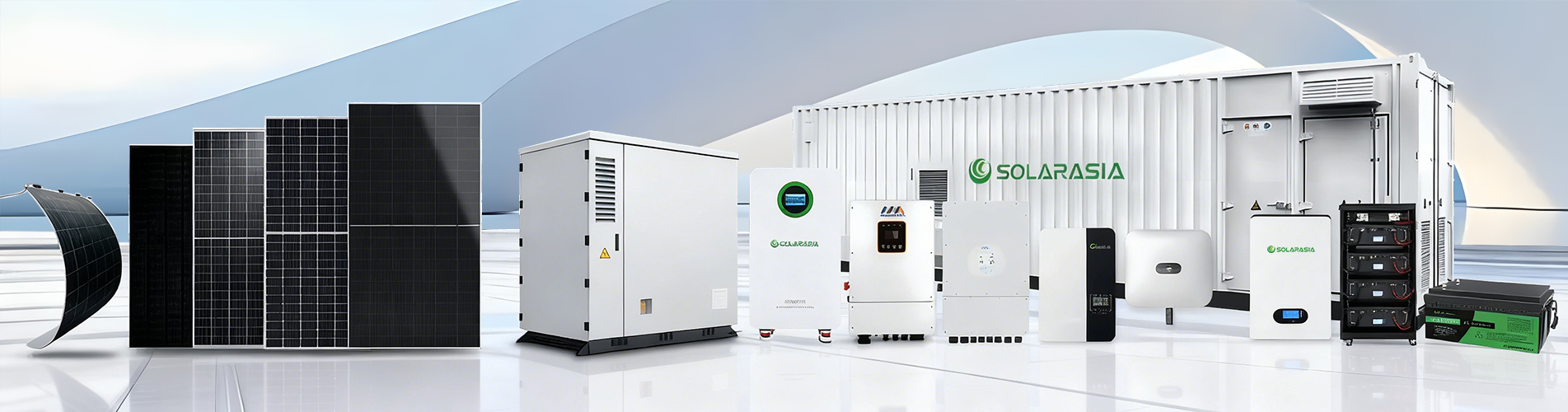
Solarasia banner

Commercial Solar System

Home

Commercial Solar System

  • Why Commercial and Industrial Solar Systems Are a Smart Investment for Your Business Sep 08, 2025
    Introduction As energy costs continue to rise, businesses are looking for reliable and cost effective ways to power their operations. Commercial and industrial solar systems, starting from 50kW, offer a sustainable solution that not only reduces electricity bills but also ensures a stable power supply for factories, warehouses, and enterprise buildings. 1. High Capacity Solar Systems for Business Large scale solar PV systems provide the energy your business needs. With commercial solar systems of 50kW and above, companies can cover a significant portion of their electricity consumption, reducing dependency on the grid and lowering monthly energy costs. 2. Reliable Solar Panels and Inverters Using premium solar panels and high efficiency inverters ensures that your system performs optimally. Industrial grade inverters convert solar energy efficiently, while top-quality panels capture maximum sunlight throughout the day, delivering consistent and reliable power. 3. Hybrid and Off Grid Options For businesses requiring uninterrupted power, hybrid solar systems with ESS (Energy Storage System) are ideal. These systems store excess energy for use during nighttime or grid outages, ensuring 24/7 power availability. Off grid solutions are also available for remote locations or industrial sites without reliable grid access. 4. Fast ROI and Energy Savings Investing in commercial solar systems can lead to quick payback periods. By generating your own electricity, your business can save substantially on energy bills and even sell excess energy back to the grid. This makes solar energy a smart financial decision for enterprises of all sizes. 5. Custom Solutions for Every Business Every facility has unique energy needs. Whether it’s a factory, warehouse, or office building, commercial solar solutions can be customized to fit your space, power requirements, and budget. Experts can design, install, and maintain a system tailored specifically for your business. Conclusion Commercial and industrial solar systems are no longer just an environmental choice—they are a smart business strategy. From lowering energy costs to ensuring reliable power and a fast ROI, solar energy provides significant benefits for modern enterprises.   Ready to power your business with solar energy? Contact us today to learn about our commercial solar panels, inverters, and ESS solutions.
  • What Makes Commercial Solar Systems the Smart Choice for Industrial and Business Applications? Oct 13, 2025
    In today’s competitive energy market, companies are constantly searching for reliable and affordable power solutions. One of the most effective answers lies in commercial solar systems—a long term investment that reduces energy costs while increasing energy independence. Whether it’s a solar power system for industrial use or a solar system for commercial buildings, switching to solar is a powerful way to secure your company’s future.   We provide customized solutions for enterprises looking to lower operational costs and achieve sustainability goals. Our Commercial and Industrial Solar Power Systems are built for reliability and performance—perfect for factories, warehouses, and large commercial buildings that demand stable electricity. Each commercial solar panel system is designed to match your specific energy needs and space availability.   If your company is located in an area with unstable grid power, consider a Complete Off Grid Solar Kit or a commercial off grid solar system. These setups include solar panels, hybrid inverters, and lithium battery storage, ensuring continuous power even when the grid fails. It’s an ideal solution for industrial zones or rural manufacturing sites that can’t afford downtime.   Wondering about the cost? The 100kW Solar System Price varies depending on configuration and region. For example, in some markets such as South Africa, 100kW solar system price South Africa estimates show a strong return on investment within just a few years. Businesses are quickly realizing that solar isn’t just an environmental choice—it’s a smart financial strategy.   Whether you’re looking for solar panels for business use, commercial pv systems, or a full solar power system for business, We offer complete, factory-priced solutions.As one of the reliable commercial solar providers, we help companies build their own energy independence while supporting global carbon reduction goals. Choose the right solar power solution today, and transform your energy costs into long term savings.
  • Why More Businesses Choose Commercial Solar Systems (50kW–1MW)? Oct 28, 2025
    Are you still paying high electricity bills for your factory, warehouse, or commercial building?   In countries like Australia, South Africa, the Philippines, and even Canada, more and more companies are turning to commercial solar power systems to take control of their energy costs.But what makes a 50kW, 100kW, or even 500kW solar system such a smart investment for industrial users?Let’s explore what’s driving this global shift toward industrial solar energy solutions.   What Is the Best Solar System Size for Your Business — 50kW, 100kW, or 500kW?   Choosing between a 50kW solar system or a 100kW solar system depends on your daily power load and available rooftop area.For small to medium factories, a 100kW solar system can reduce grid dependence by up to 70%.Larger manufacturing sites often prefer 200kW or 500kW solar panel systems for long term stability and energy independence.If your business needs 24 hour power, a hybrid solar solution or an off grid solar system with battery storage can ensure continuous operation even during outages — perfect for places like South Africa or the Philippines, where grid stability can fluctuate.   Why Commercial & Industrial Solar Systems Are Growing Fast?   Across the USA, UK, and Indonesia, government incentives, high grid tariffs, and sustainability goals are making solar a top choice for enterprises.Installing commercial rooftop solar panels not only cuts costs but also strengthens your company’s green brand image.A commercial solar energy system can deliver a payback period of just 3–5 years, and many systems last 25+ years with minimal maintenance.That means you get free, clean electricity for decades — a major advantage over ever rising grid power costs.   How Much Does a 100kW or 200kW Solar System Cost?   Prices vary by region, but typically a 100kW solar system price starts around USD 60,000–80,000, while a 200kW solar system price can range between USD 120,000–150,000 depending on inverter brand, panel efficiency, and installation type.For larger industries, an industrial solar power system (500kW–1MW) can save thousands of dollars per month, especially in Australia, the US, or the UK, where daytime tariffs are high.   Conclusion: Power Your Business with Smart Solar Energy Solutions Whether you need an off grid, on grid, or hybrid solar solution, switching to solar is no longer just an eco friendly choice — it’s a profitable one.Companies that adopt industrial solar panel systems today are setting themselves up for a cleaner, more cost efficient future.
  • How Businesses Can Cut Energy Costs with Commercial Solar Power Systems? Oct 31, 2025
    In an era of rising energy prices and increasing environmental responsibility, more and more companies are turning to commercial solar systems as a practical way to reduce electricity bills and secure a stable energy future. Solar power is no longer just for homes — today, large enterprises, factories, and office buildings are installing solar panels for companies to generate their own clean, renewable energy.   We design and build efficient commercial and industrial solar power systems that are fully customized to meet business energy demands. Our commercial pv systems help reduce reliance on the public grid while converting sunlight into reliable, low cost electricity. For manufacturing plants and warehouses with high energy consumption, investing in a solar panel system for industrial use can greatly lower operational costs and improve sustainability.   For companies in remote areas or with unstable grid access, we recommend our Complete Off Grid Solar Kits or commercial off grid solar systems. These solutions combine solar modules, hybrid inverters, and battery storage, offering complete energy independence. Whether in agriculture, logistics, or mining, our systems ensure continuous power even when the grid goes down.   Many clients often ask about pricing — for instance, “What is the 100kW solar system price?” or “How does the 100kW solar system price South Africa compare globally?” The exact price depends on system size, inverter selection, and installation region. However, in most cases, solar power delivers a faster and higher return on investment than traditional electricity sources.   As experienced commercial solar providers, we deliver reliable solar power systems for business and industrial solar power systems at factory direct prices. Our goal is to help companies reduce costs, achieve carbon neutrality, and gain long term energy independence. With our solar power solutions, your business can turn its rooftops into a lasting source of clean energy and profit.
  • How Many Inverters Do You Really Need for a Large Commercial Solar Project? Nov 27, 2025
    When companies plan a commercial solar system or an industrial solar power system, one of the biggest challenges is determining how many inverters, how many panels, and what system size is ideal for their site. Unlike small residential systems, large C&I projects require detailed engineering to avoid unnecessary cost, power imbalance, or long term performance issues.   What Determines the Number of Inverters for a Large Solar Project? For big projects—such as 100kW, 500kW, or even multi MW construction—many buyers struggle to calculate inverter quantity. Different inverter brands (like Huawei 100kW, Growatt 100kW, or Deye 100kW) have different MPPT inputs, DC ratios, and grid connection requirements.   This is why corporate buyers, EPCs, and tender based projects often require support from a professional engineering team.We provide complete electrical design, including single line diagrams, PV array configuration, and inverter matching, ensuring your commercial PV system runs safely and efficiently.   How to Calculate Solar Panels Needed for Industrial Use? The number of panels needed depends on module wattage, roof area, shading, and desired AC output. For example: •A typical 550W panel requires around 182 units for a 100kW project. •A 1MW project may need 1,820 panels, depending on DC/AC ratio. These calculations are not always straightforward—especially when clients want to compare commercial off grid solar system vs. grid tied, or when they need hybrid backup solutions. That’s why our engineering team prepares custom evaluation reports for system sizing, shading simulation, BOM lists, and budget optimization.   Why Professional Design Matters for Commercial Solar Buyers Many companies underestimate how complex large solar systems can be. Incorrect design can lead to: •AC overload on inverters •Poor performance due to mismatch •Higher operating cost •Delays during project approval or inspection For buyers sourcing solar power solutions for factories, warehouses, hotels, shopping centers, and industrial parks, having reliable technical references can greatly improve decision accuracy and confidence.   When Planning a Big Solar Project, Good Information Matters Whether you are comparing commercial solar kits, looking into commercial solar providers, or evaluating a solar power system for industrial use, having access to well-structured system data and configuration guidelines can make the entire process clearer and easier.   Clear planning not only helps avoid unnecessary mistakes, but also builds a better foundation for long term performance and project expansion in the future.  
  • How Much Does a 100kW Solar System Cost in the USA? Sep 03, 2026
        For businesses considering solar energy, a 100kW solar system is a popular size for warehouses, factories, retail buildings, agricultural facilities, offices, and other commercial properties. However, the actual project price can vary significantly depending on equipment selection, installation conditions, location, permitting, electrical upgrades, and utility interconnection requirements.   As a general planning estimate, a complete 100kW solar system cost in the USA can often fall within approximately $120,000 to $220,000 before applicable incentives, depending on the project scope and local market conditions.   This is only a preliminary range rather than a fixed quotation. A commercial solar project should be evaluated based on the property's electricity consumption, available roof or ground area, local solar conditions, utility requirements, and selected equipment.     In this guide, we will explain what a 100kW solar system typically includes, how the project cost is calculated, and what businesses should consider before purchasing a system.   What Is a 100kW Solar System?     A 100kW solar system generally refers to a photovoltaic system with approximately 100 kilowatts of installed solar module capacity.   For example, depending on the module wattage, the system could use approximately: 143 × 700W solar panels 154 × 650W solar panels 167 × 600W solar panels 172 × 580W solar panels   The exact number of panels depends on the selected module power and the final system design.   A modern 100kW solar system may include: Solar panels Solar inverter or multiple inverters Mounting structure DC and AC cables Combiner and protection equipment where required Monitoring equipment Electrical distribution equipment Installation labor Engineering and system design Permitting and inspection Utility interconnection work     Therefore, the cost of a 100kW project is much more than simply multiplying the price of solar panels by 100kW.   Estimated Cost Breakdown of a 100kW Solar System   The total cost of a commercial solar installation can be divided into several major categories.   Cost Component Typical Share of Project Solar Panels 25–35% Solar Inverters 8–15% Mounting System 8–15% Electrical Equipment & Wiring 8–12% Engineering & Permitting 5–10% Installation Labor 15–25% Other Project Costs 5-10%   These percentages are general planning references. Actual costs can be different depending on project location, system type, equipment brand, roof structure, labor rates, and interconnection requirements.   1. Solar Panels   Solar modules are one of the largest equipment costs in a PV system.   For a 100kW project, high-power N-type TOPCon modules can reduce the number of panels required compared with older, lower-wattage modules. This can be particularly useful when rooftop space is limited.   For example, using 700W modules would require approximately 143 panels to reach about 100kW of DC capacity.   When comparing modules, businesses should consider more than the price per watt. Important factors include: Module efficiency Temperature coefficient Product warranty Power degradation Mechanical load rating Bifacial performance Manufacturer reliability Availability and delivery time     A lower module price does not necessarily mean a lower total project cost.   2. Solar Inverter Cost   The inverter converts the DC electricity produced by the solar panels into AC electricity that can be used by the building or exported to the grid.   For a 100kW commercial installation, the system may use one larger commercial inverter or several smaller inverters depending on the project design.   The choice of inverter affects: System efficiency MPPT configuration Installation flexibility Monitoring Maintenance Grid compatibility Future expansion   For commercial projects, it is important to select an inverter that matches the solar array, electrical infrastructure, and local grid requirements.   3. Mounting and Electrical Equipment   The mounting system and electrical balance-of-system equipment are also important parts of the total project price.   A rooftop project may require: Roof mounting structures Rails and clamps DC cables AC cables Disconnects Circuit protection Grounding equipment Electrical panels Monitoring devices   A ground-mounted system can require additional structural components, site preparation, trenching, and other construction work.   This is one reason why two 100kW projects can have very different final prices even when they use similar solar panels.   What Factors Affect the Cost of a 100kW Solar System?   There is no single nationwide price for a 100kW solar installation in the United States.   Several factors can have a major impact on the final quotation.   1. Project Location   Labor costs, permitting requirements, electricity rates, weather conditions, and utility regulations differ from state to state.   For example, installation costs in a major metropolitan area may be significantly different from those in a less densely populated region.   Local permitting and utility interconnection requirements can also add engineering and administrative costs.   2. Rooftop or Ground Mount   A rooftop system and a ground-mounted system have different cost structures.   Rooftop Solar   Advantages may include: Better use of existing building space No additional land acquisition Potentially shorter electrical connections Good option for warehouses and factories   However, the roof must be inspected for structural strength, age, condition, and accessibility.   Ground-Mounted Solar   Ground-mounted systems can provide easier access and more flexibility in system layout, but they may require: Land preparation Structural foundations Trenching Additional cabling Fencing Site development   Therefore, the installation environment should be evaluated before comparing prices.   3. Solar Panel Efficiency   Higher-efficiency solar panels can generate more electricity from the same amount of roof space.   This is especially important for commercial buildings with limited available roof area.   For example, a business with a large roof may prioritize the lowest total system cost, while a business with limited roof space may benefit more from high-efficiency modules.   The best solution should balance: Module efficiency + price per watt + available area + expected energy production.   4. Electrical Infrastructure   A 100kW PV system can place additional requirements on the building's electrical infrastructure.   Depending on the existing system, a project may require: Main panel upgrades Transformer upgrades New switchgear Additional disconnects Electrical protection Utility meter modifications   These upgrades can have a significant impact on the final 100kW solar system cost.   This is why a professional site assessment is recommended before purchasing equipment.   How Much Electricity Can a 100kW Solar System Produce?   The annual energy production of a 100kW PV system depends heavily on location.   Factors include: Solar irradiance Weather System orientation Tilt angle Shading Module efficiency Inverter efficiency Temperature System losses   As a broad planning example, a 100kW system could potentially generate around 120,000–170,000 kWh per year in many U.S. locations, although actual production may fall outside this range.   A system in a high-solar-resource location may generate considerably more electricity than a similar installation in an area with lower solar irradiance.   For a commercial project, production should be calculated using location-specific solar data rather than relying on a national average.   Is a 100kW Solar System Suitable for a Business?     A 100kW system can be a good fit for businesses with substantial daytime electricity consumption.   Typical applications include:   Warehouses Warehouses often have large rooftop areas that can accommodate a significant number of PV modules.   Manufacturing Facilities Factories may have high electricity consumption from machinery, motors, HVAC systems, and production equipment.   Retail Buildings Solar can help businesses offset daytime electricity consumption, particularly where air conditioning and refrigeration loads are significant.   Agricultural Facilities Farms, greenhouses, irrigation facilities, and agricultural processing operations can also be suitable applications.   Offices and Commercial Buildings Buildings with significant HVAC, lighting, and equipment loads may benefit from commercial PV generation.   The ideal system size should always be determined by electricity consumption, available installation space, utility rules, and financial objectives.   How Can Businesses Reduce the Cost of a 100kW Solar Project?   Businesses looking to control project costs should consider the total cost of ownership rather than focusing only on the initial equipment price.   Compare Equipment Based on Value   When purchasing solar panels and inverters, compare: Price per watt Efficiency Warranty Expected degradation Product availability Technical support Delivery time   A slightly higher upfront equipment cost can sometimes provide better long-term value.   Optimize System Design   Good system design can reduce unnecessary costs.   For example, selecting the right module wattage may reduce the number of panels, mounting components, connectors, and labor hours required.   Similarly, selecting an appropriate inverter configuration can simplify installation and maintenance.   Work With an Experienced Solar Supplier   For commercial projects, equipment procurement can represent a substantial part of the overall project budget.   Working with an experienced supplier can help EPC companies and installers compare different module and inverter configurations and develop a more suitable equipment package.   What About Solar Battery Storage?   A standard grid-connected PV system does not necessarily require batteries.   However, businesses may consider adding a battery energy storage system when they want to: Store excess solar electricity Increase solar self-consumption Reduce peak demand Improve backup power capability Manage energy usage Support specific grid or operational requirements   A solar-plus-storage system will have a higher upfront cost than a PV-only system, but it can provide additional energy management capabilities.   For larger commercial projects, battery capacity should be selected according to the business's load profile, electricity tariff structure, backup requirements, and operating objectives.   What Is the Payback Period for a 100kW Solar System?   The payback period varies considerably from one project to another.   A simple calculation is: Payback Period = Net Solar Project Cost ÷ Annual Electricity Cost Savings   However, this calculation is only a starting point.   A more complete financial analysis should consider: Local electricity prices Annual solar production Self-consumption rate Export compensation Demand charges System degradation Maintenance Financing Applicable incentives Utility rate changes   For this reason, businesses should evaluate a solar investment using a project-specific financial model instead of relying on a general national payback estimate.   What Should You Ask a Solar Supplier Before Buying?   Before purchasing equipment for a 100kW project, commercial buyers should ask the supplier for detailed technical and commercial information.   Important questions include:   About Solar Panels What is the module power rating? What is the module efficiency? What type of solar cell technology is used? What are the product and performance warranties? What is the expected delivery time?   About Inverters What is the inverter rated output? How many MPPTs are available? What is the maximum PV input? Is the inverter compatible with the local grid? What monitoring functions are included?   About the Project What equipment is included in the quotation? Does the quotation include mounting structures? Are cables and protection devices included? What engineering services are available? What are the shipping terms? Is technical support available after delivery?   Getting a detailed bill of materials is important when comparing quotations from different suppliers.   Why Choose SolarAsia Power for Solar Equipment?   Anhui Solarasia Energy Technology Co., Ltd., operating under the SolarAsia Power brand, provides solar energy products and system solutions for international customers.   Our product portfolio covers: Solar panels Solar inverters Lithium battery storage LiFePO4 batteries Residential energy storage Commercial and industrial energy storage Complete solar energy system solutions   For EPC contractors, distributors, wholesalers, installers, and commercial solar buyers, sourcing the right combination of PV modules, inverters, and energy storage equipment is essential for building a reliable project.   SolarAsia Power can support customers with equipment selection and customized solar energy solutions based on project requirements.   Final Thoughts: How Much Should You Budget for a 100kW Solar System?   So, how much does a 100kW solar system cost in the USA?   As a preliminary planning range, a complete 100kW commercial PV project may cost approximately $120,000–$220,000 before applicable incentives, but the final price can be substantially different depending on location, equipment, installation conditions, electrical upgrades, permitting, and utility interconnection requirements.   The most important point is that the lowest equipment price does not always produce the lowest overall project cost.   For businesses, EPC contractors, and solar installers, the best approach is to compare the complete system: Solar panels + inverter + mounting + electrical equipment + engineering + installation + grid connection rather than evaluating individual components alone.   If you are planning a 100kW solar system for a warehouse, factory, commercial building, or other business in the USA, obtaining a project-specific equipment list and quotation is the best way to determine the actual investment required.     SolarAsia Power can provide solar panels, inverters, batteries, and other equipment for commercial solar projects and help international buyers select suitable products according to their project requirements.    
  • How Many Solar Panels Do You Need for a 100kW Solar System? Sep 08, 2026
    A 100kW solar system is a popular choice for warehouses, factories, agricultural facilities, retail buildings, offices, and other commercial properties. But one of the first questions businesses and solar installers often ask is: How many solar panels do you need for a 100kW solar system?     The answer depends primarily on the power rating of the solar panels.   For example, a 100kW system using 500W panels would require approximately 200 panels, while the same system using 700W panels would require only about 143 panels.   However, panel wattage is not the only factor that matters. Module efficiency, physical dimensions, available roof space, inverter configuration, electrical design, and the actual DC capacity of the system can all influence the final design.     In this guide, SolarAsia Power explains how to calculate the number of panels required for a 100kW PV system and what businesses should consider when selecting solar modules.   What Is a 100kW Solar System?   A 100kW solar system generally refers to a photovoltaic system with approximately 100 kilowatts of installed DC solar capacity.   The system converts sunlight into electricity through solar panels and then uses solar inverters to convert the DC electricity into AC electricity for the building or grid.   A typical commercial PV system may include: Solar panels Solar inverters Mounting structures DC cables AC cables Electrical protection equipment Monitoring equipment Distribution equipment Optional battery energy storage     The actual configuration depends on the project location, electricity consumption, available roof area, utility requirements, and system objectives.   How Do You Calculate the Number of Solar Panels for 100kW?   The basic calculation is simple: Number of Solar Panels = Total System Capacity ÷ Panel Power   Because: 100kW = 100,000 watts   you can divide 100,000W by the power rating of one solar panel.   For example, if you choose a 600W module: 100,000W ÷ 600W = 166.67   Since you cannot install a fraction of a panel, you would need approximately: 167 × 600W solar panels   This would give a total DC capacity of: 167 × 600W = 100.2kW     Therefore, the exact number of modules does not always result in exactly 100.00kW. A practical system may be slightly above or below the nominal target depending on the selected module wattage and system design.   How Many Panels Are Needed for a 100kW Solar System?   The number of panels depends on the wattage of the selected module.     Here is a simple comparison:   Solar Panel Power Approximate Number of Panels Total DC Capacity 400W 250 100.0kW 450W 223 100.35kW 500W 200 100.0kW 550W 182 100.1kW 580W 173 100.34kW 600W 167 100.2kW 650W 154 100.1kW 670W 150 100.5kW 700W 143 100.1kW   These figures are useful for preliminary planning.     The final number of modules may be different because professional system design also needs to consider string configuration, inverter input limits, MPPT voltage ranges, available roof space, electrical requirements, and module dimensions.   600W vs 650W vs 700W Solar Panels for a 100kW System     High power solar modules have become increasingly popular for commercial and utility-scale PV projects.   Let's compare three common module power ratings.   600W Solar Panels   A 100kW system would require approximately: 167 × 600W panels   Advantages can include: Mature product availability Flexible system configuration Suitable for many commercial projects Relatively manageable module size   However, more modules are required compared with higher-power panels.   650W Solar Panels   Using 650W modules: 100,000W ÷ 650W ≈ 154 panels   Therefore, approximately 154 × 650W solar panels can provide around 100kW of installed DC capacity.   This can reduce the number of modules and mounting points compared with a 600W configuration.   700W Solar Panels   Using 700W modules: 100,000W ÷ 700W ≈ 143 panels   This means a 100kW system can use approximately 143 × 700W solar panels.   Compared with 600W panels, this reduces the number of modules by approximately 24 panels.   That can potentially simplify: Mounting Wiring Installation Roof layout Module handling   However, 700W modules can have larger physical dimensions and higher weight, so roof structure and installation conditions must be evaluated.   Does Higher Panel Wattage Always Mean a Better Solar System?   Not necessarily.   A higher-wattage panel can reduce the number of modules required, but the best solar panel depends on the complete project.   Important factors include: Module Efficiency   Efficiency determines how effectively a panel converts available sunlight into electricity.   Higher-efficiency modules can be especially valuable when roof space is limited.   Physical Dimensions   A 700W module may produce more power, but it can also have a larger footprint than a lower-wattage module.   For some rooftops, module dimensions can be just as important as module wattage.   Weight The roof structure must be capable of supporting the selected modules and mounting system.   Temperature Coefficient Solar modules lose some power as operating temperature increases. A better temperature coefficient can help maintain performance in hot conditions.   Warranty and Degradation Businesses should evaluate both product warranty and long-term power performance.   Availability and Logistics For commercial projects, module availability, shipping dimensions, delivery time, and supply continuity can have a major impact on project schedules.   How Much Roof Space Do 100kW Solar Panels Need?   The number of panels is only one part of the equation.   You also need to determine whether the building has enough usable roof space.   The required area depends on: Number of modules Module dimensions Module efficiency Panel orientation Row spacing Roof shape Walkways Fire access HVAC equipment Skylights Maintenance areas Shading   For example, a 100kW system using 700W panels requires approximately 143 modules, while a system using 500W panels requires approximately 200 modules.   Although the higher-power system uses fewer panels, the physical dimensions of each module may be larger.   Therefore, the correct question is not simply: “How many solar panels can fit on the roof?”   It should be: “How much usable roof area is available, and which module configuration can provide the required capacity within that space?”   Why Panel Efficiency Matters for Commercial Solar   Module power and module efficiency are related but are not exactly the same thing.   Two panels can have similar power ratings but different physical dimensions and efficiency levels.   For commercial rooftops, high-efficiency solar panels can offer an important advantage because they can generate more electricity from a limited area.   For example, a warehouse may have a large roof, but part of the roof may be unavailable because of HVAC units, ventilation equipment, skylights, or safety access requirements.   In this situation, higher-efficiency modules may allow the project developer to achieve the desired system capacity without using as much usable roof area.   How Many Solar Panels Do You Need Based on Your Electricity Consumption?   A 100kW system should not automatically be selected simply because the building has enough space.   Electricity consumption should be considered first.   For example, suppose a commercial building consumes: 150,000 kWh per year.   If a properly designed 100kW PV system can produce approximately 140,000 kWh annually at that location, the system could potentially offset a significant portion of the building's electricity consumption.   However, actual solar production depends on: Location Solar irradiance Weather Roof orientation Tilt Shading Module performance Inverter efficiency System losses     Therefore, businesses should use location-specific solar production estimates when deciding whether 100kW is the right system size.   How Does the Inverter Affect the Number of Solar Panels?   Solar panels cannot be selected independently from the inverter.   The inverter has specific electrical limits, including: Maximum PV input power Maximum input voltage MPPT voltage range Maximum input current Number of MPPTs Maximum number of strings   For example, even if 143 × 700W panels theoretically provide approximately 100kW, the panels must still be configured into strings that fall within the inverter's voltage and current limits.   This is why commercial PV system design requires more than simply dividing 100,000W by the module wattage.   Understanding Solar Panel Strings   Solar panels are usually connected in series to create strings.   When panels are connected in series: Voltage increases while current remains approximately the same.   The string configuration must remain within the inverter's allowable operating voltage and maximum input voltage.   For example, a system designer may determine the appropriate number of modules per string based on: Module open-circuit voltage Module operating voltage Lowest expected temperature Highest expected temperature Inverter MPPT voltage range Maximum DC voltage   The number of panels in each string therefore needs to be calculated carefully.   Should a 100kW Solar System Have Exactly 100kW of Panels?   Not necessarily.   In real commercial PV projects, the total DC capacity of the solar modules may be slightly higher than the inverter's AC output capacity.   For example: 120kW DC solar panels + 100kW AC inverter   creates a DC/AC ratio of: 1.2   This type of configuration can be used to improve inverter utilization during periods when the solar array is not operating at its maximum rated output.   However, oversizing the PV array too much can lead to greater clipping.   The appropriate DC/AC ratio depends on: Project location Solar resource Module characteristics Inverter specifications Electricity consumption Utility requirements Project economics   Therefore, the final design should be determined by a qualified system designer.   Can You Add Battery Storage to a 100kW Solar System?   Yes. A 100kW PV system can be combined with battery energy storage to create a solar-plus-storage solution.   A battery can help businesses: Store excess solar electricity Increase solar self-consumption Reduce peak demand Shift electricity usage Provide backup power Improve energy management   For example, a factory may generate excess solar energy during midday but have significant electricity demand later in the afternoon or evening.   A battery energy storage system can store some of the excess solar energy and discharge it when needed.   However, battery capacity should be calculated separately from PV capacity.   The solar system is usually described in kW, while battery energy capacity is commonly expressed in kWh.   Example: 100kW Commercial Solar System     Let's consider a simplified commercial project.   A warehouse has: Annual electricity consumption: 150,000 kWh Suitable rooftop area High daytime electricity demand Good solar exposure Grid-connected operation   The business is considering a 100kW PV system.   If the project uses 650W solar modules: 100,000W ÷ 650W ≈ 154 panels   The system could therefore use approximately: 154 × 650W solar panels   Total DC capacity: 154 × 650W = 100.1kW   The next step would be to determine: Module string configuration Inverter capacity Number of MPPTs DC/AC ratio Mounting layout Cable sizing Electrical protection Monitoring Utility interconnection     If the business also wants battery storage, the battery power and energy capacity should then be calculated according to the building's load profile.   Common Mistakes When Choosing Solar Panels for a 100kW System   Mistake 1: Looking Only at Panel Wattage   A 700W panel is not automatically better than a 600W panel.   Module efficiency, dimensions, weight, warranty and degradation should also be considered.   Mistake 2: Ignoring Roof Space   A system may have enough theoretical capacity but still not fit efficiently on the available roof.   Roof layout should account for: Safety pathways Maintenance access Roof equipment Shading Fire regulations Structural limitations   Mistake 3: Choosing Panels Without Checking the Inverter   The module's voltage and current must be compatible with the selected inverter.   String design is especially important for commercial systems.   Mistake 4: Selecting Equipment Based Only on the Lowest Price   For a commercial project, equipment price is only one part of the total project cost.   A better evaluation should include: Price per watt Module efficiency Warranty Degradation Installation requirements Shipping Availability Technical support   What Size Solar System Does Your Business Need?   A 100kW PV system may be appropriate for many commercial properties, but it is not the ideal size for every business.   A proper system design should consider:   Electricity Consumption How much electricity does the business use annually and monthly?   Load Profile How much electricity is consumed during daylight hours?   Roof Area How much space is actually available for solar panels?   Solar Resource How much solar energy is available at the project location?   Utility Requirements Does the local utility impose export or interconnection limitations?   Future Expansion Will the business add production equipment, EV chargers, HVAC systems, or other electrical loads?   Battery Storage Does the business need energy storage for demand management, energy shifting, or backup power?   These factors should be evaluated together before deciding on the final system capacity.   SolarAsia Power: Solar Equipment for Commercial Projects   Anhui Solarasia Energy Technology Co., Ltd., operating under the SolarAsia Power brand, provides solar energy products and solutions for international customers.   Our product portfolio includes: High-efficiency solar panels Solar inverters LiFePO4 batteries Lithium energy storage systems Residential energy storage Commercial and industrial energy storage Complete solar energy system solutions   For EPC contractors, distributors, wholesalers, installers, and commercial project developers, choosing compatible solar modules and inverters is an important part of system design.   SolarAsia Power can support international customers with solar panels, inverters, batteries, and customized energy solutions according to project requirements.   Whether you are planning a 100kW solar system for a warehouse, factory, agricultural facility, office, or retail building, selecting the right module wattage and system configuration can help optimize available space and overall project performance.   Final Thoughts   So, how many solar panels do you need for a 100kW solar system?   The answer depends primarily on the wattage of the selected solar modules.   For example: 500W panels: approximately 200 panels 600W panels: approximately 167 panels 650W panels: approximately 154 panels 700W panels: approximately 143 panels   The calculation is straightforward, but the final PV system design is more complex.   A professional commercial solar project should also consider module efficiency, roof space, string configuration, inverter capacity, DC/AC ratio, electrical infrastructure, local solar conditions, utility requirements, and optional battery storage.   For businesses planning a commercial solar system, the goal should not simply be to install the fewest possible panels. Instead, the objective should be to find the right balance between power output, efficiency, available space, equipment cost, installation requirements, and long-term energy production.   With the right combination of solar panels, inverters, and energy storage, a well-designed commercial PV system can provide a scalable solution for businesses looking to reduce grid electricity consumption and improve energy management.     Anhui Solarasia Energy Technology Co., Ltd. (SolarAsia Power) supplies solar panels, solar inverters, batteries, and energy storage solutions for international solar projects.    
  • Commercial Solar System Design: Components, Sizing and Cost Sep 09, 2026
    Introduction     For businesses looking to reduce electricity costs and improve energy independence, installing a commercial solar system can be a practical long term investment. However, designing a commercial photovoltaic system requires more than simply selecting a certain number of solar panels.   System capacity, electricity consumption, roof or ground space, solar irradiation, inverter configuration, battery storage and local regulations can all affect the final system design and project economics.   A properly designed system should match the customer's actual energy demand while making effective use of available installation space and maintaining reliable operation.   In this guide, we explain the major components of a commercial solar system, how to determine the appropriate system size, what affects project costs and how businesses can approach commercial solar project planning.   1. What Is a Commercial Solar System?   A commercial solar system is a photovoltaic power generation system designed primarily for businesses, factories, warehouses, office buildings, retail facilities and other commercial properties.   Compared with small residential systems, commercial PV projects generally have higher power capacities and more complex electrical configurations.   Depending on the application, a commercial system may include: Solar panels Commercial solar inverters Mounting structures DC and AC cables Combiner boxes and protection devices Monitoring equipment Distribution equipment Battery energy storage systems Grid connection equipment   A typical grid connected system works by converting sunlight into DC electricity through solar panels. The inverter then converts DC electricity into AC electricity that can be used by the building or exported to the grid according to local regulations.   For businesses with significant daytime electricity consumption, solar power can help reduce dependence on grid electricity and improve long term energy cost management.   2. Main Components of a Commercial Solar System     Understanding the role of each component is an important step in commercial solar system design.   2.1 Solar Panels   Solar panels are the primary energy generation component of a PV system.   The total number of panels required depends on the desired system capacity and the power rating of the selected modules.   For example, a 100 kW commercial system using 600 W solar panels would theoretically require approximately: 100,000 W ÷ 600 W ≈ 167 panels   The actual panel quantity may be adjusted according to inverter capacity, system voltage, available installation area and electrical design requirements.   Modern commercial projects often use high efficiency N type modules because they can provide higher power output while making better use of limited roof space.   2.2 Commercial Solar Inverter   The solar inverter is responsible for converting DC electricity generated by the PV modules into usable AC electricity.   For larger projects, inverter selection should consider: Rated AC output Maximum DC input power MPPT voltage range Number of MPPTs Maximum input current Output voltage Grid frequency Communication and monitoring functions Protection functions   A suitable inverter configuration can improve energy harvesting, simplify system installation and provide better monitoring of the PV system.   For large commercial projects, multiple string inverters may be used instead of a single centralized inverter. This can provide greater flexibility when different roof orientations, shading conditions or installation areas are involved.   2.3 Mounting System   The mounting structure secures the solar panels to the roof, ground or other installation surface.   The appropriate mounting solution depends on the project location and installation environment.   Common options include: Rooftop mounting Ground mounting Carport solar structures Flat roof mounting Metal roof mounting   Structural loading, wind speed, snow conditions, roof material and corrosion resistance should all be evaluated before installation.   2.4 Electrical Protection and Distribution Equipment   Commercial PV systems require appropriate electrical protection to improve system safety and reliability.   Depending on the project, equipment may include: DC isolators AC circuit breakers Surge protection devices Combiner boxes Distribution cabinets Grounding systems Monitoring devices   The final configuration should be determined according to the inverter specifications, system voltage and applicable electrical standards.   2.5 Battery Energy Storage   Battery storage is not mandatory for every grid connected commercial PV project.   However, adding a battery energy storage system can provide additional functions such as: Solar energy shifting Peak demand management Backup power Increased self consumption Energy arbitrage Improved energy resilience   For businesses with high electricity prices during peak periods, combining solar generation with battery storage may improve the overall value of the project.   3. How to Size a Commercial Solar System   One of the most important parts of commercial solar system design is determining the appropriate system capacity.   The goal is not necessarily to install the largest possible PV system. Instead, the system should be designed around electricity consumption, available space, local solar conditions and the customer's financial objectives.   Step 1: Analyze Electricity Consumption   Start with the customer's historical electricity bills.   Ideally, collect at least 12 months of electricity consumption data.   Important information includes: Monthly electricity consumption Annual electricity consumption Average daily consumption Daytime electricity demand Peak demand Electricity tariff structure Peak and off peak rates   Daytime electricity consumption is particularly important for commercial PV because solar generation normally occurs during daylight hours.   Step 2: Estimate Solar Energy Production   The estimated annual energy production can be calculated using: Annual PV Production ≈ System Capacity × Peak Sun Hours × 365 × System Efficiency   For example, suppose a 100 kW system receives an average of 4.5 peak sun hours per day and the overall system performance factor is approximately 80%.   The estimated annual production would be: 100 kW × 4.5 × 365 × 80%≈ 131,400 kWh per year   This is only a simplified estimate. Actual production depends on location, module orientation, temperature, shading, inverter efficiency, soiling and system losses.     For a commercial project, professional PV simulation software and local solar irradiation data should be used for more accurate energy yield calculations.   4. How Many Solar Panels Does a Commercial System Need?     Panel quantity depends mainly on the desired system capacity and the wattage of the selected modules.   System Size 550 W Panel 600 W Panel 700 W Panel 50 kW ~91 ~84 ~72 100 kW ~182 ~167 ~143 200 kW ~364 ~334 ~286 500 kW ~910 ~834 ~715   These numbers are theoretical calculations based on module nameplate power. The final design may differ because of DC/AC ratio, string configuration, inverter input limits and local installation requirements.     Higher wattage modules can reduce the number of panels required for the same system capacity. This may be particularly useful when roof space is limited.   5. Choosing the Right Inverter Size   Inverter capacity is another important consideration.   A PV system does not always need a DC module capacity exactly equal to the inverter's AC rating.   Many commercial systems use a DC to AC ratio greater than 1.0. For example, a 100 kW AC inverter may be connected to a PV array with a DC capacity higher than 100 kW, depending on the inverter's maximum recommended DC input power.   This approach can help increase inverter utilization during periods when solar irradiance is lower than peak conditions.   However, the DC/AC ratio should always remain within the inverter manufacturer's specifications.   When selecting a commercial inverter, EPC contractors and system designers should carefully check: Maximum PV input power Maximum DC voltage MPPT voltage range Maximum input current Number of MPPT channels AC output voltage Grid compatibility Communication functions   6. Rooftop Space Requirements   Available installation space can significantly influence the system size.   As a general example, a commercial rooftop PV system may require approximately 5–8 m² of roof area per kW of installed capacity, although the actual requirement varies according to module dimensions, panel efficiency, roof layout, tilt angle, maintenance pathways and fire safety requirements.   For a 100 kW system, this could mean roughly: 100 kW × 5–8 m²/kW = 500–800 m²   The available area should be assessed before finalizing the system capacity.   Other factors to consider include: Roof orientation Roof inclination Shading from nearby buildings HVAC equipment Skylights Water tanks Maintenance access Roof structural capacity     A larger roof does not automatically mean that the maximum possible PV capacity should be installed.   7. What Determines Commercial Solar System Cost?   The commercial solar system cost depends on much more than the price of solar panels.     Major cost components typically include:   Cost Component Main Cost Factors Solar Panels Power rating, efficiency, technology and quantity Inverter Capacity, brand, MPPT configuration and functions Mounting Roof type, structure and installation environment Electrical Equipment Protection, distribution and grid connection Cables Cable length, voltage and installation method Battery Storage Capacity, battery chemistry and power rating Installation Labor, equipment and project complexity Engineering Design, permits and system commissioning Transportation Distance, shipment size and destination   For this reason, it is difficult to give one universal price for a commercial PV system.     Two projects with the same nominal capacity can have significantly different total costs because of differences in roof conditions, electrical infrastructure, labor rates and local permitting requirements.   8. Example: 100 kW Commercial Solar System     A 100 kW PV system is a common reference point for commercial solar projects.   A basic configuration could include: Approximately 100 kW of PV modules One or more commercial string inverters Rooftop mounting structures DC and AC cables DC and AC protection equipment Monitoring system Grounding equipment   If 600 W modules are used, approximately 167 panels would be required based on nameplate capacity.   However, the final system should not be designed simply by dividing 100 kW by the panel wattage.   The engineering team should also verify string voltage, current, MPPT allocation, roof layout and inverter specifications.   For businesses with substantial evening electricity consumption, a battery storage system could also be integrated with the 100 kW PV system.   9. Grid Connected vs Solar + Battery   Commercial customers typically have two major system configurations.   Grid Connected Solar   A grid connected PV system sends solar electricity directly to the building's loads.When solar production is insufficient, the building can draw electricity from the grid.This configuration is generally simpler and can be suitable for businesses with substantial daytime electricity consumption.   Solar + Battery Storage   A solar and battery system adds energy storage to the PV system.   During the day, excess solar electricity can charge the battery. The stored energy can then be used later when solar production decreases.   This configuration can be useful for: Factories operating into the evening Warehouses with extended operating hours Businesses with high peak electricity rates Facilities requiring backup power Commercial sites with limited grid capacity   The choice between the two depends on the customer's load profile, electricity tariff, grid conditions and project investment objectives.   10. How to Improve Commercial Solar Project ROI   A successful commercial solar project should focus on total project economics rather than equipment price alone.   Maximize Solar Self Consumption If most of the generated electricity can be consumed directly by the business, the project may achieve better economic performance than a system that frequently exports excess power.   Select High Efficiency Modules High efficiency modules can help increase installed capacity when roof space is limited.   Optimize Inverter Configuration Proper MPPT and string design can reduce mismatch losses and improve energy harvesting.   Consider Battery Storage Battery storage can help shift solar energy to periods with higher electricity prices, depending on the local tariff structure.   Compare Total Cost of Ownership When comparing suppliers, consider equipment quality, warranty, technical support, installation requirements and expected system performance rather than focusing only on the initial quotation.   11. Commercial Solar System Design Checklist   Before purchasing equipment or starting installation, project developers and EPC contractors should confirm:   Site Information Roof or ground installation Available installation area Roof structural condition Orientation and tilt Shading conditions   Electrical Information Grid voltage Grid frequency Existing transformer capacity Main distribution capacity Electricity consumption profile   PV System Module power and efficiency Inverter capacity DC/AC ratio String configuration MPPT requirements Protection equipment   Energy Storage Required battery capacity Peak load Backup requirements Battery power rating Energy management strategy   Commercial Factors Equipment cost Installation cost Transportation Permits Warranty Payback period Long term operation and maintenance   A complete assessment of these factors can significantly reduce the risk of oversizing, undersizing or unexpected project costs.   12. Frequently Asked Questions   What size solar system does a commercial building need?   There is no universal system size. Capacity should be determined based on annual electricity consumption, daytime load, available installation area, local solar resources and the customer's investment objectives.   Is 100 kW enough for a commercial solar system?   A 100 kW system can be suitable for many small and medium sized commercial facilities, but the appropriate size depends on the site's electricity demand and available roof area.   How much space is needed for a 100 kW solar system?   As a preliminary estimate, approximately 500–800 m² may be required, although the actual area depends on module dimensions, efficiency, roof layout and required maintenance pathways.   Does a commercial solar system need batteries?   No. A grid connected commercial PV system can operate without batteries. Battery storage becomes more attractive when the business needs energy shifting, peak demand management or backup power.   How long does a commercial solar system last?   Solar modules commonly have a useful service life of 25 years or more, while other components such as inverters may have different expected operating lives. Regular inspection and maintenance can help maintain system performance.   How much does a commercial solar system cost?   The final cost depends on system capacity, solar panel selection, inverter configuration, mounting structure, electrical equipment, installation conditions, battery storage and local project requirements. A project specific quotation is therefore more meaningful than a general price per kW.   Conclusion   Designing a commercial PV project requires a balance between energy demand, available space, system performance and investment cost.   The basic process is straightforward: Analyze electricity consumption → evaluate the site → determine PV capacity → select modules and inverters → design electrical protection → evaluate battery storage → calculate project economics.   For businesses, EPC contractors and solar project developers, the best system is not necessarily the largest system or the lowest cost system. It is the system that delivers an appropriate balance between energy production, reliability, investment and long term operating value.     At SolarAsia Power, we provide solar panels, PV inverters, lithium battery storage and complete solar energy solutions for commercial and industrial applications. By combining different equipment configurations, businesses can develop PV systems tailored to their specific energy consumption and project requirements.    
foot logo

Address : Room 908-909, Building 2, No. 469 Huatuo Lane, Shushan District, Hefei City, Anhui Province

Tel : +86 17730022793

Email : [email protected]

Subscribe

Please read on, stay posted, subscribe, and we welcome you to tell us what you think.

submit

Copyright 2026 @ Anhui Solarasia Energy Technology Co.,Ltd .All Rights Reserved. Sitemap | Blog | XML | Privacy Policy Network Supported

Click To Leave A Message

leave a message
If you are interested in our products and want to know more details,please leave a message here,we will reply you as soon as we can.
submit

Home

Products

whatsApp

contact