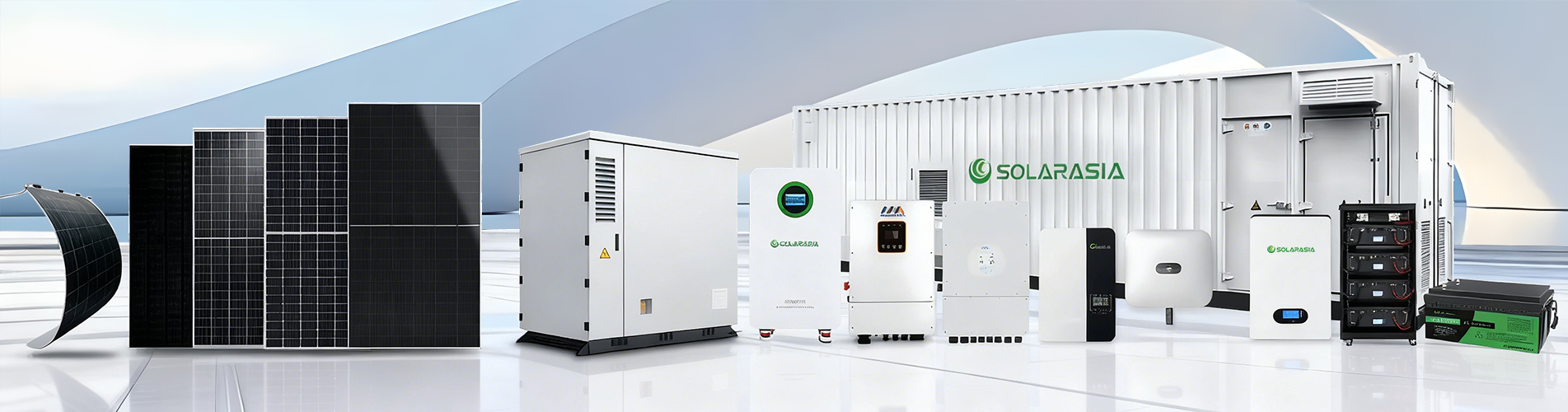
Solarasia banner

100kW solar system

Home

100kW solar system

  • Why Do 70–110kW On Grid Solar Systems Make More Business Sense Than Traditional Energy? Dec 26, 2025
    When companies evaluate energy investment, cost, payback period, and long term stability are always at the top of the list. But why do more businesses now choose a 70–110kW on grid solar system instead of relying only on the utility grid? The answer lies in predictable energy costs and long term financial returns.   Unlike small household systems, a custom solar panel system in the 70kW–110kW range is designed specifically for commercial electricity consumption patterns. Factories, office buildings, hotels, farms, and shopping centers usually have steady daytime loads — exactly when solar power generation is at its peak. This means more self consumption, lower monthly electricity bills, and faster investment recovery.   Another key question many business owners ask is: what is the real payback time of an on grid solar system? Depending on local tariffs and sunshine conditions, many 70–110kW projects reach payback within a few years, after which the system continues generating almost free electricity for 20+ years. Compared with constantly rising grid prices, solar becomes a shield against future cost uncertainty.   Customization is also a major benefit. Instead of purchasing a generic kit, engineers design the custom on grid solar system according to roof layout, shading condition, inverter selection, and panel orientation. This design approach maximizes energy yield and minimizes wasted space, especially for complex industrial rooftops or limited installation areas.   So what really changes for a business after installing a 100kW solar system? Operating expenses drop, sustainability certifications become easier to achieve, and company image improves in the eyes of customers and investors. For many tenders and international partners, renewable energy adoption is already an important evaluation factor — solar is not just technology, it is competitiveness.   If you are planning to control electricity costs, prepare for future expansion, or simply improve your energy independence, a custom solar panel system in the 70–110kW range offers a practical and scalable solution. The companies that act earlier will secure greater long term benefits — the real question is not whether to go solar, but when.  
  • How Much Does a 100kW Solar System Cost in the USA? Sep 03, 2026
        For businesses considering solar energy, a 100kW solar system is a popular size for warehouses, factories, retail buildings, agricultural facilities, offices, and other commercial properties. However, the actual project price can vary significantly depending on equipment selection, installation conditions, location, permitting, electrical upgrades, and utility interconnection requirements.   As a general planning estimate, a complete 100kW solar system cost in the USA can often fall within approximately $120,000 to $220,000 before applicable incentives, depending on the project scope and local market conditions.   This is only a preliminary range rather than a fixed quotation. A commercial solar project should be evaluated based on the property's electricity consumption, available roof or ground area, local solar conditions, utility requirements, and selected equipment.     In this guide, we will explain what a 100kW solar system typically includes, how the project cost is calculated, and what businesses should consider before purchasing a system.   What Is a 100kW Solar System?     A 100kW solar system generally refers to a photovoltaic system with approximately 100 kilowatts of installed solar module capacity.   For example, depending on the module wattage, the system could use approximately: 143 × 700W solar panels 154 × 650W solar panels 167 × 600W solar panels 172 × 580W solar panels   The exact number of panels depends on the selected module power and the final system design.   A modern 100kW solar system may include: Solar panels Solar inverter or multiple inverters Mounting structure DC and AC cables Combiner and protection equipment where required Monitoring equipment Electrical distribution equipment Installation labor Engineering and system design Permitting and inspection Utility interconnection work     Therefore, the cost of a 100kW project is much more than simply multiplying the price of solar panels by 100kW.   Estimated Cost Breakdown of a 100kW Solar System   The total cost of a commercial solar installation can be divided into several major categories.   Cost Component Typical Share of Project Solar Panels 25–35% Solar Inverters 8–15% Mounting System 8–15% Electrical Equipment & Wiring 8–12% Engineering & Permitting 5–10% Installation Labor 15–25% Other Project Costs 5-10%   These percentages are general planning references. Actual costs can be different depending on project location, system type, equipment brand, roof structure, labor rates, and interconnection requirements.   1. Solar Panels   Solar modules are one of the largest equipment costs in a PV system.   For a 100kW project, high-power N-type TOPCon modules can reduce the number of panels required compared with older, lower-wattage modules. This can be particularly useful when rooftop space is limited.   For example, using 700W modules would require approximately 143 panels to reach about 100kW of DC capacity.   When comparing modules, businesses should consider more than the price per watt. Important factors include: Module efficiency Temperature coefficient Product warranty Power degradation Mechanical load rating Bifacial performance Manufacturer reliability Availability and delivery time     A lower module price does not necessarily mean a lower total project cost.   2. Solar Inverter Cost   The inverter converts the DC electricity produced by the solar panels into AC electricity that can be used by the building or exported to the grid.   For a 100kW commercial installation, the system may use one larger commercial inverter or several smaller inverters depending on the project design.   The choice of inverter affects: System efficiency MPPT configuration Installation flexibility Monitoring Maintenance Grid compatibility Future expansion   For commercial projects, it is important to select an inverter that matches the solar array, electrical infrastructure, and local grid requirements.   3. Mounting and Electrical Equipment   The mounting system and electrical balance-of-system equipment are also important parts of the total project price.   A rooftop project may require: Roof mounting structures Rails and clamps DC cables AC cables Disconnects Circuit protection Grounding equipment Electrical panels Monitoring devices   A ground-mounted system can require additional structural components, site preparation, trenching, and other construction work.   This is one reason why two 100kW projects can have very different final prices even when they use similar solar panels.   What Factors Affect the Cost of a 100kW Solar System?   There is no single nationwide price for a 100kW solar installation in the United States.   Several factors can have a major impact on the final quotation.   1. Project Location   Labor costs, permitting requirements, electricity rates, weather conditions, and utility regulations differ from state to state.   For example, installation costs in a major metropolitan area may be significantly different from those in a less densely populated region.   Local permitting and utility interconnection requirements can also add engineering and administrative costs.   2. Rooftop or Ground Mount   A rooftop system and a ground-mounted system have different cost structures.   Rooftop Solar   Advantages may include: Better use of existing building space No additional land acquisition Potentially shorter electrical connections Good option for warehouses and factories   However, the roof must be inspected for structural strength, age, condition, and accessibility.   Ground-Mounted Solar   Ground-mounted systems can provide easier access and more flexibility in system layout, but they may require: Land preparation Structural foundations Trenching Additional cabling Fencing Site development   Therefore, the installation environment should be evaluated before comparing prices.   3. Solar Panel Efficiency   Higher-efficiency solar panels can generate more electricity from the same amount of roof space.   This is especially important for commercial buildings with limited available roof area.   For example, a business with a large roof may prioritize the lowest total system cost, while a business with limited roof space may benefit more from high-efficiency modules.   The best solution should balance: Module efficiency + price per watt + available area + expected energy production.   4. Electrical Infrastructure   A 100kW PV system can place additional requirements on the building's electrical infrastructure.   Depending on the existing system, a project may require: Main panel upgrades Transformer upgrades New switchgear Additional disconnects Electrical protection Utility meter modifications   These upgrades can have a significant impact on the final 100kW solar system cost.   This is why a professional site assessment is recommended before purchasing equipment.   How Much Electricity Can a 100kW Solar System Produce?   The annual energy production of a 100kW PV system depends heavily on location.   Factors include: Solar irradiance Weather System orientation Tilt angle Shading Module efficiency Inverter efficiency Temperature System losses   As a broad planning example, a 100kW system could potentially generate around 120,000–170,000 kWh per year in many U.S. locations, although actual production may fall outside this range.   A system in a high-solar-resource location may generate considerably more electricity than a similar installation in an area with lower solar irradiance.   For a commercial project, production should be calculated using location-specific solar data rather than relying on a national average.   Is a 100kW Solar System Suitable for a Business?     A 100kW system can be a good fit for businesses with substantial daytime electricity consumption.   Typical applications include:   Warehouses Warehouses often have large rooftop areas that can accommodate a significant number of PV modules.   Manufacturing Facilities Factories may have high electricity consumption from machinery, motors, HVAC systems, and production equipment.   Retail Buildings Solar can help businesses offset daytime electricity consumption, particularly where air conditioning and refrigeration loads are significant.   Agricultural Facilities Farms, greenhouses, irrigation facilities, and agricultural processing operations can also be suitable applications.   Offices and Commercial Buildings Buildings with significant HVAC, lighting, and equipment loads may benefit from commercial PV generation.   The ideal system size should always be determined by electricity consumption, available installation space, utility rules, and financial objectives.   How Can Businesses Reduce the Cost of a 100kW Solar Project?   Businesses looking to control project costs should consider the total cost of ownership rather than focusing only on the initial equipment price.   Compare Equipment Based on Value   When purchasing solar panels and inverters, compare: Price per watt Efficiency Warranty Expected degradation Product availability Technical support Delivery time   A slightly higher upfront equipment cost can sometimes provide better long-term value.   Optimize System Design   Good system design can reduce unnecessary costs.   For example, selecting the right module wattage may reduce the number of panels, mounting components, connectors, and labor hours required.   Similarly, selecting an appropriate inverter configuration can simplify installation and maintenance.   Work With an Experienced Solar Supplier   For commercial projects, equipment procurement can represent a substantial part of the overall project budget.   Working with an experienced supplier can help EPC companies and installers compare different module and inverter configurations and develop a more suitable equipment package.   What About Solar Battery Storage?   A standard grid-connected PV system does not necessarily require batteries.   However, businesses may consider adding a battery energy storage system when they want to: Store excess solar electricity Increase solar self-consumption Reduce peak demand Improve backup power capability Manage energy usage Support specific grid or operational requirements   A solar-plus-storage system will have a higher upfront cost than a PV-only system, but it can provide additional energy management capabilities.   For larger commercial projects, battery capacity should be selected according to the business's load profile, electricity tariff structure, backup requirements, and operating objectives.   What Is the Payback Period for a 100kW Solar System?   The payback period varies considerably from one project to another.   A simple calculation is: Payback Period = Net Solar Project Cost ÷ Annual Electricity Cost Savings   However, this calculation is only a starting point.   A more complete financial analysis should consider: Local electricity prices Annual solar production Self-consumption rate Export compensation Demand charges System degradation Maintenance Financing Applicable incentives Utility rate changes   For this reason, businesses should evaluate a solar investment using a project-specific financial model instead of relying on a general national payback estimate.   What Should You Ask a Solar Supplier Before Buying?   Before purchasing equipment for a 100kW project, commercial buyers should ask the supplier for detailed technical and commercial information.   Important questions include:   About Solar Panels What is the module power rating? What is the module efficiency? What type of solar cell technology is used? What are the product and performance warranties? What is the expected delivery time?   About Inverters What is the inverter rated output? How many MPPTs are available? What is the maximum PV input? Is the inverter compatible with the local grid? What monitoring functions are included?   About the Project What equipment is included in the quotation? Does the quotation include mounting structures? Are cables and protection devices included? What engineering services are available? What are the shipping terms? Is technical support available after delivery?   Getting a detailed bill of materials is important when comparing quotations from different suppliers.   Why Choose SolarAsia Power for Solar Equipment?   Anhui Solarasia Energy Technology Co., Ltd., operating under the SolarAsia Power brand, provides solar energy products and system solutions for international customers.   Our product portfolio covers: Solar panels Solar inverters Lithium battery storage LiFePO4 batteries Residential energy storage Commercial and industrial energy storage Complete solar energy system solutions   For EPC contractors, distributors, wholesalers, installers, and commercial solar buyers, sourcing the right combination of PV modules, inverters, and energy storage equipment is essential for building a reliable project.   SolarAsia Power can support customers with equipment selection and customized solar energy solutions based on project requirements.   Final Thoughts: How Much Should You Budget for a 100kW Solar System?   So, how much does a 100kW solar system cost in the USA?   As a preliminary planning range, a complete 100kW commercial PV project may cost approximately $120,000–$220,000 before applicable incentives, but the final price can be substantially different depending on location, equipment, installation conditions, electrical upgrades, permitting, and utility interconnection requirements.   The most important point is that the lowest equipment price does not always produce the lowest overall project cost.   For businesses, EPC contractors, and solar installers, the best approach is to compare the complete system: Solar panels + inverter + mounting + electrical equipment + engineering + installation + grid connection rather than evaluating individual components alone.   If you are planning a 100kW solar system for a warehouse, factory, commercial building, or other business in the USA, obtaining a project-specific equipment list and quotation is the best way to determine the actual investment required.     SolarAsia Power can provide solar panels, inverters, batteries, and other equipment for commercial solar projects and help international buyers select suitable products according to their project requirements.    
  • How Many Solar Panels Do You Need for a 100kW Solar System? Sep 08, 2026
    A 100kW solar system is a popular choice for warehouses, factories, agricultural facilities, retail buildings, offices, and other commercial properties. But one of the first questions businesses and solar installers often ask is: How many solar panels do you need for a 100kW solar system?     The answer depends primarily on the power rating of the solar panels.   For example, a 100kW system using 500W panels would require approximately 200 panels, while the same system using 700W panels would require only about 143 panels.   However, panel wattage is not the only factor that matters. Module efficiency, physical dimensions, available roof space, inverter configuration, electrical design, and the actual DC capacity of the system can all influence the final design.     In this guide, SolarAsia Power explains how to calculate the number of panels required for a 100kW PV system and what businesses should consider when selecting solar modules.   What Is a 100kW Solar System?   A 100kW solar system generally refers to a photovoltaic system with approximately 100 kilowatts of installed DC solar capacity.   The system converts sunlight into electricity through solar panels and then uses solar inverters to convert the DC electricity into AC electricity for the building or grid.   A typical commercial PV system may include: Solar panels Solar inverters Mounting structures DC cables AC cables Electrical protection equipment Monitoring equipment Distribution equipment Optional battery energy storage     The actual configuration depends on the project location, electricity consumption, available roof area, utility requirements, and system objectives.   How Do You Calculate the Number of Solar Panels for 100kW?   The basic calculation is simple: Number of Solar Panels = Total System Capacity ÷ Panel Power   Because: 100kW = 100,000 watts   you can divide 100,000W by the power rating of one solar panel.   For example, if you choose a 600W module: 100,000W ÷ 600W = 166.67   Since you cannot install a fraction of a panel, you would need approximately: 167 × 600W solar panels   This would give a total DC capacity of: 167 × 600W = 100.2kW     Therefore, the exact number of modules does not always result in exactly 100.00kW. A practical system may be slightly above or below the nominal target depending on the selected module wattage and system design.   How Many Panels Are Needed for a 100kW Solar System?   The number of panels depends on the wattage of the selected module.     Here is a simple comparison:   Solar Panel Power Approximate Number of Panels Total DC Capacity 400W 250 100.0kW 450W 223 100.35kW 500W 200 100.0kW 550W 182 100.1kW 580W 173 100.34kW 600W 167 100.2kW 650W 154 100.1kW 670W 150 100.5kW 700W 143 100.1kW   These figures are useful for preliminary planning.     The final number of modules may be different because professional system design also needs to consider string configuration, inverter input limits, MPPT voltage ranges, available roof space, electrical requirements, and module dimensions.   600W vs 650W vs 700W Solar Panels for a 100kW System     High power solar modules have become increasingly popular for commercial and utility-scale PV projects.   Let's compare three common module power ratings.   600W Solar Panels   A 100kW system would require approximately: 167 × 600W panels   Advantages can include: Mature product availability Flexible system configuration Suitable for many commercial projects Relatively manageable module size   However, more modules are required compared with higher-power panels.   650W Solar Panels   Using 650W modules: 100,000W ÷ 650W ≈ 154 panels   Therefore, approximately 154 × 650W solar panels can provide around 100kW of installed DC capacity.   This can reduce the number of modules and mounting points compared with a 600W configuration.   700W Solar Panels   Using 700W modules: 100,000W ÷ 700W ≈ 143 panels   This means a 100kW system can use approximately 143 × 700W solar panels.   Compared with 600W panels, this reduces the number of modules by approximately 24 panels.   That can potentially simplify: Mounting Wiring Installation Roof layout Module handling   However, 700W modules can have larger physical dimensions and higher weight, so roof structure and installation conditions must be evaluated.   Does Higher Panel Wattage Always Mean a Better Solar System?   Not necessarily.   A higher-wattage panel can reduce the number of modules required, but the best solar panel depends on the complete project.   Important factors include: Module Efficiency   Efficiency determines how effectively a panel converts available sunlight into electricity.   Higher-efficiency modules can be especially valuable when roof space is limited.   Physical Dimensions   A 700W module may produce more power, but it can also have a larger footprint than a lower-wattage module.   For some rooftops, module dimensions can be just as important as module wattage.   Weight The roof structure must be capable of supporting the selected modules and mounting system.   Temperature Coefficient Solar modules lose some power as operating temperature increases. A better temperature coefficient can help maintain performance in hot conditions.   Warranty and Degradation Businesses should evaluate both product warranty and long-term power performance.   Availability and Logistics For commercial projects, module availability, shipping dimensions, delivery time, and supply continuity can have a major impact on project schedules.   How Much Roof Space Do 100kW Solar Panels Need?   The number of panels is only one part of the equation.   You also need to determine whether the building has enough usable roof space.   The required area depends on: Number of modules Module dimensions Module efficiency Panel orientation Row spacing Roof shape Walkways Fire access HVAC equipment Skylights Maintenance areas Shading   For example, a 100kW system using 700W panels requires approximately 143 modules, while a system using 500W panels requires approximately 200 modules.   Although the higher-power system uses fewer panels, the physical dimensions of each module may be larger.   Therefore, the correct question is not simply: “How many solar panels can fit on the roof?”   It should be: “How much usable roof area is available, and which module configuration can provide the required capacity within that space?”   Why Panel Efficiency Matters for Commercial Solar   Module power and module efficiency are related but are not exactly the same thing.   Two panels can have similar power ratings but different physical dimensions and efficiency levels.   For commercial rooftops, high-efficiency solar panels can offer an important advantage because they can generate more electricity from a limited area.   For example, a warehouse may have a large roof, but part of the roof may be unavailable because of HVAC units, ventilation equipment, skylights, or safety access requirements.   In this situation, higher-efficiency modules may allow the project developer to achieve the desired system capacity without using as much usable roof area.   How Many Solar Panels Do You Need Based on Your Electricity Consumption?   A 100kW system should not automatically be selected simply because the building has enough space.   Electricity consumption should be considered first.   For example, suppose a commercial building consumes: 150,000 kWh per year.   If a properly designed 100kW PV system can produce approximately 140,000 kWh annually at that location, the system could potentially offset a significant portion of the building's electricity consumption.   However, actual solar production depends on: Location Solar irradiance Weather Roof orientation Tilt Shading Module performance Inverter efficiency System losses     Therefore, businesses should use location-specific solar production estimates when deciding whether 100kW is the right system size.   How Does the Inverter Affect the Number of Solar Panels?   Solar panels cannot be selected independently from the inverter.   The inverter has specific electrical limits, including: Maximum PV input power Maximum input voltage MPPT voltage range Maximum input current Number of MPPTs Maximum number of strings   For example, even if 143 × 700W panels theoretically provide approximately 100kW, the panels must still be configured into strings that fall within the inverter's voltage and current limits.   This is why commercial PV system design requires more than simply dividing 100,000W by the module wattage.   Understanding Solar Panel Strings   Solar panels are usually connected in series to create strings.   When panels are connected in series: Voltage increases while current remains approximately the same.   The string configuration must remain within the inverter's allowable operating voltage and maximum input voltage.   For example, a system designer may determine the appropriate number of modules per string based on: Module open-circuit voltage Module operating voltage Lowest expected temperature Highest expected temperature Inverter MPPT voltage range Maximum DC voltage   The number of panels in each string therefore needs to be calculated carefully.   Should a 100kW Solar System Have Exactly 100kW of Panels?   Not necessarily.   In real commercial PV projects, the total DC capacity of the solar modules may be slightly higher than the inverter's AC output capacity.   For example: 120kW DC solar panels + 100kW AC inverter   creates a DC/AC ratio of: 1.2   This type of configuration can be used to improve inverter utilization during periods when the solar array is not operating at its maximum rated output.   However, oversizing the PV array too much can lead to greater clipping.   The appropriate DC/AC ratio depends on: Project location Solar resource Module characteristics Inverter specifications Electricity consumption Utility requirements Project economics   Therefore, the final design should be determined by a qualified system designer.   Can You Add Battery Storage to a 100kW Solar System?   Yes. A 100kW PV system can be combined with battery energy storage to create a solar-plus-storage solution.   A battery can help businesses: Store excess solar electricity Increase solar self-consumption Reduce peak demand Shift electricity usage Provide backup power Improve energy management   For example, a factory may generate excess solar energy during midday but have significant electricity demand later in the afternoon or evening.   A battery energy storage system can store some of the excess solar energy and discharge it when needed.   However, battery capacity should be calculated separately from PV capacity.   The solar system is usually described in kW, while battery energy capacity is commonly expressed in kWh.   Example: 100kW Commercial Solar System     Let's consider a simplified commercial project.   A warehouse has: Annual electricity consumption: 150,000 kWh Suitable rooftop area High daytime electricity demand Good solar exposure Grid-connected operation   The business is considering a 100kW PV system.   If the project uses 650W solar modules: 100,000W ÷ 650W ≈ 154 panels   The system could therefore use approximately: 154 × 650W solar panels   Total DC capacity: 154 × 650W = 100.1kW   The next step would be to determine: Module string configuration Inverter capacity Number of MPPTs DC/AC ratio Mounting layout Cable sizing Electrical protection Monitoring Utility interconnection     If the business also wants battery storage, the battery power and energy capacity should then be calculated according to the building's load profile.   Common Mistakes When Choosing Solar Panels for a 100kW System   Mistake 1: Looking Only at Panel Wattage   A 700W panel is not automatically better than a 600W panel.   Module efficiency, dimensions, weight, warranty and degradation should also be considered.   Mistake 2: Ignoring Roof Space   A system may have enough theoretical capacity but still not fit efficiently on the available roof.   Roof layout should account for: Safety pathways Maintenance access Roof equipment Shading Fire regulations Structural limitations   Mistake 3: Choosing Panels Without Checking the Inverter   The module's voltage and current must be compatible with the selected inverter.   String design is especially important for commercial systems.   Mistake 4: Selecting Equipment Based Only on the Lowest Price   For a commercial project, equipment price is only one part of the total project cost.   A better evaluation should include: Price per watt Module efficiency Warranty Degradation Installation requirements Shipping Availability Technical support   What Size Solar System Does Your Business Need?   A 100kW PV system may be appropriate for many commercial properties, but it is not the ideal size for every business.   A proper system design should consider:   Electricity Consumption How much electricity does the business use annually and monthly?   Load Profile How much electricity is consumed during daylight hours?   Roof Area How much space is actually available for solar panels?   Solar Resource How much solar energy is available at the project location?   Utility Requirements Does the local utility impose export or interconnection limitations?   Future Expansion Will the business add production equipment, EV chargers, HVAC systems, or other electrical loads?   Battery Storage Does the business need energy storage for demand management, energy shifting, or backup power?   These factors should be evaluated together before deciding on the final system capacity.   SolarAsia Power: Solar Equipment for Commercial Projects   Anhui Solarasia Energy Technology Co., Ltd., operating under the SolarAsia Power brand, provides solar energy products and solutions for international customers.   Our product portfolio includes: High-efficiency solar panels Solar inverters LiFePO4 batteries Lithium energy storage systems Residential energy storage Commercial and industrial energy storage Complete solar energy system solutions   For EPC contractors, distributors, wholesalers, installers, and commercial project developers, choosing compatible solar modules and inverters is an important part of system design.   SolarAsia Power can support international customers with solar panels, inverters, batteries, and customized energy solutions according to project requirements.   Whether you are planning a 100kW solar system for a warehouse, factory, agricultural facility, office, or retail building, selecting the right module wattage and system configuration can help optimize available space and overall project performance.   Final Thoughts   So, how many solar panels do you need for a 100kW solar system?   The answer depends primarily on the wattage of the selected solar modules.   For example: 500W panels: approximately 200 panels 600W panels: approximately 167 panels 650W panels: approximately 154 panels 700W panels: approximately 143 panels   The calculation is straightforward, but the final PV system design is more complex.   A professional commercial solar project should also consider module efficiency, roof space, string configuration, inverter capacity, DC/AC ratio, electrical infrastructure, local solar conditions, utility requirements, and optional battery storage.   For businesses planning a commercial solar system, the goal should not simply be to install the fewest possible panels. Instead, the objective should be to find the right balance between power output, efficiency, available space, equipment cost, installation requirements, and long-term energy production.   With the right combination of solar panels, inverters, and energy storage, a well-designed commercial PV system can provide a scalable solution for businesses looking to reduce grid electricity consumption and improve energy management.     Anhui Solarasia Energy Technology Co., Ltd. (SolarAsia Power) supplies solar panels, solar inverters, batteries, and energy storage solutions for international solar projects.    
  • 50kW vs 100kW Solar System: Which One Is Right for Your Business? Sep 24, 2026
    For businesses looking to reduce electricity costs and increase the use of renewable energy, choosing the right solar system size is one of the most important decisions.   A small warehouse may have very different electricity requirements from a large manufacturing facility. A retail building may consume most of its electricity during the daytime, while a factory could operate multiple shifts throughout the day and night.   Two common system sizes for commercial applications are 50kW and 100kW.   A 50kW solar system can be suitable for businesses with moderate electricity consumption and limited available roof space. A 100kW solar system can provide approximately twice the installed PV capacity and may be more suitable for businesses with higher electricity demand and sufficient installation space.   However, choosing between 50kW and 100kW should not be based on system capacity alone.   Businesses should also consider: Annual electricity consumption Daytime electricity demand Roof area Solar resource Electricity prices Solar panel power Inverter capacity Battery storage requirements Grid connection Future electricity demand     This guide compares 50kW and 100kW commercial solar systems and explains how businesses can determine which system size better fits their needs.   What Is a 50kW Solar System?   A 50kW solar system has a total installed PV capacity of approximately 50kW under standard test conditions.   A typical commercial system can include: Solar Panels → DC Protection → Solar Inverter → AC Distribution → Building Loads → Grid   The system can generate electricity during daylight hours and supply it directly to commercial loads.   Depending on the local grid connection and project configuration, excess electricity may also be exported to the grid.   A 50kW system can be considered for applications such as: Small warehouses Retail stores Office buildings Workshops Restaurants Agricultural buildings Small manufacturing facilities Commercial rooftops     The actual suitability depends on the building's electricity consumption and available installation area.   What Is a 100kW Solar System?   A 100kW solar system provides approximately twice the nominal PV capacity of a 50kW system.   It is commonly considered for larger commercial and industrial applications where electricity consumption is relatively high.   Typical applications can include: Large warehouses Manufacturing facilities Distribution centers Shopping facilities Agricultural processing buildings Large office buildings Commercial complexes Industrial workshops     A 100kW system can support a larger electricity load and generate more solar energy, but it also requires more solar modules, roof space, electrical equipment, and installation investment.   50kW vs 100kW Solar System at a Glance   Item 50kW Solar System 100kW Solar System Rated PV Capacity 50kW 100kW Relative PV Capacity 1x 2x Typical Application Small and medium businesses Medium and larger businesses Solar Panel Quantity Approximately 72 to 100 modules Approximately 143 to 200 modules Roof Space Lower Higher Inverter Capacity Around 50kW class Around 100kW class Initial Investment Lower Higher Potential Solar Generation Lower Higher Suitable Electricity Demand Moderate Higher Battery Integration Possible Possible Commercial Application Yes Yes   The panel quantity is only an example. The actual number depends on the selected module power.   For example: 50kW ÷ 600W ≈ 84 panels 100kW ÷ 600W ≈ 167 panels If 700W modules are used: 50kW ÷ 700W ≈ 72 panels 100kW ÷ 700W ≈ 143 panels     The final system design also needs to consider string voltage, current, MPPT range, roof layout, shading, module orientation, and inverter specifications.     How Many Solar Panels Do You Need?   One of the first questions businesses ask is how many solar panels are required.   The answer depends on the power rating of the selected module.     For a 50kW system:   Solar Panel Power Approximate Panel Quantity 500W 100 550W 91 600W 84 650W 77 700W 72   For a 100kW system:   Solar Panel Power Approximate Panel Quantity 500W 200 550W 182 600W 167 650W 154 700W 143   These calculations use: System Capacity ÷ Panel Power = Approximate Panel Quantity   For example: 100,000W ÷ 600W ≈ 167 panels     Actual system design may differ slightly because installers need to configure complete PV strings and account for the electrical characteristics of the selected inverter and modules.   How Much Roof Space Does a 50kW System Need?   Roof area is an important consideration for commercial solar projects.   Modern commercial solar panels can have physical dimensions of approximately 2 square meters per module, although actual dimensions vary by manufacturer and model.   Using 600W modules as a simple example: A 50kW system may require approximately 84 modules.   A 100kW system may require approximately 167 modules.   This means the 100kW system may require roughly twice the module area of a 50kW system.   However, the actual usable roof area will also depend on: Roof shape Panel orientation Row spacing Roof obstacles HVAC equipment Skylights Maintenance access Fire access requirements Roof structure     Therefore, businesses should not calculate the required roof area based only on the panel footprint.   50kW vs 100kW: Energy Production   Installed capacity and annual electricity generation are not the same thing.   A 100kW system has twice the nominal PV capacity of a 50kW system, but actual annual generation depends on the installation location and operating conditions.   Important factors include: Solar irradiation Weather Temperature Panel orientation Tilt angle Shading System losses Inverter efficiency Module degradation Maintenance   For example, if two systems are installed at the same location under similar conditions, the 100kW system would generally have approximately twice the potential PV generation of the 50kW system.   However, actual output will vary throughout the year.     This is why businesses should evaluate solar production using site specific energy simulations rather than relying only on the nominal system size.   Daytime Electricity Consumption Is Critical     One of the most important questions is not: How much electricity does the business use every year?   but: How much electricity does the business use while the solar system is generating power?   This distinction matters because commercial solar systems typically produce most of their electricity during daylight hours.   For example, a warehouse may operate primarily from 8:00 AM to 6:00 PM.   In this case, much of its daytime electricity demand may directly consume solar generation.   Another business may operate mostly at night.   That business may have lower direct solar self consumption unless battery storage or other energy management strategies are used.     Therefore, electricity consumption patterns should be analyzed before selecting between a 50kW and 100kW system.   Which Businesses Are Suitable for a 50kW Solar System?   A 50kW system may be considered when the business has moderate electricity consumption and a suitable rooftop.   Potential applications include:   Small Warehouses Warehouses with lighting, refrigeration, ventilation, and material handling equipment can use solar power during operating hours.   Retail Buildings Retail stores typically have lighting, HVAC, refrigeration, and electronic equipment that consume electricity throughout the day.   Small Manufacturing Facilities Workshops with moderate machinery loads may use solar generation directly during production hours.   Agricultural Buildings Farms and agricultural facilities can use solar power for pumps, ventilation, refrigeration, and processing equipment.A 50kW system can also provide a practical starting point for businesses planning to expand their solar capacity later.   Which Businesses Are Suitable for a 100kW Solar System?   A 100kW system may be more suitable for businesses with higher electricity demand and sufficient roof area.   Potential applications include: Large warehouses Distribution centers Manufacturing plants Food processing facilities Commercial complexes Large workshops Agricultural processing facilities   Businesses with high daytime electricity consumption may be able to use a significant portion of the solar generation directly.     For larger facilities, a 100kW system can also provide more flexibility for integrating battery storage or expanding the overall energy management system.   50kW vs 100kW Inverter Selection   The inverter is another important part of the system.   A 50kW PV system may use a commercial inverter around the 50kW class, while a 100kW system may use a 100kW class inverter or an alternative multi inverter configuration.   However, PV capacity and inverter AC capacity do not always need to be exactly the same.   Solar designers may intentionally oversize the DC side within the inverter manufacturer's permitted specifications.   For example, a commercial inverter may be connected to a PV array with a higher nominal DC capacity than its AC output.   This is commonly referred to as the: DC to AC ratio   The appropriate ratio depends on the inverter, module characteristics, location, system design, and project objectives.   Before selecting an inverter, installers should check:   Maximum PV input power Maximum DC voltage MPPT voltage range Maximum input current Number of MPPTs Rated AC output Maximum AC current Grid voltage Three phase requirements   Does a 100kW System Need a 100kW Inverter?   Not necessarily.   The PV array and inverter should be designed as an integrated system.   For example, a commercial project could have: 100kW PV + 100kW AC inverter   or a different DC to AC configuration within the inverter manufacturer's specifications.   The appropriate configuration depends on the project's energy production goals, local solar conditions, inverter specifications, and grid requirements.     This is why simply purchasing a 100kW inverter and adding 100kW of panels does not complete the system design.   50kW vs 100kW Solar System With Battery Storage   Both system sizes can be combined with battery storage.   A commercial energy storage system can help businesses shift solar energy from periods of high solar production to periods of higher electricity demand.   A simplified system could look like: Solar Panels → Inverter → Building Loads   with: Solar → Battery → Building Loads   Battery storage may be useful for businesses that: Have high evening electricity consumption Have time of use electricity tariffs Want to increase solar self consumption Need backup power for selected loads Want additional energy management flexibility   For larger businesses, a 100kW PV system can potentially be combined with a larger battery system, depending on the project's load profile and objectives.     Battery sizing should be based on energy consumption and operating requirements rather than simply matching the PV capacity.   What Is the Cost Difference Between 50kW and 100kW?   A 100kW system generally requires more equipment than a 50kW system.   The main cost components include: Solar modules Solar inverters Mounting structures DC cables AC cables Protection equipment Distribution equipment Installation labor Engineering Monitoring Grid connection Optional battery storage   Because the system is approximately twice the PV capacity, the total project investment will generally be higher.   However, the cost does not necessarily increase by exactly 100%.   Larger projects can sometimes achieve better equipment utilization and installation efficiency.     For this reason, businesses should compare the total project cost together with expected annual solar generation and electricity savings.   50kW vs 100kW: Which Has Better ROI?   Return on investment depends on many factors.   These can include: Local electricity price Solar resource Annual energy consumption Daytime self consumption System investment Financing Electricity tariff structure Grid export policy Maintenance cost System lifetime   A 100kW system may generate more electricity, but if a business cannot consume much of the additional generation and grid export value is low, the additional PV capacity may not provide the expected financial benefit.   On the other hand, a business with high daytime electricity demand may be able to use much of the additional generation directly.   Therefore, the larger system is not automatically the better financial choice.     The system should be sized around the business's actual energy profile.   How to Choose Between 50kW and 100kW     A practical approach is to evaluate five areas.   1. Check Annual Electricity Consumption   Review at least 12 months of electricity bills if available. Look at: Annual consumption Monthly consumption Peak demand Electricity costs   2. Analyze Daytime Load   Determine how much electricity the business uses while the solar system is operating.This is particularly important for maximizing direct solar consumption.   3. Measure Available Roof Space   Check whether the roof can accommodate the required number of modules while maintaining appropriate access and spacing.   4. Evaluate Future Electricity Demand   Consider whether the business plans to add: EV chargers HVAC equipment Refrigeration Production machinery Heat pumps Additional facilities   Future electricity demand may influence the appropriate system size.   5. Consider Battery Storage     If the business has significant electricity demand outside solar production hours, battery storage may be worth evaluating.   50kW vs 100kW Solar System: Decision Guide   Business Situation Potentially Suitable Option Limited roof space 50kW class Moderate electricity demand 50kW class Small warehouse 50kW class Large warehouse 100kW class High daytime electricity consumption 100kW class Large manufacturing facility 100kW class or larger Limited solar budget 50kW class Significant future electricity demand 100kW class or scalable design High evening consumption Evaluate PV plus battery Large available rooftop 100kW class or larger   These are general planning categories rather than fixed recommendations. A site specific assessment should always be completed before final system sizing.   Should You Start With 50kW and Expand Later?   For some businesses, a phased approach can make sense.   A company may initially install a 50kW solar system and consider future expansion based on: Actual electricity consumption Solar generation Electricity savings Business expansion Available roof space Inverter capacity Grid connection   However, expansion should be considered during the original system design.   The initial inverter, electrical equipment, roof layout, cable sizing, and protection equipment may need to accommodate future changes.     Planning for expansion from the beginning can help avoid unnecessary redesign.   50kW vs 100kW Solar System: Common Mistakes   Mistake 1: Choosing Based Only on Roof Size A large roof does not automatically mean the business needs a 100kW system.Electricity demand should also be considered.   Mistake 2: Looking Only at Annual Electricity Consumption Daytime consumption is particularly important for solar self consumption.   Mistake 3: Ignoring Future Expansion A business may add production equipment or EV charging later.   Mistake 4: Using Panel Quantity as the Only Design Factor PV voltage, current, string configuration, MPPT range, shading, and inverter compatibility also matter.   Mistake 5: Assuming a 100kW System Always Has Better Economics   The financial performance depends on electricity prices, solar production, self consumption, investment, and local policies.   Why Commercial Solar System Design Should Be Customized   Every commercial building has a different energy profile.Two warehouses of similar size can have very different electricity consumption.   For example:   Warehouse A Operates mainly during daylight hours and has high daytime electricity demand.   Warehouse B Operates mainly at night with limited daytime consumption.Even if both buildings have similar roof areas, their solar system designs may be different.   A customized design should consider: Load Profile + Solar Resource + Roof Area + PV Capacity + Inverter + Battery + Grid Connection     This approach provides a more accurate basis for determining whether a 50kW, 100kW, or larger system is appropriate.   SolarAsia Power Commercial Solar Solutions   Anhui Solarasia Energy Technology Co., Ltd. provides photovoltaic and energy storage products for commercial and industrial applications.   Our solutions can include: Commercial solar panels 50kW class solar inverters 100kW class solar inverters High power three phase inverters Lithium battery storage Commercial and industrial BESS Solar power systems Customized PV and energy storage solutions   For distributors, EPC contractors, installers, wholesalers, and commercial project developers, SolarAsia Power can support customized solar and energy storage configurations based on project requirements.     A commercial PV project can be designed around the customer's electricity consumption, available installation space, inverter requirements, battery storage needs, and local grid conditions.   Final Thoughts   Choosing between a 50kW and 100kW solar system is not simply a question of selecting a smaller or larger system.   A 50kW system can be suitable for businesses with moderate electricity demand and limited installation space. A 100kW system can provide substantially more PV capacity for businesses with higher electricity consumption and sufficient roof area.   The most important factors are: Electricity Demand + Daytime Load + Roof Space + Solar Resource + Inverter Capacity + Future Energy Needs   For example, a small warehouse with moderate daytime electricity consumption may have no need for a 100kW system.   A large manufacturing facility with high daytime electricity demand may have sufficient energy consumption to make a 100kW system more practical.   Battery storage can also change the system design by allowing solar energy to be shifted to periods when the business needs more electricity.   Ultimately, the right commercial solar system is the one that matches the actual energy profile of the business.     Before making a final decision, businesses should analyze electricity bills, load profiles, roof conditions, solar resource, grid requirements, and future energy demand.    
foot logo

Address : Room 908-909, Building 2, No. 469 Huatuo Lane, Shushan District, Hefei City, Anhui Province

Tel : +86 17730022793

Email : [email protected]

Subscribe

Please read on, stay posted, subscribe, and we welcome you to tell us what you think.

submit

Copyright 2026 @ Anhui Solarasia Energy Technology Co.,Ltd .All Rights Reserved. Sitemap | Blog | XML | Privacy Policy Network Supported

Click To Leave A Message

leave a message
If you are interested in our products and want to know more details,please leave a message here,we will reply you as soon as we can.
submit

Home

Products

whatsApp

contact