
How to Choose a Commercial BESS Supplier: 10 Key Factors to Evaluate
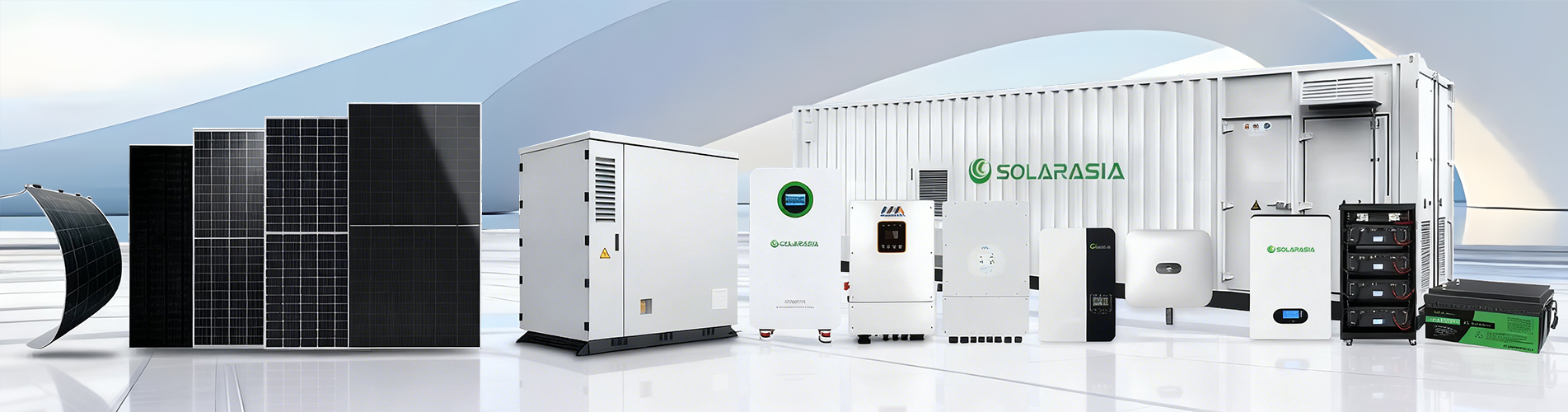
Choosing the right commercial battery energy storage system (BESS) supplier is one of the most important decisions when developing an industrial or commercial energy storage project.
A reliable supplier does more than provide battery cabinets or energy storage equipment. The supplier should understand project requirements, recommend suitable system configurations, provide complete technical documentation, coordinate equipment integration, and offer long-term technical support.
For factories, warehouses, commercial buildings, solar power plants, and industrial facilities, selecting an unsuitable BESS supplier can lead to equipment compatibility problems, unexpected project costs, installation delays, and difficulties with long-term operation.
With an increasing number of battery manufacturers, energy storage integrators, and trading companies entering the market, how can buyers identify a suitable commercial BESS supplier?
This guide explains 10 key factors to evaluate before purchasing a commercial or industrial battery energy storage system, helping EPC contractors, project developers, and business owners make more informed decisions.
The first step is to understand the supplier's experience in the battery energy storage industry.
Commercial and industrial BESS projects are different from ordinary residential battery installations. They may involve higher power ratings, larger battery capacities, complex electrical connections, energy management requirements, and specific grid regulations.
A supplier with relevant C&I energy storage experience may be better prepared to understand these technical and operational requirements.
Consider evaluating the following:
Years of experience in battery and energy storage businesses.
Experience with commercial and industrial battery storage projects.
Product portfolio, including battery cabinets, containerized BESS, PCS, and related equipment.
Experience with different applications, such as peak shaving, solar self-consumption, load shifting, and backup power.
Experience serving international customers and different project markets.
Availability of technical documentation and project references.
How long have you been working in the energy storage industry?
What types of commercial BESS projects have you supplied?
Can you provide relevant project references or case studies?
Which countries or markets have your products been supplied to?
Do not evaluate a supplier based only on its company introduction. Request relevant technical documents and project evidence where available.
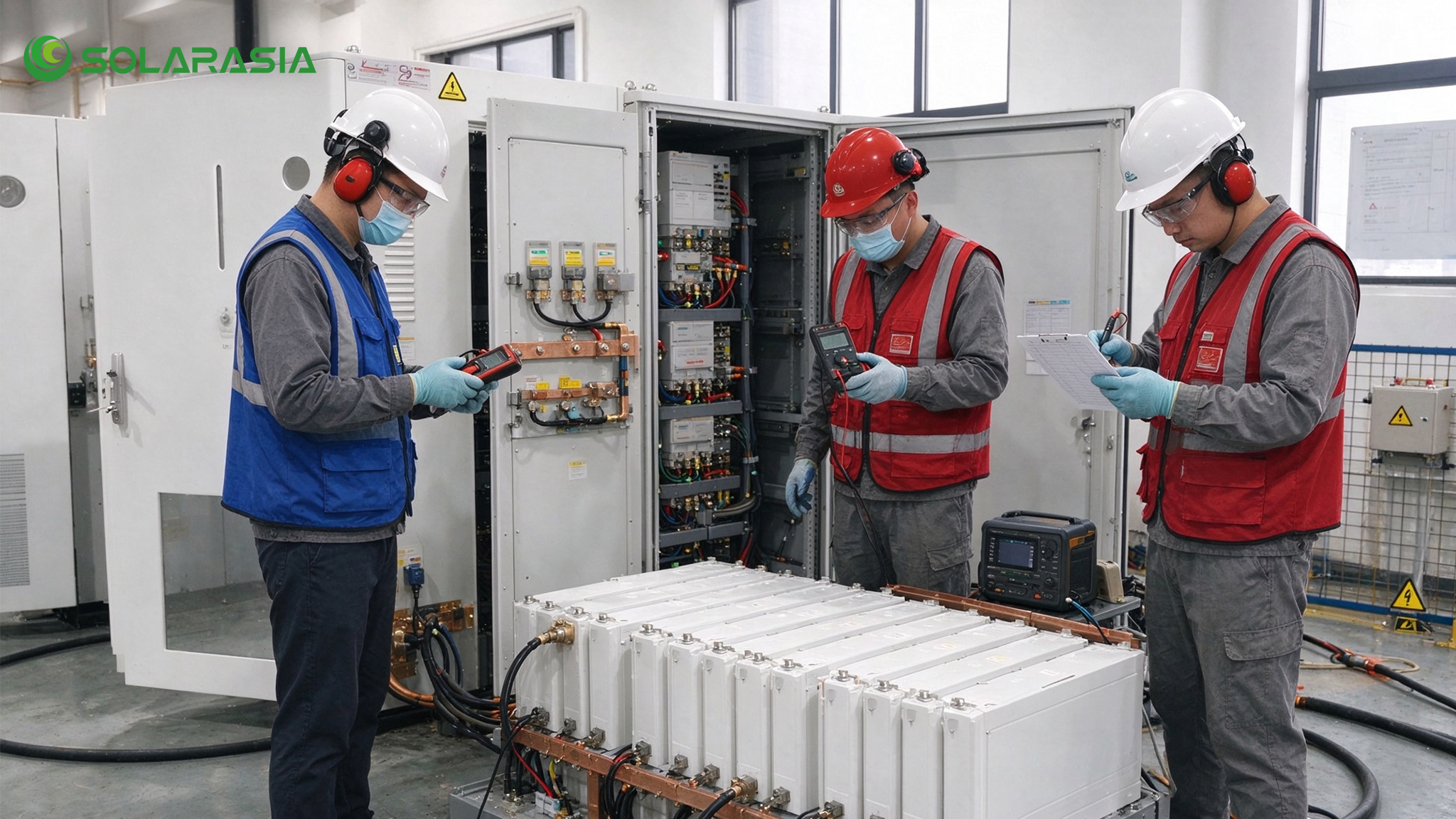
Battery cells are one of the most important components of a commercial battery energy storage system.
The quality and characteristics of the cells can affect system performance, usable energy, operating life, thermal behavior, and long-term maintenance requirements.
Lithium iron phosphate (LiFePO4 or LFP) batteries are widely used in stationary energy storage applications because of their thermal stability characteristics, cycle-life potential, and suitability for frequent charging and discharging.
However, selecting a battery based only on its chemistry is not enough.
| Parameter | What Buyers Should Check |
|---|---|
| Battery Chemistry | LFP or another specified chemistry |
| Cell Manufacturer | Cell brand, manufacturer, and traceability |
| Rated Capacity | Ah per cell or kWh per battery module |
| Nominal Voltage | Battery module or system voltage |
| Operating Voltage Range | Minimum and maximum permitted voltage |
| Cycle Life | Test conditions, cycle definition, and end-of-life criteria |
| Depth of Discharge | Recommended operating range |
| Operating Temperature | Permitted charging and discharging temperature |
| Warranty | Duration and applicable performance conditions |
A professional battery supplier should be able to explain the cell sourcing process and provide relevant technical documentation.
For larger projects, buyers should ask whether the supplier can provide:
Cell datasheets.
Cell batch or traceability information, where available.
Battery module specifications.
Battery testing documentation.
Battery system configuration details.
Be careful with cycle-life claims. A statement such as 6,000 cycles or 8,000 cycles is incomplete without the relevant test conditions, including temperature, charge and discharge rates, depth of discharge, and end-of-life capacity threshold.
A longer cycle-life figure does not automatically mean a better battery for every project.
A commercial battery energy storage system is made up of multiple components that must work together.
A supplier should understand the relationship between battery capacity, PCS power, EMS control, electrical infrastructure, and installation conditions.
Choosing equipment with impressive individual specifications does not guarantee that the complete system will operate as expected.
Battery System: Stores electrical energy and supplies it when required.
Power Conversion System (PCS): Converts power between the battery's DC side and the AC electrical system.
Energy Management System (EMS): Coordinates energy management strategies, including charging schedules, discharging, and energy optimization.
Battery Management System (BMS): Monitors battery operating conditions and manages battery protection functions.
Thermal Management: Maintains suitable battery operating temperatures through the specified cooling design.
Fire Detection and Protection: Provides safety monitoring and protection measures according to the system design and applicable requirements.
Before placing an order, confirm:
Is the BESS AC-coupled or DC-coupled?
What are the rated power and energy capacity?
What is the usable battery energy?
Which PCS models are supported?
Does the EMS communicate with the BMS and PCS?
Which communication protocols are available?
What are the AC voltage and frequency requirements?
Is the system designed for grid-connected operation, backup power, or both?
Can the system be expanded in the future?
A commercial battery storage system rated at 100kW / 215kWh has:
Rated power: 100kW
Nominal energy capacity: 215kWh
A simplified theoretical calculation gives:
215kWh ÷ 100kW = 2.15 hours
However, this is not a guaranteed discharge duration. Actual operating time depends on usable energy, permitted depth of discharge, conversion losses, auxiliary consumption, temperature, and system operating limits.
A qualified supplier should explain these differences clearly instead of presenting nominal capacity as guaranteed usable energy.
Product certifications and compliance documentation are important when purchasing commercial battery energy storage equipment for international projects.
Different countries and markets may have different requirements for battery products, electrical equipment, transportation, installation, and fire safety.
Buyers should confirm which standards and certifications apply to the specific product and project location.
| Standard or Certification | General Relevance |
|---|---|
| IEC 62619 | Safety requirements for secondary lithium cells and batteries used in industrial applications |
| IEC 62477-1 | Safety requirements for power electronic converter systems and equipment |
| UN 38.3 | Testing requirements for lithium batteries during transport |
| UL 1973 | Safety standard for batteries used in stationary and other specified applications |
| UL 9540 | Safety standard for energy storage systems and equipment |
| UL 9540A | Test method for evaluating thermal runaway fire propagation in battery energy storage systems |
| CE Marking | Applicable European conformity requirements, depending on product scope and legislation |
| ISO 9001 | Quality management system certification for an organization |
These standards are not interchangeable, and not every project requires every certification.
For example, a battery cell certificate does not automatically demonstrate that the complete BESS cabinet or integrated energy storage system has been certified.
Related Articles:BESS safety requirements
Ask the supplier to provide applicable documentation, such as:
Product certificates and test reports.
Battery cell and module datasheets.
PCS and inverter compliance documents.
UN 38.3 test summary, where applicable.
Safety and installation manuals.
Quality management system certificates.
Fire protection and thermal management specifications.
Always verify that the certificate applies to the exact product model, configuration, manufacturer, and intended market.
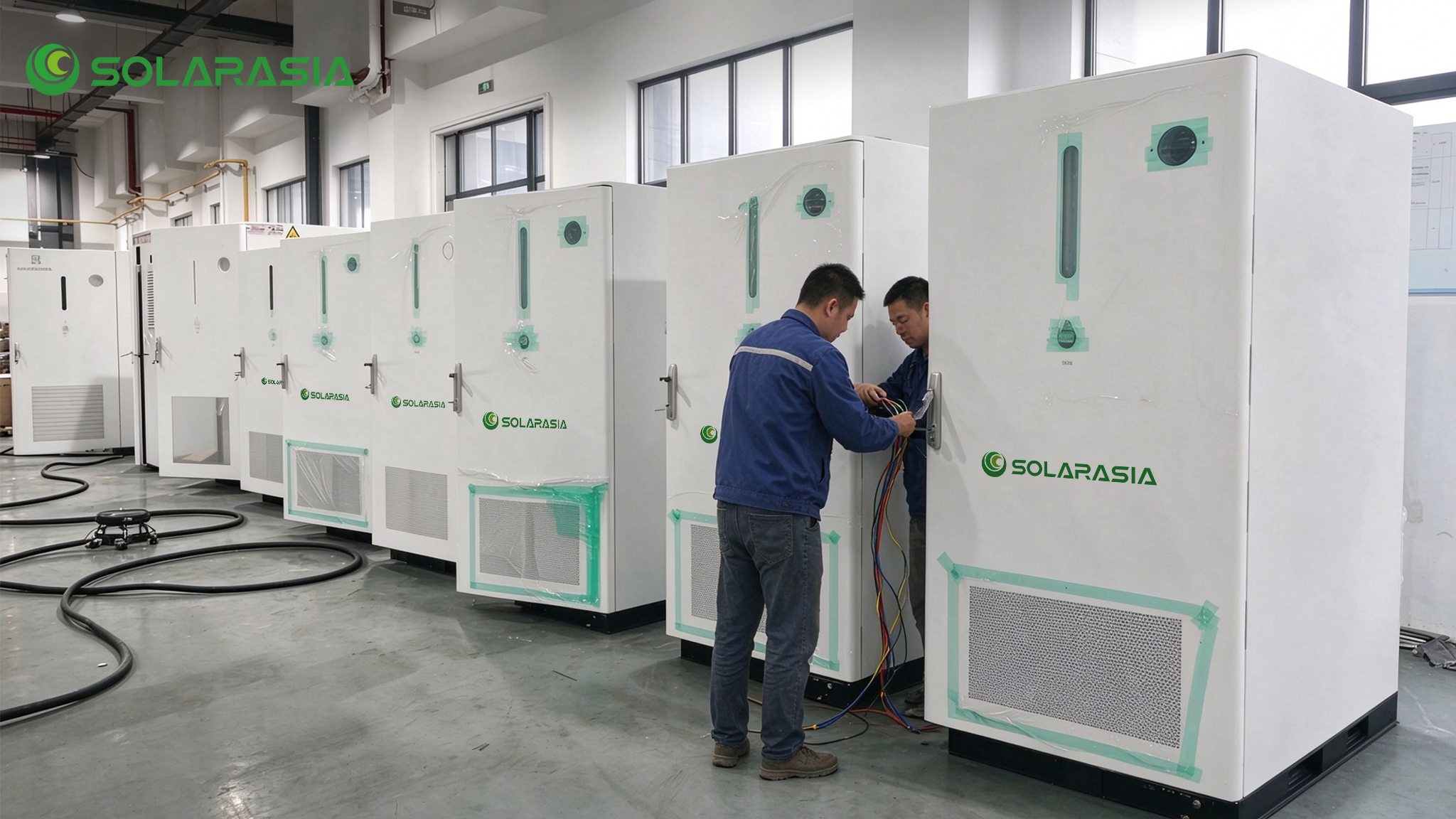
Manufacturing capability is another important factor when selecting a commercial BESS supplier.
Buyers should understand whether the supplier is a battery manufacturer, system integrator, trading company, or a business working with qualified manufacturing partners.
Each business model can serve a different purchasing requirement. The important point is transparency about who manufactures the equipment and who is responsible for product quality and technical support.
Production Facilities
Check whether the supplier has access to suitable battery assembly facilities, production equipment, and testing areas.
Battery Assembly
Evaluate whether the manufacturing process includes appropriate cell inspection, module assembly, electrical connection, and battery system integration.
Quality Inspection
Ask about incoming material inspection, production testing, aging procedures where applicable, and final product inspection.
Testing Equipment
Check whether the supplier can provide relevant testing records for voltage, current, insulation, communication, and system operation.
Production Capacity
For large projects, confirm whether the supplier can meet the required production schedule and delivery quantity.
Do you manufacture the battery system directly or work with partner factories?
Which production processes are completed in-house?
What quality control procedures are implemented?
Can you provide factory inspection or production photographs?
What is the typical lead time for the required configuration?
Can you support customized battery storage solutions?
A supplier does not necessarily need to own every production facility. However, its manufacturing relationships, quality responsibilities, and delivery capabilities should be clearly explained.
Warranty conditions can have a significant impact on the long-term economics of a commercial battery energy storage project.
A supplier may advertise a long warranty period, but buyers should carefully review what the warranty actually covers.
| Warranty Item | What to Confirm |
|---|---|
| Battery Warranty | Warranty period and covered components |
| Performance Warranty | Energy retention or throughput conditions, if provided |
| PCS Warranty | Coverage for power conversion equipment |
| BMS Warranty | Coverage for battery management equipment |
| EMS Warranty | Software support and service conditions |
| Replacement Policy | Repair, replacement, and labor responsibilities |
| Warranty Exclusions | Operating conditions that may invalidate coverage |
Battery performance warranties may be based on factors such as:
Maximum annual energy throughput.
Permitted depth of discharge.
Charging and discharging rates.
Operating temperature.
Annual operating cycles.
Remaining capacity at the end of the warranty period.
For example, a battery warranty that specifies a certain remaining capacity after a defined period should also state the operating conditions and measurement method.
Buyers should not compare warranty duration alone. A shorter warranty with clearly defined performance conditions may be more useful than a longer warranty with extensive exclusions.
Related Articles:Commercial BESS Warranty and Lifecycle
For modern commercial and industrial BESS projects, energy management and monitoring are important parts of the overall system.
A suitable EMS should coordinate the battery system with the facility's energy consumption, solar generation, grid connection, and operating strategy.
Real-time battery monitoring.
Charging and discharging control.
Peak shaving.
Time-of-use energy management.
Solar self-consumption optimization.
Grid import or export management, where supported.
Historical energy data and performance reports.
Alarm notifications.
Remote monitoring and troubleshooting.
Ask which communication interfaces and protocols are supported by the system.
Examples may include:
Modbus TCP.
Modbus RTU.
CAN communication.
Ethernet communication.
Manufacturer-specific communication interfaces.
The exact compatibility depends on the connected equipment and implementation.
A supplier should be able to explain how the EMS communicates with the BMS, PCS, meters, solar inverters, and other relevant devices.
Also ask about remote access permissions, data storage, cybersecurity, and software update procedures.
Related Articles:BESS energy management system
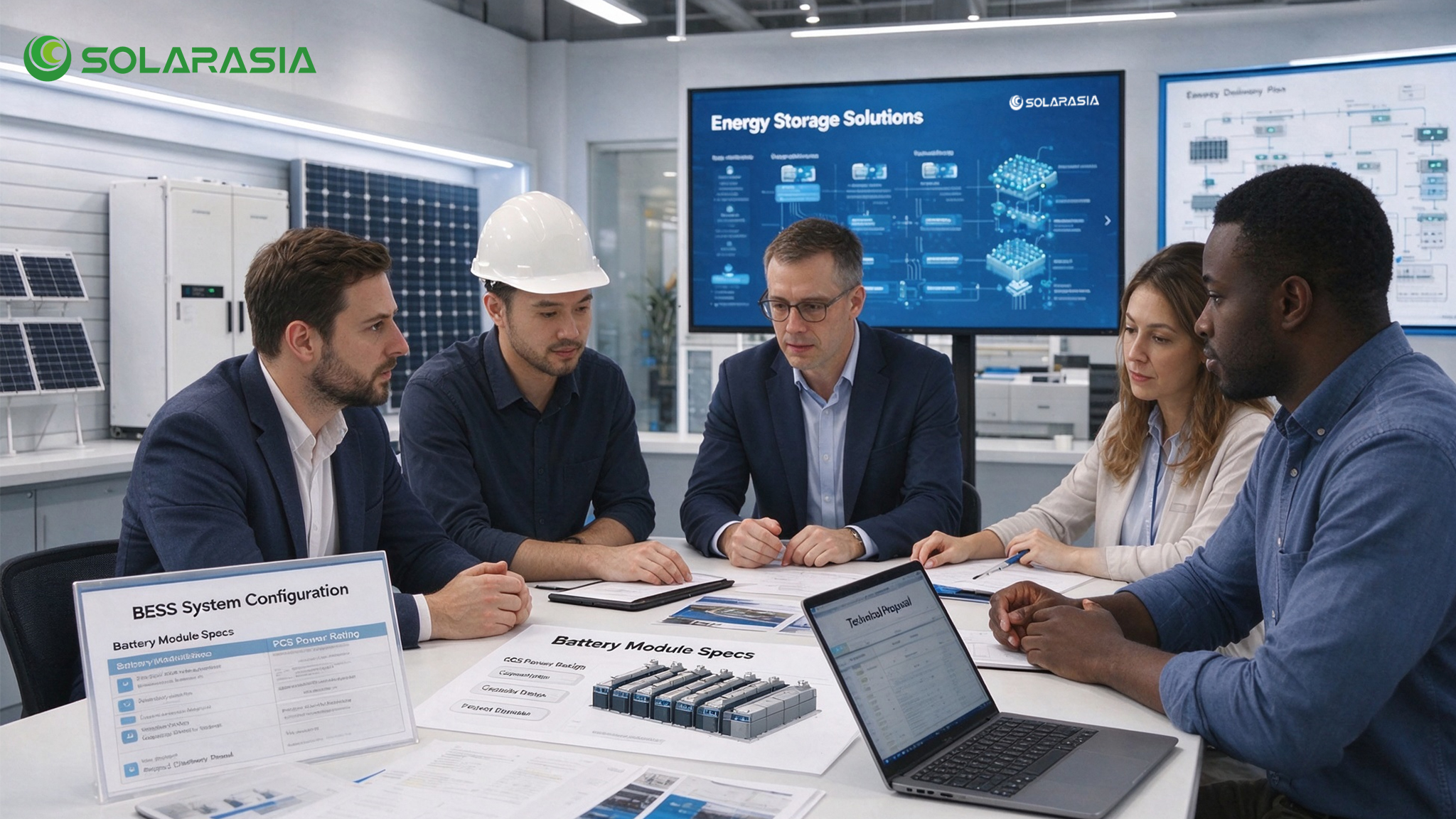
Commercial and industrial energy storage projects rarely have exactly the same requirements.
A warehouse, manufacturing plant, commercial building, and solar power station may require different battery capacities, PCS ratings, cooling designs, electrical configurations, and control strategies.
A suitable BESS supplier should be able to evaluate these differences and recommend an appropriate configuration.
Battery Capacity
The required energy capacity may vary according to electricity consumption, backup duration, solar generation, and operating strategy.
Power Rating
The PCS rating should be selected according to the facility's load demand, peak shaving requirements, and expected charging and discharging power.
System Configuration
Projects may require AC-coupled or DC-coupled architectures, different battery cabinet configurations, or specific grid connection arrangements.
Environmental Adaptation
The system may need to operate in hot, cold, humid, dusty, or coastal environments.
Monitoring and Control
The EMS may need to integrate with existing solar inverters, meters, industrial control systems, or building management platforms.
A qualified supplier or engineering partner should be able to discuss:
Preliminary system configuration.
Technical specifications.
Battery and PCS sizing.
Electrical architecture.
Installation requirements.
Communication interfaces.
Project-specific equipment options.
Do not accept a standard product configuration without checking whether it matches the actual site requirements.
A commercial BESS project does not end when the equipment leaves the factory.
Transportation, installation, commissioning, and after-sales support are all important parts of the purchasing decision.
Ask about:
Production lead time.
Packaging and shipping arrangements.
Export documentation.
Battery transportation requirements.
Delivery schedule.
Shipping responsibilities and Incoterms.
For international projects, battery transportation requirements should be reviewed before shipment.
Clarify whether the supplier provides:
Installation guidance.
Electrical connection documentation.
Commissioning procedures.
EMS and PCS configuration support.
System testing guidance.
Technical training.
Also establish which tasks are the responsibility of the supplier, local EPC contractor, and site installation team.
Long-term support is especially important for industrial energy storage systems.
Ask the supplier:
Is technical support available after delivery?
What is the response procedure for equipment alarms?
Is remote troubleshooting available?
Are spare parts available?
How are warranty claims handled?
Can the supplier provide maintenance guidance?
A supplier's after-sales responsibilities should be clearly defined in the quotation and contract.
Price is an important purchasing factor, but the lowest initial quotation does not always represent the best value.
A commercial BESS quotation should clearly explain the included equipment, technical specifications, project responsibilities, and additional costs.
| Cost Component | Items to Review |
|---|---|
| Battery System | Cells, modules, racks, and cabinets |
| PCS | Power conversion equipment |
| EMS | Energy management and monitoring platform |
| BMS | Battery management and protection |
| Thermal Management | Cooling equipment and related components |
| Fire Safety | Detection and protection equipment included in the design |
| Electrical Equipment | Cables, switchgear, and protection devices |
| Engineering | System design and technical documentation |
| Installation | On-site installation and commissioning, if included |
| Logistics | Packaging, transportation, and insurance |
| Warranty and Service | Included support and optional service packages |
When comparing multiple quotations, make sure they use comparable specifications.
For example, check whether the quoted systems have the same:
Rated power.
Nominal and usable energy capacity.
Battery chemistry.
PCS configuration.
Operating voltage.
Cooling method.
Safety design.
Warranty conditions.
EMS functions.
Delivery and service scope.
A quotation with a lower price may exclude important components or services that another supplier has included.
The best approach is to compare the complete project scope rather than looking only at the price per kWh.
Related Articles:Commercial BESS Cost Breakdown
Before making a final purchasing decision, buyers can use the following checklist to compare potential suppliers.
| Evaluation Factor | Key Question | Priority |
|---|---|---|
| Industry Experience | Does the supplier have relevant C&I BESS experience? | High |
| Battery Quality | Are cell specifications and traceability available? | High |
| System Configuration | Are battery, PCS, BMS, and EMS compatible? | High |
| Certifications | Are applicable product certificates and test reports available? | High |
| Manufacturing | Are production and quality control capabilities transparent? | High |
| Warranty | Are warranty coverage and performance conditions clear? | High |
| EMS and Monitoring | Does the system support the required control functions? | Medium to High |
| Customization | Can the supplier meet project-specific requirements? | High |
| Delivery and Support | Are logistics, commissioning, and after-sales responsibilities defined? | High |
| Pricing Transparency | Is the quotation complete and technically comparable? | High |
Buyers can use this checklist to create a supplier comparison sheet and identify which companies meet the project's essential requirements.
In addition to evaluating positive capabilities, buyers should identify potential warning signs before placing an order.
Be cautious when a supplier promises exceptionally high cycle life, guaranteed savings, or unusually long operating life without providing test conditions and supporting documentation.
If a supplier provides a certificate that does not match the product model or manufacturer, request clarification before proceeding.
A quotation that only states battery capacity and price is not sufficient for evaluating a commercial BESS.
Request detailed battery, PCS, EMS, electrical, environmental, and safety specifications.
If the supplier cannot explain who manufactures the battery system, who performs quality inspections, or who handles warranty claims, the project may face unnecessary risks.
A supplier should be able to explain how technical issues, equipment failures, spare parts, and warranty claims are handled.
A lower quotation may reflect a different system configuration, excluded components, different battery specifications, or a narrower service scope.
Always request a detailed technical and commercial comparison.
To receive a more accurate commercial battery storage proposal, prepare the following project information:
| Project Information | Details to Provide |
|---|---|
| Project Type | Factory, warehouse, commercial building, solar power plant |
| Project Location | Country and installation site |
| Required Power | kW or MW |
| Required Energy Capacity | kWh or MWh |
| Existing Solar PV | Installed capacity and inverter model |
| Main Application | Peak shaving, load shifting, backup, solar self-consumption |
| Load Profile | Daily or interval-based electricity consumption |
| Grid Information | Voltage, frequency, import and export requirements |
| Installation Conditions | Indoor or outdoor, ambient temperature, available space |
| Project Schedule | Expected delivery and commissioning date |
| Special Requirements | Certifications, communication, customization, or other specifications |
If available, provide electricity bills, load profiles, solar generation data, and existing electrical drawings.
These documents can help the supplier evaluate battery capacity, PCS power, energy management strategies, and system configuration more accurately.
Related Articles:Commercial BESS Installation Requirements
Look for relevant industry experience, reliable battery specifications, compatible system components, applicable certifications, transparent manufacturing arrangements, clear warranty terms, and responsive technical support.
A BESS manufacturer produces battery cells, modules, cabinets, or integrated energy storage equipment. A BESS supplier may manufacture products directly, integrate equipment from different manufacturers, or work with manufacturing partners to provide complete solutions. Buyers should confirm the supplier's actual responsibilities and product sourcing arrangements.
Request company information, product datasheets, applicable certificates, test reports, factory or production evidence, warranty documents, and relevant project references. Verify that technical and certification documents correspond to the actual product being offered.
Lithium iron phosphate (LiFePO4 or LFP) is widely used in stationary commercial and industrial battery storage applications. The most suitable battery chemistry depends on the project's safety requirements, operating conditions, performance targets, and economics.
Commercial BESS pricing depends on battery capacity, PCS power, system configuration, cooling and safety design, EMS functions, installation, logistics, and project requirements. Buyers should request a detailed quotation based on a defined technical scope rather than relying on a general price per kWh.
Applicable requirements depend on the product type and target market. Buyers may need to review standards and certifications related to battery safety, electrical equipment, transportation, and complete energy storage systems. Always verify the scope and validity of the specific documents.
Many suppliers and system integrators can support customized configurations based on required battery capacity, PCS power, electrical infrastructure, installation environment, and EMS requirements. Confirm which customization and engineering services are actually available.
Commercial BESS equipment may operate for many years and requires monitoring, maintenance, troubleshooting, and potentially component replacement. Clear technical support and warranty procedures can help reduce operational uncertainty and improve long-term system management.
Selecting a commercial battery energy storage supplier requires more than comparing product prices.
Buyers should evaluate battery quality, system compatibility, certifications, manufacturing capabilities, warranty conditions, EMS functions, customization, logistics, and after-sales support.
A suitable supplier should be transparent about its products, technical capabilities, manufacturing arrangements, and project responsibilities.
For EPC contractors, project developers, and industrial energy users, taking the time to evaluate these factors can help reduce procurement risks and support more reliable energy storage project development.
At SOLARASIA, we provide commercial and industrial energy storage products and customized BESS solutions for different project requirements. Our team works with manufacturing partners and technical resources to support battery storage configuration, product selection, and project-specific requirements.
Planning a commercial or industrial energy storage project? Contact SOLARASIA to discuss your required power capacity, battery energy capacity, application, and technical specifications. Our team can help you evaluate a suitable BESS solution for your project.


Address : Room 908-909, Building 2, No. 469 Huatuo Lane, Shushan District, Hefei City, Anhui Province


Please read on, stay posted, subscribe, and we welcome you to tell us what you think.
Copyright 2026 @ Anhui Solarasia Energy Technology Co.,Ltd .All Rights Reserved. Sitemap | Blog | XML | Privacy Policy
 Network Supported