Commercial Solar System Design: Components, Sizing and Cost
Sep 30, 2026
Commercial solar power has become an important energy solution for warehouses, factories, offices, retail buildings, agricultural facilities and other businesses with significant electricity demand.
Unlike a small residential PV installation, a commercial solar project usually requires more detailed planning. The system needs to match the building's electricity consumption, available roof area, electrical infrastructure, grid connection and future energy requirements.
A properly designed commercial solar system is not simply a collection of solar panels and an inverter. It is an integrated energy system that can include photovoltaic modules, inverters, mounting structures, DC and AC protection, cables, monitoring equipment, transformers, energy storage and other electrical components.
The design process generally starts with the customer's electricity consumption and site conditions, then determines the appropriate PV capacity, inverter configuration and optional battery storage.
This article explains the major components of a commercial solar system, how to size the system, what factors affect project costs and what businesses should consider before starting a commercial PV project.
What Is a Commercial Solar System?
A commercial solar system is a photovoltaic power generation system designed primarily for businesses and commercial or industrial facilities.
Typical applications include:
Warehouses
Manufacturing facilities
Office buildings
Shopping centers
Retail stores
Hotels
Agricultural facilities
Cold storage facilities
Workshops
Distribution centers
Commercial complexes
A typical grid connected system can be represented as:
Solar Panels → DC Protection → Solar Inverter → AC Distribution → Building Loads → Utility Grid
When battery storage is included, the system can also provide:
Solar → Battery → Building Loads
This allows businesses to use solar energy directly during the day and potentially store surplus generation for later use.
Key Components of a Commercial Solar System
A complete PV project can contain many different components. The exact configuration depends on the project size and local electrical requirements.
1. Solar Panels
Solar panels are the primary electricity generation component.
Modern commercial projects commonly use high power PV modules to maximize electricity generation while making efficient use of available roof space.
Important module specifications include:
Rated power
Open circuit voltage
Operating voltage
Short circuit current
Operating current
Module efficiency
Dimensions
Temperature coefficient
Mechanical load rating
Higher wattage modules can reduce the number of panels required for a particular system capacity.
For example, a 100kW system using 600W modules would require approximately:
100,000W ÷ 600W ≈ 167 modules
The actual configuration depends on the final string design and selected equipment.
2. Solar Inverters
The solar inverter converts the DC electricity generated by the PV array into AC electricity that can be used by the building or supplied to the grid.
For commercial applications, three phase string inverters and larger central or modular inverter solutions are commonly considered.
Important inverter specifications include:
Rated AC output
Maximum DC input power
Maximum DC voltage
MPPT voltage range
Maximum input current
Number of MPPTs
AC voltage
AC frequency
Maximum efficiency
Communication functions
Protection functions
The inverter must be matched to the PV array.
This is why inverter selection should be part of the overall commercial solar system design rather than treated as a separate purchasing decision.
3. Mounting Structure
The mounting system secures solar panels to the roof or ground.
Commercial installations may use:
Rooftop mounting
Ground mounting
Ballasted systems
Metal roof mounting
Tile roof mounting
Fixed tilt structures
Custom structures
The structure must consider:
Roof type
Wind conditions
Snow load
Panel dimensions
Roof slope
Structural capacity
Maintenance access
Local building requirements
For rooftop projects, the existing building structure should be evaluated before installation.
4. DC and AC Protection Equipment
Protection equipment helps protect the PV system and electrical infrastructure from faults and abnormal operating conditions.
Depending on the system design, this may include:
DC isolators
AC circuit breakers
Surge protection devices
Fuses
Combiner boxes
Switchgear
Grounding equipment
Monitoring equipment
The final protection configuration should comply with applicable local electrical codes and standards.
5. Cables and Connectors
Cables connect the PV modules, inverter, distribution equipment and grid.
A commercial installation may require:
PV DC cables
AC cables
Communication cables
Grounding conductors
Network cables
Cable selection should consider current capacity, voltage drop, temperature, installation environment and applicable electrical standards.
6. Monitoring System
A commercial PV monitoring system can provide information about:
PV generation
Inverter performance
Energy consumption
System faults
Historical production
Equipment status
For larger projects, monitoring becomes particularly useful because operators need to identify underperforming equipment and potential faults quickly.
7. Battery Energy Storage
Battery storage is optional but increasingly relevant for commercial PV projects.
A commercial solar system can be combined with battery storage to support applications such as:
Increasing solar self consumption
Shifting energy to later periods
Peak demand management
Backup power
Energy management
Renewable energy utilization
A typical configuration may include:
PV + Inverter + Battery + PCS + EMS + Building Loads + Grid
Battery sizing should be based on the building's load profile and project objectives rather than simply matching the PV capacity.
How to Size a Commercial Solar System
Sizing is one of the most important stages of a commercial PV project.
The objective is not simply to install as many solar panels as possible.
Instead, the system should be designed around:
Electricity Consumption + Solar Resource + Roof Space + Grid Requirements + Investment Goals
Several factors should be analyzed before selecting the final system capacity.
1. Analyze Electricity Consumption
Start by collecting the business's electricity bills.
Ideally, review at least 12 months of historical data.
Important information includes:
Annual electricity consumption
Monthly electricity consumption
Daily consumption
Peak demand
Daytime electricity use
Evening electricity use
Electricity tariff
This information provides the foundation for the PV system design.
For example, a warehouse that consumes significant electricity between 8 AM and 6 PM may be able to directly use a large portion of its solar generation.
2. Analyze the Load Profile
Annual electricity consumption alone is not enough.
The timing of electricity consumption is equally important.
Solar panels produce electricity mainly during daylight hours.
A simplified daily pattern might look like:
Morning → Solar Generation Increasing
Midday → Solar Generation Peak
Afternoon → Solar Generation Decreasing
Night → Little or No Solar Generation
If a business has high electricity demand during the middle of the day, solar self consumption can potentially be high.
If electricity consumption is mainly at night, battery storage or other energy management strategies may need to be considered.
3. Evaluate Available Roof Space
Available installation area is another major limitation.
The required area depends on:
Panel dimensions
Panel wattage
Panel orientation
Row spacing
Roof obstacles
Maintenance pathways
Fire access
Roof structure
For example, using higher power PV modules can reduce the number of modules needed for the same installed capacity.
A 100kW system with 600W panels requires approximately 167 modules, while a 100kW system with 700W panels requires approximately 143 modules.
The physical roof area will also depend on the actual dimensions and layout of the selected modules.
4. Consider Solar Resource
The same PV capacity can produce different amounts of electricity in different locations.
Important environmental factors include:
Solar irradiation
Temperature
Weather
Shading
Panel orientation
Tilt angle
Soiling
Snow
System losses
A professional PV design should use location-specific solar data to estimate annual energy production.
5. Select the Appropriate System Capacity
Commercial systems can range from relatively small installations to multi-megawatt projects.
For example:
30kW to 50kW
50kW to 100kW
100kW to 500kW
500kW to 1MW
Multi-megawatt systems
The appropriate size depends on the customer's electricity demand, available space, grid connection and project economics.
A larger system is not automatically better.
If a business has limited daytime electricity consumption, installing excessive PV capacity may result in a higher proportion of surplus generation.
Commercial Solar System Sizing Example
Consider a warehouse with:
High daytime electricity consumption
Large available rooftop
Stable electricity demand throughout the year
Existing three phase electrical service
The project developer may evaluate a 100kW, 150kW or larger PV system.
The final capacity should be determined by comparing:
PV Generation vs Building Consumption
rather than selecting the capacity based only on roof size.
A detailed energy simulation can estimate:
Annual PV generation
Monthly generation
Self consumption
Grid import
Potential export
Energy savings
Choosing the Right Solar Inverter
Inverter selection is closely connected to PV system sizing.
For example, a 50kW class PV system may use a commercial inverter around the 50kW class, while a larger 100kW system may use a 100kW class inverter or a combination of multiple inverters.
However, PV DC capacity and inverter AC capacity do not always have to be exactly the same.
The designer may use a suitable DC to AC ratio within the inverter manufacturer's specifications.
Before selecting the inverter, check:
Maximum DC Voltage
The maximum PV string voltage must remain within the inverter's permitted operating range.
MPPT Voltage Range
The PV string operating voltage should be compatible with the inverter's MPPT range.
Maximum Input Current
The PV string current must not exceed the inverter's permitted input current.
Maximum PV Power
The total connected PV capacity must comply with the inverter specifications.
AC Output
The inverter's AC output should match the building's electrical system and grid requirements.
Three Phase Systems for Commercial Applications
Many commercial and industrial buildings use three phase electrical systems.
Three phase solar inverters are therefore commonly used for larger commercial projects.
The final configuration depends on:
Building electrical service
Grid voltage
Frequency
Utility requirements
Inverter specifications
Project capacity
The inverter and electrical equipment must be compatible with the local grid.
This is particularly important for international solar projects because voltage and grid requirements can vary between markets.
Solar + Battery Storage for Commercial Projects
Battery storage can expand the functionality of a commercial PV installation.
During periods of high solar generation:
Solar → Building Loads + Battery
Later:
Battery → Building Loads
This can help businesses use more of their solar generation outside the hours of peak PV production.
A commercial battery system can also be considered for:
Peak shaving
Time of use energy management
Backup power
Solar self consumption
Load shifting
Battery storage should be designed according to the project's actual operating requirements.
AC Coupled vs DC Coupled Storage
When adding batteries, businesses may consider two main architectures.
AC Coupled
The battery system is connected on the AC side of the existing solar installation.This approach can be useful for retrofitting battery storage to an existing PV system.
DC Coupled
The battery is integrated on the DC side through a compatible inverter or power conversion architecture.This approach can provide a more integrated configuration for certain new installations.The appropriate solution depends on the existing PV system, inverter architecture, battery requirements and project objectives.
What Affects Commercial Solar System Cost?
The commercial solar system cost can vary significantly between projects.There is no single price that applies to every 50kW, 100kW or 500kW installation.
Major cost factors include:
Solar Panels
Panel wattage, efficiency, technology and manufacturer can influence the equipment cost.
Solar Inverters
The number, capacity and type of inverters affect the total project cost.
Mounting System
Roof type, structural requirements and installation conditions can influence mounting costs.
Electrical Equipment
Larger systems may require additional:
Switchgear
Transformers
Protection devices
Distribution equipment
Cabling
Installation Labor
Installation costs depend on:
Project location
Roof accessibility
System size
Installation complexity
Local labor costs
Engineering and Permitting
Commercial projects may require engineering design, structural assessment, permitting, inspections and grid approval.
Battery Storage
If energy storage is included, the project cost will increase because of the battery, PCS, BMS, EMS and additional electrical equipment.
Why Larger Commercial Solar Projects Can Have Different Costs
A larger project does not necessarily cost exactly twice as much as a smaller project.
For example, a 100kW project and two separate 50kW projects may have different equipment, engineering and installation costs.
Larger projects can sometimes benefit from:
Bulk equipment purchasing
More efficient installation
Shared engineering
Optimized electrical infrastructure
However, larger projects can also require additional:
Transformers
Switchgear
Grid upgrades
Structural reinforcement
Safety equipment
Engineering
Therefore, project cost should be evaluated as a complete system rather than calculated simply from PV capacity.
How to Evaluate the Economics of a Commercial Solar System
Businesses should look beyond the initial purchase price.
Important financial factors include:
Total project investment
Annual solar generation
Electricity price
Solar self consumption
Grid export value
Operating costs
Maintenance
Financing
System lifetime
Battery replacement requirements, if applicable
A project assessment may consider:
Annual Energy Savings
Payback Period
Return on Investment
Levelized Cost of Electricity
The appropriate financial metric depends on the project and market.
Commercial Solar System Cost vs Long Term Savings
The initial investment is only one side of the analysis.
A PV system can continue generating electricity for many years.
During its operating life, the system may help reduce electricity purchased from the grid.
The actual financial outcome depends on:
Local electricity rates
Solar generation
System performance
Self consumption
Financing
Maintenance
Electricity price changes
For this reason, businesses should compare the expected lifetime energy savings with the total project investment rather than focusing only on the initial equipment price.
Common Commercial Solar System Design Mistakes
Mistake 1: Designing the System Only Around Roof Area
A large roof does not necessarily mean the business needs a large PV system.Electricity consumption should be analyzed first.
Mistake 2: Ignoring Daytime Consumption
Solar generation and electricity consumption should be compared on an hourly or interval basis whenever possible.
Mistake 3: Choosing the Inverter After the Panels
The PV modules and inverter need to be electrically compatible.
Mistake 4: Ignoring Future Electricity Demand
Businesses may add:
EV charging
Production machinery
HVAC
Refrigeration
Heat pumps
Additional buildings
Future loads should be considered during system planning.
Mistake 5: Looking Only at Equipment Price
The cheapest equipment does not necessarily result in the lowest overall project cost.
Efficiency, reliability, installation requirements, warranty, maintenance and long term performance also matter.
Mistake 6: Forgetting Battery Integration
If the business may add battery storage later, the initial electrical architecture should be planned with future expansion in mind.
How to Design a Commercial Solar System Step by Step
A practical design process can follow these stages.
Step 1: Collect Electricity Data
Review at least 12 months of electricity bills and available load data.
Step 2: Conduct a Site Assessment
Evaluate:
Roof
Ground conditions
Shading
Electrical room
Grid connection
Installation access
Step 3: Determine PV Capacity
Compare electricity demand, solar resource and available installation space.
Step 4: Select Solar Panels
Consider:
Power
Efficiency
Dimensions
Voltage
Current
Temperature characteristics
Step 5: Select Inverters
Match the PV array with the inverter's:
DC voltage
Current
MPPT range
Maximum PV power
AC output
Step 6: Design Electrical Protection
Configure DC and AC protection, grounding, switchgear and distribution equipment.
Step 7: Evaluate Battery Storage
Determine whether energy storage is needed for:
Self consumption
Peak shaving
Backup
Energy shifting
Step 8: Estimate Energy Production
Use local solar data and system design parameters to estimate annual generation.
Step 9: Calculate Project Economics
Compare investment, energy savings, operating costs and expected project lifetime.
Step 10: Complete Engineering and Installation
Finalize structural, electrical, grid connection and safety requirements before construction.
What Size Commercial Solar System Does a Business Need?
There is no universal system size for every business.
For reference, businesses may evaluate systems such as:
System Size
Typical Application
30kW to 50kW
Small commercial facilities
50kW to 100kW
Warehouses and medium businesses
100kW to 500kW
Large commercial and industrial buildings
500kW to 1MW
Large industrial facilities
1MW+
Large industrial or utility scale projects
These categories are only general planning references.
The actual PV capacity should be determined by the project's electricity consumption, site conditions, grid requirements and financial objectives.
Commercial Solar System Design for Different Businesses
Warehouses
Warehouses often have large roof areas and significant daytime electricity consumption from lighting, HVAC, refrigeration and logistics equipment.
Manufacturing Facilities
Factories may have substantial and relatively stable electricity demand, making them suitable candidates for larger PV installations.
Retail Buildings
Retail facilities can have significant daytime loads from lighting, air conditioning, refrigeration and other equipment.
Agricultural Facilities
Solar can support agricultural applications such as irrigation, ventilation, refrigeration and processing.
Office Buildings
Office buildings typically consume electricity during working hours, which can align well with daytime solar generation.
However, every site should be evaluated individually.
Designing for Future Expansion
A commercial PV system should ideally be considered as part of the business's long term energy strategy.
Future projects may include:
Additional solar panels
Larger inverters
Battery storage
EV charging
Energy management
Backup power
Additional production equipment
Planning for future expansion can help businesses avoid major system modifications later.
For example, if battery storage is likely to be added in the future, the initial electrical design can consider suitable space, switchgear, communication infrastructure and energy management requirements.
Solarasia Power Commercial Solar Solutions
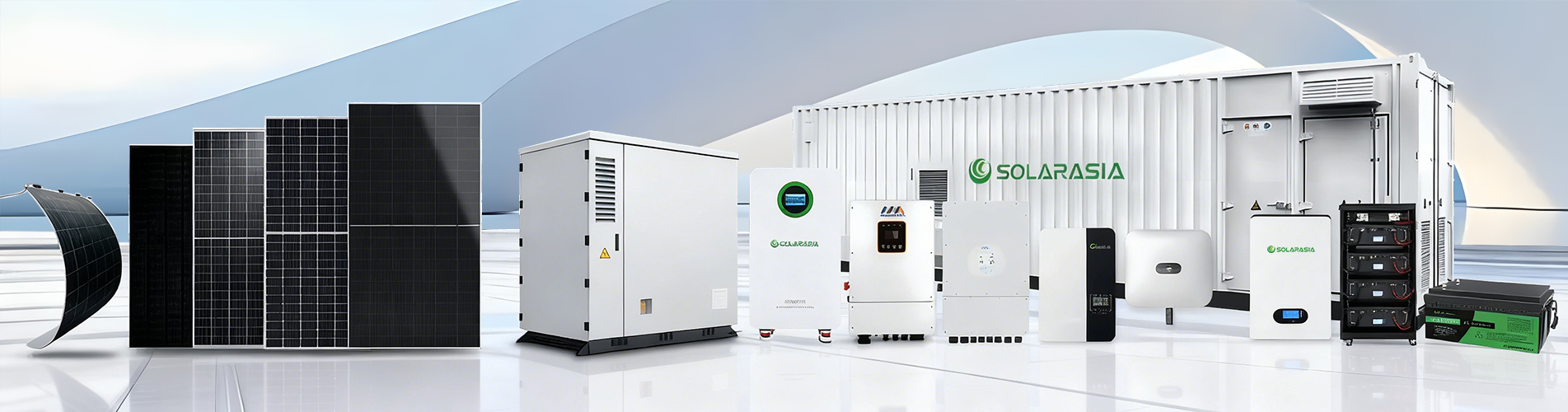
Anhui Solarasia Energy Technology Co., Ltd. provides solar and energy storage products for commercial and industrial applications.
Our product portfolio includes:
Solar panels
Commercial solar inverters
Hybrid solar inverters
Lithium battery systems
Commercial and industrial BESS
Solar power systems
Customized solar and energy storage solutions
We support distributors, EPC contractors, installers, wholesalers and project developers with solar and energy storage solutions for different commercial applications.
A commercial project can be configured according to:
PV Capacity + Inverter Requirements + Load Profile + Battery Storage + Grid Conditions
Whether the project involves a warehouse rooftop, manufacturing facility, commercial building or larger industrial application, system components should be selected as an integrated solution rather than independently.
Final Thoughts
A successful commercial PV project starts with system design rather than equipment selection.
The right commercial solar system design should connect the building's electricity demand with available solar resources, roof space, electrical infrastructure and long term energy goals.
The major components include:
Solar Panels + Inverters + Mounting Structure + DC/AC Protection + Cables + Monitoring + Optional Battery Storage
System sizing should consider electricity consumption, daytime load, solar irradiation, available roof area and future energy demand.
At the same time, commercial solar system cost depends on much more than the price of solar panels.
Inverters, mounting structures, electrical equipment, engineering, installation, permitting and optional battery storage can all affect the final project investment.
For businesses considering commercial solar, the most useful starting point is to collect electricity consumption data and conduct a detailed site assessment.
With the right design, a commercial PV system can become more than a source of renewable electricity. It can form part of a broader energy strategy that includes solar generation, battery storage, energy management and future electrification.






 Network Supported