Commercial Solar System Design: Components, Sizing and Cost
Sep 09, 2026
Introduction
For businesses looking to reduce electricity costs and improve energy independence, installing a commercial solar system can be a practical long term investment. However, designing a commercial photovoltaic system requires more than simply selecting a certain number of solar panels.
System capacity, electricity consumption, roof or ground space, solar irradiation, inverter configuration, battery storage and local regulations can all affect the final system design and project economics.
A properly designed system should match the customer's actual energy demand while making effective use of available installation space and maintaining reliable operation.
In this guide, we explain the major components of a commercial solar system, how to determine the appropriate system size, what affects project costs and how businesses can approach commercial solar project planning.
1. What Is a Commercial Solar System?
A commercial solar system is a photovoltaic power generation system designed primarily for businesses, factories, warehouses, office buildings, retail facilities and other commercial properties.
Compared with small residential systems, commercial PV projects generally have higher power capacities and more complex electrical configurations.
Depending on the application, a commercial system may include:
Solar panels
Commercial solar inverters
Mounting structures
DC and AC cables
Combiner boxes and protection devices
Monitoring equipment
Distribution equipment
Battery energy storage systems
Grid connection equipment
A typical grid connected system works by converting sunlight into DC electricity through solar panels. The inverter then converts DC electricity into AC electricity that can be used by the building or exported to the grid according to local regulations.
For businesses with significant daytime electricity consumption, solar power can help reduce dependence on grid electricity and improve long term energy cost management.
2. Main Components of a Commercial Solar System
Understanding the role of each component is an important step in commercial solar system design.
2.1 Solar Panels
Solar panels are the primary energy generation component of a PV system.
The total number of panels required depends on the desired system capacity and the power rating of the selected modules.
For example, a 100 kW commercial system using 600 W solar panels would theoretically require approximately:
100,000 W ÷ 600 W ≈ 167 panels
The actual panel quantity may be adjusted according to inverter capacity, system voltage, available installation area and electrical design requirements.
Modern commercial projects often use high efficiency N type modules because they can provide higher power output while making better use of limited roof space.
2.2 Commercial Solar Inverter
The solar inverter is responsible for converting DC electricity generated by the PV modules into usable AC electricity.
For larger projects, inverter selection should consider:
Rated AC output
Maximum DC input power
MPPT voltage range
Number of MPPTs
Maximum input current
Output voltage
Grid frequency
Communication and monitoring functions
Protection functions
A suitable inverter configuration can improve energy harvesting, simplify system installation and provide better monitoring of the PV system.
For large commercial projects, multiple string inverters may be used instead of a single centralized inverter. This can provide greater flexibility when different roof orientations, shading conditions or installation areas are involved.
2.3 Mounting System
The mounting structure secures the solar panels to the roof, ground or other installation surface.
The appropriate mounting solution depends on the project location and installation environment.
Common options include:
Rooftop mounting
Ground mounting
Carport solar structures
Flat roof mounting
Metal roof mounting
Structural loading, wind speed, snow conditions, roof material and corrosion resistance should all be evaluated before installation.
2.4 Electrical Protection and Distribution Equipment
Commercial PV systems require appropriate electrical protection to improve system safety and reliability.
Depending on the project, equipment may include:
DC isolators
AC circuit breakers
Surge protection devices
Combiner boxes
Distribution cabinets
Grounding systems
Monitoring devices
The final configuration should be determined according to the inverter specifications, system voltage and applicable electrical standards.
2.5 Battery Energy Storage
Battery storage is not mandatory for every grid connected commercial PV project.
However, adding a battery energy storage system can provide additional functions such as:
Solar energy shifting
Peak demand management
Backup power
Increased self consumption
Energy arbitrage
Improved energy resilience
For businesses with high electricity prices during peak periods, combining solar generation with battery storage may improve the overall value of the project.
3. How to Size a Commercial Solar System
One of the most important parts of commercial solar system design is determining the appropriate system capacity.
The goal is not necessarily to install the largest possible PV system. Instead, the system should be designed around electricity consumption, available space, local solar conditions and the customer's financial objectives.
Step 1: Analyze Electricity Consumption
Start with the customer's historical electricity bills.
Ideally, collect at least 12 months of electricity consumption data.
Important information includes:
Monthly electricity consumption
Annual electricity consumption
Average daily consumption
Daytime electricity demand
Peak demand
Electricity tariff structure
Peak and off peak rates
Daytime electricity consumption is particularly important for commercial PV because solar generation normally occurs during daylight hours.
Step 2: Estimate Solar Energy Production
The estimated annual energy production can be calculated using:
Annual PV Production ≈ System Capacity × Peak Sun Hours × 365 × System Efficiency
For example, suppose a 100 kW system receives an average of 4.5 peak sun hours per day and the overall system performance factor is approximately 80%.
The estimated annual production would be:
100 kW × 4.5 × 365 × 80%≈ 131,400 kWh per year
This is only a simplified estimate. Actual production depends on location, module orientation, temperature, shading, inverter efficiency, soiling and system losses.
For a commercial project, professional PV simulation software and local solar irradiation data should be used for more accurate energy yield calculations.
4. How Many Solar Panels Does a Commercial System Need?
Panel quantity depends mainly on the desired system capacity and the wattage of the selected modules.
System Size
550 W Panel
600 W Panel
700 W Panel
50 kW
~91
~84
~72
100 kW
~182
~167
~143
200 kW
~364
~334
~286
500 kW
~910
~834
~715
These numbers are theoretical calculations based on module nameplate power. The final design may differ because of DC/AC ratio, string configuration, inverter input limits and local installation requirements.
Higher wattage modules can reduce the number of panels required for the same system capacity. This may be particularly useful when roof space is limited.
5. Choosing the Right Inverter Size
Inverter capacity is another important consideration.
A PV system does not always need a DC module capacity exactly equal to the inverter's AC rating.
Many commercial systems use a DC to AC ratio greater than 1.0. For example, a 100 kW AC inverter may be connected to a PV array with a DC capacity higher than 100 kW, depending on the inverter's maximum recommended DC input power.
This approach can help increase inverter utilization during periods when solar irradiance is lower than peak conditions.
However, the DC/AC ratio should always remain within the inverter manufacturer's specifications.
When selecting a commercial inverter, EPC contractors and system designers should carefully check:
Maximum PV input power
Maximum DC voltage
MPPT voltage range
Maximum input current
Number of MPPT channels
AC output voltage
Grid compatibility
Communication functions
6. Rooftop Space Requirements
Available installation space can significantly influence the system size.
As a general example, a commercial rooftop PV system may require approximately 5–8 m² of roof area per kW of installed capacity, although the actual requirement varies according to module dimensions, panel efficiency, roof layout, tilt angle, maintenance pathways and fire safety requirements.
For a 100 kW system, this could mean roughly:
100 kW × 5–8 m²/kW = 500–800 m²
The available area should be assessed before finalizing the system capacity.
Other factors to consider include:
Roof orientation
Roof inclination
Shading from nearby buildings
HVAC equipment
Skylights
Water tanks
Maintenance access
Roof structural capacity
A larger roof does not automatically mean that the maximum possible PV capacity should be installed.
7. What Determines Commercial Solar System Cost?
The commercial solar system cost depends on much more than the price of solar panels.
Major cost components typically include:
Cost Component
Main Cost Factors
Solar Panels
Power rating, efficiency, technology and quantity
Inverter
Capacity, brand, MPPT configuration and functions
Mounting
Roof type, structure and installation environment
Electrical Equipment
Protection, distribution and grid connection
Cables
Cable length, voltage and installation method
Battery Storage
Capacity, battery chemistry and power rating
Installation
Labor, equipment and project complexity
Engineering
Design, permits and system commissioning
Transportation
Distance, shipment size and destination
For this reason, it is difficult to give one universal price for a commercial PV system.
Two projects with the same nominal capacity can have significantly different total costs because of differences in roof conditions, electrical infrastructure, labor rates and local permitting requirements.
8. Example: 100 kW Commercial Solar System
A 100 kW PV system is a common reference point for commercial solar projects.
A basic configuration could include:
Approximately 100 kW of PV modules
One or more commercial string inverters
Rooftop mounting structures
DC and AC cables
DC and AC protection equipment
Monitoring system
Grounding equipment
If 600 W modules are used, approximately 167 panels would be required based on nameplate capacity.
However, the final system should not be designed simply by dividing 100 kW by the panel wattage.
The engineering team should also verify string voltage, current, MPPT allocation, roof layout and inverter specifications.
For businesses with substantial evening electricity consumption, a battery storage system could also be integrated with the 100 kW PV system.
9. Grid Connected vs Solar + Battery
Commercial customers typically have two major system configurations.
Grid Connected Solar
A grid connected PV system sends solar electricity directly to the building's loads.When solar production is insufficient, the building can draw electricity from the grid.This configuration is generally simpler and can be suitable for businesses with substantial daytime electricity consumption.
Solar + Battery Storage
A solar and battery system adds energy storage to the PV system.
During the day, excess solar electricity can charge the battery. The stored energy can then be used later when solar production decreases.
This configuration can be useful for:
Factories operating into the evening
Warehouses with extended operating hours
Businesses with high peak electricity rates
Facilities requiring backup power
Commercial sites with limited grid capacity
The choice between the two depends on the customer's load profile, electricity tariff, grid conditions and project investment objectives.
10. How to Improve Commercial Solar Project ROI
A successful commercial solar project should focus on total project economics rather than equipment price alone.
Maximize Solar Self Consumption
If most of the generated electricity can be consumed directly by the business, the project may achieve better economic performance than a system that frequently exports excess power.
Select High Efficiency Modules
High efficiency modules can help increase installed capacity when roof space is limited.
Optimize Inverter Configuration
Proper MPPT and string design can reduce mismatch losses and improve energy harvesting.
Consider Battery Storage
Battery storage can help shift solar energy to periods with higher electricity prices, depending on the local tariff structure.
Compare Total Cost of Ownership
When comparing suppliers, consider equipment quality, warranty, technical support, installation requirements and expected system performance rather than focusing only on the initial quotation.
11. Commercial Solar System Design Checklist
Before purchasing equipment or starting installation, project developers and EPC contractors should confirm:
Site Information
Roof or ground installation
Available installation area
Roof structural condition
Orientation and tilt
Shading conditions
Electrical Information
Grid voltage
Grid frequency
Existing transformer capacity
Main distribution capacity
Electricity consumption profile
PV System
Module power and efficiency
Inverter capacity
DC/AC ratio
String configuration
MPPT requirements
Protection equipment
Energy Storage
Required battery capacity
Peak load
Backup requirements
Battery power rating
Energy management strategy
Commercial Factors
Equipment cost
Installation cost
Transportation
Permits
Warranty
Payback period
Long term operation and maintenance
A complete assessment of these factors can significantly reduce the risk of oversizing, undersizing or unexpected project costs.
12. Frequently Asked Questions
What size solar system does a commercial building need?
There is no universal system size. Capacity should be determined based on annual electricity consumption, daytime load, available installation area, local solar resources and the customer's investment objectives.
Is 100 kW enough for a commercial solar system?
A 100 kW system can be suitable for many small and medium sized commercial facilities, but the appropriate size depends on the site's electricity demand and available roof area.
How much space is needed for a 100 kW solar system?
As a preliminary estimate, approximately 500–800 m² may be required, although the actual area depends on module dimensions, efficiency, roof layout and required maintenance pathways.
Does a commercial solar system need batteries?
No. A grid connected commercial PV system can operate without batteries. Battery storage becomes more attractive when the business needs energy shifting, peak demand management or backup power.
How long does a commercial solar system last?
Solar modules commonly have a useful service life of 25 years or more, while other components such as inverters may have different expected operating lives. Regular inspection and maintenance can help maintain system performance.
How much does a commercial solar system cost?
The final cost depends on system capacity, solar panel selection, inverter configuration, mounting structure, electrical equipment, installation conditions, battery storage and local project requirements. A project specific quotation is therefore more meaningful than a general price per kW.
Conclusion
Designing a commercial PV project requires a balance between energy demand, available space, system performance and investment cost.
The basic process is straightforward:
Analyze electricity consumption → evaluate the site → determine PV capacity → select modules and inverters → design electrical protection → evaluate battery storage → calculate project economics.
For businesses, EPC contractors and solar project developers, the best system is not necessarily the largest system or the lowest cost system. It is the system that delivers an appropriate balance between energy production, reliability, investment and long term operating value.
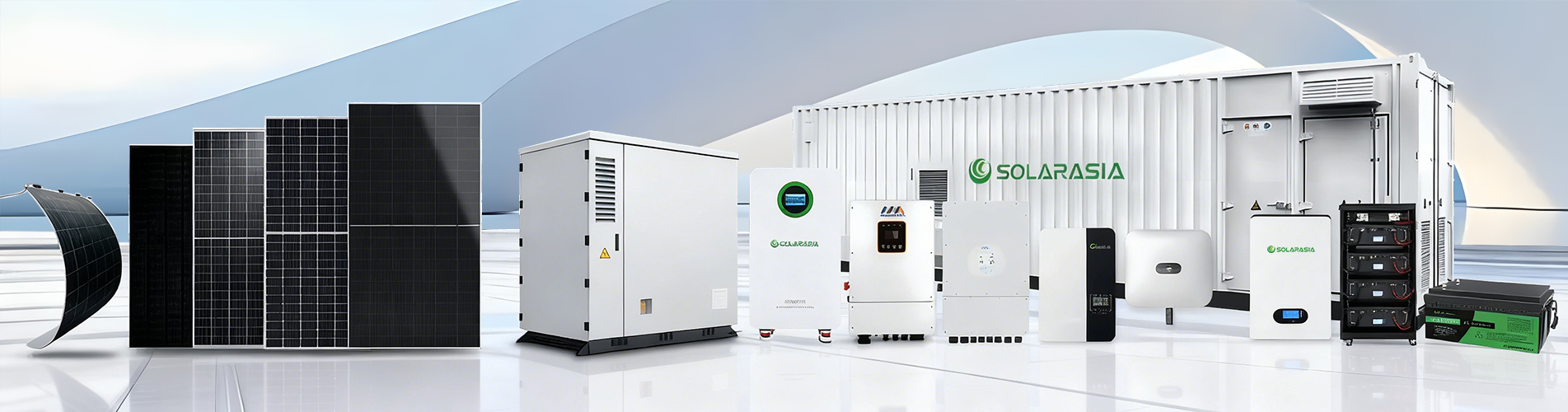
At SolarAsia Power, we provide solar panels, PV inverters, lithium battery storage and complete solar energy solutions for commercial and industrial applications. By combining different equipment configurations, businesses can develop PV systems tailored to their specific energy consumption and project requirements.






 Network Supported