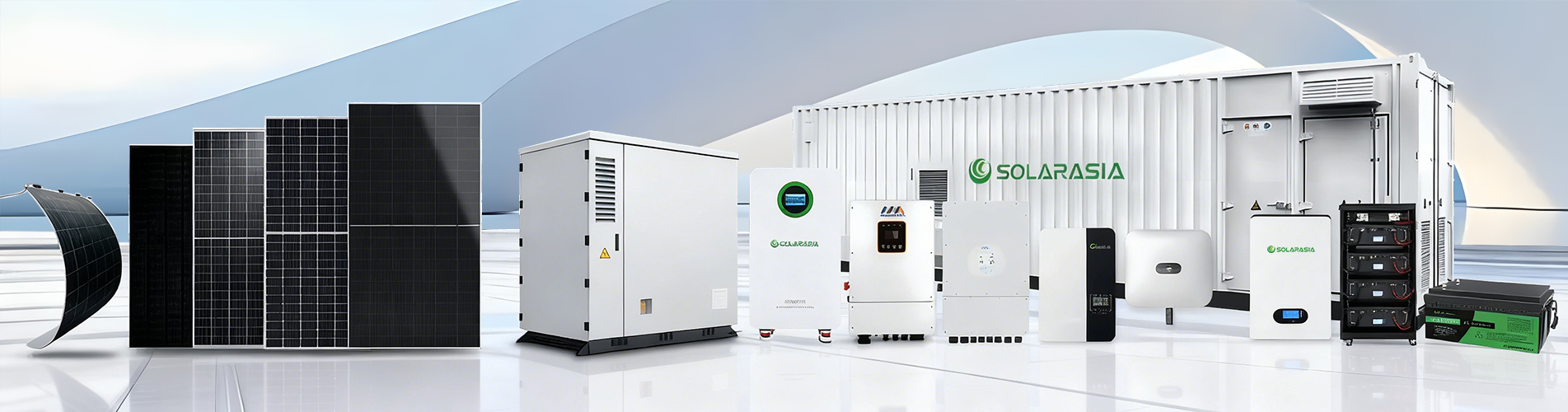
Solarasia banner

Bifacial Solar Panel

Home

Bifacial Solar Panel

  • Why Are 800W Solar Panels Becoming the First Choice for Commercial Solar Projects in 2026? Jul 17, 2026
    The solar industry is moving toward larger, more efficient photovoltaic modules.   In 2026, 800W solar panels are attracting increasing attention from EPC contractors, project developers, and commercial solar investors because they help reduce installation costs while maximizing energy production.   With advanced N Type ABC technology, high conversion efficiency, and bifacial power generation, these modules are changing how commercial solar projects are designed.     So, what makes an 800 watt solar panel such an attractive option?     What Is an 800W Solar Panel?   An 800W solar panel is a high power photovoltaic module designed for large scale commercial and utility applications.   Compared with conventional 550W or 600W modules, higher power panels allow developers to generate more electricity using fewer modules.   Typical applications include: Commercial rooftop solar systems Industrial facilities Utility scale solar farms Agricultural PV projects Ground mounted solar power plants     Because fewer modules are required, installation becomes faster while reducing mounting structures, cables, and labor costs.   Why N Type ABC Technology Is Leading the Industry   One of the biggest innovations in modern photovoltaic technology is the N Type ABC solar panel.   ABC (All Back Contact) technology places electrical contacts on the rear side of the cell, leaving the front surface free to absorb more sunlight.   Key advantages include: Higher conversion efficiency Improved low light performance Lower temperature coefficient Better long term power retention Cleaner appearance without front side busbars     These features help maximize energy production throughout the system's lifetime.   Bifacial Solar Panels Generate More Energy   Many modern 800W bifacial solar panels capture sunlight from both the front and rear sides.   Reflected sunlight from concrete, sand, snow, or light colored rooftops increases total energy generation.   Benefits include: Higher annual energy yield Better return on investment Lower Levelized Cost of Electricity (LCOE) Improved project profitability     For commercial projects with high ground reflectivity, bifacial technology can significantly increase overall power generation.     800W Solar Panel vs 600W Solar Panel   Feature 600W Panel 800W Panel Power Output Lower Higher Number of Modules Required More Fewer Installation Time Longer Shorter BOS Cost Higher Lower Energy Density Lower Higher Commercial ROI Good Excellent   Using fewer high power modules can simplify installation and reduce overall project costs.   Ideal Applications for 800W Solar Panels   Commercial Rooftop Solar Large factories and warehouses benefit from higher power density and better roof utilization.   Utility Scale Solar Farms High output modules reduce installation costs while improving project efficiency.   Industrial Solar Projects Manufacturing plants with significant daytime electricity demand can maximize solar self consumption.   Agricultural Solar   Ground mounted systems for farms and agricultural facilities benefit from higher energy yield and reduced installation complexity.   How to Choose the Right High Power Solar Panel   Before selecting a module, consider:   Cell Technology Choose N Type ABC solar panels for higher efficiency and long term reliability.   Module Power Select an output that matches your project design, such as:   765W solar panel 770W solar panel 775W solar panel 780W solar panel 785W solar panel 795W solar panel 800W solar panel   Project Type Commercial rooftops and utility scale projects often require different module configurations.   Warranty and Reliability Look for manufacturers offering long product warranties, stable power output, and proven long term performance.     Future Trends in Commercial Solar Panels   As solar technology continues to evolve, higher power modules are expected to dominate commercial installations.   Key trends include: Larger module formats N Type cell technology ABC and back contact architectures Bifacial energy generation Higher conversion efficiency Lower BOS costs AI assisted energy management     Businesses investing in advanced solar modules today will be better positioned to achieve long term energy savings and sustainability goals.   Final Thoughts   The 800W N Type ABC bifacial solar panel represents the next generation of commercial photovoltaic technology.   By combining high power output, advanced back contact cell design, and bifacial energy generation, these modules help developers reduce installation costs, increase electricity production, and improve project profitability.     Whether you're planning a commercial rooftop installation or a utility scale solar farm, 800W solar panels provide a reliable and future ready solution for maximizing renewable energy performance.    
  • N Type ABC Technology Explained: Why Is This Solar Cell Technology Becoming the Future of High Efficiency Solar Panels? Jul 20, 2026
    The solar industry is constantly evolving, and cell technology plays a critical role in improving photovoltaic performance.   In recent years, N Type ABC technology has attracted significant attention from solar manufacturers, EPC companies, and commercial project developers due to its high efficiency, excellent reliability, and advanced cell structure.   As the demand for higher power modules continues to grow, technologies such as PERC, TOPCon, HJT, and ABC are competing to define the next generation of solar panels.     So, what exactly is N Type ABC technology, and why is it becoming one of the most promising technologies for high efficiency solar modules?   What Is N Type ABC Technology?   N Type ABC technology stands for N Type All Back Contact technology.   Unlike traditional solar cells that place metal contacts and grid lines on the front surface, ABC solar cells move all electrical contacts to the back side of the cell.   This design creates a completely unobstructed front surface, allowing more sunlight to enter the silicon layer.   The basic structure includes: N Type silicon wafer Back side electrical contacts Optimized carrier transport structure Reduced front surface shading     The result is a solar cell with higher light absorption and improved energy conversion efficiency.   How Does ABC Technology Improve Solar Panel Efficiency?   Traditional solar cells lose part of their power generation capability because front side metal grids block sunlight.   ABC technology solves this problem by removing front contacts.     The main benefits include:   1. Reduced Light Loss   Without front busbars and fingers, more sunlight reaches the photovoltaic layer.   This improves:   Light utilization Energy conversion efficiency Module output power   2. Higher Power Output   Because of improved cell design, N Type ABC solar panels can achieve higher wattage compared with conventional modules.   Modern ABC modules are available in: 700W+ solar panels 750W solar panels 800W solar panels   This makes them especially suitable for:   Utility scale solar farms Industrial solar systems Commercial rooftop projects   3. Better Temperature Performance   Solar panels normally lose output when temperatures increase.   N Type ABC technology provides a lower temperature coefficient, helping modules maintain better performance in hot environments.   This is valuable for regions such as:   Middle East Australia Africa Southeast Asia     N Type ABC vs TOPCon: What Is the Difference?   Both ABC and TOPCon are advanced N Type technologies, but their structures are different.   Feature N Type ABC N Type TOPCon Contact Position Back side only Front and rear Front Shading Almost eliminated Reduced Efficiency Potential Very High High Appearance Cleaner black surface Traditional appearance Application Premium high efficiency modules Large scale PV projects   Both technologies provide excellent performance, but ABC technology focuses on maximizing efficiency through a fully back contact design.   Why Are N Type ABC Solar Panels Popular for Commercial Projects?   Commercial and utility scale solar projects are increasingly focused on: Higher power density Lower installation costs Better long term energy yield Reduced balance of system costs   High power N Type ABC solar panels help achieve these goals.     Advantages include:   Fewer Modules Required Higher wattage modules mean fewer panels are needed for the same system capacity.   Lower Installation Costs Fewer modules can reduce:   Mounting structures Cable requirements Labor costs   Higher Energy Production Improved efficiency generates more electricity over the lifetime of the solar system.   Are N Type ABC Panels Suitable for Bifacial Solar Applications? Yes.   Many advanced ABC modules are designed with dual glass structures and bifacial capability.   A bifacial N Type ABC solar panel can generate electricity from: Direct sunlight on the front side Reflected sunlight on the rear side   This makes them suitable for:   Ground mounted solar farms Commercial rooftops High reflectivity environments     N Type ABC Technology vs Traditional PERC Technology The solar industry is gradually moving away from traditional PERC technology.   Technology Efficiency Potential Market Trend PERC Medium Declining TOPCon High Growing HJT High Growing ABC Very High Premium market growth   ABC technology represents the industry's move toward higher efficiency and better utilization of available installation space.   Future Development of N Type ABC Technology   As solar projects become larger and land availability becomes more limited, efficiency will become increasingly important.   Future trends include: Higher wattage modules Larger wafer sizes Improved bifacial performance Lower manufacturing costs Better energy yield     The combination of N Type ABC technology, dual glass design, and bifacial generation is expected to play an important role in next generation photovoltaic systems.   Final Thoughts   N Type ABC technology represents one of the most advanced developments in modern solar cell engineering.   By moving all electrical contacts to the back side of the cell, ABC technology reduces shading losses, improves efficiency, and enables higher power solar modules.   For commercial, industrial, and utility scale solar projects, high efficiency ABC solar panels provide an effective solution to maximize energy production while reducing long term system costs.     As the solar industry continues moving toward higher efficiency modules, N Type ABC technology is positioned to become an important part of the future photovoltaic market.    
foot logo

Address : Room 908-909, Building 2, No. 469 Huatuo Lane, Shushan District, Hefei City, Anhui Province

Tel : +86 17730022793

Email : [email protected]

Subscribe

Please read on, stay posted, subscribe, and we welcome you to tell us what you think.

submit

Copyright 2026 @ Anhui Solarasia Energy Technology Co.,Ltd .All Rights Reserved. Sitemap | Blog | XML | Privacy Policy Network Supported

Click To Leave A Message

leave a message
If you are interested in our products and want to know more details,please leave a message here,we will reply you as soon as we can.
submit

Home

Products

whatsApp

contact