
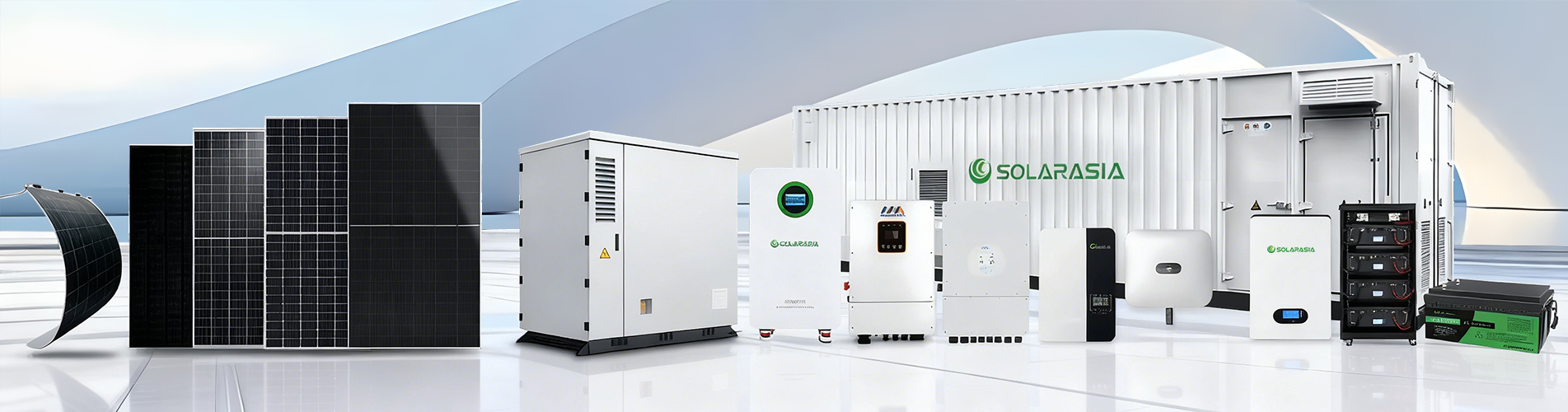
How to Calculate the Right Battery Capacity for a Commercial Energy Storage System
Choosing the right battery capacity is one of the most important steps when planning a commercial or industrial energy storage project. A battery system that is too small may not provide enough energy for peak shaving, solar self-consumption, or backup power. An oversized system, on the other hand, can increase upfront investment and leave some of its capacity underused.
For businesses considering solar-plus-storage solutions, understanding commercial battery storage capacity calculation helps determine how much energy the battery needs to store and how long it can support the facility's electrical loads. The correct configuration depends on power demand, operating hours, electricity tariffs, solar generation, usable battery capacity, and system efficiency.
In this guide, we explain how to calculate the required battery capacity, compare common commercial applications, and identify the key factors to consider when selecting a commercial battery energy storage system (BESS).
Before calculating battery size, it is important to understand the difference between battery capacity and power output.
Battery capacity is generally measured in kilowatt-hours (kWh), while power is measured in kilowatts (kW). These two specifications serve different purposes when designing an energy storage system.
| Parameter | Unit | What It Means |
|---|---|---|
| Battery energy capacity | kWh | The amount of energy stored in the battery |
| Battery power | kW | The rate at which the battery can charge or discharge |
| Discharge duration | Hours | How long the battery can supply a specified load |
| Depth of discharge (DoD) | % | The proportion of rated capacity used during discharge |
| System efficiency | % | The proportion of input energy retained through the relevant energy conversion process |
For example, a 200 kWh battery does not necessarily deliver 200 kW of power. If the system can continuously discharge at 50 kW and has enough usable energy, it could theoretically supply that load for approximately four hours before accounting for operating limits and other losses.
Likewise, a battery with a large energy capacity may still be unsuitable for a facility with high instantaneous power demand if its discharge power is insufficient.
When comparing commercial battery storage systems, evaluate both the required energy capacity and the required continuous and peak power output.
There is no single battery size that suits every commercial facility. The following factors should be evaluated before choosing a system.
Start by reviewing the facility's electricity consumption. Electricity bills provide a useful overview of monthly energy usage, while interval meter data can reveal when the facility consumes the most power.
Important information includes:
Average and peak electrical demand
Daily energy consumption
Operating hours and shift patterns
Nighttime and weekend electricity demand
Critical loads that must remain operational during an outage
A warehouse operating mainly during daylight hours may have different storage requirements from a manufacturing plant running multiple shifts. A commercial building with substantial evening demand may also benefit from a different battery configuration.
For accurate industrial battery storage sizing, use actual load data whenever possible instead of relying only on average monthly electricity consumption.
Discharge duration describes how long a battery must supply power to a load.
For example, a facility that requires 50 kW for four hours needs 200 kWh of delivered energy before accounting for battery operating limits and system losses.
The required duration depends on the application's purpose. Peak shaving may require relatively short discharge periods during expensive demand peaks, while backup applications may require several hours of power for critical equipment.
A longer required discharge duration generally means a larger battery capacity, assuming the power demand remains unchanged.
A battery's rated capacity is not always fully available for normal operation. The usable energy depends on the manufacturer's specified operating limits, reserve settings, battery management system, and other system requirements.
Depth of discharge, or DoD, represents the proportion of rated capacity used during a discharge cycle.
For preliminary calculations, if a battery has a rated capacity of 200 kWh and an allowable DoD of 90%, the estimated usable energy is:
200 kWh × 90% = 180 kWh
The actual usable capacity should be confirmed from the product datasheet and system design. Do not assume that every lithium battery supports the same usable DoD.
Energy is lost during charging, discharging, and power conversion. These losses affect the amount of rated battery capacity required to deliver a specific amount of energy to the load.
The relevant efficiency depends on the calculation boundary. Battery DC efficiency, inverter efficiency, and overall AC round-trip efficiency are not interchangeable.
For a simplified preliminary estimate, a system efficiency factor can be included in the calculation. For a detailed project design, use the manufacturer's efficiency data and clarify whether the value applies to battery DC output, AC delivery, or the complete charging and discharging cycle.
For a commercial solar battery storage project, battery sizing should consider when solar energy is generated and when electricity is consumed.
A battery may store excess solar generation for use later in the day. It may also charge from the grid when permitted and economically appropriate.
Electricity tariff structures can affect the optimal configuration. Facilities with time-of-use rates or demand charges may benefit from discharging during specific periods, but the best battery size depends on tariff rules, load profiles, and operating constraints.
A larger battery does not automatically produce a better financial return. Its capacity should match the energy that can realistically be charged and discharged under the intended operating strategy.
A basic battery sizing calculation starts with the power demand and the required discharge duration.
Use the following formula:
Required Load Energy (kWh) = Load Power (kW) × Operating Time (hours)
For example, if a commercial facility needs 50 kW of power for four hours:
50 kW × 4 hours = 200 kWh
The load requires 200 kWh of delivered energy over the four-hour period.
If the battery has a rated capacity of 250 kWh and an allowable DoD of 90%, its estimated usable energy is:
250 kWh × 90% = 225 kWh
This value is before accounting for any additional losses between the battery and the load.
For a simplified preliminary calculation, the required nominal battery capacity can be estimated using:
Required Battery Capacity (kWh) = Required Load Energy ÷ (Usable DoD × Discharge Path Efficiency)
Suppose the facility needs 200 kWh of delivered energy, the allowable DoD is 90%, and the assumed efficiency of the relevant discharge path is 95%.
200 ÷ (0.90 × 0.95) = approximately 234 kWh
The preliminary result is approximately 234 kWh of nominal battery capacity.
A system with a nominal capacity of around 250 kWh might be a candidate for further evaluation, but it should not be selected solely from this calculation. The design must also confirm continuous and peak power, actual usable capacity, reserve requirements, temperature conditions, degradation allowances, and manufacturer specifications.
Important: This simplified formula assumes that the efficiency factor represents losses between the battery's rated capacity and the load. Do not multiply by a round-trip efficiency figure if the calculation only concerns discharge. For a complete solar charging and battery discharging model, charging and discharging losses should be evaluated separately.
The following examples illustrate how different operating requirements affect battery sizing. They are preliminary calculations, not recommended configurations or product quotations.
| Application | Assumed Load | Required Duration | Delivered Energy | Preliminary Battery Capacity* |
|---|---|---|---|---|
| Small commercial facility | 20 kW | 3 hours | 60 kWh | About 70 kWh |
| Office or retail building | 30 kW | 4 hours | 120 kWh | About 140 kWh |
| Warehouse or workshop | 50 kW | 4 hours | 200 kWh | About 234 kWh |
| Manufacturing facility | 100 kW | 4 hours | 400 kWh | About 468 kWh |
*Illustrative estimates assume 90% usable DoD and 95% discharge path efficiency, with no additional reserve or degradation allowance. Actual designs must use verified product data and site-specific requirements.
These examples show why battery capacity should be based on the intended load and operating duration rather than facility size alone.
Two factories with similar floor areas may have very different storage requirements because their equipment, production schedules, and peak demand patterns differ.
When adding battery storage to a commercial solar installation, the battery should be sized according to both the site's energy demand and the available surplus solar generation.
A solar array may produce more electricity than a facility consumes during sunny periods. A battery can store some of this surplus energy for use later, depending on system configuration, charging limits, and operating conditions.
For example, if a facility regularly has 150 kWh of surplus solar energy available during the day and expects to use the stored energy in the evening, a battery with an appropriate usable capacity may help increase solar self-consumption.
However, the system should not automatically be sized to store all daily surplus energy. The available surplus can vary with weather, season, solar output, and facility demand. The battery's charging power and the time available for charging also matter.
Battery capacity is only one part of a complete solar-plus-storage system. Compatibility between the battery, inverter or power conversion system (PCS), battery management system (BMS), and energy management system (EMS) is also important.
Confirm the following before selecting a system:
Battery voltage and operating range
Continuous charging and discharging power
Communication protocols and control compatibility
AC-coupled or DC-coupled system architecture
Grid connection and export limitations
Required protection and monitoring functions
For projects involving existing solar installations, check whether the current inverter supports battery integration or whether additional power conversion equipment is required.
Some businesses expect to expand production, add electric vehicle charging, or increase solar generation in the future. In these cases, it may be useful to consider modular battery systems or configurations that allow planned expansion.
Future capacity should be based on a realistic forecast rather than an arbitrary oversized system. Confirm the supplier's supported expansion method, power limitations, controls, and warranty conditions before making a decision.
Backup power requirements differ from those for peak shaving or solar self-consumption.
A backup system should first identify which loads need to remain operational during a grid outage. These may include essential production equipment, refrigeration, servers, lighting, pumps, or critical control systems.
List the required loads, their power demand, and the expected backup duration. For equipment with high starting currents or variable demand, the system must also be checked for peak power and transient requirements.
For example, if selected critical loads consume an average of 25 kW and must operate for three hours, the delivered energy requirement is:
25 kW × 3 hours = 75 kWh
The nominal battery capacity must be higher than 75 kWh if only part of the rated capacity is usable or if the discharge path has losses.
A complete backup design should also consider:
Starting and surge power requirements
Whether loads can be shed during an outage
Battery reserve settings and minimum state of charge
Automatic transfer and grid-forming capabilities
Required operating duration under realistic load conditions
Whether the system supports the intended backup mode
Not every grid-connected battery system can automatically supply power during an outage. Confirm that the proposed inverter or PCS and system controls support the required backup functionality.
Avoiding common design errors can help businesses select a more appropriate energy storage solution.
A large energy capacity does not guarantee sufficient power output. Always compare the battery's continuous discharge rating and the system's peak power capability with the facility's load requirements.
Monthly electricity consumption alone cannot show when the facility needs power. Use interval meter data or a detailed load assessment to understand daily demand patterns and peak periods.
Rated capacity and usable capacity are different. Review the manufacturer's specifications, operating limits, reserve settings, and system efficiency before comparing battery products.
An oversized battery may increase capital costs without delivering enough additional savings or operational value. Evaluate expected battery utilization, electricity tariffs, charging opportunities, and project economics.
Businesses should consider maintenance access, system monitoring, warranty terms, replacement planning, and potential expansion. These factors influence the long-term suitability of a commercial energy storage installation.
After estimating the required capacity, compare complete systems rather than choosing a battery based on kWh alone.
| Selection Factor | What to Evaluate |
|---|---|
| Rated and usable capacity | Confirm the actual energy available under the intended operating conditions |
| Power output | Check continuous discharge power, peak output, and charging capability |
| Battery chemistry | Evaluate suitability for the application's safety, performance, and lifecycle requirements |
| Battery management system | Review monitoring, protection, balancing, and operating limits |
| Inverter or PCS compatibility | Confirm electrical ratings, communication, and system integration |
| Thermal management | Assess suitability for the installation environment and operating temperatures |
| Safety and certifications | Verify applicable product certifications and project requirements |
| Warranty and service | Check warranty conditions, technical support, and maintenance arrangements |
| Expansion capability | Confirm supported system configurations and future expansion options |
For many stationary storage projects, lithium iron phosphate (LiFePO4 or LFP) batteries are worth evaluating because of their established use in stationary energy storage applications. However, the best choice depends on the specific project, product specifications, safety requirements, and total cost of ownership.
Businesses should also request technical documentation showing usable energy, rated power, operating limits, efficiency, and warranty conditions. These details make it easier to compare proposals on a consistent basis.
At SolarAsia Power, we provide lithium battery products and energy storage solutions for residential, commercial, and industrial applications. We work with customers to evaluate project requirements and discuss suitable system configurations based on their intended applications.
If you are planning a commercial solar-plus-storage installation, an industrial battery project, or a battery system for peak shaving and backup power, visit our Commercial Battery Energy Storage System (BESS) page to explore our solutions.
To help evaluate your project, prepare the following information before contacting a supplier:
Average and peak load demand in kW
Required battery discharge duration in hours
Daily energy consumption in kWh
Existing solar system capacity, if applicable
Main application, such as peak shaving, solar self-consumption, or backup power
Site location and operating environment
Expected future expansion requirements
With this information, a supplier can more effectively assess the required battery capacity, power rating, system architecture, and integration requirements.
Calculating the right battery capacity for a commercial energy storage system starts with understanding the facility's power demand, required discharge duration, usable battery capacity, and system efficiency. Solar generation patterns, electricity tariffs, backup requirements, and future expansion plans also influence the final design.
A simple calculation can provide an initial estimate, but a reliable commercial battery storage sizing decision requires site-specific load data and verified product specifications. Businesses should evaluate both energy capacity and power output, while also considering system compatibility, safety, maintenance, and long-term operating costs.
Planning a commercial or industrial energy storage project? Visit Solarasia Power BESS to explore battery storage solutions and discuss your project requirements.
Multiply the required load in kW by the number of hours the battery must supply power. Then account for usable depth of discharge and relevant discharge losses to estimate the required nominal battery capacity.
kW measures power output, while kWh measures stored or delivered energy. Power indicates how much load the system can support at a given moment, while energy indicates how long it can support that load.
There is no universal battery size for a 100 kW solar installation. The required capacity depends on the surplus solar energy available, the facility's load profile, the intended discharge duration, and the project's operating strategy.
Backup duration depends on usable battery capacity and the connected load. A simplified estimate divides the usable energy in kWh by the average load in kW, while accounting for operating limits and system losses.
No. A larger battery may offer more stored energy, but it also increases investment. The appropriate size should balance operational requirements, expected utilization, available charging energy, and financial returns.
LiFePO4 batteries are widely used in stationary energy storage applications. Suitability depends on the system design, operating conditions, power and energy requirements, safety provisions, and product specifications.
In many cases, yes. The feasibility depends on the existing inverter, system architecture, battery compatibility, available electrical capacity, and local grid requirements. A technical assessment can identify the necessary integration equipment and configuration.
Useful information includes required power output, target energy capacity, discharge duration, load profile, solar system details, installation location, application, and expansion plans. Providing these details helps suppliers evaluate an appropriate solution.


Address : Room 908-909, Building 2, No. 469 Huatuo Lane, Shushan District, Hefei City, Anhui Province


Please read on, stay posted, subscribe, and we welcome you to tell us what you think.
Copyright 2026 @ Anhui Solarasia Energy Technology Co.,Ltd .All Rights Reserved. Sitemap | Blog | XML | Privacy Policy
 Network Supported