
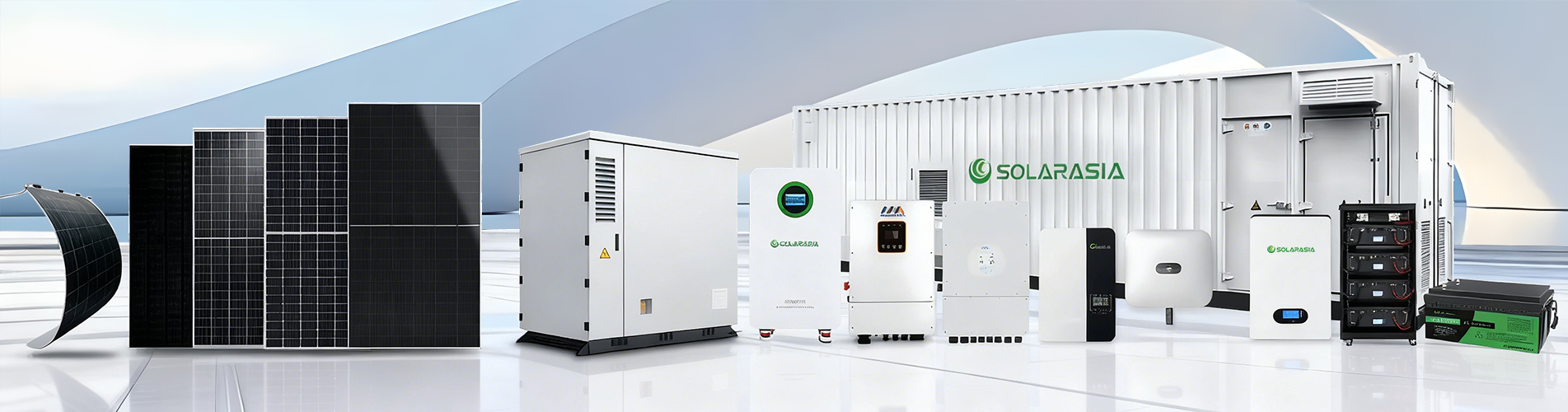
How to Choose a Commercial Battery Energy Storage System for Your Business in 2026
For businesses with high electricity consumption, rising energy costs, peak demand charges, or an increasing reliance on renewable energy, battery storage can be an important part of a modern energy strategy. However, choosing the right system involves more than comparing battery capacity or looking at the lowest equipment price. A system that works well for one factory may be unsuitable for a warehouse, shopping center, office building, or industrial facility with a different electricity consumption pattern.
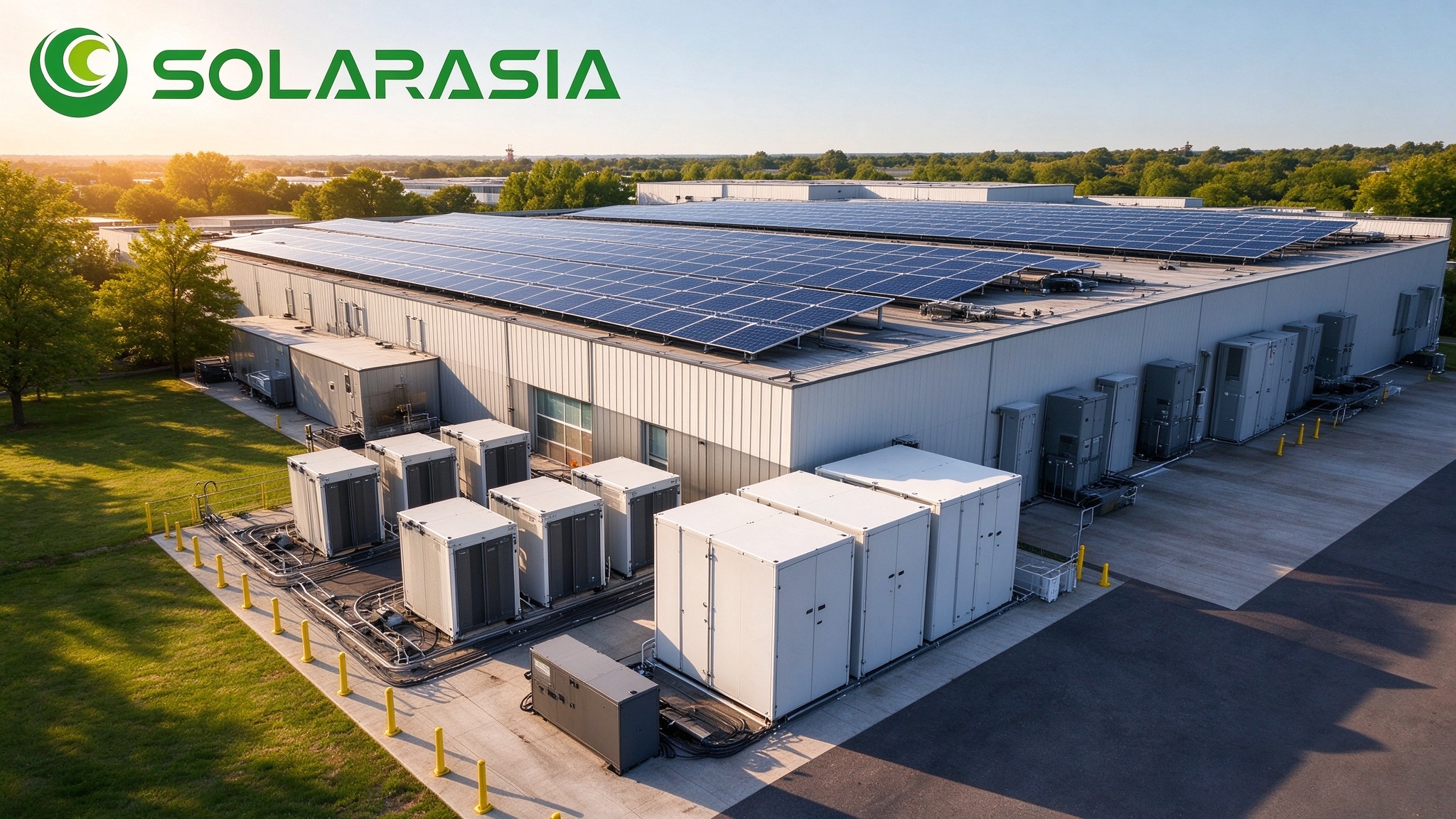
A well-designed commercial battery energy storage system should match the facility's load profile, operating schedule, backup requirements, and future energy plans. It should also work reliably with the site's electrical infrastructure, solar PV system, and energy management strategy.
For business owners, project developers, EPC contractors, and energy procurement teams, the selection process should start with the actual application rather than a particular battery model. This guide explains the main technical and commercial factors to consider when choosing a battery energy storage system for a commercial or industrial project.
Before comparing equipment, identify what you expect the system to achieve. Different applications require different configurations, and a system optimized for one purpose may not deliver the best results for another.
Some commercial and industrial electricity tariffs include charges based on the highest power demand recorded during a billing period. When a facility experiences short periods of high demand, a battery can discharge to supplement the grid supply and reduce the measured peak, subject to the utility's metering and tariff rules.
For example, a factory may experience high electricity demand when several production machines start simultaneously. A properly controlled battery system can provide additional power during these periods, potentially reducing demand charges.
To evaluate this application, examine historical interval meter data, peak demand events, tariff structures, and the duration of each peak. The battery's discharge power and usable energy must be sufficient to support the target reduction for the required period.
Businesses with rooftop or ground-mounted solar installations may generate more electricity during the day than they can immediately use. Battery storage can capture some of this surplus energy and discharge it later when solar production decreases and electricity demand remains high.
This approach can increase on-site solar utilization and reduce grid electricity purchases. The actual benefit depends on the solar generation profile, the site's load curve, battery efficiency, electricity prices, and export compensation rules.
For companies planning a new photovoltaic installation, storage should be considered alongside panel capacity, inverter selection, and electrical system design rather than treated as a completely separate decision.
For facilities that cannot tolerate interruptions, battery storage can help maintain power to selected loads during a grid outage, provided the system includes the necessary backup architecture, controls, and isolation equipment.
Not every grid-connected battery system can operate during a power outage. Some installations require dedicated backup outputs, transfer equipment, grid-forming capability, or other compatible components to establish a stable local power supply.
Identify which loads must remain operational, how much power they require, and how long they need to run. Critical loads may include control systems, communications equipment, refrigeration, selected production equipment, or emergency support systems.
Where electricity tariffs vary by time of use, a battery may charge during lower-price periods and discharge during higher-price periods. This strategy can be useful when the price difference is large enough to offset conversion losses, battery degradation, operating expenses, and other project costs.
A financial assessment should use the site's actual tariff and expected operating schedule. Avoid assuming that a battery will automatically produce savings simply because electricity prices differ throughout the day.
One of the most important decisions is determining how much power the system must deliver and how much energy it must store. These are related but different specifications.
Power, measured in kW, indicates how much electricity the system can deliver or absorb at a given moment.
Energy capacity, measured in kWh, indicates how much energy can be stored and delivered over time.
Discharge duration describes how long the battery can support a specified load at a given power level.
A battery with a large energy capacity may still be unable to support a facility's highest instantaneous load if its power rating is too low. Conversely, a high-power system may not provide enough operating time if its energy capacity is insufficient.
A useful starting point is to estimate the energy required during the intended discharge period:
Required delivered energy (kWh) = Average supported load (kW) × Required duration (hours)
Suppose a business wants to support an average load of 100 kW for two hours.
Required delivered energy = 100 kW × 2 hours = 200 kWh.
This is the energy that must be delivered to the load, not necessarily the battery's nominal capacity. The installed battery capacity may need to be higher to account for the permitted depth of discharge, conversion losses, operating limits, and the desired reserve.
For preliminary sizing, a simplified estimate is:
Nominal battery capacity ≈ Required delivered energy ÷ (Usable depth-of-discharge fraction × Discharge-path efficiency)
If the usable depth-of-discharge fraction is 90% and the assumed discharge-path efficiency is 95%, the example would require approximately 234 kWh of nominal capacity before additional design margins. Actual sizing should use the selected equipment's guaranteed usable energy, operating limits, and applicable design requirements.
Monthly energy consumption alone is not enough to determine the correct battery size. Two facilities may consume the same amount of electricity each month but have very different peak loads and operating schedules.
Review interval data, preferably at 15-minute or finer resolution where available, and identify:
Typical daily electricity consumption.
Maximum demand and the duration of peak events.
Nighttime and weekend loads.
Solar generation and surplus energy, if applicable.
Critical loads that require backup.
Expected operating changes or production expansion.
These details help determine whether the project needs a high-power, short-duration system, a larger energy-storage system, or a configuration that balances both requirements.
For a more detailed calculation, see our related guide on how to calculate battery capacity for a commercial energy storage system.
Battery chemistry influences energy density, cycle life, thermal behavior, maintenance requirements, and lifecycle cost. For many stationary commercial and industrial applications, lithium iron phosphate (LiFePO4 or LFP) is a widely used option.
LFP batteries are commonly selected for stationary storage because they offer a combination of cycle durability, relatively stable thermal characteristics, and suitability for frequent charge and discharge operation.
When evaluating a LiFePO4 energy storage battery, consider more than the chemistry name. Compare the cell specifications, operating temperature range, warranted performance, battery management system, usable energy, and safety measures of the complete system.
Battery life depends on operating conditions, including temperature, charge and discharge rates, depth of discharge, and cumulative energy throughput. A cycle-life figure in a specification sheet should therefore be reviewed alongside the test conditions and the manufacturer's warranty terms.
When reviewing proposals from different suppliers, check whether their quoted capacity refers to nominal energy, usable energy, or energy delivered at the AC output. These values are not necessarily equivalent.
You should also confirm the expected end-of-warranty capacity, cycle-life conditions, permitted operating temperatures, and any restrictions on daily cycling. These details are essential for comparing the long-term value of competing systems.
Commercial storage systems are available in different voltage architectures and physical configurations. The appropriate choice depends on project size, required power, electrical design, inverter compatibility, and installation conditions.
Low-voltage battery systems are often used in smaller installations, modular storage applications, and selected commercial projects. High-voltage systems may be suitable for larger power-conversion architectures, depending on the equipment and project design.
Neither option is universally better. The system voltage must be compatible with the selected power conversion equipment and must meet the project's electrical safety and performance requirements.
For larger commercial and industrial installations, the complete architecture matters more than the battery voltage alone. Engineers should evaluate current levels, cable sizing, conversion efficiency, protection coordination, expansion requirements, and the manufacturer's approved configuration.
Modular systems can make it easier to expand storage capacity as energy requirements grow. Integrated cabinet solutions may simplify equipment arrangement by combining selected battery modules, controls, and thermal management components within a coordinated enclosure.
However, an integrated cabinet should not automatically be assumed to include every component needed for a complete installation. Confirm whether the quotation includes the battery system, power conversion system, energy management system, thermal management, fire protection, monitoring, and required electrical accessories.
Also verify whether parallel operation, additional cabinets, and future capacity expansion are supported by the manufacturer's design.
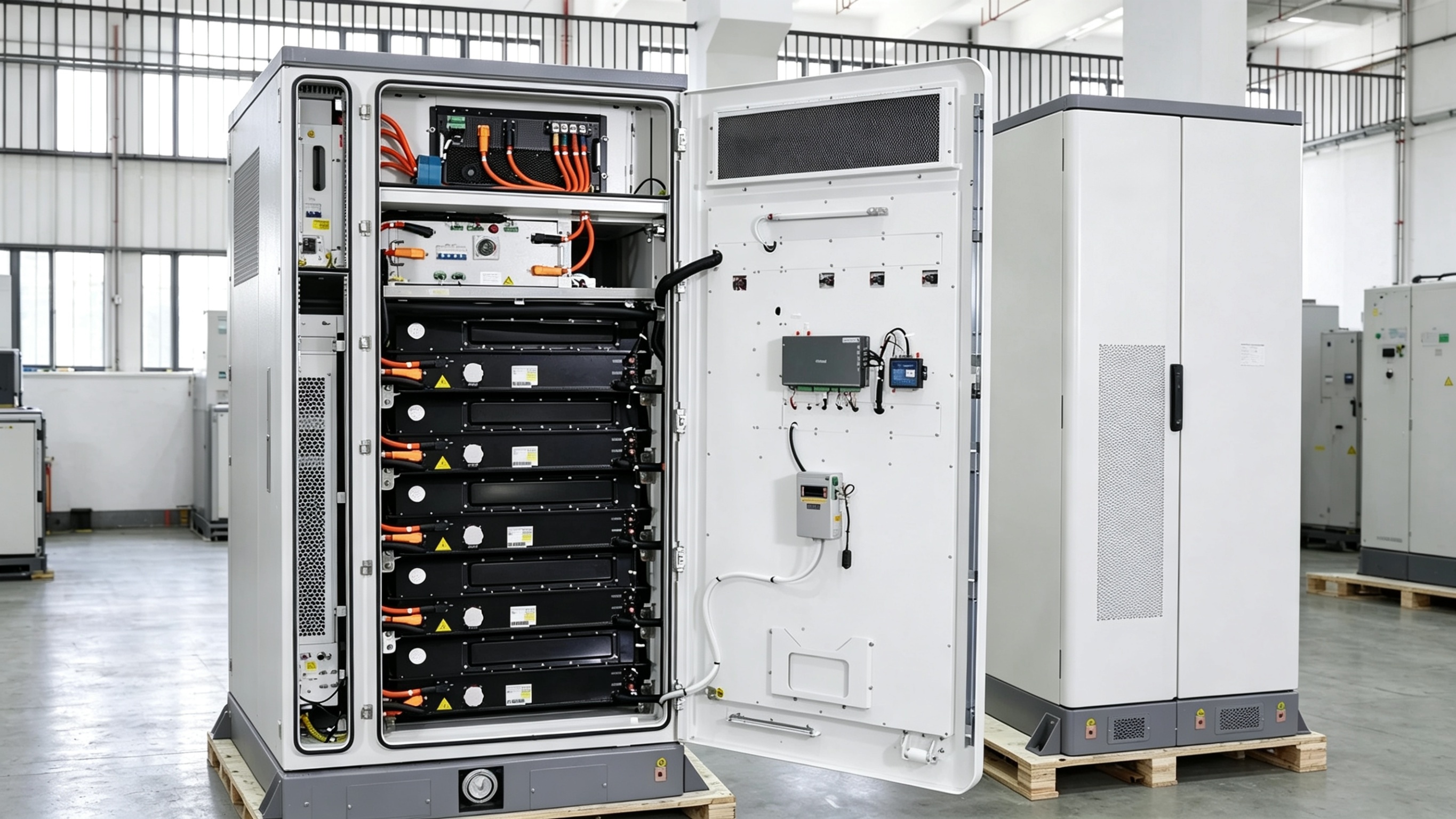
A commercial battery project is more than a collection of battery modules. Its performance depends on how the batteries interact with power conversion equipment, control software, protection systems, and the facility's electrical infrastructure.
The PCS converts electricity between the battery's DC side and the AC electrical system. Its power rating, efficiency, operating voltage range, overload capability, and grid-interconnection functions should match the application.
For example, a peak-shaving project may require sufficient discharge power to reduce demand during short peaks. A solar self-consumption project may require coordinated charging and discharging based on PV production and site demand.
Confirm whether the PCS supports the required operating modes, including grid-connected operation, charging from the grid where permitted, and backup or islanded operation if required.
The EMS coordinates charging and discharging based on operating objectives, electricity prices, solar generation, load demand, and other system inputs.
A useful EMS should provide suitable monitoring, operating schedules, alarms, historical data, and configurable control strategies. For projects involving demand management or time-of-use optimization, check whether the system can use relevant meter data and implement the intended control logic.
Before purchasing, clarify how the EMS communicates with the PCS, battery management system, meters, solar inverters, and any building or industrial control platform. Confirm which communication protocols are supported and whether additional integration work is required.
For a project that combines storage with an existing PV installation, confirm the proposed architecture before choosing the battery.
Depending on the design, storage may be coupled on the DC side or the AC side. The decision affects equipment compatibility, conversion paths, controls, retrofit complexity, and system operation.
Provide the supplier or EPC contractor with the existing inverter model, electrical drawings, grid connection details, and intended operating modes. Do not assume that two devices will be compatible simply because they support the same nominal voltage.
Safety should be a core selection criterion rather than an optional extra. A suitable commercial battery installation needs a coordinated approach to battery protection, electrical design, thermal management, installation, and emergency response.
The battery management system (BMS) monitors relevant battery parameters and helps manage operation within defined limits. Depending on the system, it may monitor cell voltages, temperatures, current, state of charge, and fault conditions.
Ask suppliers how the BMS communicates with the PCS and EMS, what protective responses are available, and how faults are reported. Review the complete protection architecture rather than relying on a single feature or marketing claim.
The thermal management design should be appropriate for the battery chemistry, enclosure, climate, operating conditions, and installation environment. Depending on the system, this may involve air cooling or liquid cooling.
Fire protection and emergency arrangements should be designed in accordance with applicable local codes, permitting requirements, and the equipment manufacturer's instructions. Requirements can vary significantly by jurisdiction and project type.
Before installation, evaluate equipment clearances, access for emergency responders, ventilation where applicable, drainage and weather exposure, separation distances, and the location of electrical isolation devices.
Ask for relevant test reports, product certifications, installation manuals, warranty documentation, and evidence of compliance with applicable standards. Requirements vary by market, so documentation suitable for one country may not be sufficient for another.
For projects in the United States, for example, applicable requirements may involve recognized battery and energy-storage safety standards, fire codes, electrical codes, and local authority approval. The project engineer should confirm which editions and requirements apply to the actual installation.
A supplier's certification claim should be checked against the specific product model, system configuration, and intended market.
The initial purchase price is only one part of a commercial energy storage investment. A meaningful comparison should account for the complete installed system and its expected operating life.
Potential cost components include:
Battery modules or integrated storage cabinets.
PCS, EMS, meters, and communication equipment.
Cooling, fire protection, and electrical protection systems.
Cabling, foundations, installation, and commissioning.
Grid interconnection, permitting, and engineering.
Transportation, insurance, and applicable import charges.
Software services, scheduled maintenance, and replacement components.
Different quotations may use different system boundaries. One supplier may quote battery equipment only, while another may include power conversion equipment and installation. Comparing these prices without checking the scope can lead to misleading conclusions.
A lower initial price does not always mean a lower cost over the system's operating life. Consider expected usable energy, efficiency, warranty coverage, degradation, maintenance, and the cost of any required replacements.
The financial model should reflect the project's intended operating strategy. For peak shaving, use actual demand charges and peak-load data. For solar self-consumption, consider the value of additional solar energy used on-site. For time-of-use optimization, account for price differences, energy losses, and battery degradation.
A simplified payback estimate is:
Simple payback period = Initial project investment ÷ Annual net savings
Annual net savings should account for relevant operating expenses and should be based on realistic assumptions. This simple formula does not capture financing costs, taxes, degradation over time, or the time value of money, so larger projects may require a more detailed financial model.
For a deeper breakdown, see our related article on how much a commercial battery energy storage system costs in 2026.
The installation environment can affect both system performance and long-term maintenance. Before selecting equipment, confirm where the system will be installed and what constraints the site presents.
For an outdoor installation, evaluate ambient temperature, humidity, dust, rain exposure, corrosion risk, flooding, and access for maintenance. For an indoor installation, consider floor loading, room layout, ventilation requirements, access routes, and applicable fire and electrical regulations.
The enclosure's ingress protection rating should be suitable for the actual installation environment, but an IP rating alone does not establish suitability for every outdoor condition.
Future expansion is another important consideration. If the facility expects higher electricity demand, additional production lines, or a larger solar installation, discuss expansion plans at the design stage.
Confirm the maximum supported system capacity, the compatibility of future battery modules, the PCS expansion method, available electrical capacity, and whether adding equipment would require changes to protection systems or control software.
A modular design can provide flexibility, but future expansion should be supported by the manufacturer's documented design rather than assumed to be possible.
The reliability of a battery project depends not only on the equipment but also on the supplier's engineering capabilities, documentation, and support arrangements.
When evaluating suppliers, consider the following questions:
Can the supplier provide technical specifications, installation documentation, and relevant certification records?
Does the supplier understand the project's application and load profile?
Can the proposed battery, PCS, EMS, and protection equipment work together as a complete system?
Are warranty terms, performance guarantees, and exclusions clearly documented?
Is remote monitoring available, and how are system faults handled?
Are spare parts, technical assistance, and maintenance support available in the target market?
Can the supplier support the required customization, communication protocols, and project documentation?
For EPC contractors, distributors, and project developers, consistency of supply and clear technical communication can be just as important as the equipment price. A supplier that can provide coordinated equipment specifications and practical engineering support may help reduce integration risks during project delivery.
Before placing an order, request a proposal based on the project's actual requirements rather than a generic product catalogue. This makes it easier to compare suppliers on a like-for-like basis.
Use the following checklist when preparing a project specification or comparing quotations.
| Evaluation item | What to confirm |
|---|---|
| Application | Peak shaving, solar self-consumption, backup power, time-of-use optimization, or a combination |
| Load profile | Peak demand, average load, operating schedule, and critical loads |
| Power rating | Required charging and discharging power in kW |
| Energy capacity | Nominal and usable energy in kWh |
| Discharge duration | Required support time at the intended load |
| Battery chemistry | Cell chemistry, operating limits, and documented cycle-life conditions |
| System architecture | Low voltage or high voltage, AC or DC coupling, and expansion method |
| PCS | Rated power, efficiency, operating modes, and grid compatibility |
| EMS and BMS | Monitoring, control strategy, communication, and fault reporting |
| Safety | Protection design, thermal management, fire safety, and applicable certifications |
| Site conditions | Temperature, weather exposure, space, access, and local installation requirements |
| Financial performance | Installed cost, operating expenses, expected savings, and warranty |
| Supplier support | Technical documentation, commissioning, warranty service, and spare parts |
A project that has clear answers to these questions is easier to design, quote, install, and evaluate financially.
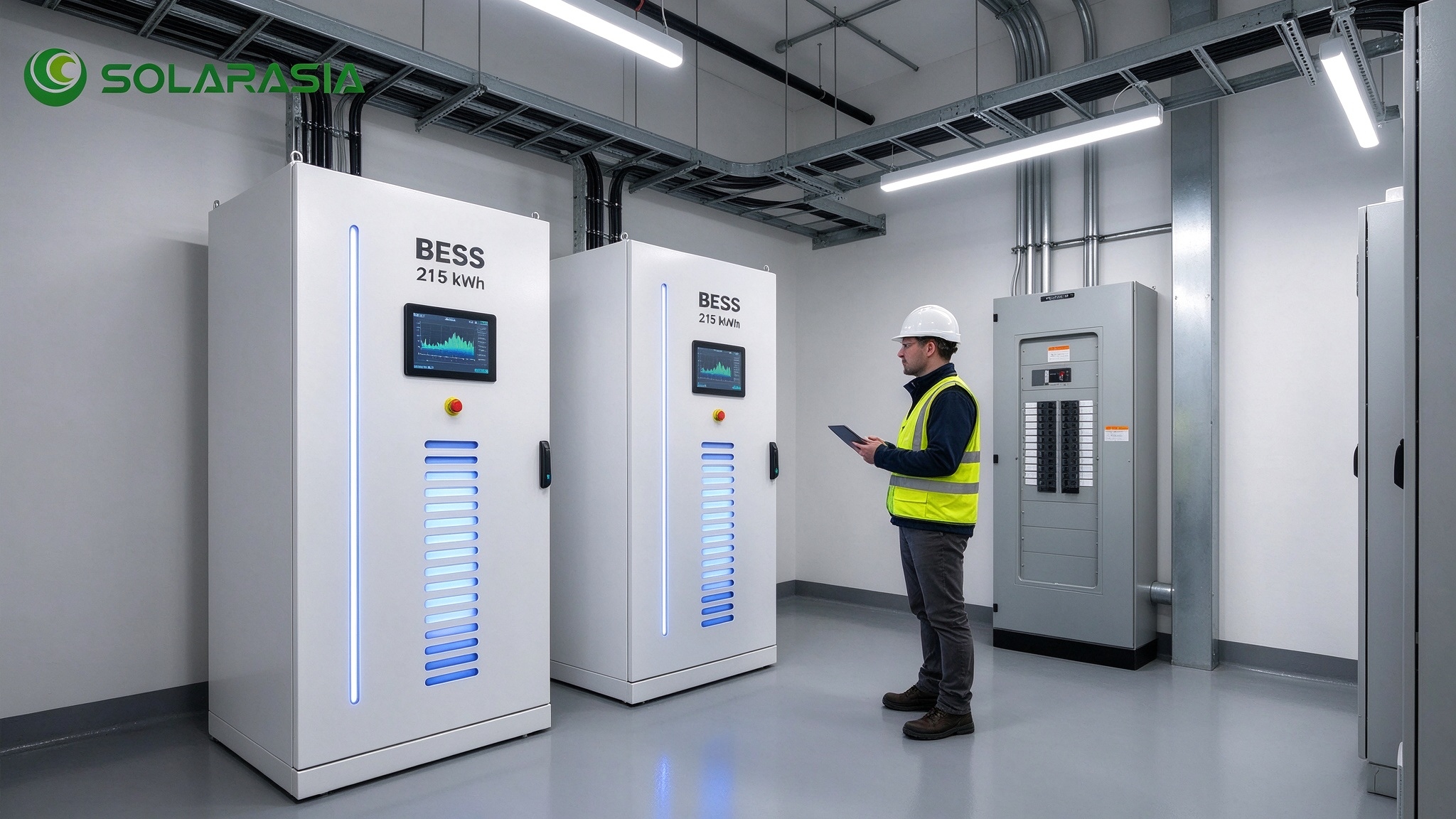
Choosing the right commercial battery energy storage system starts with understanding how a business uses electricity and what it expects the battery to achieve. Power rating, usable energy capacity, battery chemistry, system architecture, PCS and EMS compatibility, safety, installation conditions, and lifecycle cost all influence the final decision.
For some businesses, a smaller system designed for peak shaving may be the most practical option. Others may benefit from a larger configuration that stores surplus solar generation or supports selected critical loads. The best solution is the one that matches the site's actual requirements and can operate reliably within its technical, regulatory, and financial constraints.
At SolarAsia Power, we provide lithium battery and energy storage solutions for residential and commercial applications, with customized options based on project requirements. If you are planning a commercial or industrial battery storage project, prepare your load profile, required power, target backup duration, installation location, and preferred operating strategy before requesting a proposal. These details help establish a more accurate starting point for system sizing and equipment selection.
Contact Solarasia Power to discuss your commercial battery energy storage requirements and explore a suitable solution for your project.


Address : Room 908-909, Building 2, No. 469 Huatuo Lane, Shushan District, Hefei City, Anhui Province


Please read on, stay posted, subscribe, and we welcome you to tell us what you think.
Copyright 2026 @ Anhui Solarasia Energy Technology Co.,Ltd .All Rights Reserved. Sitemap | Blog | XML | Privacy Policy
 Network Supported