Solar Panel Complete Guide: Types, Benefits and How to Choose the Right Supplier
Aug 06, 2026
Introduction
Solar energy has become one of the fastest-growing renewable energy solutions worldwide. With increasing electricity costs, energy security concerns, and global demand for clean energy, more homeowners, businesses, and industrial customers are investing in photovoltaic (PV) systems.
At the center of every solar power system is the solar panel, which converts sunlight into electricity and provides the foundation for renewable energy generation.
Choosing the right solar panel is not only about efficiency. Customers should also consider product quality, reliability, supplier experience, certifications, and compatibility with complete solar systems.
This guide explains different types of solar panels, their applications, key selection factors, and how to choose a reliable solar panel supplier for residential, commercial, and industrial projects.
What Is a Solar Panel?
A solar panel is a photovoltaic device that converts sunlight into electrical energy.
Solar panels are made up of multiple solar cells, which generate direct current (DC) electricity when exposed to sunlight.
A complete solar power system usually includes:
Solar panels
Solar inverter
Solar battery
Mounting system
Monitoring system
The solar panel is the first step in converting renewable energy into usable electricity.
Why Solar Panels Are Becoming More Popular Worldwide
The global demand for solar panels continues to increase because of several important advantages.
Reduce Electricity Costs
Solar panels allow users to generate their own electricity and reduce dependence on traditional energy sources.
For residential users, solar power can reduce household electricity expenses.
For commercial and industrial customers, solar systems can help manage long-term energy costs.
Support Clean Energy Goals
Solar energy produces electricity without direct carbon emissions during operation.
Many countries in Europe and the Middle East are increasing renewable energy adoption, creating strong demand for high-quality photovoltaic solutions.
Flexible Applications
Solar panels can be installed in many different environments:
Residential rooftops
Commercial buildings
Industrial factories
Agricultural projects
Large-scale solar farms
Different Types of Solar Panels
Solar panels are mainly categorized according to solar cell technology and application requirements.
Monocrystalline Solar Panels
Monocrystalline solar panels are currently one of the most widely used PV technologies.
They are manufactured using high-purity silicon and provide:
High efficiency
Better performance in limited space
Long service life
Excellent reliability
They are commonly used in:
Residential solar systems
Commercial rooftops
Industrial projects
Polycrystalline Solar Panels
Polycrystalline solar panels were widely used in earlier solar markets.
Compared with monocrystalline panels, they usually have:
Lower manufacturing cost
Different efficiency characteristics
Although monocrystalline panels dominate many modern installations, polycrystalline technology is still used in some markets.
Bifacial Solar Panels
Bifacial solar panels can generate electricity from both the front and rear sides of the module.
They are suitable for projects where additional energy generation from reflected sunlight can improve system performance.
Applications include:
Utility-scale solar farms
Commercial projects
Ground-mounted systems
Key Factors to Consider When Choosing Solar Panels
Choosing the right solar panel supplier requires evaluating several factors.
Solar Panel Efficiency
Efficiency determines how effectively a panel converts sunlight into electricity.
Higher efficiency panels can provide more power output with limited installation space.
Product Quality and Reliability
A reliable solar panel should provide:
Stable performance
Durable materials
Strong weather resistance
Long-term operation capability
Certifications and Standards
Professional solar panel suppliers should provide products that meet international quality requirements.
Important considerations include:
Product certifications
Factory quality management
Testing reports
Warranty and Service Support
Solar projects are long-term investments.
Customers should consider:
Product warranty
Technical support
Supplier experience
Solar Panel Applications
Residential Solar Systems
Solar panels are widely used in homes to generate clean electricity.
A typical residential system includes:
Solar Panel → Hybrid Inverter → Battery Storage → Home Loads
Benefits:
Lower electricity costs
Backup power capability
Energy independence
Commercial Solar Projects
Commercial buildings often install rooftop solar panels to reduce operating costs.
Applications:
Offices
Shopping centers
Warehouses
Hotels
Industrial Solar Systems
Industrial facilities require larger solar solutions.
Solar panels can work together with:
High power inverters
ESS systems
BESS solutions
to support large energy requirements.
How Solar Panels Work with Inverters and Batteries
Solar panels generate DC electricity, but most electrical equipment uses AC power.
Therefore, solar systems require an inverter.
The energy flow is:
Solar Panel
↓
Solar Inverter
↓
Battery Storage (Optional)
↓
Home / Business Electricity Usage
A complete solar solution combines:
High-quality solar panels
Reliable inverter
Efficient battery storage
This creates a flexible and intelligent renewable energy system.
How to Choose a Reliable Solar Panel Supplier
Selecting a professional supplier is important for long-term project success.
Customers should evaluate:
Manufacturing Capability
A reliable supplier should have:
Stable supply capacity
Quality control process
Professional technical team
Product Range
A complete supplier should provide:
Solar panels
Solar inverters
Batteries
ESS solutions
This helps customers build complete solar energy systems.
Global Experience
International projects require suppliers who understand:
Export requirements
Different market standards
Logistics management
Why Choose Solar Asia Power?
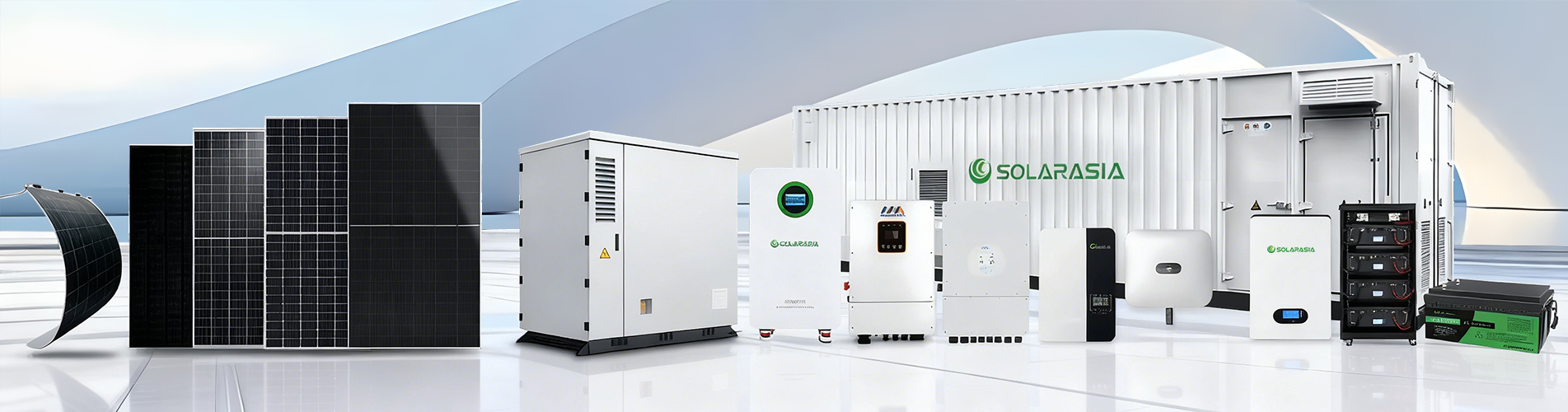
Solarasia Power provides complete solar energy solutions including:
Solar panels
Solar inverters
Hybrid inverters
Lithium batteries
ESS and BESS solutions
We cooperate with leading solar brands and provide reliable products for customers worldwide.
With professional technical support, stable supply capability, and complete renewable energy solutions, Solar Asia Power supports residential, commercial, and industrial solar projects.
Conclusion
Solar panels are the foundation of modern renewable energy systems.
Whether for residential rooftops, commercial buildings, or industrial projects, choosing reliable solar panels and a professional supplier is essential for long-term performance.
A trusted solar panel supplier should provide high-quality products, technical support, stable supply, and complete solar solutions.
Solarasia Power provides solar panels together with inverters, batteries, ESS, and complete photovoltaic solutions to help global customers achieve clean and reliable energy goals.
FAQs
What is a solar panel?
A solar panel is a photovoltaic device that converts sunlight into electricity.
Which type of solar panel is best?
Monocrystalline solar panels are widely used because of their high efficiency and reliable performance.
How long do solar panels last?
High-quality solar panels are designed for long-term operation with proper installation and maintenance.
Can solar panels work with batteries?
Yes. Solar panels can be combined with batteries and hybrid inverters to create energy storage systems.
What solar panels are suitable for commercial projects?
Commercial projects usually require high-efficiency panels with reliable performance and professional installation support.
How do I choose a solar panel supplier?
Consider product quality, certifications, manufacturing capability, technical support, and global experience.






 Network Supported