
How Solar Panels and Inverters Work Together in a PV System
Solar panels and inverters are two of the most important components in a photovoltaic system.
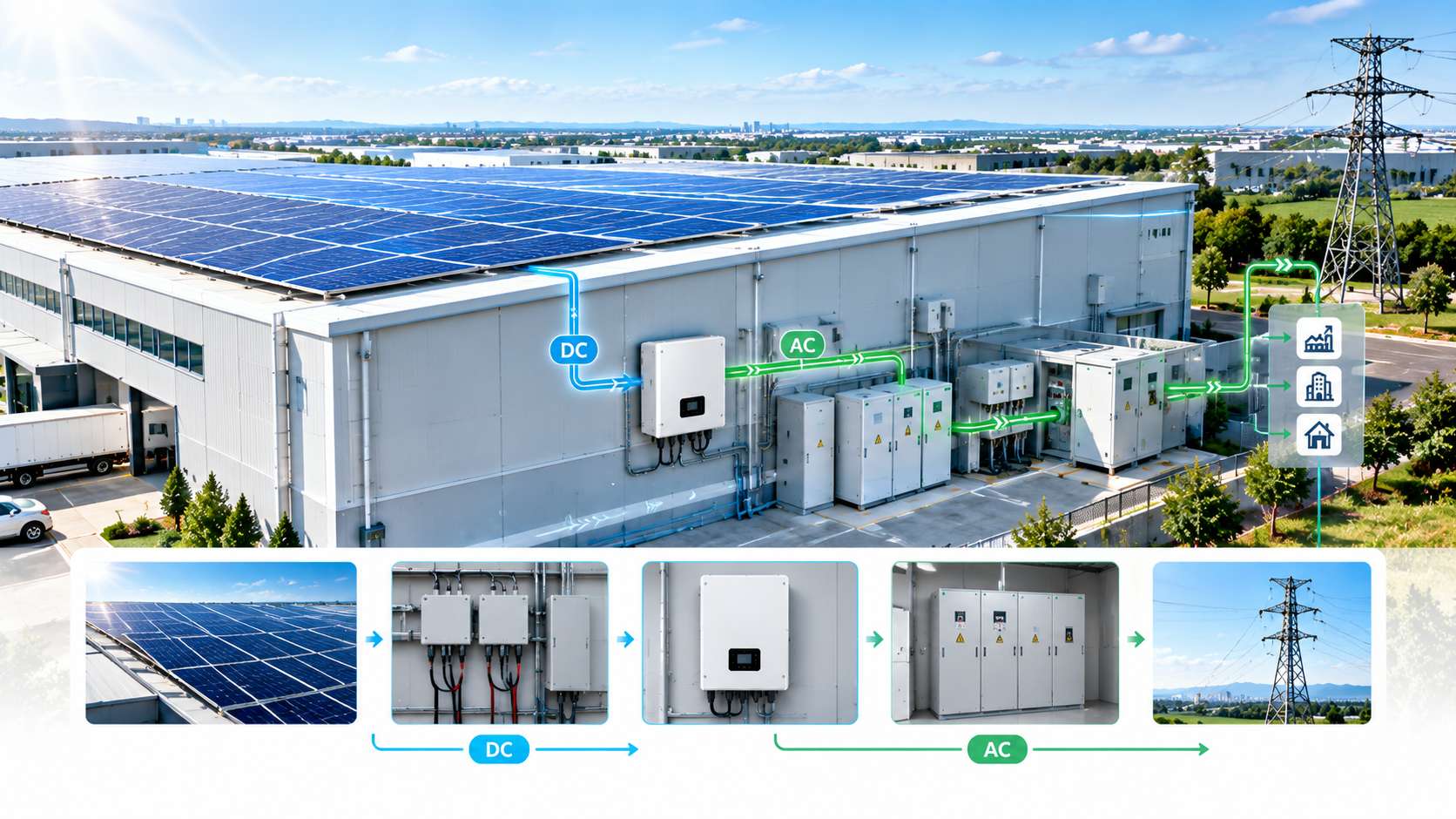
Solar panels capture sunlight and convert it into direct current electricity, while the inverter converts that DC electricity into alternating current that can be used by electrical loads or supplied to the grid.
But how exactly do solar panels and inverters work together?
Why can't solar panels simply supply electricity directly to a building?
How do you make sure that the solar panel voltage and current are compatible with the inverter?
And how does the inverter determine how much power the solar panels can produce?
Understanding the relationship between these two components is essential when designing a residential, commercial, or industrial PV system.
In this guide, SolarAsia Power explains how solar panels and inverters work together, how they should be matched, and what factors should be considered when designing a complete solar energy system.
A photovoltaic system, commonly called a PV system, uses solar panels to convert sunlight into electrical energy.
A typical grid-connected system can be simplified as:
Depending on the project, additional components may include:
The solar panels and inverter perform different functions, but they must operate together as part of a coordinated electrical system.
Solar panels consist of photovoltaic cells, usually made from semiconductor materials.
When sunlight reaches the cells, photons transfer energy to electrons within the semiconductor material. This creates an electrical current.
The electricity produced by a solar module is direct current (DC).
A solar panel has several important electrical characteristics, including:
For example, a modern solar module may have a rated power of several hundred watts.
However, the actual output changes throughout the day according to sunlight intensity, temperature, shading, orientation, and other environmental conditions.
This is why the inverter needs to continuously manage the electrical output from the solar array.
One common question is:
Why can't electricity from solar panels simply go directly into a building?
The main reason is that solar panels generate DC electricity, while most building electrical systems and the utility grid operate using AC electricity.
Common AC loads include:
The solar inverter performs the critical task of converting the DC electricity generated by the PV array into AC electricity suitable for the building's electrical system.
The inverter also performs other important functions, including monitoring electrical conditions, controlling the operating point of the PV array, and providing required grid protection functions depending on the inverter type and applicable standards.
A solar inverter is much more than a simple DC-to-AC converter.
Modern inverters can perform several functions simultaneously.
The primary function is converting electricity from the solar array:
DC → AC
This allows solar energy to be used by AC electrical loads or, where permitted, exported to the utility grid.
Solar panels have a continuously changing optimal operating point.
The inverter uses MPPT, or Maximum Power Point Tracking, to adjust the operating conditions of the PV array and extract available power efficiently.
Solar irradiance and temperature change throughout the day, so the maximum power point can also change.
MPPT allows the inverter to respond to these changes.
For a grid-connected PV system, the inverter needs to operate in synchronization with the electrical grid.
Depending on the applicable grid standard, the inverter monitors parameters such as:
If abnormal grid conditions are detected, the inverter can respond according to its protection and grid-support functions.
Modern solar inverters often provide monitoring functions that allow users and installers to view:
This information can help operators identify potential system problems.
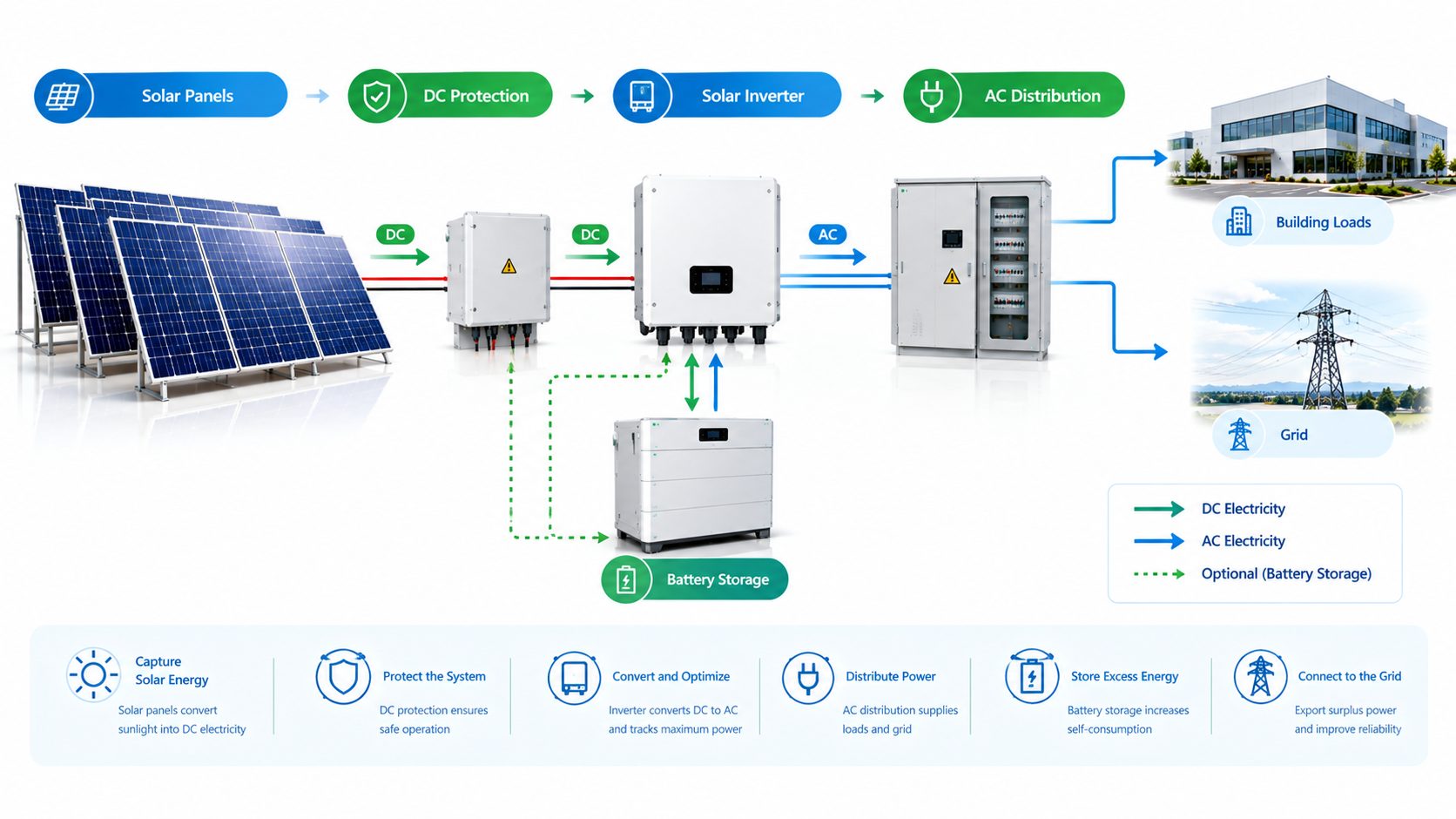
The relationship between the two components can be understood through a simple process.
Solar radiation reaches the PV modules.
The photovoltaic cells convert sunlight into DC electricity.
Individual modules are connected together in strings to achieve the required voltage and power.
The PV strings are connected to the inverter's DC inputs.
The inverter tracks the maximum power point of the PV array.
The inverter converts the DC electricity into AC electricity.
The AC electricity can be consumed by the building's electrical loads.
Depending on the system design and local regulations, excess electricity can potentially be exported to the grid or stored in a battery energy storage system.
Solar panels are normally connected in series to form PV strings.
When modules are connected in series:
Voltage increases while current remains approximately similar.
Multiple strings may then be connected to the inverter's MPPT inputs.
For example, a simplified configuration might look like:
Solar Panels → PV String → MPPT → Inverter → AC Output
The actual number of modules per string depends on the electrical characteristics of the modules and inverter.
Important parameters include:
This is why solar panel and inverter compatibility must be checked before installation.
MPPT stands for Maximum Power Point Tracking.
A solar panel does not produce the same amount of power under every operating condition.
For example, when sunlight intensity changes, the relationship between voltage and current also changes.
The inverter's MPPT controller continuously searches for an operating point that allows the PV array to produce available power efficiently.
This is particularly important in commercial installations where different sections of the roof may have:
Using multiple MPPT inputs can provide greater flexibility when PV strings have different operating conditions.
Poor equipment matching can affect system performance and reliability.
Potential problems include:
If the PV string voltage exceeds the inverter's allowable maximum DC voltage, the system may not operate safely.
If the PV string voltage is below the inverter's required operating range, the inverter may not operate effectively.
The inverter's maximum input current must be sufficient for the connected PV strings.
If the PV array is oversized beyond the inverter's permitted input capacity, the system may not meet the manufacturer's design requirements.
Improper string design can cause compatibility and performance issues.
Therefore, solar panel and inverter selection should always be based on their actual electrical specifications.
One of the most important concepts when connecting solar panels and inverters is the DC/AC ratio.
The formula is:
For example:
12kW solar panels ÷ 10kW inverter = 1.2
This means the PV array has 1.2 times the rated capacity of the inverter's AC output.
A PV array can be intentionally sized above the inverter's AC output because solar panels do not continuously operate at their nameplate rating.
However, the inverter manufacturer must allow the proposed PV input capacity.
Solar panels reach their rated power only under specific test conditions.
Actual operating conditions are often different because of:
As a result, a PV array may spend much of the day operating below its rated capacity.
A properly selected DC/AC ratio can help increase inverter utilization.
However, when the PV array can produce more DC power than the inverter can convert to AC, some potential output may be clipped.
Therefore, the appropriate DC/AC ratio is a system design decision rather than a universal number.
The inverter's AC rating provides an important reference point, but it does not directly determine the exact number of solar panels.
For example, a 10kW inverter might be used with a PV array larger than 10kW if the inverter specification permits it.
The actual design needs to check:
This is especially important when using high power modules such as 600W, 650W, 700W, or higher.
Suppose a project uses:
16 × 650W solar panels
The total PV capacity is:
16 × 650W = 10.4kW DC
If the project uses a compatible inverter with a suitable AC rating and permitted PV input capacity, this can form a practical PV system.
However, the installer still needs to determine whether the modules can be arranged into strings that remain within the inverter's voltage and current limits.
The example demonstrates that:
Panel wattage alone does not determine whether a solar array is compatible with an inverter.
The electrical characteristics of both products must be evaluated together.
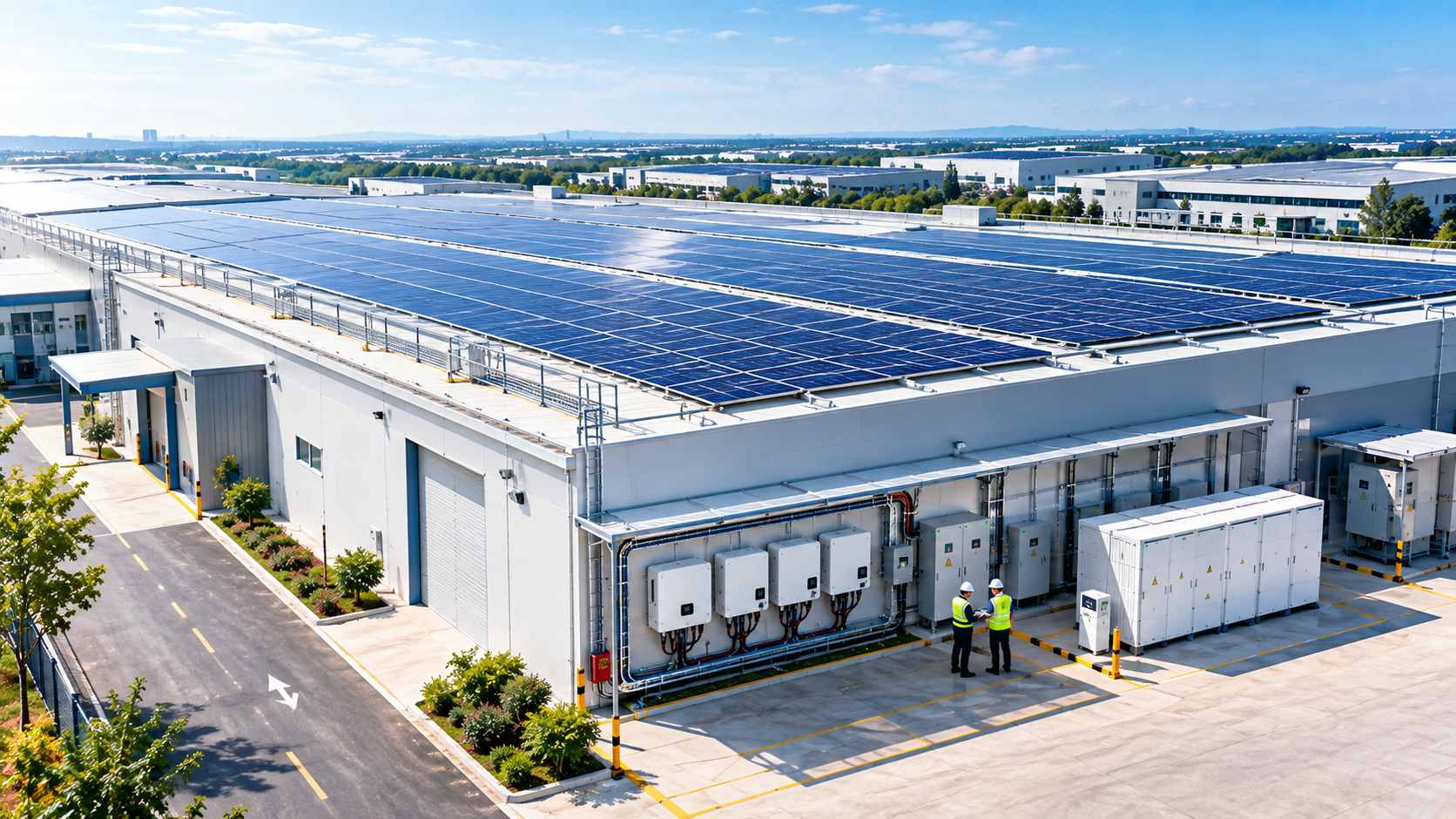
The relationship becomes even more important in larger commercial and industrial installations.
A commercial PV system may include:
For a large warehouse or factory, roof orientation may vary across different sections of the building.
In this situation, inverter selection and string configuration can have a significant impact on system design.
Commercial projects also need to consider:
In a solar-plus-storage system, the relationship between PV panels and the inverter becomes more complex.
A hybrid or energy storage inverter may manage:
Solar Panels → Inverter → Loads
while also controlling:
Solar Panels → Battery
and:
Battery → Inverter → Loads
During periods of strong solar generation, excess energy can potentially be used to charge the battery.
Later, stored energy can be discharged to supply loads.
Battery storage can be used for different objectives, including:
The appropriate configuration depends on the inverter architecture and battery compatibility.
Imagine a commercial building has:
Solar generation: 80kW
while its current electricity demand is:50kW
There may be approximately:30kW of excess solar power
depending on the operating conditions and system losses.
That excess energy may be:
This is one reason understanding the relationship between the PV array, inverter, building load, battery and grid is important.
Now consider the opposite situation.
The building requires:
60kW
but the PV system is currently generating:
35kW
The remaining electricity requirement may be supplied by:
Grid = 60kW − 35kW = 25kW
If battery storage is available and configured for discharge, part or all of this difference may instead come from the battery.
This demonstrates how solar, inverter, battery and grid resources can work together to meet building electricity demand.
When purchasing equipment for a PV project, check the following parameters.
Matching these specifications helps create a properly designed system.
A 10kW PV array does not automatically require a 10kW inverter.The DC/AC ratio and inverter's permitted PV input capacity should also be considered.
The PV string voltage must remain within the inverter's allowable operating range under expected temperature conditions.
High-power solar modules may have relatively high operating currents.The inverter's maximum input current must be checked carefully.
When PV strings have significantly different orientations or shading conditions, MPPT configuration should be carefully considered.
If the system may be expanded later, the initial inverter and electrical design should consider future PV and battery requirements.
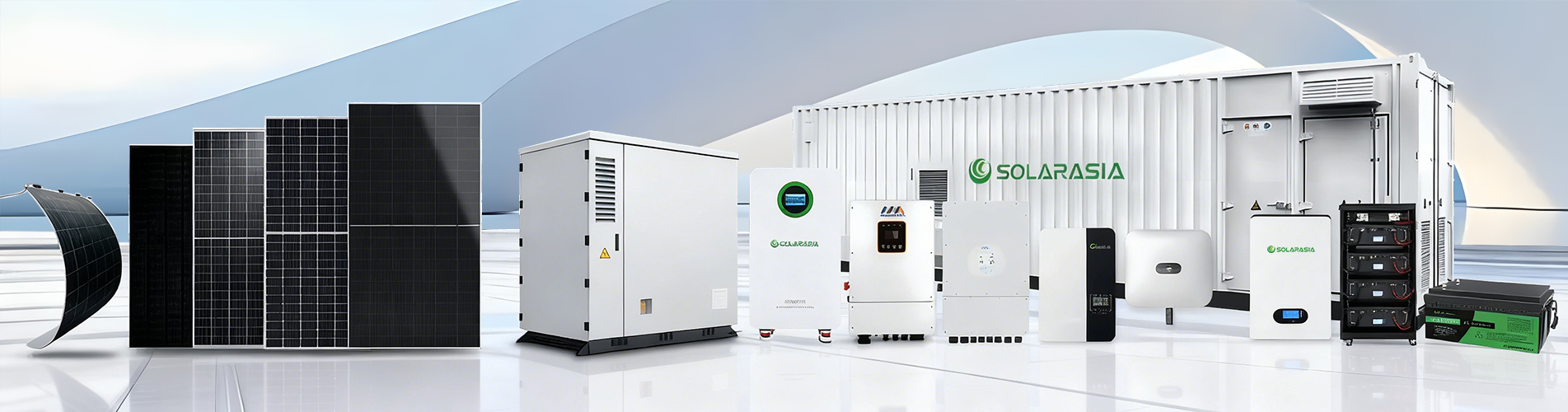
Anhui Solarasia Energy Technology Co., Ltd., operating under the SolarAsia Power brand, provides photovoltaic and energy storage products for international customers.
Our product portfolio includes:
For distributors, wholesalers, EPC contractors, installers, and project developers, choosing compatible components is an important part of building a reliable PV system.
SolarAsia Power can provide solar panels, inverters, batteries, and customized energy solutions according to different project requirements.
For commercial and industrial projects, our solutions can be considered for applications such as:
Solar panels and inverters perform different functions, but they are closely connected within a PV system.
The solar panels convert sunlight into DC electricity, while the inverter converts that electricity into AC power that can be used by electrical loads or supplied to the grid.
The inverter also manages the PV operating point through MPPT, monitors system conditions, and performs important grid-interconnection functions.
For a properly designed system, solar panels and inverters must be matched according to:
PV capacity + voltage + current + MPPT range + DC/AC ratio + grid requirements + load demand.
When battery storage is included, the design also needs to consider battery voltage, power, energy capacity, operating strategy, and inverter compatibility.
Whether you are designing a residential rooftop system or a large commercial PV system, understanding how solar panels and inverters work together is an essential step toward selecting the right equipment and creating an effective solar energy solution.
Anhui Solarasia Energy Technology Co., Ltd. (SolarAsia Power) supplies solar panels, solar inverters, lithium batteries, and energy storage solutions for international photovoltaic projects.


Address : Room 908-909, Building 2, No. 469 Huatuo Lane, Shushan District, Hefei City, Anhui Province


Please read on, stay posted, subscribe, and we welcome you to tell us what you think.
Copyright 2026 @ Anhui Solarasia Energy Technology Co.,Ltd .All Rights Reserved. Sitemap | Blog | XML | Privacy Policy
 Network Supported