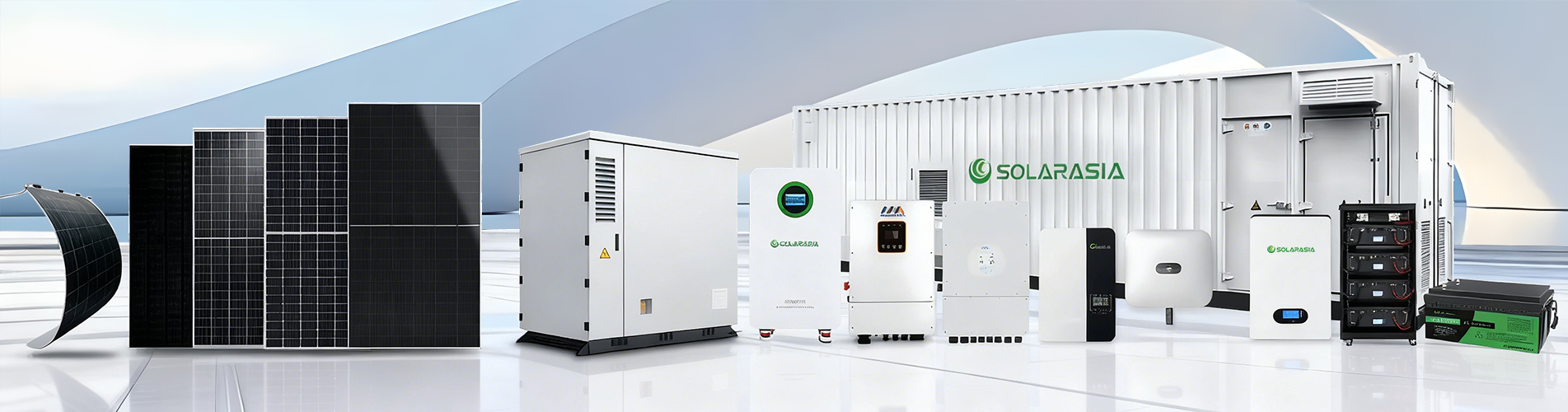
Solarasia banner

solar panels and inverters

Home

solar panels and inverters

  • How Solar Panels and Inverters Work Together in a PV System Aug 31, 2026
    A solar PV system is more than a collection of solar panels. Solar panels generate DC electricity, while solar inverters convert that DC electricity into AC electricity for use by electrical loads or connection to the grid. When battery storage is added, a BESS can store and later discharge electrical energy according to the system design and operating strategy.     Understanding how these components work together is important when designing or purchasing a complete solar energy system.   For residential, commercial, industrial and utility scale projects, choosing compatible solar panels, inverters and battery storage can affect system design, installation and overall project performance.   This guide explains how solar panels, solar inverters and BESS work together, what specifications need to be considered, and how to approach system selection.   What Is a Solar PV System?   A photovoltaic (PV) system converts sunlight into electricity using semiconductor-based solar cells.   At its simplest, the energy flow looks like this: Sunlight → Solar Panels → DC Electricity → Solar Inverter → AC Electricity → Loads / Grid   A system with battery storage adds another pathway: Solar Panels → Inverter / Charging System → BESS → Inverter → Loads / Grid   The exact architecture depends on the equipment selected and the project's requirements.   A typical complete system may include: Solar panels Solar inverter Battery energy storage system (BESS), when required Mounting structures DC and AC electrical equipment Monitoring and control equipment Grid connection equipment     The solar panels and inverter are therefore closely connected, but they perform different functions.   How Do Solar Panels Generate Electricity?   Solar panels contain photovoltaic cells that convert sunlight into direct current (DC) electricity.   The electrical output of a module changes depending on factors such as: Solar irradiance Cell temperature Shading Orientation Tilt Module technology Installation conditions   A solar panel's datasheet normally provides important electrical specifications, including: Maximum power (Pmax) Open-circuit voltage (Voc) Short-circuit current (Isc) Voltage at maximum power (Vmp) Current at maximum power (Imp)     These specifications are essential when designing the connection between the PV array and inverter.   What Does a Solar Inverter Do?   A solar inverter is a key component between the PV array and the AC electrical system.   Solar panels generate DC electricity, while most building electrical loads and conventional utility grids operate using AC electricity.   The inverter performs the conversion from DC to AC.   Depending on the inverter type and system configuration, it may also provide functions related to: Maximum Power Point Tracking (MPPT) Grid synchronization System monitoring Protection functions Energy management Battery charging and discharging   The exact functions depend on the inverter model.     This makes inverter selection just as important as solar panel selection.   How Solar Panels and Inverters Work Together     The relationship can be summarized in four basic steps.   Step 1: Solar Panels Capture Sunlight   Solar modules receive sunlight and generate DC electricity.     The amount of electricity generated varies throughout the day according to solar conditions.   Step 2: PV Modules Are Connected Into Strings   Individual modules can be connected in series to create PV strings.   When modules are connected in series, their voltages add while the current remains approximately that of the string under the relevant operating conditions.   Multiple strings can then be connected to the inverter according to the system design.     The final configuration must remain within the inverter's electrical limits.   Step 3: The Inverter Tracks and Converts the DC Power   The inverter uses its MPPT system to operate the PV array around its maximum power point within the inverter's operating range.   It then converts the DC electricity into AC electricity.     The AC output can be directed toward the project's loads, grid connection or other equipment depending on the system architecture.   Step 4: Electricity Is Used, Exported or Stored   Once electricity reaches the AC side, the system can use it according to its configuration.   For a grid-connected system, electricity may: Supply on-site loads Be exported to the grid where permitted Be managed according to the project's energy strategy     When BESS is integrated, some electricity can also be directed to battery storage.   Why Solar Panel and Inverter Compatibility Matters   Choosing a solar panel and inverter independently can create unnecessary design problems.   The PV array needs to operate within the inverter's electrical specifications.     Important parameters include:   Maximum DC Voltage   The PV string's voltage should not exceed the inverter's maximum allowable DC input voltage.     Temperature must be considered because PV module voltage changes with temperature.   MPPT Voltage Range   The PV array's operating voltage should fall within the inverter's MPPT operating range under expected conditions.   Maximum DC Input Current   The current from connected PV strings needs to comply with the inverter's input current limitations.   Number of MPPTs   The number of MPPT channels can influence how different PV strings are configured, particularly when roof orientations or shading conditions vary.     For professional projects, these calculations should be verified by a qualified system designer using the exact module and inverter datasheets.   What Is MPPT and Why Does It Matter?   MPPT stands for Maximum Power Point Tracking.   A solar panel does not produce exactly the same amount of power at all operating points.   The inverter's MPPT system continuously adjusts the electrical operating point to obtain available power from the PV array within its design limits.   For example, a commercial rooftop may contain different roof orientations.   If separate PV sections have significantly different operating characteristics, multiple MPPT inputs can provide greater design flexibility.     This is one reason buyers should consider more than the inverter's nominal power rating.   How Does BESS Work With Solar Panels and Inverters?     Battery Energy Storage Systems, commonly called BESS, add energy storage capabilities to a solar PV system.   Instead of using all solar generation immediately, the system can store some electrical energy for later use when the system architecture and operating strategy support it.   A simplified energy flow is: Solar Panels → Inverter / Energy Management → BESS → Loads   Depending on the configuration, energy can also move between the grid, inverter, BESS and loads.     This can make solar-plus-storage systems useful for applications where energy needs to be managed beyond the period of solar generation.   Why Add BESS to a Solar PV System?   The reasons for adding battery storage vary by project.     Potential applications include:   Storing Excess Solar Generation When solar generation exceeds immediate demand, a compatible system can direct some energy toward battery storage.   Using Stored Energy Later Stored energy can potentially be discharged when solar generation is lower, subject to system design and battery operating limits.   Energy Management Commercial and industrial projects may use BESS as part of a broader energy management strategy.   Backup Applications Some systems can provide backup power when appropriately designed and equipped. The actual backup capability depends on the inverter, BESS, electrical architecture and applicable requirements.     BESS should therefore be viewed as part of an integrated energy system rather than simply “a larger battery.”   Solar Panels + Inverter + BESS: A Complete Energy System   When solar panels, an inverter and BESS are combined, the system can be designed around multiple energy flows.   A simplified example is:                       SUNLIGHT                        ↓                 SOLAR PANELS                        ↓                   DC POWER                        ↓                SOLAR INVERTER                  ↙         ↘              AC LOADS      BESS                  ↑          ↓                  └──────────┘                        ↓                   GRID / LOAD   The actual architecture varies.   Some systems use hybrid inverters that integrate PV and battery management functions, while larger projects may use separate equipment for different parts of the energy system.   The correct architecture depends on:   System capacity Load profile Battery capacity Grid requirements Inverter specifications Project objectives Applicable electrical regulations   How to Choose Solar Panels for an Inverter Based System   When selecting solar panels, start with the inverter and overall project design rather than looking only at module wattage.   1. Check Module Power   Higher power modules can reduce the number of modules needed for a particular DC capacity.     However, physical dimensions and electrical characteristics should also be considered.   2. Check Module Efficiency   High efficiency modules can be particularly useful where installation space is limited.   3. Check Voltage and Current   Compare: Voc Isc Vmp Imp     with the inverter's DC input specifications.   4. Consider Temperature Characteristics   Module voltage changes with temperature, so string design should account for expected temperature conditions.   5. Consider Module Technology   Depending on the application, buyers may evaluate: N-type modules TOPCon HJT Bifacial modules Other available PV technologies     Technology selection should be based on project requirements and verified product specifications.   How to Choose the Right Solar Inverter   The inverter should be selected according to both the PV array and the electrical requirements of the project.     Important considerations include:   Inverter Capacity   The inverter's rated output should be appropriate for the intended system design.   DC Input Range   The inverter must accommodate the designed PV string voltage and current.   MPPT Configuration   Multiple MPPTs can provide greater flexibility for systems with different orientations or operating conditions.   Grid Requirements   Grid connected projects need to comply with applicable local requirements and the inverter's certifications.   Battery Compatibility   If BESS is planned, confirm whether the inverter supports the intended battery architecture and operating strategy.   Should You Oversize the Solar Array?   In some PV designs, the installed DC capacity of the solar array can be higher than the inverter's nominal AC output capacity.   This is often described using the DC-to-AC ratio.   For example: PV array DC capacity ÷ inverter AC capacity   The appropriate ratio depends on the project, equipment specifications, site conditions and design objectives.   A higher ratio can increase the amount of DC generation available during periods when irradiance is lower, but it can also increase potential clipping under certain conditions.   Therefore, there is no universal DC-to-AC ratio that is best for every project.     The ratio should be determined through proper system design and energy yield analysis.   Solar + Inverter + BESS for Commercial Projects   Commercial buildings often have substantial daytime electricity consumption, which can make solar PV attractive for reducing reliance on grid electricity during periods of generation.     A commercial system might include: Rooftop Solar Panels + Solar Inverters + BESS + Building Loads   The system can be designed around the building's actual energy consumption profile.   Before selecting equipment, project developers should evaluate: Daily load profile Peak demand Available roof area Solar resource Grid connection Battery requirements Operating schedule Local electricity tariffs Project economics     The right equipment combination will vary from project to project.   Solar + Inverter + BESS for Utility Scale Projects   Large solar farms can also incorporate energy storage.   At this scale, the system architecture can become significantly more complex.   Design considerations may include: PV capacity Inverter configuration BESS capacity Grid interconnection Transformer configuration Energy management Site conditions Monitoring and control Project operating strategy     For utility scale projects, the PV module should therefore be evaluated as one component of the complete power system.   Common Mistakes When Selecting Solar Panels and Inverters   Mistake 1: Choosing Panels Only by Wattage A higher wattage does not automatically mean better overall project economics.   Mistake 2: Ignoring Electrical Compatibility PV voltage and current must remain within the inverter's applicable limits.   Mistake 3: Selecting the Inverter After the Panels Panel and inverter selection should be coordinated during system design.   Mistake 4: Treating BESS as an Independent Product Battery storage should be evaluated alongside the inverter, load profile and energy management strategy.   Mistake 5: Focusing Only on Equipment Price A complete evaluation should consider installation, logistics, system configuration and long-term project requirements.   Why Choose a Supplier That Understands the Complete System?   For professional buyers, the supplier's capabilities can be just as important as individual product specifications.   An EPC contractor or distributor may need access to several product categories, including: Solar panels Solar inverters Hybrid inverters Battery energy storage systems PV system equipment Commercial solar solutions   Working with a supplier that understands how these products interact can simplify project communication and procurement.   This is particularly valuable when a customer is looking for a complete solar energy solution rather than individual solar components.     For Solar Asia Power, this broader solution-oriented approach can help connect the solar panel business with inverter and BESS applications while keeping the content relevant to real project requirements.   Solar Panels and Inverters: A Practical Selection Checklist Before purchasing equipment, use the following checklist:   Item What to Check Solar panels Power and efficiency Module technology TOPCon, HJT, bifacial or other technology Voc Open-circuit voltage Isc Short-circuit current Vmp Voltage at maximum power Imp Current at maximum power Inverter DC voltage and current limits MPPT Voltage range and number of trackers BESS Compatibility and required capacity Application Residential, commercial, industrial or utility Environment Temperature, shading, humidity and other conditions Certification Requirements for the target market Warranty Applicable product terms Supplier Technical and project support   This approach helps buyers evaluate the system as a whole.   FAQs   How do solar panels and inverters work together? Solar panels generate DC electricity from sunlight. The solar inverter receives this DC power, tracks an appropriate operating point and converts it into AC electricity for electrical loads or grid connection, depending on the system configuration.   Can solar panels work without an inverter? Solar panels can generate DC electricity without an inverter, but a conventional grid-connected PV system generally requires an inverter to convert the DC output into usable AC electricity and interface with the electrical system.   How do I match solar panels with a solar inverter? Compare the solar module's Voc, Isc, Vmp and Imp with the inverter's maximum DC voltage, maximum input current and MPPT operating range. String design should also account for temperature and other site conditions.   Can BESS be added to a solar PV system? Yes. A battery energy storage system can be integrated into a compatible solar PV architecture. The appropriate configuration depends on the inverter, battery system, load profile, grid requirements and project objectives.   What is the difference between a solar inverter and a hybrid inverter? A conventional solar inverter is primarily designed to convert PV-generated DC electricity into AC electricity. A hybrid inverter can integrate PV generation and battery storage functions within a compatible system. The exact functionality varies by product.   Are bifacial solar panels compatible with solar inverters? Yes, bifacial modules can be used with suitable inverters. Compatibility is determined by the module's electrical characteristics and the inverter's input specifications rather than whether the module is bifacial alone.   Is a high power solar panel always better? No. High-power modules can reduce the number of modules required for a particular system capacity, but physical dimensions, electrical specifications, installation conditions, price and total system economics also matter.   Why is MPPT important in a solar PV system? MPPT helps the inverter operate the PV array around an appropriate maximum power point within its operating range. This allows the system to make effective use of the available PV generation under changing conditions.   Do all solar PV systems need BESS? No. Battery storage is not required for every solar PV system. A grid-connected PV system can operate without BESS. Storage becomes relevant when a project has specific energy-management, backup or other storage-related requirements.   What should EPC contractors consider when buying solar panels and inverters? EPC contractors should evaluate module and inverter compatibility, system capacity, electrical specifications, installation conditions, certifications, warranties, logistics, supplier support and overall project economics.   Conclusion     Solar panels and inverters perform different but interconnected roles in a photovoltaic system.   The basic relationship is straightforward: Solar panels generate DC electricity → the inverter converts DC to AC → the electricity supplies loads or interacts with the grid.   When battery storage is included, BESS adds another layer of energy management, allowing compatible systems to store and later discharge electricity according to the project's design and operating strategy.   For this reason, choosing the best equipment should not be based on one specification alone.   A professional system evaluation should consider: Solar panels + inverter + BESS + site conditions + load profile + electrical requirements + project economics.   For distributors, EPC contractors and project developers, this system-level approach can also make it easier to identify suppliers capable of supporting complete solar energy projects.   Solarasia Power's Solar Panel product range can be explored here: https://www.solarasiapower.com/solar-panel     As your content strategy develops, this type of article can also serve as a bridge between the Solar Panel, Solar Inverter and BESS sections of the website, helping establish a broader topical relationship around solar energy solutions.    
  • How Solar Panels and Inverters Work Together in a PV System Sep 17, 2026
    Solar panels and inverters are two of the most important components in a photovoltaic system.     Solar panels capture sunlight and convert it into direct current electricity, while the inverter converts that DC electricity into alternating current that can be used by electrical loads or supplied to the grid.   But how exactly do solar panels and inverters work together?   Why can't solar panels simply supply electricity directly to a building?   How do you make sure that the solar panel voltage and current are compatible with the inverter?   And how does the inverter determine how much power the solar panels can produce?   Understanding the relationship between these two components is essential when designing a residential, commercial, or industrial PV system.   In this guide, SolarAsia Power explains how solar panels and inverters work together, how they should be matched, and what factors should be considered when designing a complete solar energy system.   What Is a PV System?   A photovoltaic system, commonly called a PV system, uses solar panels to convert sunlight into electrical energy.   A typical grid-connected system can be simplified as: Solar Panels → DC Protection → Solar Inverter → AC Distribution → Loads / Grid   Depending on the project, additional components may include: Mounting structures DC cables AC cables Combiner boxes Protection devices Monitoring equipment Battery energy storage Energy management systems Transformers Switchgear   The solar panels and inverter perform different functions, but they must operate together as part of a coordinated electrical system.   How Do Solar Panels Generate Electricity?   Solar panels consist of photovoltaic cells, usually made from semiconductor materials.   When sunlight reaches the cells, photons transfer energy to electrons within the semiconductor material. This creates an electrical current.   The electricity produced by a solar module is direct current (DC).   A solar panel has several important electrical characteristics, including: Maximum power Open-circuit voltage Voltage at maximum power Short-circuit current Current at maximum power Module efficiency   For example, a modern solar module may have a rated power of several hundred watts.   However, the actual output changes throughout the day according to sunlight intensity, temperature, shading, orientation, and other environmental conditions.   This is why the inverter needs to continuously manage the electrical output from the solar array.   Why Can't Solar Panels Power Most AC Appliances Directly?   One common question is: Why can't electricity from solar panels simply go directly into a building?   The main reason is that solar panels generate DC electricity, while most building electrical systems and the utility grid operate using AC electricity.   Common AC loads include: Air conditioners Refrigerators Pumps Motors Lighting Office equipment Industrial machinery EV chargers   The solar inverter performs the critical task of converting the DC electricity generated by the PV array into AC electricity suitable for the building's electrical system.   The inverter also performs other important functions, including monitoring electrical conditions, controlling the operating point of the PV array, and providing required grid protection functions depending on the inverter type and applicable standards.   What Does a Solar Inverter Do?   A solar inverter is much more than a simple DC-to-AC converter.   Modern inverters can perform several functions simultaneously.   1. DC to AC Conversion   The primary function is converting electricity from the solar array: DC → AC   This allows solar energy to be used by AC electrical loads or, where permitted, exported to the utility grid.   2. Maximum Power Point Tracking   Solar panels have a continuously changing optimal operating point.   The inverter uses MPPT, or Maximum Power Point Tracking, to adjust the operating conditions of the PV array and extract available power efficiently.   Solar irradiance and temperature change throughout the day, so the maximum power point can also change.   MPPT allows the inverter to respond to these changes.   3. Grid Synchronization   For a grid-connected PV system, the inverter needs to operate in synchronization with the electrical grid.   Depending on the applicable grid standard, the inverter monitors parameters such as: Voltage Frequency Grid conditions Phase relationship   If abnormal grid conditions are detected, the inverter can respond according to its protection and grid-support functions.   4. System Monitoring   Modern solar inverters often provide monitoring functions that allow users and installers to view: PV power generation Daily energy production Monthly energy production DC voltage DC current AC output Fault information System status   This information can help operators identify potential system problems.   How Do Solar Panels and Inverters Work Together?     The relationship between the two components can be understood through a simple process.   Step 1: Sunlight Reaches the Solar Panels Solar radiation reaches the PV modules.   Step 2: Solar Panels Generate DC Electricity The photovoltaic cells convert sunlight into DC electricity.   Step 3: Multiple Panels Form a PV Array Individual modules are connected together in strings to achieve the required voltage and power.   Step 4: DC Electricity Enters the Inverter The PV strings are connected to the inverter's DC inputs.   Step 5: MPPT Optimizes the Operating Point The inverter tracks the maximum power point of the PV array.   Step 6: The Inverter Converts DC to AC The inverter converts the DC electricity into AC electricity.   Step 7: Electricity Supplies the Loads The AC electricity can be consumed by the building's electrical loads.   Step 8: Excess Energy May Be Exported or Stored   Depending on the system design and local regulations, excess electricity can potentially be exported to the grid or stored in a battery energy storage system.   How Are Solar Panels Connected to an Inverter?   Solar panels are normally connected in series to form PV strings.   When modules are connected in series: Voltage increases while current remains approximately similar.   Multiple strings may then be connected to the inverter's MPPT inputs.   For example, a simplified configuration might look like: Solar Panels → PV String → MPPT → Inverter → AC Output   The actual number of modules per string depends on the electrical characteristics of the modules and inverter.   Important parameters include: Module open-circuit voltage Module operating voltage Module short-circuit current Module operating current Inverter maximum DC voltage Inverter MPPT voltage range Maximum inverter input current Number of MPPTs   This is why solar panel and inverter compatibility must be checked before installation.   What Is MPPT and Why Does It Matter?   MPPT stands for Maximum Power Point Tracking.   A solar panel does not produce the same amount of power under every operating condition.   For example, when sunlight intensity changes, the relationship between voltage and current also changes.   The inverter's MPPT controller continuously searches for an operating point that allows the PV array to produce available power efficiently.   This is particularly important in commercial installations where different sections of the roof may have: Different orientations Different tilt angles Different shading conditions   Using multiple MPPT inputs can provide greater flexibility when PV strings have different operating conditions.   What Happens If Solar Panels and Inverters Are Poorly Matched?   Poor equipment matching can affect system performance and reliability.   Potential problems include:   Excessive DC Voltage If the PV string voltage exceeds the inverter's allowable maximum DC voltage, the system may not operate safely.   Insufficient MPPT Voltage If the PV string voltage is below the inverter's required operating range, the inverter may not operate effectively.   Excessive Input Current The inverter's maximum input current must be sufficient for the connected PV strings.   Excessive PV Oversizing If the PV array is oversized beyond the inverter's permitted input capacity, the system may not meet the manufacturer's design requirements.   Incorrect String Configuration Improper string design can cause compatibility and performance issues.   Therefore, solar panel and inverter selection should always be based on their actual electrical specifications.   What Is the DC/AC Ratio?   One of the most important concepts when connecting solar panels and inverters is the DC/AC ratio.   The formula is: DC/AC Ratio = Total PV DC Capacity ÷ Inverter AC Capacity   For example: 12kW solar panels ÷ 10kW inverter = 1.2   This means the PV array has 1.2 times the rated capacity of the inverter's AC output.   A PV array can be intentionally sized above the inverter's AC output because solar panels do not continuously operate at their nameplate rating.   However, the inverter manufacturer must allow the proposed PV input capacity.   Why Would a PV System Use More DC Capacity Than AC Capacity?   Solar panels reach their rated power only under specific test conditions.   Actual operating conditions are often different because of: Cloud cover High temperatures Panel orientation Dust System losses Morning and afternoon conditions Seasonal changes   As a result, a PV array may spend much of the day operating below its rated capacity.   A properly selected DC/AC ratio can help increase inverter utilization.   However, when the PV array can produce more DC power than the inverter can convert to AC, some potential output may be clipped.   Therefore, the appropriate DC/AC ratio is a system design decision rather than a universal number.   How Does Inverter Size Affect Solar Panel Selection?   The inverter's AC rating provides an important reference point, but it does not directly determine the exact number of solar panels.   For example, a 10kW inverter might be used with a PV array larger than 10kW if the inverter specification permits it.   The actual design needs to check: Maximum PV input power Maximum DC voltage MPPT operating range Maximum input current Number of MPPT channels Recommended string configuration   This is especially important when using high power modules such as 600W, 650W, 700W, or higher.   Example: 10kW PV System   Suppose a project uses: 16 × 650W solar panels   The total PV capacity is: 16 × 650W = 10.4kW DC   If the project uses a compatible inverter with a suitable AC rating and permitted PV input capacity, this can form a practical PV system.   However, the installer still needs to determine whether the modules can be arranged into strings that remain within the inverter's voltage and current limits.   The example demonstrates that: Panel wattage alone does not determine whether a solar array is compatible with an inverter.   The electrical characteristics of both products must be evaluated together.   Solar Panels and Inverters for Commercial PV Systems     The relationship becomes even more important in larger commercial and industrial installations.   A commercial PV system may include: Hundreds of solar panels Multiple inverter units Multiple MPPT channels DC combiner equipment AC distribution equipment Transformers Monitoring systems Battery energy storage   For a large warehouse or factory, roof orientation may vary across different sections of the building.   In this situation, inverter selection and string configuration can have a significant impact on system design.   Commercial projects also need to consider:   Three-phase electrical systems Grid connection requirements Export limitations Peak demand Energy consumption patterns Future system expansion Battery integration   How Do Solar Panels and Inverters Work With Batteries?   In a solar-plus-storage system, the relationship between PV panels and the inverter becomes more complex.   A hybrid or energy storage inverter may manage: Solar Panels → Inverter → Loads   while also controlling: Solar Panels → Battery   and: Battery → Inverter → Loads   During periods of strong solar generation, excess energy can potentially be used to charge the battery.   Later, stored energy can be discharged to supply loads.   Battery storage can be used for different objectives, including: Solar self-consumption Energy shifting Peak demand management Backup power Load management   The appropriate configuration depends on the inverter architecture and battery compatibility.   What Happens When Solar Production Is Higher Than Building Demand?   Imagine a commercial building has:   Solar generation: 80kW while its current electricity demand is:50kW   There may be approximately:30kW of excess solar power   depending on the operating conditions and system losses.   That excess energy may be: Exported to the grid where permitted Used to charge a battery Curtailed depending on system and grid requirements   This is one reason understanding the relationship between the PV array, inverter, building load, battery and grid is important.   What Happens When Solar Production Is Lower Than Demand?   Now consider the opposite situation.   The building requires: 60kW   but the PV system is currently generating: 35kW   The remaining electricity requirement may be supplied by: Grid = 60kW − 35kW = 25kW   If battery storage is available and configured for discharge, part or all of this difference may instead come from the battery.   This demonstrates how solar, inverter, battery and grid resources can work together to meet building electricity demand.   How to Choose Compatible Solar Panels and Inverters   When purchasing equipment for a PV project, check the following parameters.   Solar Panel Specifications Rated power Module efficiency Open-circuit voltage Operating voltage Short-circuit current Operating current Temperature coefficient Physical dimensions Weight   Inverter Specifications Rated AC output Maximum PV input power Maximum DC voltage MPPT voltage range Maximum input current Number of MPPTs Grid voltage Grid frequency Single-phase or three-phase Battery compatibility if required   Matching these specifications helps create a properly designed system.   Common Mistakes When Matching Solar Panels and Inverters   1. Matching Only by Wattage A 10kW PV array does not automatically require a 10kW inverter.The DC/AC ratio and inverter's permitted PV input capacity should also be considered.   2. Ignoring Voltage   The PV string voltage must remain within the inverter's allowable operating range under expected temperature conditions.   3. Ignoring Current High-power solar modules may have relatively high operating currents.The inverter's maximum input current must be checked carefully.   4. Putting Different Roof Orientations on the Same MPPT   When PV strings have significantly different orientations or shading conditions, MPPT configuration should be carefully considered.   5. Forgetting Future Expansion   If the system may be expanded later, the initial inverter and electrical design should consider future PV and battery requirements.   SolarAsia Power: Solar Panels, Inverters and Energy Storage   Anhui Solarasia Energy Technology Co., Ltd., operating under the SolarAsia Power brand, provides photovoltaic and energy storage products for international customers.   Our product portfolio includes: Solar panels Solar inverters LiFePO4 batteries Residential energy storage Commercial and industrial BESS Solar energy systems   For distributors, wholesalers, EPC contractors, installers, and project developers, choosing compatible components is an important part of building a reliable PV system.   SolarAsia Power can provide solar panels, inverters, batteries, and customized energy solutions according to different project requirements.   For commercial and industrial projects, our solutions can be considered for applications such as:   Warehouses Factories Commercial buildings Agricultural facilities Industrial facilities Solar-plus-storage projects   Final Thoughts   Solar panels and inverters perform different functions, but they are closely connected within a PV system.   The solar panels convert sunlight into DC electricity, while the inverter converts that electricity into AC power that can be used by electrical loads or supplied to the grid.   The inverter also manages the PV operating point through MPPT, monitors system conditions, and performs important grid-interconnection functions.   For a properly designed system, solar panels and inverters must be matched according to: PV capacity + voltage + current + MPPT range + DC/AC ratio + grid requirements + load demand.   When battery storage is included, the design also needs to consider battery voltage, power, energy capacity, operating strategy, and inverter compatibility.   Whether you are designing a residential rooftop system or a large commercial PV system, understanding how solar panels and inverters work together is an essential step toward selecting the right equipment and creating an effective solar energy solution.   Anhui Solarasia Energy Technology Co., Ltd. (SolarAsia Power) supplies solar panels, solar inverters, lithium batteries, and energy storage solutions for international photovoltaic projects.    
foot logo

Address : Room 908-909, Building 2, No. 469 Huatuo Lane, Shushan District, Hefei City, Anhui Province

Tel : +86 17730022793

Email : [email protected]

Subscribe

Please read on, stay posted, subscribe, and we welcome you to tell us what you think.

submit

Copyright 2026 @ Anhui Solarasia Energy Technology Co.,Ltd .All Rights Reserved. Sitemap | Blog | XML | Privacy Policy Network Supported

Click To Leave A Message

leave a message
If you are interested in our products and want to know more details,please leave a message here,we will reply you as soon as we can.
submit

Home

Products

whatsApp

contact