
High Voltage vs Low Voltage Lithium Battery: Key Differences & Best Uses
When shopping for lithium battery solutions for energy storage, portable power, or industrial equipment, one of the most critical decisions is choosing between a high voltage lithium battery and a low voltage alternative. Many buyers overlook voltage differences and focus solely on capacity, but voltage directly impacts efficiency, installation costs, safety, and overall performance in real world use. Generally, low voltage lithium batteries operate at 12V, 24V, or 48V, while high voltage models start above 100V and often reach 300V-600V for commercial and heavy duty applications. This core distinction shapes every aspect of how the battery integrates with your system, making it essential to understand their unique traits before investing.
|
Specification |
Low Voltage Lithium Battery |
High Voltage Lithium Battery |
|
Standard Voltage Range |
12V, 24V, 48V (typically below 100V) |
100V to 600V, common for commercial & industrial use |
|
Round-Trip Efficiency |
90% - 93%, slightly lower due to higher current flow |
94% - 97%, higher efficiency with lower current output |
|
Installation & Wiring |
Simple setup, standard wiring, no professional installation required for most cases |
Complex setup, needs professional installation, thinner wiring but strict safety insulation |
|
Upfront Cost |
Lower upfront investment, budget-friendly for small setups |
Higher initial cost, includes advanced BMS and safety components |
|
Typical Applications |
Residential solar storage, RVs, marine gear, portable power stations, small off grid systems |
Commercial solar farms, electric vehicles, industrial machinery, large-scale energy storage, high-power residential setups |
|
Safety & Maintenance |
Lower electric shock risk, easy parallel expansion, minimal maintenance |
Strict safety protocols needed, complex BMS monitoring, professional maintenance recommended |
The biggest advantage of a low voltage lithium battery lies in its simplicity, safety, and affordability for small scale setups. These batteries require minimal specialized installation, carry a lower risk of electric shock, and work seamlessly with standard off grid inverters, making them the top choice for residential solar storage, RVs, marine use, and small portable power stations. They also have lower upfront costs and are easier to maintain and expand with parallel connections, ideal for homeowners or casual users who prioritize ease of use over maximum power output. However, low voltage systems rely on higher current to deliver the same power, leading to slightly more energy loss, thicker wiring needs, and lower efficiency under heavy, prolonged loads.
In contrast, high voltage lithium battery systems excel in efficiency and high power performance, making them perfect for demanding applications that need consistent, large scale energy delivery. By operating at higher voltages, these batteries use lower current to generate the same power output, drastically reducing resistive heat loss and cable waste—boosting round trip efficiency to 94%-97%, compared to 90%-93% for low voltage options. This makes them the preferred choice for electric vehicles, commercial solar energy storage, industrial machinery, and large residential setups with high power demands. The tradeoff is higher upfront costs, more complex battery management systems (BMS), and strict safety requirements, including professional installation and advanced insulation to prevent electrical hazards.
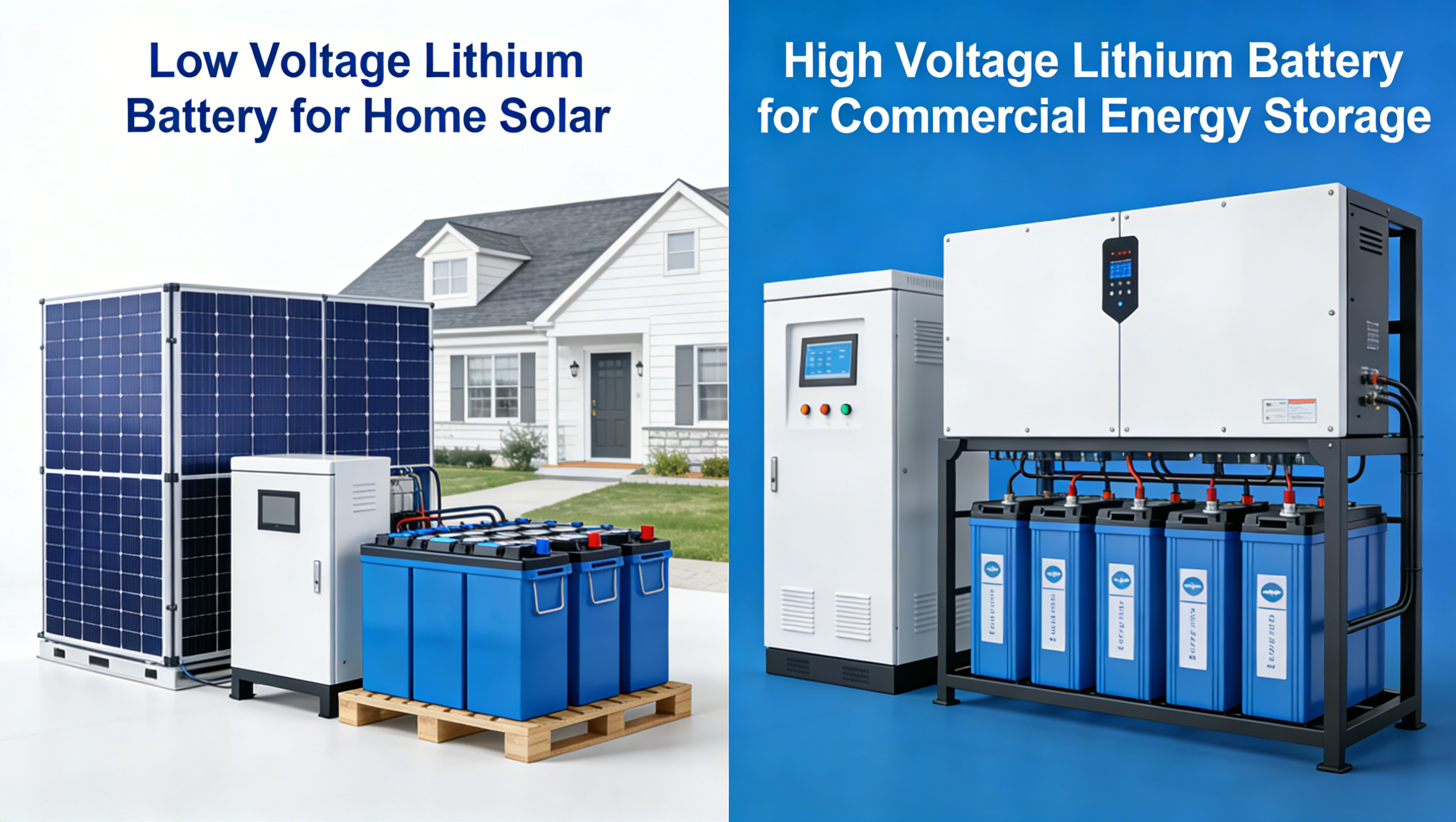
Choosing between high voltage and low voltage lithium batteries ultimately boils down to your specific power needs, budget, and installation capabilities. If you need a compact, budget friendly, and easy to install solution for small residential or portable use, a low voltage lithium battery is the most practical pick. If you require maximum efficiency, scalable power, and long term performance for heavy duty or commercial applications, investing in a high voltage lithium battery will deliver better value and lower long term energy waste. Always match the battery voltage to your inverter and equipment specifications, and prioritize certified models with reliable BMS to ensure safety and longevity, regardless of which voltage type you select.

Address : Room 908-909, Building 2, No. 469 Huatuo Lane, Shushan District, Hefei City, Anhui Province


Please read on, stay posted, subscribe, and we welcome you to tell us what you think.
Copyright 2026 @ Anhui Solarasia Energy Technology Co.,Ltd .All Rights Reserved. Sitemap | Blog | XML | Privacy Policy
 Network Supported