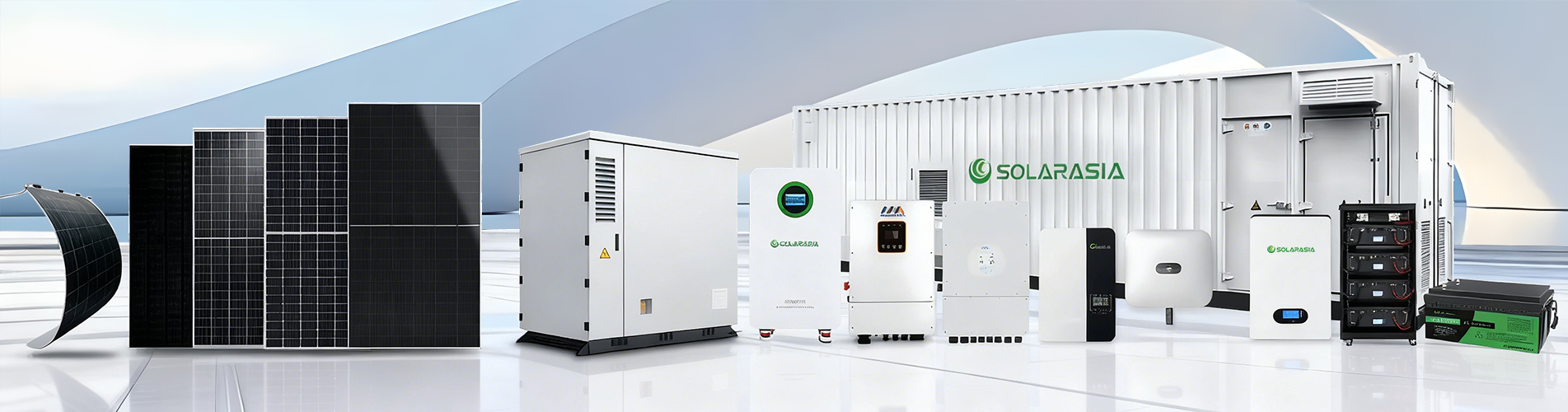
Solarasia banner

solar inverter supplier

Home

solar inverter supplier

  • What Does a Solar Inverter Do? Understanding the Heart of a Solar Power System Jun 15, 2026
    As solar energy becomes one of the fastest growing renewable energy sources worldwide, more homeowners and businesses are investing in solar power systems. While solar panels often receive most of the attention, the solar inverter is actually one of the most critical components in the entire system. But what exactly does a solar inverter do, and why is it so important?   A Solar Inverter Converts Solar Energy into Usable Electricity   The primary function of a solar inverter is to convert direct current (DC) electricity generated by solar panels into alternating current (AC) electricity. Solar panels naturally produce DC power when exposed to sunlight, but most homes, commercial buildings, and industrial facilities operate using AC power.   Without a solar inverter, the electricity generated by your solar panels would not be compatible with standard electrical equipment. In simple terms, the inverter acts as the bridge between solar energy production and real-world electricity consumption.     Solar Inverters Monitor and Optimize System Performance   Modern solar power inverters do much more than convert electricity. Advanced inverters continuously monitor system performance and maximize energy production through technologies such as Maximum Power Point Tracking (MPPT).   MPPT technology ensures that solar panels operate at their optimal voltage and current levels, helping increase energy harvest throughout the day. Many smart inverters also provide remote monitoring through mobile apps or web platforms, allowing users to track energy production, system status, and fault alerts in real time.   For commercial and industrial projects, this monitoring capability helps reduce maintenance costs and improve overall system efficiency.   Solar Inverters Manage Energy Flow Between Solar Panels, Batteries, and the Grid   Today's hybrid solar inverters play a vital role in energy management. They can intelligently direct electricity where it is needed most. During the day, solar energy can power loads directly, charge batteries, or export excess electricity to the utility grid.   When solar production decreases, stored battery energy can be used to support loads and reduce grid dependence. This makes hybrid systems ideal for businesses looking to lower electricity costs, improve energy independence, and ensure backup power availability.   As battery energy storage systems (BESS) become more popular, the inverter becomes the central controller that coordinates power generation, storage, and consumption.     Solar Inverters Improve Safety and Grid Compatibility   Another important role of a PV inverter is protecting both the solar system and the electrical grid. Modern inverters include multiple safety features such as overvoltage protection, short-circuit protection, anti-islanding protection, and temperature monitoring.   Grid-tied inverters must also comply with local utility regulations and grid standards. They help maintain stable voltage and frequency levels while ensuring safe interaction with the power grid. For large-scale solar projects and commercial facilities, these functions are essential for reliable operation and regulatory compliance.   Why Choosing the Right Solar Inverter Matters   The performance of a solar energy system depends heavily on the quality and efficiency of its inverter. Whether you need a residential unit, a hybrid solar inverter, or a commercial solar inverter for industrial applications, selecting the right model can maximize energy production and long term return on investment.   At Solarasia Power, we provide a wide range of solar inverter solutions, including residential, commercial, and industrial models from leading manufacturers. Our inverter portfolio supports grid tied, off grid, and energy storage applications for customers worldwide.   Explore our solar inverter solutions here:   👉 https://www.solarasiapower.com/solar-inverter    
  • How to Calculate Solar Panel, Battery, and Inverter Size for a Solar Energy System Jun 16, 2026
    Designing a solar power system requires more than simply choosing solar panels and batteries. To ensure reliable performance and cost effectiveness, it is important to correctly calculate the required solar panel capacity, battery storage capacity, and solar inverter size. Whether you are planning a residential solar installation, an off-grid system, or a commercial energy storage project, understanding these calculations can help you build a system that meets your energy needs.   Step 1: Calculate Your Daily Energy Consumption The first step is determining how much electricity you use each day. This is usually measured in kilowatt-hours (kWh).   You can calculate daily energy consumption using the following formula: Daily Energy Consumption (kWh) = Power (W) × Operating Hours ÷ 1000     For example: Appliance Power Usage Time Daily Consumption LED Lights 100W 5 Hours 0.5 kWh Air Conditioner 1500W 6 Hours 9 kWh Refrigerator 200W 24 Hours 4.8 kWh   Total Daily Consumption:0.5 + 9 + 4.8 = 14.3 kWh/day   This number becomes the foundation for sizing your solar panels, battery bank, and inverter.     Step 2: Calculate Solar Panel Capacity After determining daily energy usage, calculate how much solar generation is required.   Formula: Solar Panel Size (kW) = Daily Energy Consumption ÷ Peak Sun Hours     Assume: Daily consumption = 14.3 kWh Peak sunlight = 5 hours/day   Calculation:14.3 ÷ 5 = 2.86 kW   Considering system losses (10%–20%), it is recommended to increase capacity: Recommended Solar Array Size = 3.2–3.5 kW   If using 550W solar panels:   3.3 kW ÷ 550W ≈ 6 panels   Choosing slightly larger capacity can improve performance during cloudy weather and seasonal variations.   Step 3: Calculate Battery Storage Capacity   Battery sizing depends on how many hours or days of backup power are required.   Formula:   Battery Capacity (kWh) = Daily Energy Consumption × Backup Days   For one day of backup:   14.3 kWh ×1 = 14.3 kWh   Considering 90% usable depth of discharge for lithium batteries: 14.3 ÷ 0.9 = 15.9 kWh   Recommended battery capacity: 16 kWh lithium battery system     For commercial and industrial projects, battery capacity may range from 50 kWh to several MWh depending on operational requirements.     Step 4: Calculate Solar Inverter Size The inverter must be capable of handling the maximum simultaneous load.   Formula: Inverter Size (kW) = Total Running Load × Safety Factor     Suppose the maximum load operating at one time is: Air Conditioner = 1.5 kW Refrigerator = 0.2 kW Lighting = 0.1 kW   Total:1.8 kW   Applying a 25% safety margin:1.8 × 1.25 = 2.25 kW   Recommended inverter:3 kW solar inverter     For larger commercial systems, common inverter sizes include: 30kW solar inverter 50kW solar inverter 100kW solar inverter 110kW solar inverter 125kW solar inverter   Selecting a properly sized inverter improves system reliability and future expansion flexibility.   Why Proper System Sizing Matters   Oversized systems increase project costs unnecessarily, while undersized systems can lead to insufficient power generation, battery shortages, and inverter overloads. Accurate sizing helps maximize return on investment, improve energy efficiency, and ensure long-term system stability.   Solarasia Power specializes in solar panels, lithium battery systems, solar inverters, and complete energy storage solutions. We provide customized system design and one-stop procurement services for residential, commercial, and industrial solar projects worldwide.   Whether you need a small off-grid solar system or a large-scale battery energy storage project, our team can help you calculate the right configuration based on your specific energy requirements.     👉 https://www.solarasiapower.com/    
foot logo

Address : Room 908-909, Building 2, No. 469 Huatuo Lane, Shushan District, Hefei City, Anhui Province

Tel : +86 17730022793

Email : [email protected]

Subscribe

Please read on, stay posted, subscribe, and we welcome you to tell us what you think.

submit

Links: Inverter Cables Sunrangeenergy gmsolarkit Copyright 2026 @ Anhui Solarasia Energy Technology Co.,Ltd .All Rights Reserved. Sitemap | Blog | XML | Privacy Policy Network Supported

Click To Leave A Message

leave a message
If you are interested in our products and want to know more details,please leave a message here,we will reply you as soon as we can.
submit

Home

Products

whatsApp

contact