
Bifacial Solar Panels: How They Work, Benefits and Best Applications
Solar panel technology has moved beyond traditional front side power generation. Bifacial solar panels can generate electricity from sunlight reaching both the front and rear sides of the module, allowing the solar system to make better use of reflected and diffuse light.
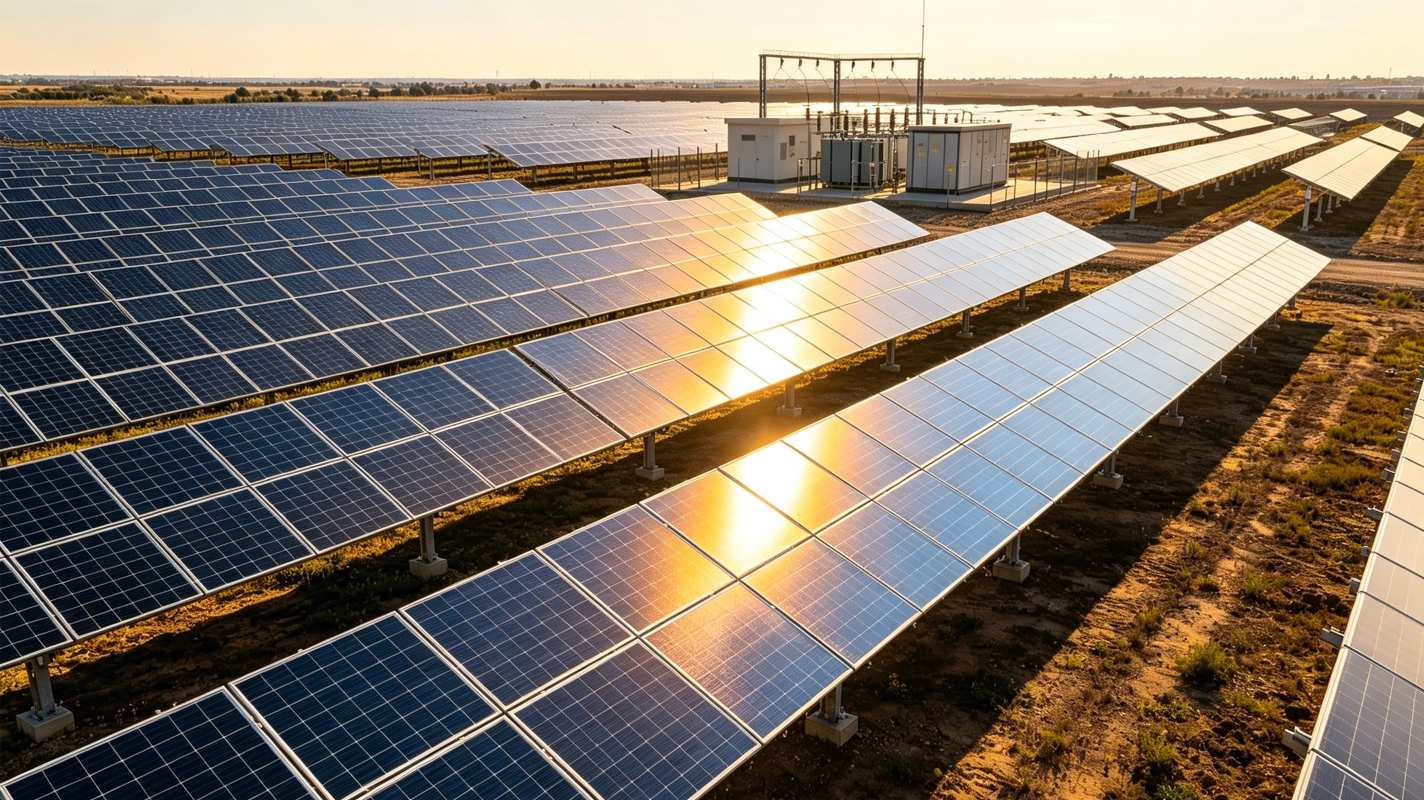
This makes bifacial technology particularly relevant for commercial rooftops, ground mounted solar farms, industrial projects, and other installations where the rear side of the module can receive meaningful irradiance.
According to IEA PVPS, bifacial gain depends on factors such as ground reflectivity, array height, row spacing, module spacing, and the amount of diffuse light reaching the rear side.
Solarasia Power's current solar panel portfolio includes a dedicated bifacial category as well as bifacial modules from brands including Jinko, Trina, Huasun and AIKO.
Explore Solarasia Power's Bifacial Solar Panel Solutions
What Are Bifacial Solar Panels?
Bifacial solar panels are photovoltaic modules designed to generate electricity from both the front and rear sides of the module.
Traditional monofacial modules primarily rely on sunlight reaching the front surface. Bifacial modules add photovoltaic generation on the rear side, allowing them to capture additional light reflected from the ground, roof, or surrounding surfaces.
The amount of additional energy is not fixed. It depends heavily on the installation environment and system design.
For example, IEA PVPS identifies ground albedo, module height, row spacing, module spacing and diffuse irradiance as important factors influencing bifacial performance.
This means simply replacing a monofacial module with a bifacial module does not automatically produce the same percentage of additional energy in every project.
The system needs to be designed to allow the rear side to receive useful light.
How Do Bifacial Solar Panels Work?
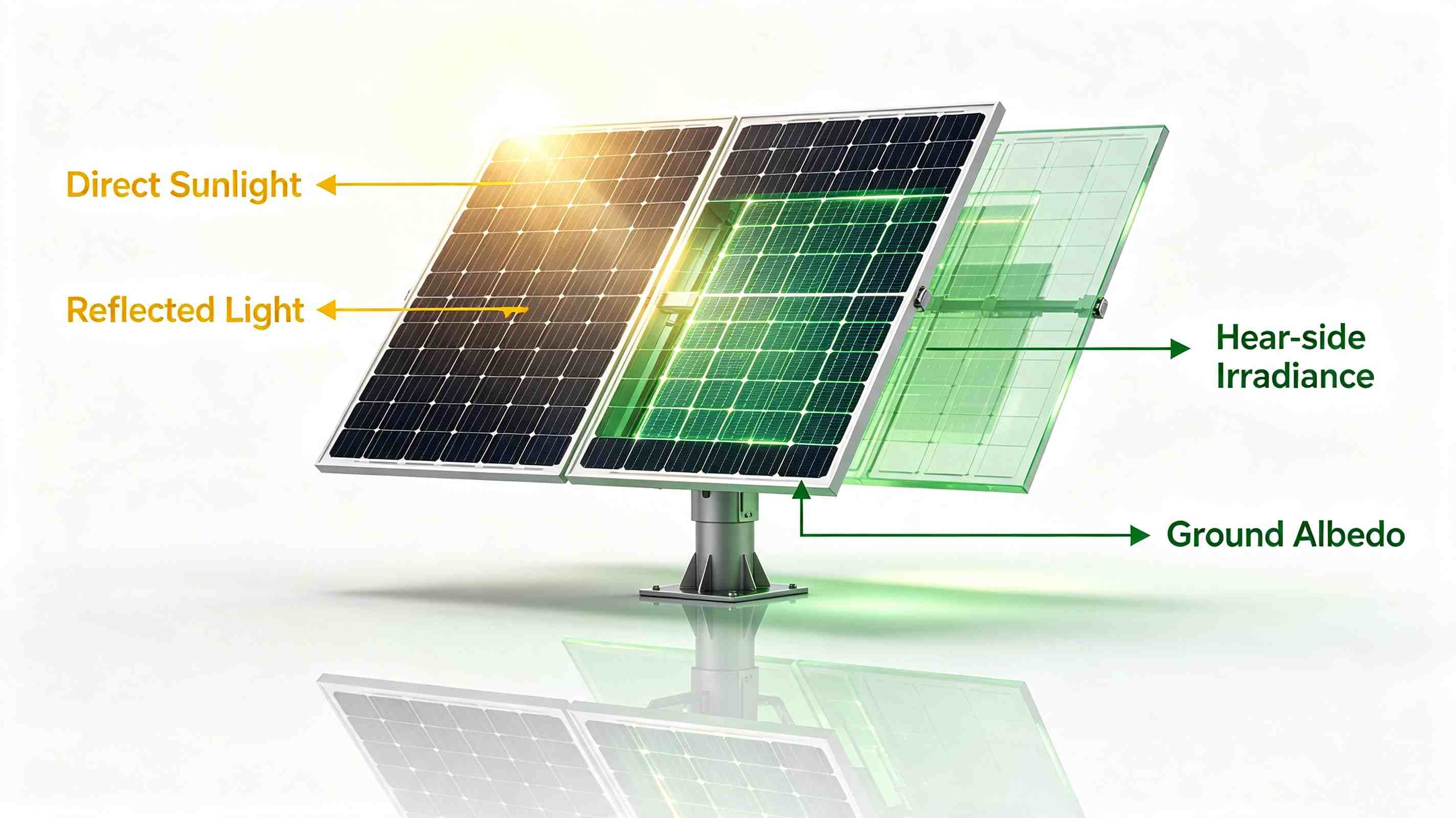
The basic operating principle is straightforward.
The front side receives direct and diffuse sunlight.
At the same time, the rear side can receive:
Both sides contribute to electricity generation.
The U.S. Department of Energy explains that bifacial solar cells are designed to capture light on both sides of a silicon solar module, including light reflected from the ground or roof.
This creates an additional energy source without necessarily increasing the physical footprint of the module.
However, the rear side contribution depends on actual site conditions.
What Is Bifacial Gain?
Bifacial gain describes the additional energy produced by a bifacial PV system compared with a comparable monofacial system under the relevant conditions.
It is important to understand that bifacial gain is not a universal fixed percentage.
A project installed above a highly reflective surface with sufficient module elevation and good rear-side exposure may achieve more rear-side contribution than a system installed close to a dark surface.
IEA PVPS notes that bifacial gain generally increases with factors such as higher albedo, greater array height, wider row spacing, and greater spacing between modules.
Therefore, when evaluating bifacial solar panels, project owners should consider annual energy yield, rather than looking only at the module's front-side rated power.
Key Factors That Affect Bifacial Performance
Ground Albedo
Albedo refers to the ability of a surface to reflect solar radiation.
A high albedo surface can reflect more light toward the rear of a bifacial module.
Examples of surfaces with different reflective characteristics include:
The exact performance depends on the actual material, weather, surface condition, module geometry, and other site variables.
IEA PVPS measurements show a clear relationship between ground albedo and rear-side irradiance.
This is one reason bifacial modules can be particularly interesting for carefully designed ground-mounted and commercial projects.
Module Height and Row Spacing
The space beneath and around a solar module affects how much light reaches its rear side.If modules are installed too close to the ground, the rear side may receive less reflected light.Similarly, insufficient row spacing can increase shading and reduce the amount of available rear-side irradiance.For larger solar farms, these design variables should be considered during system modeling rather than after the equipment has already been selected.NREL provides bifacial PV modeling tools that account for factors such as module layout, reflective surfaces, shading obstructions and rear-side irradiance.
Mounting Structure
The mounting system is another important consideration.Bifacial modules need sufficient rear-side exposure. Mounting rails, brackets, cables and other components should therefore be considered during system design because they can influence the light reaching the rear surface.For commercial and utility-scale projects, the mounting structure should be selected together with the module and site layout.
Shading and Rear Side Irradiance
Front-side shading is obviously important for any solar module, but bifacial projects also require attention to rear-side shading.Nearby structures, mounting components, adjacent rows and other obstructions can reduce the amount of light reaching the rear side.IEA PVPS also notes that rear side irradiance can be considerably less uniform than front side irradiance, which means project design and electrical configuration should account for the specific installation conditions.
Benefits of Bifacial Solar Panels
1. Better Use of Available Solar Radiation
The biggest advantage of bifacial technology is its ability to capture useful light from two sides.Instead of treating reflected light as unused energy, a bifacial module can convert part of that available radiation into electricity.
2. Higher Energy Yield Potential
When the installation environment is suitable, bifacial modules can increase total energy production compared with a comparable monofacial configuration.However, the actual improvement varies by project.This is why professional system modeling is important before selecting a module based solely on its bifacial rating.
3. Suitable for Large Scale Solar Projects
Bifacial modules are particularly attractive for:
IEA PVPS highlights ground reflectivity, array configuration and system design as key considerations for bifacial applications.
4. Strong Compatibility with N Type Technologies
Many current high-performance bifacial products use N-type cell technologies such as TOPCon and HJT.For example, Trina's Vertex N range includes bifacial dual-glass modules and highlights high bifaciality, low temperature coefficient and low degradation as characteristics of its N-type technology. JinkoSolar's current Tiger Neo materials also highlight high bifaciality and N-type TOPCon technology.
Bifacial vs Monofacial Solar Panels: Which Is Better?
There is no universal answer.
The right choice depends on the project.
| Feature | Bifacial Solar Panel | Monofacial Solar Panel |
| Front-side generation | Yes | Yes |
| Rear-side generation | Yes | Generally no |
| Ground reflectivity importance | High | Lower |
| Installation design sensitivity | Higher | Generally simpler |
| Potential energy yield | Higher under suitable conditions | More predictable from front side generation |
| Ground-mounted applications | Excellent potential | Suitable |
| Commercial applications | Highly suitable in appropriate designs | Suitable |
| System modeling requirements | Important | Important |
For projects where the rear side receives meaningful irradiance, bifacial modules can offer a strong energy yield opportunity.
For projects where the rear side is heavily shaded or blocked, the additional value may be limited.
Best Applications for Bifacial Solar Panels
Commercial Solar Projects
Commercial rooftops can be a good application when the roof surface and mounting configuration allow useful reflected light to reach the rear of the modules.
Large commercial buildings may also benefit from high-power modules because reducing the number of modules required for a given DC capacity can simplify certain aspects of installation and balance of system planning.
Industrial Solar Systems
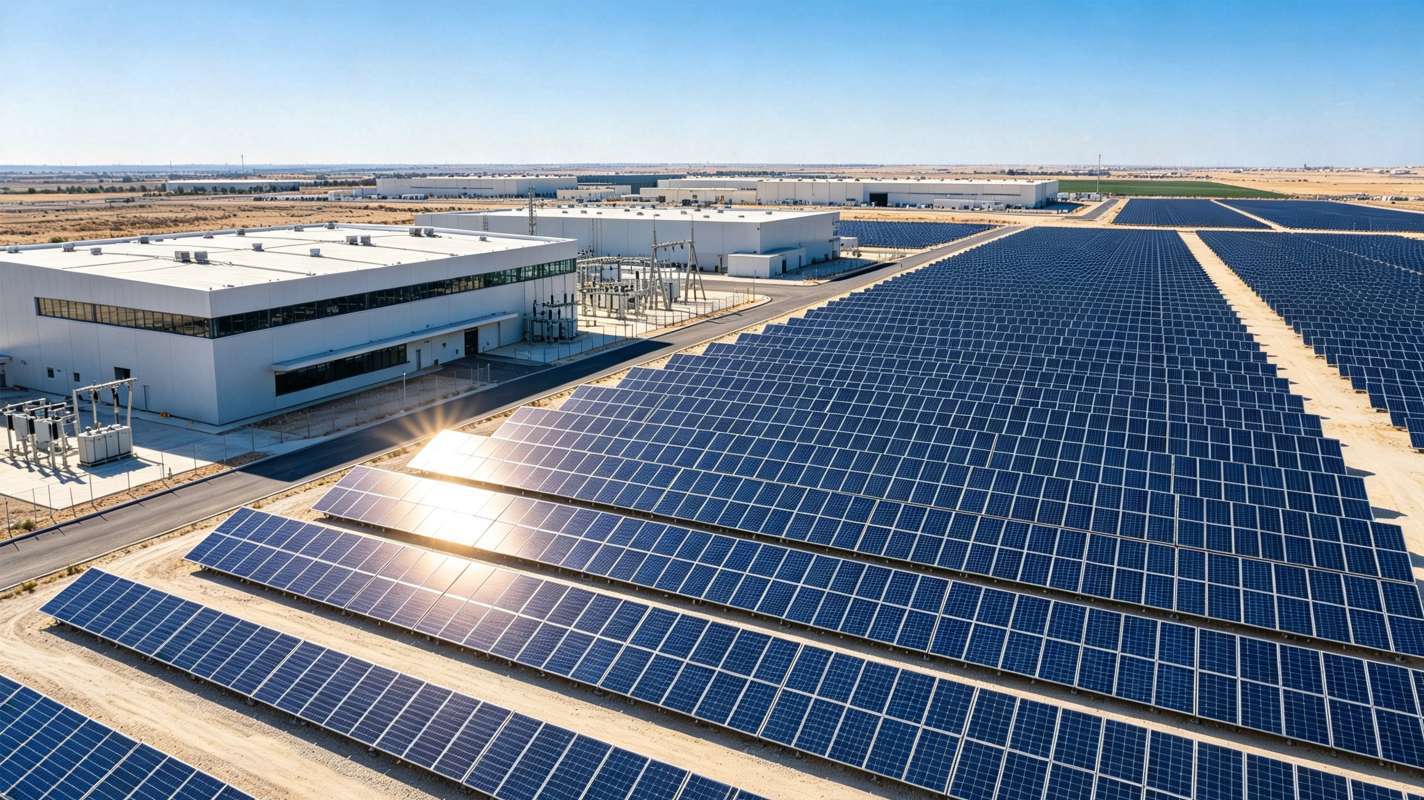
Factories and industrial facilities often have large roof areas or available land for ground-mounted PV.
For these projects, bifacial modules can be evaluated together with:
Bifacial PV can therefore become part of a larger industrial energy strategy rather than simply being a module selection.
Utility Scale Solar Farms
Utility-scale projects are one of the most important applications for bifacial modules.
Large ground mounted systems can provide opportunities to optimize:
IEA PVPS notes that bifacial systems can be used with fixed-tilt structures and single-axis tracking, with performance depending strongly on site and system design.
N Type, TOPCon and HJT Bifacial Solar Panels
Bifacial is a module configuration, while N-type, TOPCon and HJT describe cell technologies or technology families. They should not be treated as interchangeable terms.
N Type TOPCon
N-type TOPCon modules are widely used in high-power bifacial products.JinkoSolar's Tiger Neo products, for example, use N type TOPCon technology and emphasize high bifaciality and high power generation performance.
HJT
HJT is another high efficiency cell technology used in bifacial modules.Solarasia Power currently lists Huasun HJT bifacial modules in its solar panel portfolio, including modules in the 720W–760W range described on its category page.
ABC
AIKO's ABC technology is another high-efficiency approach represented in Solarasia Power's product portfolio. Its current category page lists an AIKO N-type ABC bifacial module in the 765W–800W range.
For buyers, the most important question is not simply which technology has the most impressive specification. The better question is:
Which module technology provides the best overall energy yield and project economics for the specific site?
How to Choose Bifacial Solar Panels for Your Project
Before purchasing bifacial solar panels, evaluate the following factors.
1. Project Type
Determine whether the system is:
Large ground mounted projects generally provide more opportunities to optimize rear-side irradiance.
2. Module Power and Efficiency
Higher power modules can be useful when reducing the number of modules or optimizing land utilization is important.
However, module dimensions, weight, mechanical requirements and compatibility with the mounting system should also be considered.
3. Bifaciality
Bifaciality describes the rear side performance relative to the front side under specified test conditions.A higher bifaciality value can be beneficial, but it does not automatically mean a higher annual energy yield.Site conditions still matter.
4. Cell Technology
Compare available N type TOPCon, HJT, ABC and other technologies based on:
5. Installation Environment
Evaluate:
These factors can have a significant effect on the actual value of bifacial technology.
Bifacial Solar Panel Solutions from Solarasia Power
Solarasia Power offers a broad solar panel portfolio for residential, commercial, industrial and utility scale applications.
The current product category includes bifacial, monocrystalline, N-type, P-type, all-black, flexible and folding solar panels, with products from brands such as Jinko, LONGi, Trina, Canadian Solar, JA Solar, Huasun and AIKO.
Several products are particularly relevant to bifacial applications.
AIKO ABC Bifacial Solar Panels
Solar Asia Power currently lists AIKO N-type ABC bifacial modules in the 765W–800W range, positioned for commercial and utility-scale applications.
Huasun HJT Bifacial Solar Panels
The website also lists Huasun HJT bifacial double-glass modules from 720W to 760W, aimed at utility-scale and commercial PV projects.
Trina N-Type TOPCon Bifacial Solar Panels
Solarasia Power lists Trina N-type TOPCon bifacial dual-glass modules in the 700W–725W range.
Jinko N-Type Bifacial Solar Panels
The website also features Jinko Tiger Neo N-type bifacial modules in its current solar panel portfolio.(View the complete Solar Panel product range)
FAQs About Bifacial Solar Panels
What are bifacial solar panels?
Bifacial solar panels are photovoltaic modules that can generate electricity from both the front and rear sides. The rear side can use reflected and diffuse sunlight to contribute additional energy generation.
Are bifacial solar panels better than monofacial panels?
Bifacial panels can be more advantageous when the installation provides good rear-side irradiance. However, the actual benefit depends on ground reflectivity, module height, row spacing, shading and other system design factors.
How much more energy can bifacial solar panels produce?
There is no single percentage that applies to every project. Bifacial gain varies according to site conditions and system design. IEA PVPS specifically identifies albedo, array height, row spacing and module spacing as important factors.
Are bifacial solar panels suitable for commercial projects?
Yes. Bifacial modules can be suitable for commercial projects when the roof surface, mounting configuration and surrounding environment provide sufficient rear-side irradiance.
Are bifacial panels good for solar farms?
Yes. Ground-mounted solar farms are a major application because system designers can optimize module height, row spacing, ground surface and other factors that affect rear-side irradiance.
What is bifacial gain?
Bifacial gain is the additional energy generated by a bifacial PV system compared with a comparable monofacial system under the relevant project conditions.
Are TOPCon solar panels bifacial?
Many modern N-type TOPCon modules are available in bifacial configurations. For example, current Jinko Tiger Neo and Trina Vertex N product information includes bifacial N-type modules.
Are HJT solar panels bifacial?
Yes. HJT modules can be designed as bifacial products, and Solar Asia Power currently lists Huasun HJT bifacial modules.
Conclusion
Bifacial solar panels offer an important opportunity to increase solar energy yield by using both the front and rear sides of a photovoltaic module. However, their performance depends on more than the module specification itself.
Ground albedo, module height, row spacing, mounting structure, shading and rear-side irradiance all influence the actual bifacial gain.
For commercial, industrial and utility-scale projects, bifacial modules can be particularly attractive when the system is designed to take advantage of these conditions.
Solarasia Power provides a broad selection of bifacial solar panels from leading manufacturers, including Jinko, Trina, Huasun and AIKO, alongside other PV technologies and solar energy products.
For project developers, EPC companies, installers and distributors, the best approach is to evaluate bifacial modules based on total energy yield, system design, product reliability, project conditions and overall economics, rather than looking at rated wattage alone.


Address : Room 908-909, Building 2, No. 469 Huatuo Lane, Shushan District, Hefei City, Anhui Province


Please read on, stay posted, subscribe, and we welcome you to tell us what you think.
Copyright 2026 @ Anhui Solarasia Energy Technology Co.,Ltd .All Rights Reserved. Sitemap | Blog | XML | Privacy Policy
 Network Supported