
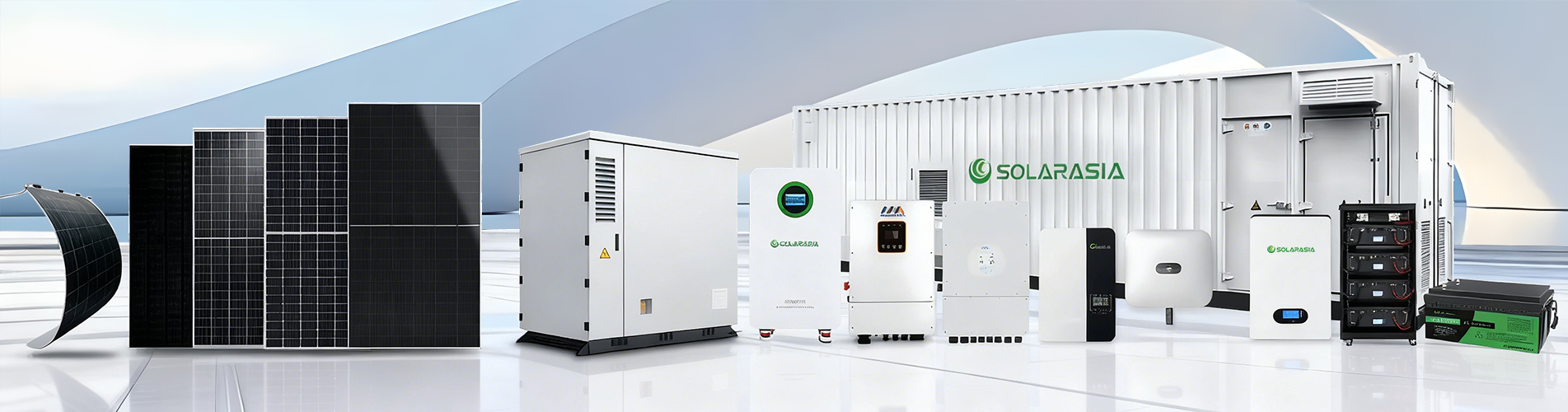
How to Choose the Right Solar Inverter for Your Solar System
Choosing the right solar inverter is one of the most important decisions when designing a solar PV system. Learn how to compare inverter types, capacity, MPPT, efficiency, battery compatibility, and other key factors for residential, commercial, and industrial solar projects.
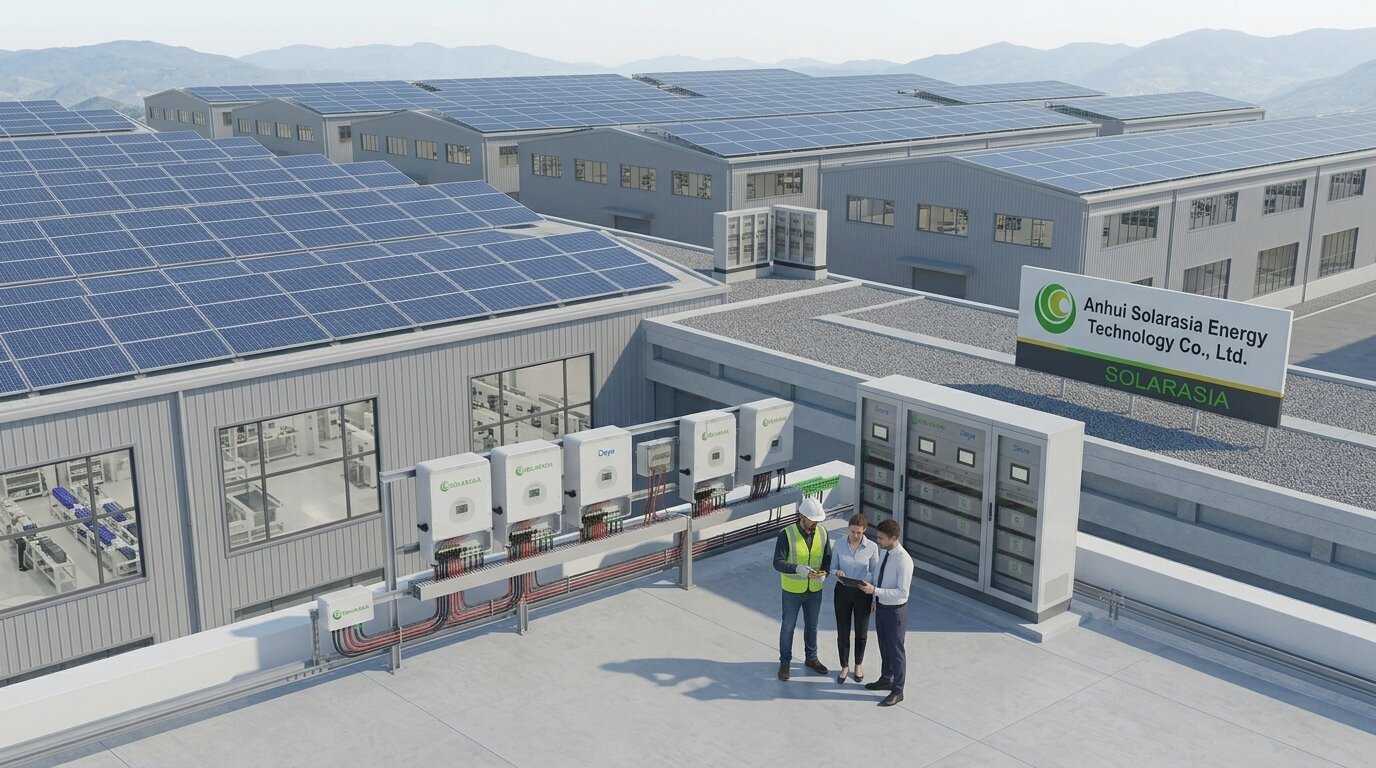
Solar panels are often the most visible part of a photovoltaic system, but the solar inverter is just as important.
Solar panels generate direct current (DC) electricity, while most buildings and electrical grids use alternating current (AC). The solar inverter converts and manages this electricity so that it can be used by electrical loads, exported to the grid, or integrated with battery storage.
Choosing an inverter based only on its price or rated power can lead to an unsuitable system design. A properly selected inverter needs to work with the solar panels, electrical loads, battery system, grid requirements, and site conditions.
So, how do you choose the right solar inverter for your solar system?
This guide covers the key factors to consider before purchasing a solar inverter.
A solar inverter is a key component that converts electricity generated by photovoltaic panels from DC to AC.
A basic solar PV system works like this:
Sunlight → Solar Panels → DC Electricity → Solar Inverter → AC Electricity → Loads / Grid
Depending on the inverter type, it may also perform functions such as:
For systems incorporating battery storage, the inverter can become an even more important part of the overall system architecture.
The inverter needs to match the electrical characteristics of the PV array.
If the inverter is poorly matched with the solar panels, the system may not operate as intended.
Important considerations include:
For larger commercial and industrial projects, inverter selection also needs to consider the project's load profile, grid connection and overall energy management strategy.
The first step is to understand the required PV system capacity.
For example, a project may require:
The inverter's AC capacity should be selected based on the overall system design rather than simply matching the nameplate capacity of the solar panels.
A PV system may intentionally have a DC capacity higher than the inverter's AC rating. This relationship is commonly expressed using the DC-to-AC ratio.
The basic calculation is:
DC-to-AC Ratio = PV Array DC Capacity ÷ Inverter AC Capacity
For example, a 120 kW DC PV array connected to a 100 kW AC inverter has a DC-to-AC ratio of 1.2.
The appropriate ratio depends on:
There is no single ratio that is ideal for every solar project.
Different solar projects require different inverter architectures.
String inverters connect groups of solar panels into PV strings.
They are widely used in residential, commercial and industrial PV systems.
Potential advantages include:
String inverters can be particularly useful for commercial rooftops with multiple roof sections.
Central inverters are generally used for larger PV installations.
Multiple PV strings can be combined and connected to a central inverter.
They can be suitable for applications such as:
However, system architecture, redundancy, maintenance and site conditions need to be evaluated carefully.
A hybrid inverter can integrate solar PV and battery storage functions within a compatible system.
A simplified architecture is:
Solar Panels ↔ Hybrid Inverter ↔ BESS ↔ Loads / Grid
Hybrid inverters can be useful for projects where battery storage is part of the original system design.
If your project includes BESS, verify the inverter's battery voltage range, communication requirements, charging/discharging capabilities and supported battery configurations.
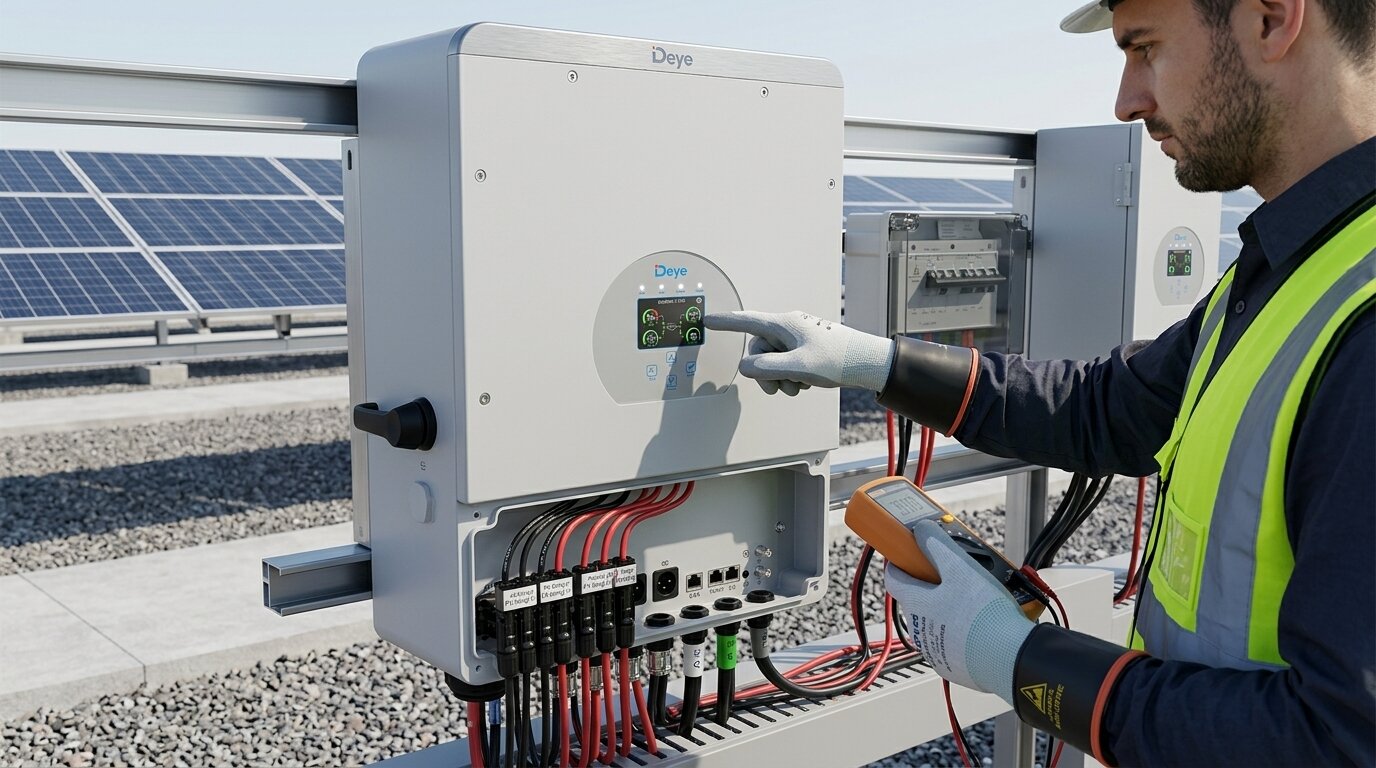
MPPT stands for Maximum Power Point Tracking.
Solar panels do not produce their maximum available power at a fixed voltage under all conditions.
The inverter's MPPT system adjusts the operating point of the PV array to make effective use of available solar generation within its operating range.
When choosing an inverter, check:
These specifications need to be compared with the electrical characteristics of the selected solar panels.
This is one of the most important technical checks.
When solar panels are connected in series, their voltages add together.
For example, if several modules are connected in a string, the string voltage will be higher than the voltage of a single module.
The PV string must remain within the inverter's allowable voltage range.
Voc — Open-Circuit Voltage
The maximum voltage of the module under specified test conditions.
Vmp — Voltage at Maximum Power
The approximate operating voltage when the module produces its maximum rated power under specified test conditions.
Because module voltage changes with temperature, system designers should also consider the expected minimum and maximum site temperatures.
For professional projects, string calculations should be verified using the exact module and inverter datasheets.
Voltage is not the only consideration.
The inverter also has maximum DC input current specifications.
Solar modules have:
The PV string and inverter configuration must be designed so that the applicable current limits are respected.
This becomes particularly important with modern high-power solar panels, which may have higher operating currents than older PV modules.
Therefore, when purchasing high-wattage modules, don't look only at the Watt rating.
Check the electrical characteristics as well.
The number of MPPT trackers can affect system design flexibility.
Imagine a commercial building with:
These arrays can experience different solar conditions throughout the day.
Using multiple MPPT inputs can allow different PV sections to be managed separately, depending on the inverter architecture.
Multiple MPPTs can also be useful when dealing with:
However, the appropriate configuration depends on the specific inverter and project design.
Inverter efficiency indicates how effectively the inverter converts DC electricity into AC electricity.
A higher efficiency can reduce conversion losses.
However, buyers should avoid evaluating an inverter solely by its peak efficiency.
It is also useful to consider:
For commercial and utility projects, small differences in system performance can become more meaningful as system capacity increases.
If your project includes battery storage, inverter selection becomes even more important.
A conventional grid-tied PV inverter may not provide the functions required to directly manage a BESS.
A compatible system could include:
Solar Panels + Solar Inverter + BESS
or:
Solar Panels + Hybrid Inverter + Battery Storage
The appropriate architecture depends on the project.
Before purchasing, confirm:
For commercial and industrial applications, BESS may also be integrated with an energy management system.
The correct inverter isn't determined only by the size of the solar array.
You should also understand how and when electricity is consumed.
For example:
A household may have:
Battery storage may therefore be useful for shifting available solar energy toward later consumption.
An office, warehouse or factory may have significant daytime electricity demand.
In this case, solar generation may directly support daytime loads, while BESS can serve additional energy-management objectives depending on the project.
Industrial facilities can have high and variable power demand.
The system may require more detailed analysis of:
The inverter should therefore be selected as part of the complete energy system.
Commercial solar projects typically require more detailed system planning than small residential installations.
Important considerations include:
For commercial and industrial projects, the inverter should be evaluated together with the solar panels and other balance-of-system equipment.
This is especially important for EPC contractors and project developers purchasing equipment in larger quantities.
Where the inverter is installed can affect equipment selection.
Consider:
For example, a solar inverter installed in a coastal environment may face different environmental conditions from one installed in a dry inland location.
The inverter's enclosure rating and operating temperature specifications should therefore be checked against the actual installation environment.
Grid-connected solar systems need to comply with applicable local requirements.
Depending on the target market, this may involve:
The exact requirements vary by country and project.
Before purchasing an inverter for a commercial or utility project, confirm the required certifications and grid compatibility for the intended installation location.
Modern solar inverters can provide monitoring capabilities that help users and installers understand system performance.
Depending on the product, monitoring may include:
Communication capabilities may also be important when integrating the inverter with:
For commercial installations, monitoring can become an important part of operation and maintenance.
The cheapest inverter is not necessarily the best choice for a solar project.
For professional buyers, supplier capabilities should also be considered.
Look at:
For EPC contractors and distributors, having access to multiple product categories can also simplify procurement.
For example, a complete solar project may require:
Solar Panels + Inverters + BESS + Mounting + Electrical Equipment + Monitoring
A supplier capable of supporting multiple parts of the project can potentially make project coordination easier.
Before purchasing a solar inverter, use this checklist:
| Parameter | What to Check |
| System size | Total PV DC capacityTotal PV DC capacity |
| Inverter capacity | AC output rating |
| DC-to-AC ratio | Appropriate for the project |
| Max DC voltage | Must accommodate PV string voltage |
| MPPT range | Compatible with PV operating voltage |
| Max DC current | Compatible with PV string current |
| MPPT quantity | Suitable for array configuration |
| Efficiency | Conversion performance |
| Battery compatibility | Required for BESS projects |
| Grid compatibility | Local requirements |
| Protection | Applicable safety functions |
| Environment | Temperature, humidity, dust, etc. |
| Monitoring | Local and remote monitoring options |
| Warranty | Product and service terms |
| Supplier support | Technical and after-sales support |
A low purchase price does not necessarily mean a lower total project cost.
Installation, efficiency, maintenance and system compatibility should also be considered.
A 100 kW solar array does not automatically mean that any 100 kW inverter is suitable.
Voltage, current and MPPT characteristics must also be checked.
PV voltage changes with temperature.
String calculations should account for expected site conditions.
If battery storage may be added later, consider inverter architecture and compatibility during the initial system design.
The best inverter configuration depends partly on how electricity is consumed.
Grid connected projects need to comply with applicable local requirements.
A solar energy system should not be designed as a collection of unrelated products.
Instead, consider the complete energy pathway:
Solar Panels → Inverter → Loads / Grid
and, when storage is included:
Solar Panels → Inverter → BESS → Loads / Grid
Each component affects the others.
Solar panels determine available DC generation.
The inverter determines how that electricity is converted and managed.
BESS determines how energy can be stored and discharged.
The load profile determines when electricity is needed.
The grid determines the requirements for connection and operation.
This is why a system-level approach is particularly important for commercial, industrial and utility-scale solar projects.
The appropriate inverter size depends on the PV array capacity, DC-to-AC ratio, site conditions, load profile and project design. It should be selected using the inverter manufacturer's specifications and a proper system calculation.
No. Solar panels and inverters need to be electrically compatible. PV voltage, current, MPPT range and other specifications should be checked before connecting them.
Compare the solar module's Voc, Vmp, Isc and Imp with the inverter's maximum DC voltage, input-current limits and MPPT operating range. String configuration and temperature conditions should also be considered.
MPPT stands for Maximum Power Point Tracking. It allows the inverter to adjust the operating point of the PV array to make effective use of available solar generation within its operating range.
Not necessarily. A hybrid inverter can be useful when battery storage is part of the system. A standard grid-tied inverter may be more appropriate for a PV-only system. The best option depends on the project requirements.
In some cases, yes. The feasibility depends on the existing inverter, electrical architecture, battery compatibility, control system and local requirements. An AC-coupled or other compatible retrofit architecture may be possible.
String inverters typically serve individual groups of PV strings, while central inverters are generally designed for larger PV arrays. The appropriate architecture depends on project size, site conditions, maintenance requirements and system design.
Inverter efficiency affects conversion losses. However, buyers should evaluate performance across realistic operating conditions rather than relying only on the maximum efficiency figure.
There is no universal best inverter. Commercial projects should evaluate inverter capacity, MPPT configuration, electrical compatibility, monitoring, grid requirements, environmental conditions and potential BESS integration.
Choosing the right solar inverter is about much more than selecting an inverter with the correct wattage.
A good selection process considers the entire solar energy system:
Solar Panels + Solar Inverter + BESS + Loads + Grid + Site Conditions
Before purchasing, check the PV array's voltage and current, the inverter's MPPT range, DC input limits, AC output capacity, battery compatibility, efficiency, environmental specifications and local certifications.
For residential systems, simplicity and compatibility may be the primary considerations.
For commercial and industrial projects, the focus should expand to system architecture, load profile, energy management, monitoring, BESS integration and long-term project requirements.
For EPC contractors, distributors and project developers, working with a supplier that understands both individual components and complete solar energy systems can make equipment selection and project procurement more efficient.
Explore Solar Asia Power's Solar Panel range and consider how PV modules, inverters and BESS can be combined into a complete solar energy solution.


Address : Room 908-909, Building 2, No. 469 Huatuo Lane, Shushan District, Hefei City, Anhui Province


Please read on, stay posted, subscribe, and we welcome you to tell us what you think.
Copyright 2026 @ Anhui Solarasia Energy Technology Co.,Ltd .All Rights Reserved. Sitemap | Blog | XML | Privacy Policy
 Network Supported